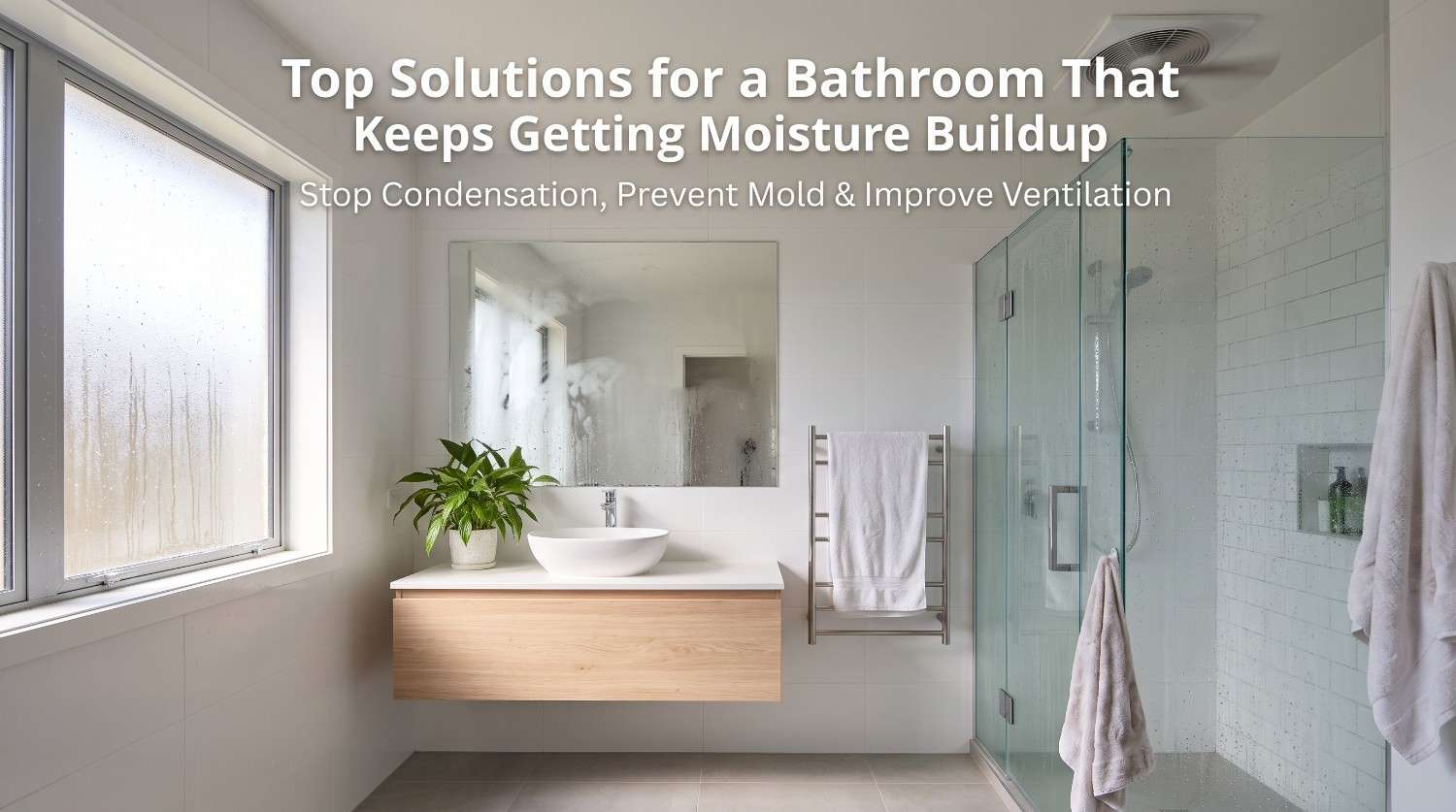

When it comes to your bathroom, choosing the right tile isn’t just about aesthetics; the wrong choice can cause mold, grout failure, and water damage. While both porcelain and ceramic tiles are popular, the decision depends on the bathroom surface, moisture exposure, and long-term maintenance.
Porcelain tiles are dense, water-resistant, and ideal for wet areas, while ceramic tiles are softer, cost-effective, and best for dry or low-splash zones. Matching the right tile to each bathroom surface helps prevent water damage, reduce mold risk, and keep your bathroom functional and stylish for years. This guide breaks down the best tile choices surface by surface floors, shower walls, tub surrounds, and dry walls with actionable tips for every scenario.
Porcelain vs Ceramic Tile: What Makes Them Different?
When choosing tiles for your bathroom, understanding the differences between porcelain and ceramic is critical. The distinction goes beyond appearance; it affects durability, water resistance, mold prevention, and overall bathroom safety.
Composition & Firing Temperature
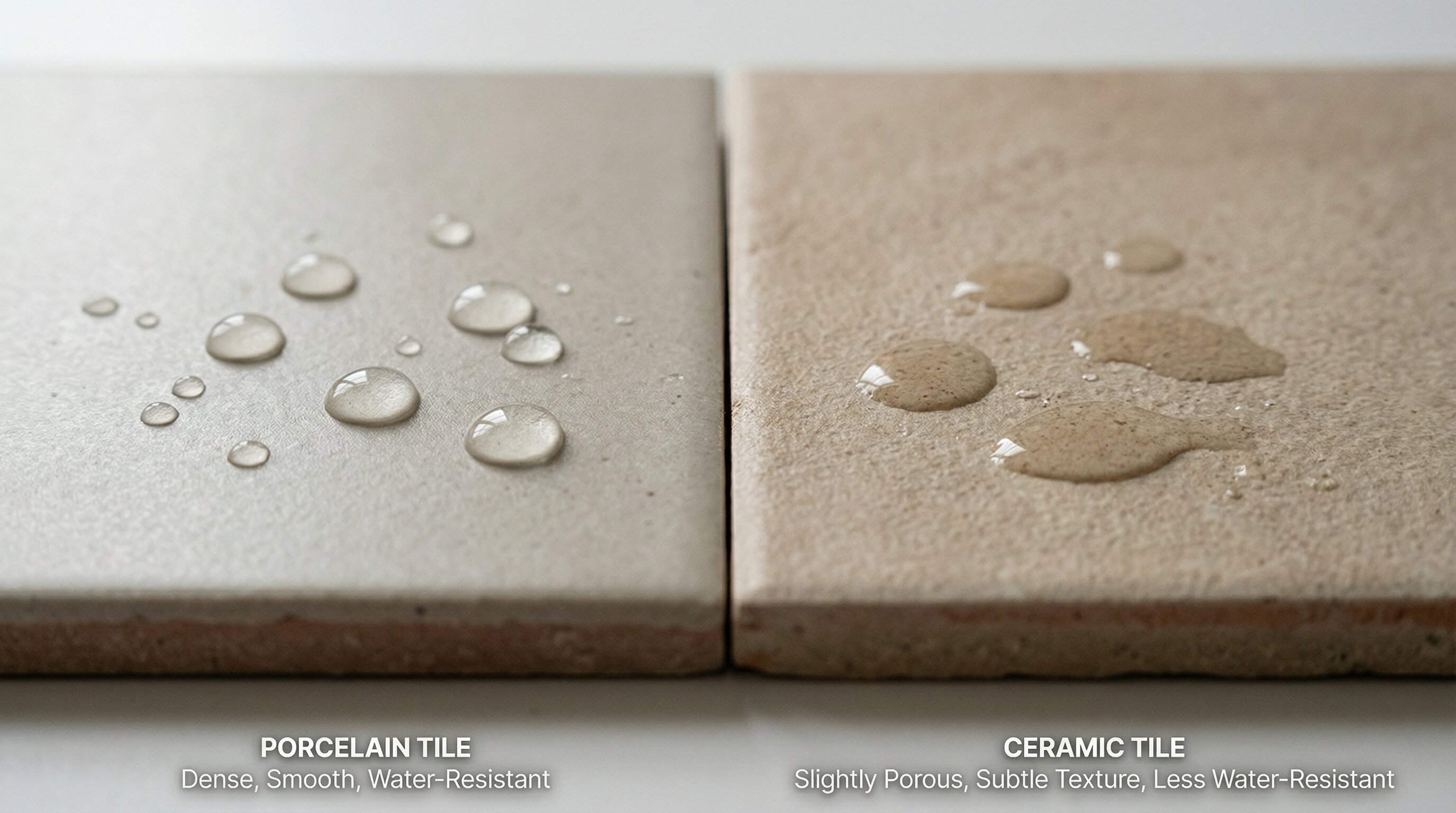
Porcelain Tile: Porcelain is made from a finer, denser clay mix and fired at higher temperatures (typically 1,200–1,400°C). This intense firing process:
Creates a very dense and hard tile
Reduces porosity, with water absorption rates ≤0.5% (ANSI standard)
Makes the tile highly resistant to moisture, stains, and wear
Ceramic Tile: Ceramic tiles are made from a softer clay mixture and fired at lower temperatures (around 1,000°C), which results in:
A slightly softer, lighter tile
Higher water absorption of 3–8%, depending on glaze and thickness
Tiles that are less resistant to heavy wear but still suitable for dry or lightly wet areas
Why it matters:
Porosity directly affects water penetration. Low-absorption porcelain reduces the risk of mold forming behind tiles, grout deterioration, and subfloor damage critical for wet bathroom areas.
Ceramic tiles, while visually similar, may allow moisture to seep through if not properly installed and sealed, making them less ideal for wet surfaces.
Water Absorption & Mold Prevention
Bathrooms are constantly exposed to water, steam, and humidity, which makes tile selection crucial. High-porosity tiles or unsealed grout can lead to:
Mold growth behind tiles
Grout deterioration, discoloration, or cracking
Subfloor damage from prolonged moisture exposure
Porcelain tiles are naturally low-absorption, which minimizes these risks. Combined with epoxy grout and waterproof membranes, they create a nearly impermeable barrier.
Ceramic tiles, while excellent for dry walls, backsplashes, and low-splash zones, require additional sealing if used in wet areas to prevent water infiltration and mold growth.
Durability & Slip Resistance
Bathroom floors and wet surfaces require tiles that are durable and safe underfoot:
Porcelain:
Extremely hard and durable, resistant to scratches, chips, and heavy foot traffic
Low-maintenance easy to clean and maintain color over time
Available in slip-resistant finishes, ideal for wet floors and showers
Ceramic:
Softer than porcelain and more prone to chipping or cracking under impact
Works best in low-traffic, low-moisture areas such as dry walls or decorative features
Limited slip-resistant options, so caution is needed for floors
Tip: Always check the PEI (Porcelain Enamel Institute) rating for floor tiles and select slip-resistant surfaces for wet zones like shower floors and bathtub areas.
Choosing the Right Tile by Bathroom Surface
Selecting the right tile depends on how much water the surface will encounter, as well as durability, maintenance, and safety requirements. Here’s a surface-specific guide:
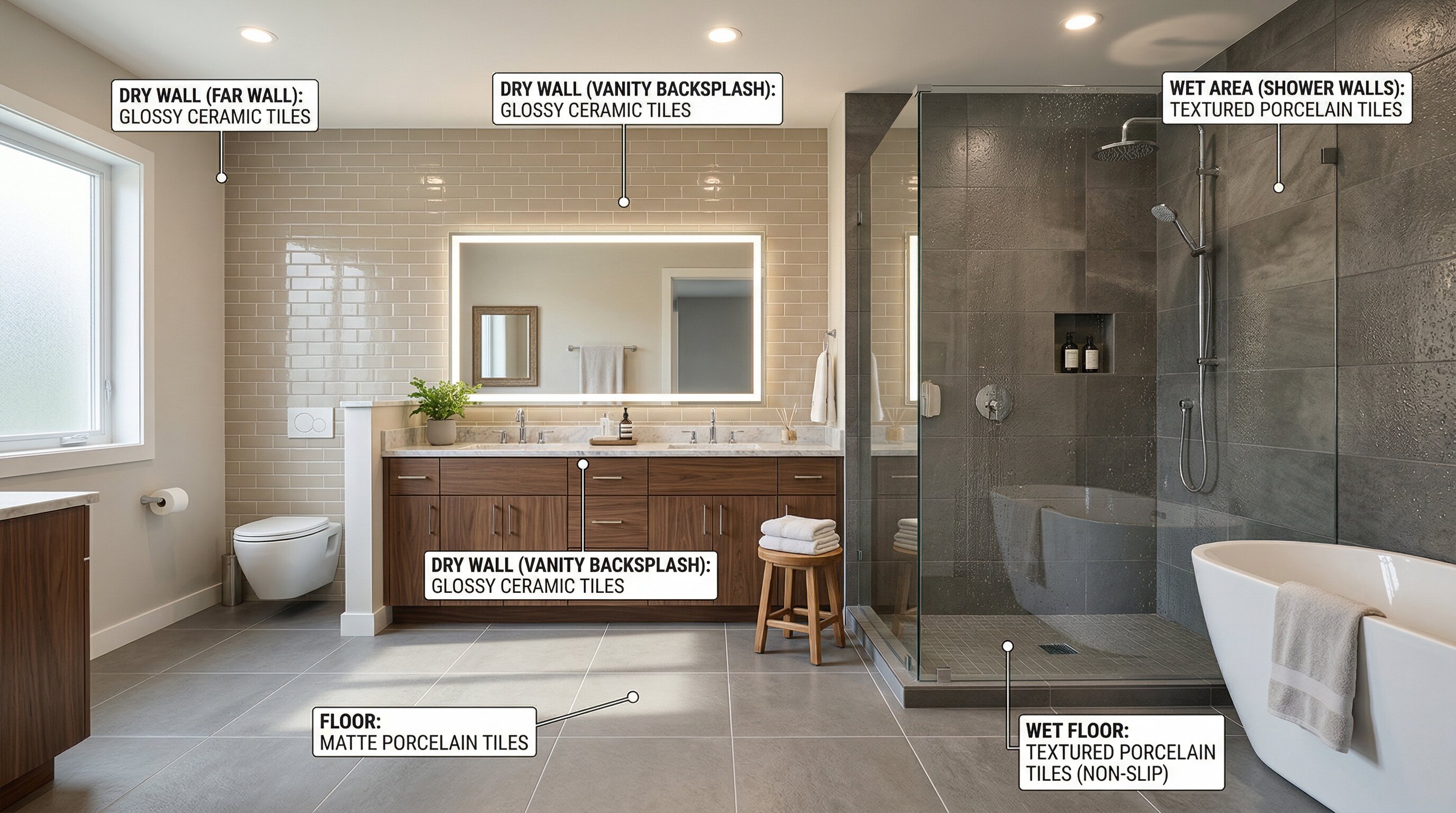
1. Bathroom Floor
Recommended Tile: Porcelain
Why: Low water absorption, slip-resistant, highly durable for wet and high-traffic floors
Grout & Maintenance Tips: Use epoxy grout or sealed cement grout; consider anti-slip finishes
2. Shower Walls
Recommended Tile: Porcelain
Why: Mold-resistant, waterproof, withstands constant steam and water exposure
Pro Tip: Install a waterproof membrane behind tiles and use epoxy grout to ensure long-term protection and prevent mold growth
3. Tub Surround
Recommended Tile: Porcelain or Ceramic (depending on water exposure)
Why:
Porcelain: Recommended for areas exposed to heavy splashes and standing water
Ceramic: Suitable for light splash zones, such as upper tub walls or decorative panels
Maintenance Tip: Always apply proper caulking and grout sealing to prevent water infiltration
4. Dry Bathroom Walls
Recommended Tile: Ceramic
Why: Cost-effective, sufficient for walls not exposed to frequent water contact
Maintenance Tip: Standard grout is acceptable; minimal sealing required
Bathroom Surface Comparison
Mold, Moisture, and Grout: The Hidden Risks
Why Grout Matters
Grout is often the weakest link. Cement grout absorbs water and fosters mold behind tiles. Epoxy grout is highly water-resistant, making it ideal for wet areas.
Tip: Even low-absorption porcelain tiles require properly sealed grout.
Preventing Mold Behind Tiles
Key factors for mold prevention:
Tile porosity
Grout type and sealing
Waterproof membrane installation
Combining porcelain tiles, epoxy grout, and membranes ensures a mold-free bathroom for years.
Long-Term Moisture Protection
Seal grout annually
Maintain caulking around joints
Ensure proper ventilation with exhaust fans
Frequently Asked Questions
Can Ceramic Tile Be Used in a Shower?
Yes, but only with proper waterproofing. Use a waterproof membrane behind the tiles and epoxy grout to prevent water from seeping through and causing mold, as standard cement grout is not water-resistant.
Is Porcelain Tile Waterproof?
Porcelain tiles are highly water-resistant, with a ≤0.5% absorption rate, making them ideal for wet bathroom areas. Pairing them with epoxy grout and, in wet zones, a waterproof membrane ensures maximum protection against moisture and mold.
Which Tile is Best for Bathroom Floors?
Porcelain is best due to its durability, slip resistance, and low water absorption. It withstands heavy traffic and wet conditions better than ceramic, especially when paired with sealed or epoxy grout.
Which Tile is Best for Shower Walls?
Porcelain is preferred for shower walls because of its low porosity and mold resistance. Proper installation with a waterproof membrane and epoxy grout keeps walls durable and hygienic.
How Often Should Grout Be Sealed in Wet Areas?
Cement grout should be sealed annually to prevent water and mold penetration, while epoxy grout requires minimal maintenance. Regular inspection ensures grout remains a reliable barrier even with porcelain tiles.
Conclusion
Your bathroom surface determines the best tile choice. Floors and shower walls perform best with porcelain for durability and mold resistance. Tub surrounds can use porcelain or ceramic depending on water exposure, while dry walls are suitable for ceramic. Using the right tile, sealed grout, and waterproofing ensures a stylish, long-lasting, and moisture-safe bathroom.