
A bathroom emergency doesn't announce itself at a convenient time. A pipe bursts at midnight. Water starts dripping through the ceiling on a Sunday. Sewage backs up into the tub while you're getting ready for work. In those moments, the one question every homeowner needs answered fast is: do I call a contractor right now, or can this wait?
This guide gives you that answer in 60 seconds and tells you exactly what to do next.
TLDR
Call a contractor today if you have a burst pipe, sewage backup, water leaking through the ceiling from an upstairs bathroom, toilet overflow with sewage, or any water near electrical outlets.
You have 24–48 hours before mold starts growing according to FEMA, mold can establish within 24 hours of a water event. Waiting overnight turns a $1,500 repair into a $6,000+ problem.
Burst pipe repair is never a DIY situation; a single burst pipe can release hundreds of gallons per hour; your first step is shutting the main water valve, your second is calling a licensed emergency plumber.
Water leaking through the ceiling from an upstairs bathroom signals a broken supply line, failed wax ring, or cracked drain pipe not a cosmetic issue. Active dripping near a ceiling light fixture is a fire and electrocution risk.
Emergency plumbing costs $70–$400 per hour but water damage left 48+ hours can push total repair bills to $13,954 on average per insurance claim data.
Is Your Bathroom Problem an Emergency? Answer This First
A plumbing emergency happens when burst pipes, water heater failures, sewage backups, or major leaks threaten your home with structural damage or health hazards. The definition has two components active structural risk and active health risk. If your bathroom problem meets either condition right now, you call today.
Use this triage tool:
Non-urgent problems include a slowly dripping faucet, a running but not overflowing toilet, low water pressure, or minor clogs in sinks or tubs. These typically don't pose immediate risk and can be addressed during regular business hours.
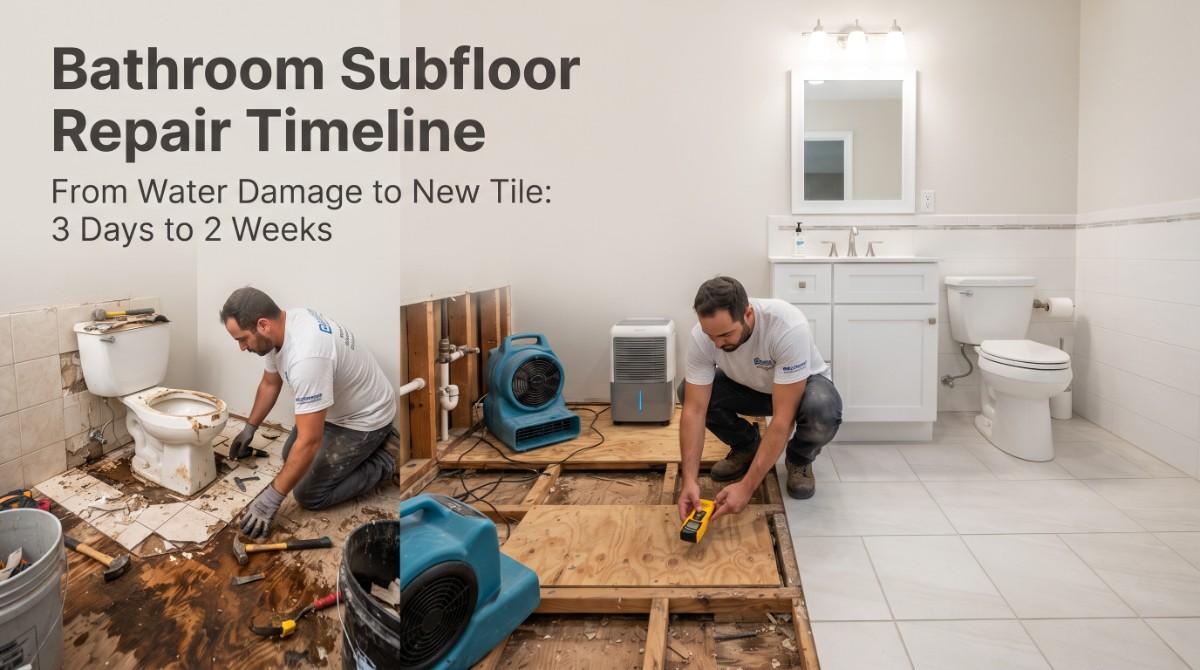
Why the 24-Hour Window Matters
According to FEMA, mold can begin growing on a damp surface within 24–48 hours. This is the number every homeowner needs to understand before deciding whether to "wait and see."
The most common cause of water damage incidents in homes is burst pipes. Home water damage due to burst pipes can cost upwards of $5,000 to repair due to the volume of water released into the home. The average private homeowners insurance claim for water damage is $13,954 a figure that reflects how quickly a bathroom emergency escalates when action is delayed.
Water damage follows a predictable cost escalation timeline:
Speed saves money: if you dry the area and stop the leak within 24–48 hours, you often avoid mold and full section replacement, which can add major cost fast.
The 7 Common Signs You Need Emergency Plumbing Repair Services Today
1. Burst Pipe or Pipe Break
A burst pipe can release gallons of water in minutes, while a leaking pipe may quietly damage walls and floors. Both situations require urgent plumbing repairs to stop the water and prevent long-term damage to your home.
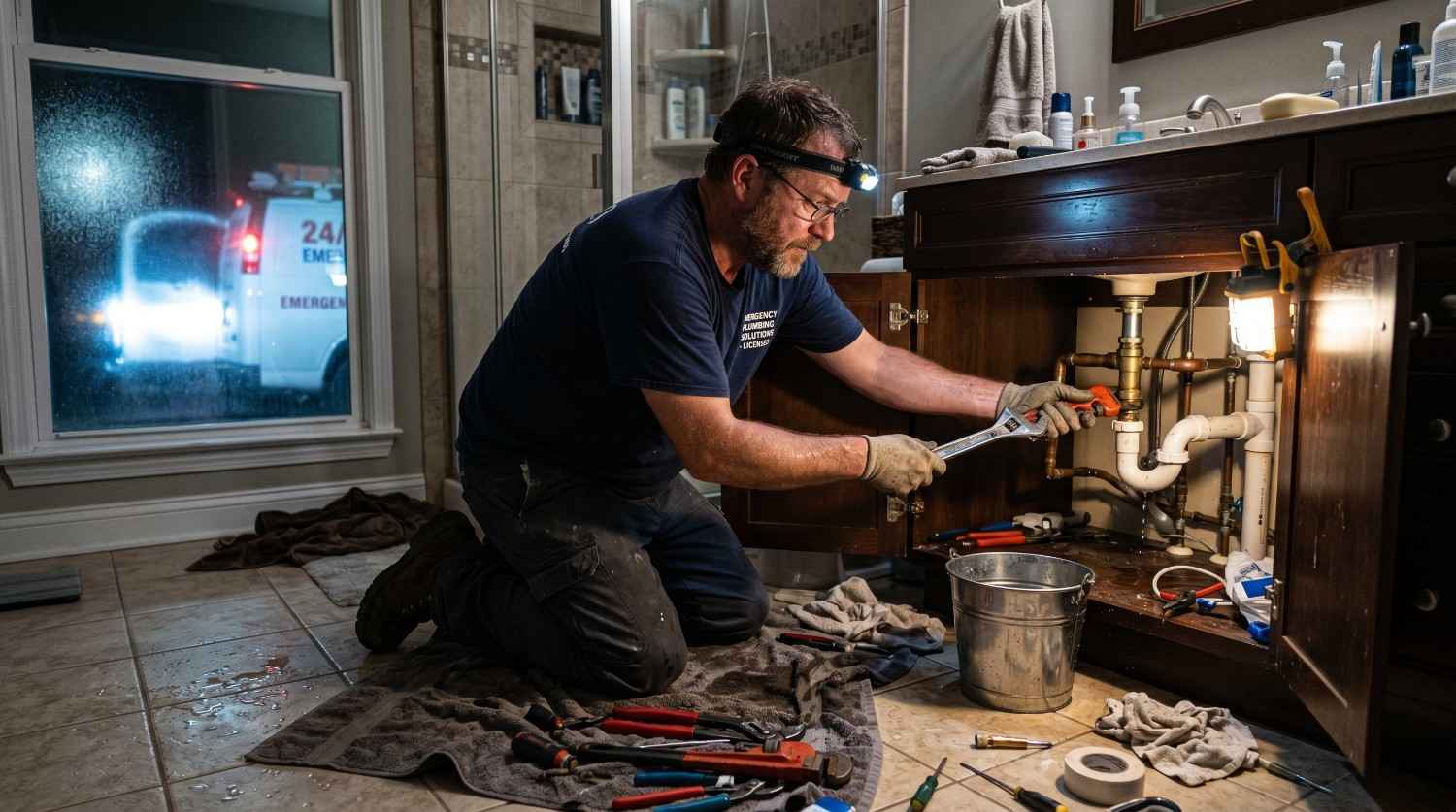
What to do before the emergency plumber arrives:
Locate and shut your main water shut-off valve immediately
Turn off electricity in any room where water is present
Open a faucet on the lowest floor to relieve pipe pressure
Move valuables and electronics off the floor
Document with photos and video before any cleanup required for insurance
Shut off the main water supply immediately to stop the flow. If water is near electrical outlets or appliances, turn off electricity in affected areas. Open faucets to relieve pressure, move belongings away from the water, and call an emergency plumber right away.
A burst pipe is never a DIY repair situation. Temporary patches on burst pipes do not hold. Temporary patches don't hold on burst pipes. Call a licensed 24-hour emergency plumbing repair service immediately.
2. Water Leaking Through the Ceiling From an Upstairs Bathroom
This is one of the most misread bathroom emergencies. Many homeowners see a small stain and schedule a non-urgent visit then discover the problem has been spreading inside the ceiling cavity for weeks.
A leak in the ceiling from the bathroom is a potentially costly emergency. The faster you act, the sooner you can eliminate the source of the water damage and keep the damage to a minimum.
The four most common causes of water leaking through a ceiling from an upstairs bathroom are:
Failed wax ring the toilet's seal to the drain breaks down, sending every flush through the subfloor
Cracked or disconnected drain pipe visible after toilet, shower, or tub use
Supply line failure a failed braided supply line under a toilet or sink can release water continuously
Cracked tile or grout allows shower water to migrate through the subfloor over time
Active dripping near light fixtures or wiring is an electrical hazard. Turn off power at the breaker and call for help immediately to avoid risk of fire or electrocution.
Plumbing leaks from an upstairs bathroom can cost $500 to $2,500 to fix, depending on pipe accessibility. Moderate ceiling water damage repair including removing and replacing drywall, fixing the water source, treating for potential mold growth, and refinishing the ceiling runs between $800 and $2,500. Waiting turns those numbers into structural replacement costs.
3. Sewage Backup
When sewage backs up into sinks, tubs, or toilets, it creates unsafe conditions. The smell is bad enough, but the bacteria and contamination are worse. This is always a reason to call an emergency plumber immediately.
Sewage backup produces Category 3 (black water) contamination, the most dangerous water classification. Category 3 water, also called black water, is the most dangerous category. Black water is highly toxic and unsanitary and poses significant health risk to humans. Direct contact causes gastrointestinal illness, fever, and vomiting. Do not attempt to clean it yourself without professional equipment.
Signs of a sewage backup in your bathroom:
Foul sulfur or sewage odor with no visible source
Water or waste coming up through the shower drain or tub when you flush the toilet
Gurgling sounds from multiple drains simultaneously
Slow drainage across all bathroom fixtures at once
Stop using water to prevent further backup. Avoid contact with the contaminated water to prevent illness. Open windows to ventilate and reduce toxic gas buildup. Call a licensed plumber immediately for an inspection and repair.
4. Toilet Overflow With Sewage Involvement
An overflowing toilet is an emergency if water continues to rise, multiple fixtures are affected, or sewage is involved. These situations can cause contamination and damage and should be handled by a professional as soon as possible.
If the toilet continues to overflow after shutting the toilet's supply valve, turn off the main water supply to the house. A toilet overflow that deposits sewage onto the bathroom floor creates Category 3 contamination the floor, grout, baseboards, and subfloor all require professional remediation, not household mopping.
5. Water Near Electrical Outlets, Switches, or Light Fixtures
Water and electricity in the same space is a life-safety emergency full stop. If you see water actively near or dripping through a ceiling light fixture, pooling under an outlet, or running down a wall with visible outlets:
Do not enter the room if you cannot immediately reach the electrical panel
Cut power to the entire floor at the breaker panel
Call an emergency plumber and your utility company
This applies to the "water leaking through ceiling from upstairs bathroom" scenario where the leak path runs past light fixtures, an extremely common bathroom emergency configuration in two-story homes.
6. Complete Loss of Water Pressure or No Water
Life becomes difficult without access to clean water. You can't cook, bathe, or even flush toilets. If your entire home loses water, this qualifies as an emergency that needs professional attention.
A sudden complete loss of water pressure in all fixtures simultaneously not just one indicates either a main line failure, a severe burst somewhere in the system, or a water authority shutoff. This is a same-day call, not a scheduled repair.
7. Gas Smell Near Bathroom Fixtures
A sulfur or rotten egg odor near a bathroom with a gas water heater is a gas leak until proven otherwise. The first sign of a gas leak is the smell of sulfur or rotten eggs. Hissing or whistling sounds might also indicate a gas leak, especially if you can hear them near a gas line.
Immediately: Do not use light switches, phones, or open flames. Exit the home. Call your gas utility's emergency line from outside. This is a utility emergency first, then a plumbing repair.
What to Do in the 10 Minutes Before the Emergency Plumber Arrives
These five steps protect your property and your insurance claim while you wait for emergency bathroom plumbing services:
Shut the main water valve located near the water meter, typically at the front of the house, in the basement, or in a utility closet. Turning it off is your single most important action in any active water emergency.
Cut electricity to affected areas at the breaker panel. Do not rely on individual switches in wet rooms.
Document everything photo and video before any cleanup. Date-stamped documentation is required for insurance claims.
Call your homeowner's insurance to report the event immediately. Many policies require prompt reporting of damage. Late reporting is the most common reason emergency water damage claims are denied.
Contain what you can towels, buckets, plastic sheeting to slow surface spread. Do not attempt to repair or disturb sewage or black water.
Emergency Plumbing Repair Costs: What to Expect
Expect to pay $70 to $400 per hour or a flat emergency visit fee of $100 to $350 when you call an emergency plumber for urgent repairs.
After-hours emergency plumbing repair costs significantly more than scheduled service typically 1.5–2× the standard rate. For situations that are urgent but not immediately catastrophic (one dripping fixture, one slow drain), waiting until business hours and calling for a same-day scheduled visit can save $150–$300 without material risk to your property.
Finding a pre-vetted emergency bathroom plumbing contractor who operates 24/7 in your area without price gouging is the hardest part of an emergency. Nationwide Builders connects homeowners with licensed, background-checked contractors available for emergency bathroom plumbing services so when you need a burst pipe plumber at 11pm, you're not searching from scratch.
Frequently Asked Questions
What are the most common signs you need emergency plumbing repair services?
The most common signs you need emergency plumbing repair services are: water actively spraying or flowing from a broken pipe; sewage or waste backing up through any drain or toilet; water leaking through a ceiling from an upstairs bathroom; water pooling near any electrical outlet or light fixture; and a complete sudden loss of water pressure throughout the home. Fast action is vital because water damage escalates quickly, leading to higher repair costs and potential harm to your home's structure. The longer you wait, the worse the impact can become.
What should I do if water is leaking through my ceiling from an upstairs bathroom?
If water is leaking through your ceiling from an upstairs bathroom, take these steps in order. First, shut off the main water supply to the house this stops additional water from entering the ceiling cavity regardless of the source. Second, if the leak is near or through a light fixture, cut power to that floor at the breaker immediately. Third, take photos and video of the leak, the ceiling stain, and any visible wet areas your insurance company requires documentation. Fourth, call an emergency plumber for same-day service. Calling a plumber quickly can make all the difference in the total amount of damage and cost after all, water can spread quickly and do a lot of damage before it becomes visible.
How much does 24-hour emergency plumbing repair cost?
Emergency plumbing repair costs $70 to $400 per hour, or a flat emergency visit fee of $100 to $350. After-hours and weekend rates typically run 1.5–2× the standard rate. For a burst pipe repair, total costs (labor + parts + any drywall access) commonly run $500–$2,000+ depending on pipe location and accessibility. Sewage backup cleanup and line repair typically costs $1,000–$5,000. These figures cover the plumbing repair only water damage restoration to walls, ceilings, and floors is a separate cost that runs $1,381–$6,350 for a typical residential incident. Getting multiple quotes is appropriate for scheduled repairs; for active emergencies, the cost of delay exceeds any savings from shopping contractors during an active leak.
Is a sewage backup in the bathroom always an emergency?
Yes a sewage backup is always treated as an emergency, regardless of its visible size. A damaged sewer pipe is an emergency plumbing problem since it can release sewage into your home, causing harmful bacteria, viruses, and parasites. Direct contact with contaminated surfaces can lead to illnesses. Sewage is classified as Category 3 (black water) the highest contamination tier and requires professional remediation equipment, not household cleaning products.
Can I do any emergency bathroom plumbing repair myself before the contractor arrives?
There are three things you can safely do yourself before the emergency plumber arrives, and several things you should never attempt. Safe actions: shut the main water valve to stop the flow; shut the toilet's individual supply valve if the emergency is toilet-specific; and cut electrical power to affected areas at the breaker panel. Never attempt to: patch a burst pipe with tape or sealant (it will fail); open walls or ceilings to locate a leak source; clean up sewage backup without professional equipment; or work on plumbing while water is still active in the line. Once the emergency is contained, call a plumber for troubleshooting. A plumber can trace the water damage back to the source and determine if the fixture needs new gaskets, seals, minor repairs, or new connecting pipes.