
A bathroom exhaust fan loud but not working is not a contradiction, it is a specific failure state. The motor is still running, drawing power and generating noise, but the blade, duct, or housing is preventing actual air movement. Noise without ventilation is worse than a dead fan: it creates a false sense of protection while moisture, mold, and humidity continue building unchecked. The cause is almost always one of four problems: dust-clogged or damaged fan blades, a blocked exhaust duct, worn motor bearings, or a fan undersized for the room. Each produces a distinct noise pattern and a distinct fix.
TL;DR
Loud fan + weak airflow usually means blockage or mechanical failure, not complete power loss
The four main causes are:
Dust-clogged or damaged blades
Blocked exhaust duct
Worn motor bearings
Fan too small for the bathroom
Do the toilet paper test:
Paper sticks to grille = airflow is working
Paper falls away = ventilation failure
Cleaning the fan and checking the duct solves most cases
Grinding or squealing noises usually mean the motor is failing
Fans over 10 years old are often cheaper to replace than repair
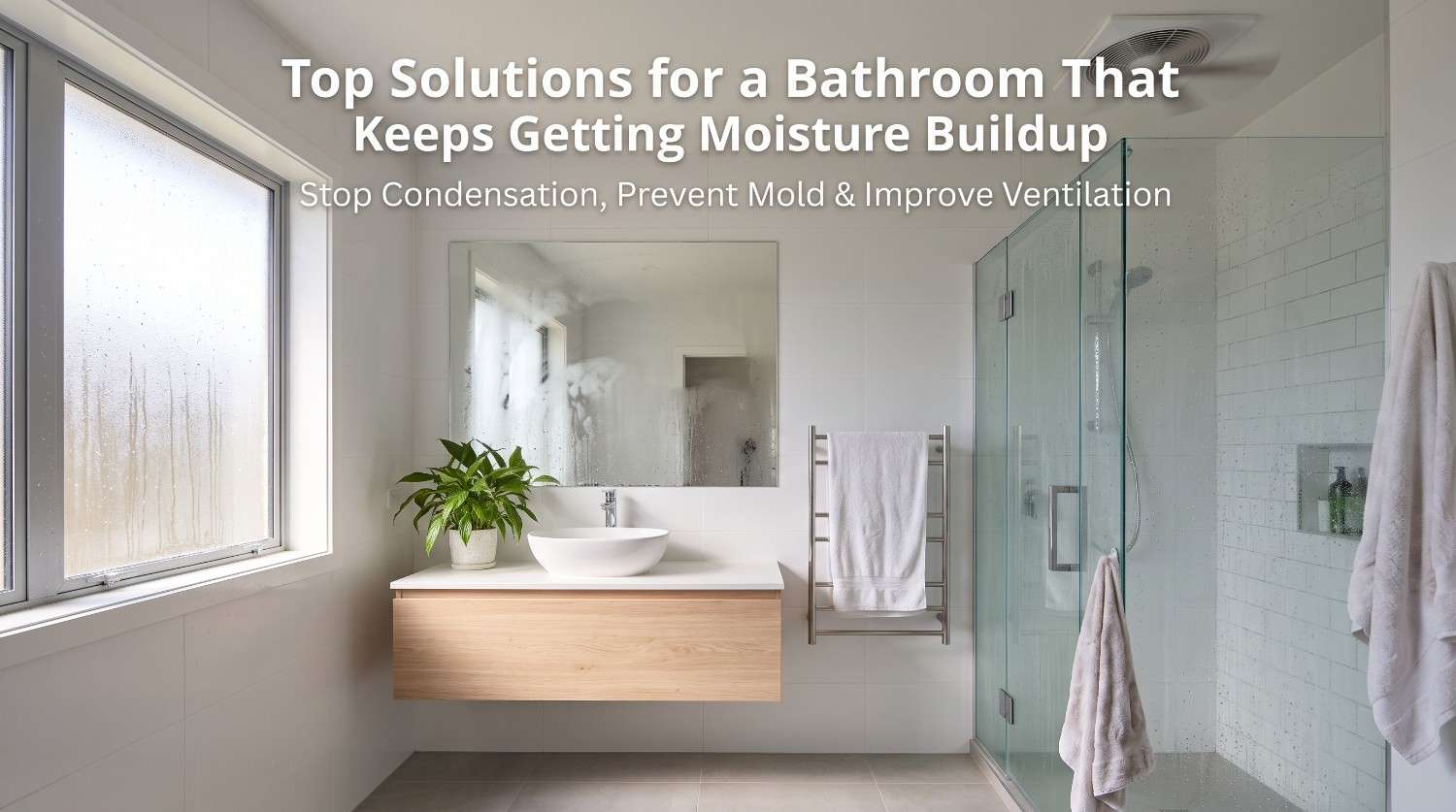
A loud but non-working fan can lead to mold and moisture damage because humidity stays trapped in the bathroom
How Do I Diagnose a Loud Bathroom Fan That Isn't Ventilating?
Run the toilet paper test before opening any housing. Hold a single sheet near the fan grille with the fan running. If the paper sticks flat to the vent, airflow is adequate, the problem is noise-only. If the paper barely moves or falls away, the bathroom fan is not pulling air despite running. That single observation separates two different repair paths.
What Causes a Bathroom Exhaust Fan to Be Loud But Not Work?
Dust-Clogged or Damaged Fan Blades
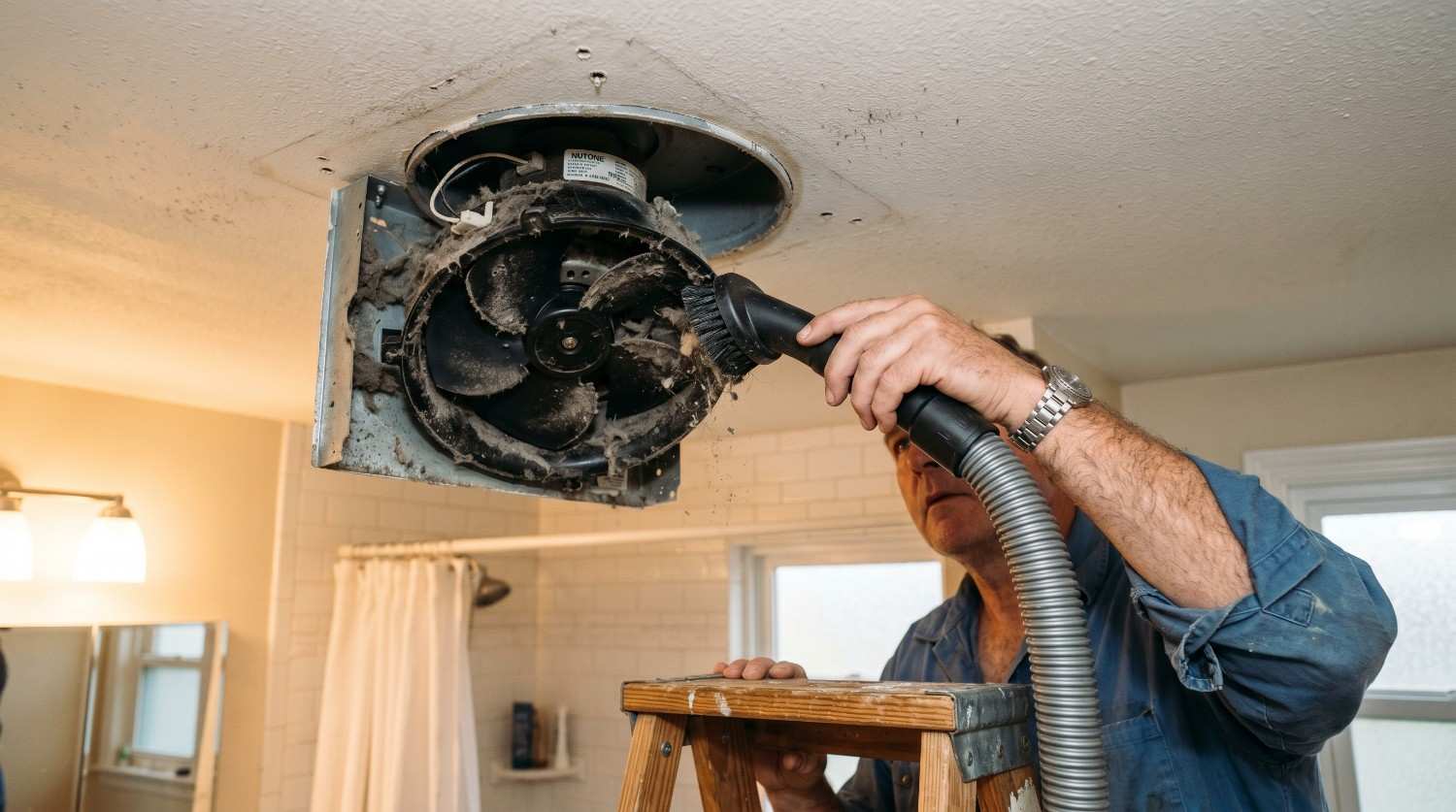
Bathroom fan making loud noise while airflow drops is the textbook symptom of a dust-loaded blade assembly. Lint, hair, and bathroom grime coat the fan blades over months of use, adding weight that throws the blade off balance. An unbalanced blade generates vibration rattling and humming while simultaneously reducing its ability to move air efficiently. Cleaning the fan grille and blade assembly every six months prevents this cycle entirely.
To clean: isolate power at the circuit breaker, remove the grille by squeezing the spring clips, vacuum the blade and motor housing with a brush attachment, then wipe with a damp cloth. Severely warped or cracked blades cannot be rebalanced by replacing them by model number from the fan housing label.
Blocked Exhaust Duct
A bathroom exhaust fan duct blocked by lint, a collapsed duct section, or a bird's nest at the exterior wall cap is the most common reason a fan runs loudly but exhausts nothing. The motor spins at full speed against resistance; it cannot overcome the resulting back-pressure amplifying motor noise while airflow drops to near zero. Confirm by disconnecting the duct at the fan housing: strong air from the open fan port confirms the restriction is in the duct, not the fan itself.
Duct blockages at the exterior cap, particularly crushed flex duct in tight attic bends require inspection from the outside. Every exhaust duct must terminate outdoors, not into the attic cavity. Venting into the attic traps moisture and creates the precise mold conditions the fan is installed to prevent.
Worn Motor Bearings
Bathroom fan motor bearings that have dried out or corroded produce a grinding or squealing sound that intensifies over time. Unlike a dirty-blade problem, bearing wear does not respond to cleaning the mechanical degradation is internal. Some motor assemblies allow lubrication with lightweight machine oil applied to the bearing ports (not WD-40, which evaporates and accelerates wear). If lubrication does not reduce the grinding within one run cycle, bathroom fan motor replacement is the correct path. Motor assemblies cost $15–$40 and can be swapped without replacing the entire housing; however, if the fan is over 10 years old, full replacement is more cost-effective.
Fan Undersized for the Room
A fan that has always been loud bathroom exhaust fan territory even when new and never effectively cleared steam is an undersizing problem, not a mechanical failure. Economy-tier fans rated at 4.0 sones or higher move minimal air volumes relative to their noise output. A correctly sized replacement fan rated at 1.0 sone or below, matched to the room's CFM requirement, resolves both the noise and the ventilation failure simultaneously.
4. How to Fix a Noisy Bathroom Fan That Isn't Ventilating
Follow this sequence before replacing anything:
Isolate power at the circuit breaker never work on a live fan
Toilet paper test : paper not moving confirms airflow failure, not just noise
Clean blades and grille : vacuum and wipe; test again before going further
Tighten mounting screws : loose housing vibrates against drywall and amplifies noise
Inspect the duct run : disconnect at housing; check exterior cap for obstruction
Lubricate motor bearings : lightweight machine oil only; test for grinding reduction
Check circuit breaker and wall switch : a partially tripped breaker can supply enough power to spin the motor but not enough to run it at rated CFM
If none resolve it : the motor is failing or the fan is undersized; replace with a unit rated at 1.0 sone and the correct CFM for your bathroom square footage
For duct work inside walls or attic spaces, and for any wiring concerns, contact a licensed electrician or HVAC contractor. Nationwide Builders connects homeowners with vetted local contractors who assess both the fan unit and the duct run before recommending replacement, preventing the common mistake of buying a new fan while leaving a blocked duct in place.
Frequently Asked Questions
Why is my bathroom vent so loud but still not removing steam?
A loud bathroom vent so loud with no humidity removal almost always means a blocked exhaust duct, not a fan failure. The motor runs at speed but cannot push air against the restriction the result is amplified vibration noise with zero ventilation. Disconnect the duct at the fan housing and test airflow directly from the fan port. Strong flow confirms the duct is blocked; weak flow from the open port points to a worn motor or undersized unit.
How do I know if my bathroom fan motor needs replacing?
Bathroom fan motor replacement is needed when: grinding or squealing persists after lubrication, the fan blade spins freely by hand but the motor hums without turning it under power, or the fan is over 10 years old and noise has increased progressively. A motor assembly swap costs $15–$40 in parts. Full fan replacement, the better value for aging units runs $240–$564 installed professionally.
What does a healthy bathroom exhaust fan sound like?
A correctly functioning fan rated at 1.0–1.5 sones is barely audible at normal conversational distance. Bathroom fans rated above 3.0 sones are perceptibly loud comparable to background office noise. If your fan has always been disruptively loud, the unit is either low-quality or too small for the space. If noise increased over time from a previously quiet baseline, a mechanical issue dust, bearings, or duct blockage is the cause.
Can a clogged bathroom fan cause mold?
Yes. A bathroom fan not working effectively whether due to blade clogging, a blocked duct, or motor wear allows bathroom humidity to remain elevated after showering. Sustained relative humidity above 60% accelerates mold growth on grout, drywall, and ceiling surfaces within days of repeated exposure. A loud but non-functional fan is more dangerous than a silent dead fan because it creates the perception of protection while providing none.