
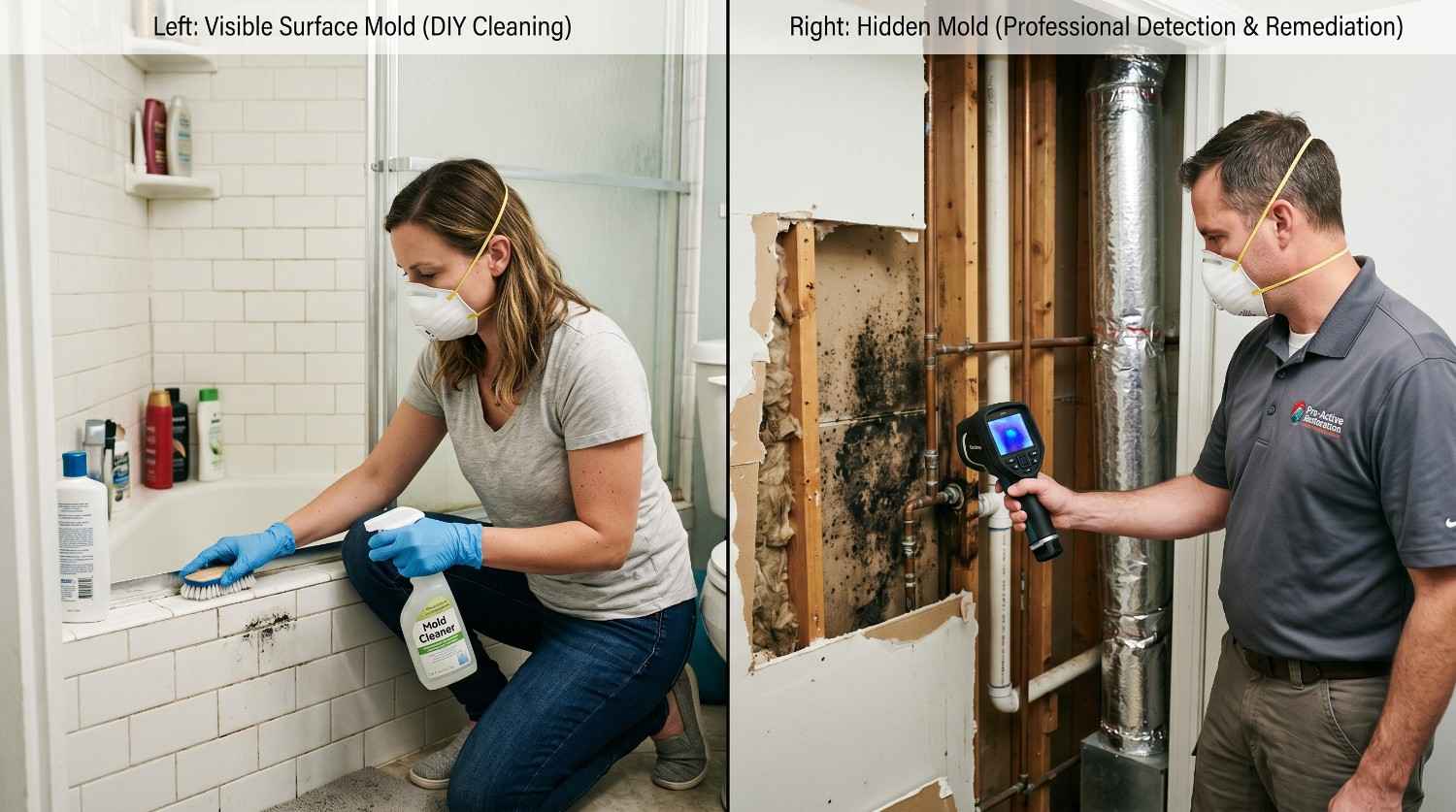
The EPA's official threshold is 10 square feet : roughly a 3×3 foot patch. Anything larger requires a licensed professional. Size alone doesn't decide it. Mold in HVAC systems, behind walls, on porous materials (drywall, wood), or in a home with an immunocompromised occupant requires a contractor regardless of size. Bleach does not kill mold on porous surfaces : it removes the color but leaves live spores in the material, guaranteeing return. 40% of DIY mold jobs re-infest when the moisture source isn't fixed. A contractor identifies the source; a homeowner usually doesn't. Professional remediation costs $1,500–$5,000 for most residential jobs, but ignoring it can reduce your home's resale value by 20–37%. You need a mold remediation contractor when the affected area exceeds 10 square feet, when mold is growing inside walls or HVAC systems, or when it keeps returning after you clean it. The EPA recommends consulting a professional any time mold growth covers more than 10 square feet. That rule covers the most common scenarios but four other factors override the size threshold entirely, and most homeowners don't know them. The EPA threshold was designed as a baseline, not a complete decision tool. Moisture severity, material type, and occupant health also determine whether professional help is needed size matters, but it isn't everything. Mold contributes to 4.6 million U.S. asthma cases annually, and removing mold from a home can reduce asthma symptoms by 25–45%. The health stakes alone explain why the size-only rule is insufficient. A 6 sq ft patch of Stachybotrys chartarum (toxic black mold) inside an air duct poses a far greater risk than a 15 sq ft surface patch on a bathroom tile. The IICRC S520 standard, the professional benchmark for mold remediation, classifies mold by severity level. This is the framework contractors use when they assess your home. Level 1 is the only scenario where a DIY approach is appropriate and only when the surface is non-porous and the moisture source has already been eliminated. Four situations require a contractor even if the visible mold patch is small: 1. Mold in or near HVAC systems. If you suspect the HVAC system may be contaminated with mold, do not attempt to clean it yourself. Every time the system runs, spores distribute through every room. This is the fastest route to whole-home contamination. 2. Mold that keeps returning. If mold returns despite proper cleanup, this indicates an unresolved moisture issue or mold in locations you couldn't reach. Recurring mold is diagnostic the visible growth is not the problem; the moisture source driving it is. 3. Anyone in the household is immunocompromised, has asthma, or respiratory conditions. Even small mold problems on non-porous surfaces warrant professional help if anyone in the household has respiratory issues. A contractor uses HEPA containment that prevents spores from going airborne during removal. 4. Mold on porous materials drywall, wood, insulation, carpet. Bleach is ineffective on porous materials like wood and drywall; the water in bleach can actually feed mold roots inside these materials. This is the single most dangerous DIY mistake. Bleach removes the visible stain but drives the colony deeper into the material. The mold returns within weeks. DIY is appropriate only when all four of the following are true: The affected area is under 10 square feet The surface is non-porous tile grout, glass, sealed concrete, bathtub caulk The moisture source has already been fixed a leak repaired, ventilation improved No one in the home has asthma, allergies, immune disorders, or pregnancy If all four apply, clean with hydrogen peroxide or a commercial fungicide not bleach. Wear an N95 respirator, sealed goggles, and rubber gloves. Bag all debris before removing it from the area. DIY supplies including N95 masks, disposable gloves, goggles, plastic sheeting, and a small HEPA filter unit typically total under $200. How Much Does Professional Mold Remediation Cost? The IICRC reports that approximately 70% of residential mold remediation projects fall in the $1,500–$5,000 range. The remaining 30% involve large-scale contamination, structural damage, or toxic species like Stachybotrys chartarum that push costs above $10,000. Delaying remediation has a measurable financial cost beyond the remediation bill itself. A home's resale value can drop 20–37% due to mold issues, and 50% of interested buyers walk away from a home after learning it had a mold problem. When hiring a contractor, never use the same company for both inspection and remediation. This creates a financial conflict of interest: always get your initial mold inspection from one company and your remediation from another, and have the testing company also do your post-remediation clearance testing. Look for IICRC-AMRT certification and verify they follow EPA guidelines. When you need a pre-vetted, IICRC-certified mold remediation contractor without the research burden, Nationwide Builders matches homeowners with background-checked remediation specialists in their area so the vetting is done before the first call. Painting over mold does not kill it and will not stop it from spreading. Paint applied over moldy surfaces is likely to peel, and mold must be cleaned and surfaces fully dried before painting. Painting traps moisture under the surface, which accelerates mold colonization of the surrounding material. The correct sequence is always: fix the moisture source first, remove the mold completely, dry the surface thoroughly, then paint. Skipping any step guarantees the mold returns within weeks to months. Not all black-colored mold is Stachybotrys chartarum, the toxic variety. The toxic variety of black mold releases spores when physically disturbed, especially when wet, while non-toxic black mold can appear without sustained water damage and is generally easier to clean. Common black molds like Aspergillus niger (frequently found in bathrooms) are relatively benign for healthy individuals. However, identifying mold species by appearance alone is unreliable. If you suspect toxic black mold particularly after prolonged water damage or flooding treat it as Stachybotrys until a lab test confirms otherwise. Never disturb suspected Stachybotrys without professional containment. Coverage depends entirely on the cause of the mold, not the mold itself. If the mold colony stems from a sudden and accidental event a burst pipe or storm-driven roof damage repairs are usually covered up to a mold sub-limit, often $1,000, $5,000, or $10,000. Mold resulting from long-term humidity, deferred maintenance, or a slow undetected leak is typically excluded. Document everything from day one photos, written notices, and invoices and report to your insurer promptly. Late reporting is the most common reason claims are denied. However, always verify your specific policy's mold sub-limit before assuming coverage. Hidden mold should be suspected when a musty odor persists after cleaning, when family members experience recurring allergy or respiratory symptoms with no clear cause, or when there has been any water intrusion event flooding, roof leak, or plumbing failure. Persistent allergic reactions, dark stains on ceilings or walls, peeling paint or wallpaper, and ongoing moisture problems are common indicators of hidden mold growth. An independent mold inspector (separate from any remediation company) uses moisture meters and infrared cameras to detect growth behind walls without destructive testing. A standard inspection costs $300–$1,000 and is the right first step if you suspect but cannot confirm hidden growth. Most residential mold remediation projects take 1–5 days, depending on the affected area size and location. A typical project runs: Day 1 inspection and moisture mapping; Days 2–3 containment setup, material removal, HEPA vacuuming; Days 4–5 dry-out with industrial dehumidifiers and antimicrobial treatment; followed by clearance testing. Most professionals recommend leaving the home while work is in progress, since removing mold stirs up airborne spores that can aggravate respiratory issues. Clearance testing of a third-party air sample confirming spore levels have returned to background should be completed before re-occupancy. Projects pass or require a touch-up round, typically at no extra charge from reputable contractors.TLDR
When Do You Actually Need to Call a Contractor for Mold?
Why the 10 Square Foot Rule Isn't the Whole Answer
What Are the 5 Severity Levels of Mold?
What Overrides the 10 Sq Ft Threshold?
What Can You Safely Handle Yourself?
Frequently Asked Questions
Can I just paint over mold to stop it from spreading?
Is black mold always the dangerous toxic kind?
Will my homeowner's insurance cover mold remediation?
How do I know if there's hidden mold I can't see?
How long does professional mold remediation take?
How Bad Does Mold Have to Be Before You Need a Contractor?
Learn the 5 severity levels, 4 override triggers, exact cost ranges that determine when mold requires a professional contractor.

Written by Zohaib Ali
More on Nationwide BuildersRead more Home Improvement Tips blogs





Pros
Support