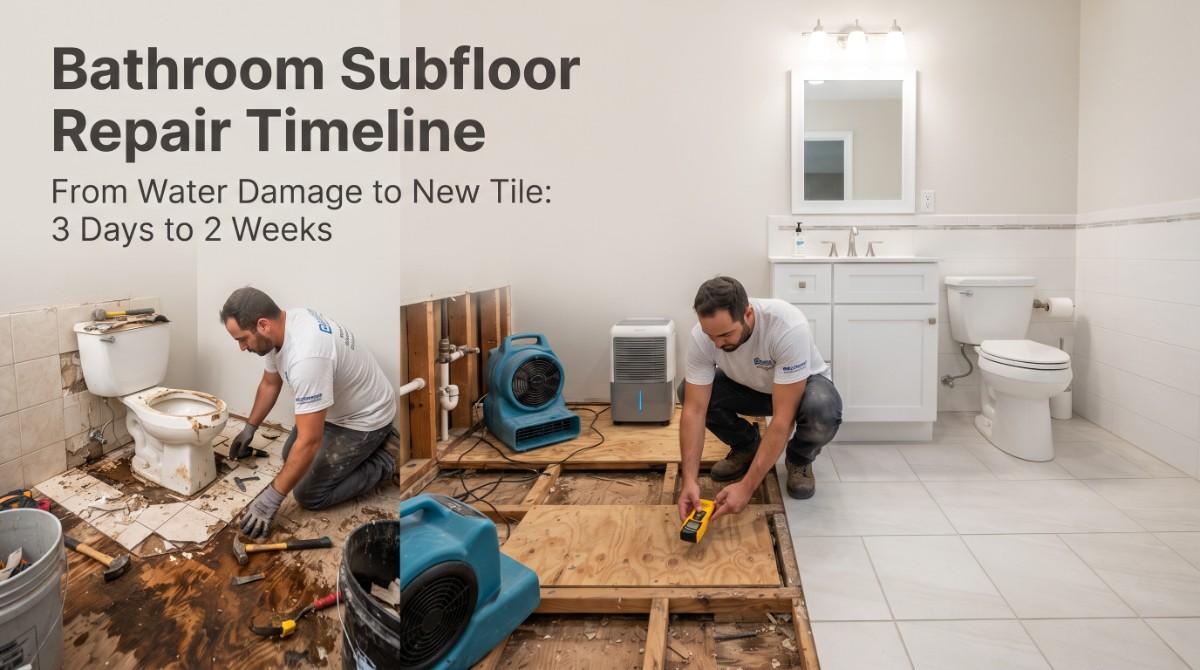

A soft, spongy bathroom floor near the toilet means moisture has reached your subfloor, the structural wood layer beneath your tile or vinyl. The subfloor begins to rot within 24–48 hours of sustained water exposure. The springy feeling underfoot is compromised wood flexing under your weight instead of holding firm. This is a structural problem that worsens every day it goes unrepaired.
TLDR
The most common culprits are a failed wax ring under the toilet, a cracked toilet flange, or a slow supply line leak all of which can go undetected for months.
Wood subfloor damaged by moisture begins to rot within 24–48 hours of sustained saturation and worsens rapidly after that.
Repair costs range from $200–$500 for a wax ring replacement up to $1,000–$3,000+ for full subfloor replacement, depending on how far the damage has spread.
If the floor flexes more than ¼ inch underfoot, smells musty, or the toilet rocks, stop using the toilet and call a contractor this is past DIY territory.
What Does a Spongy Floor Near the Toilet Actually Mean?
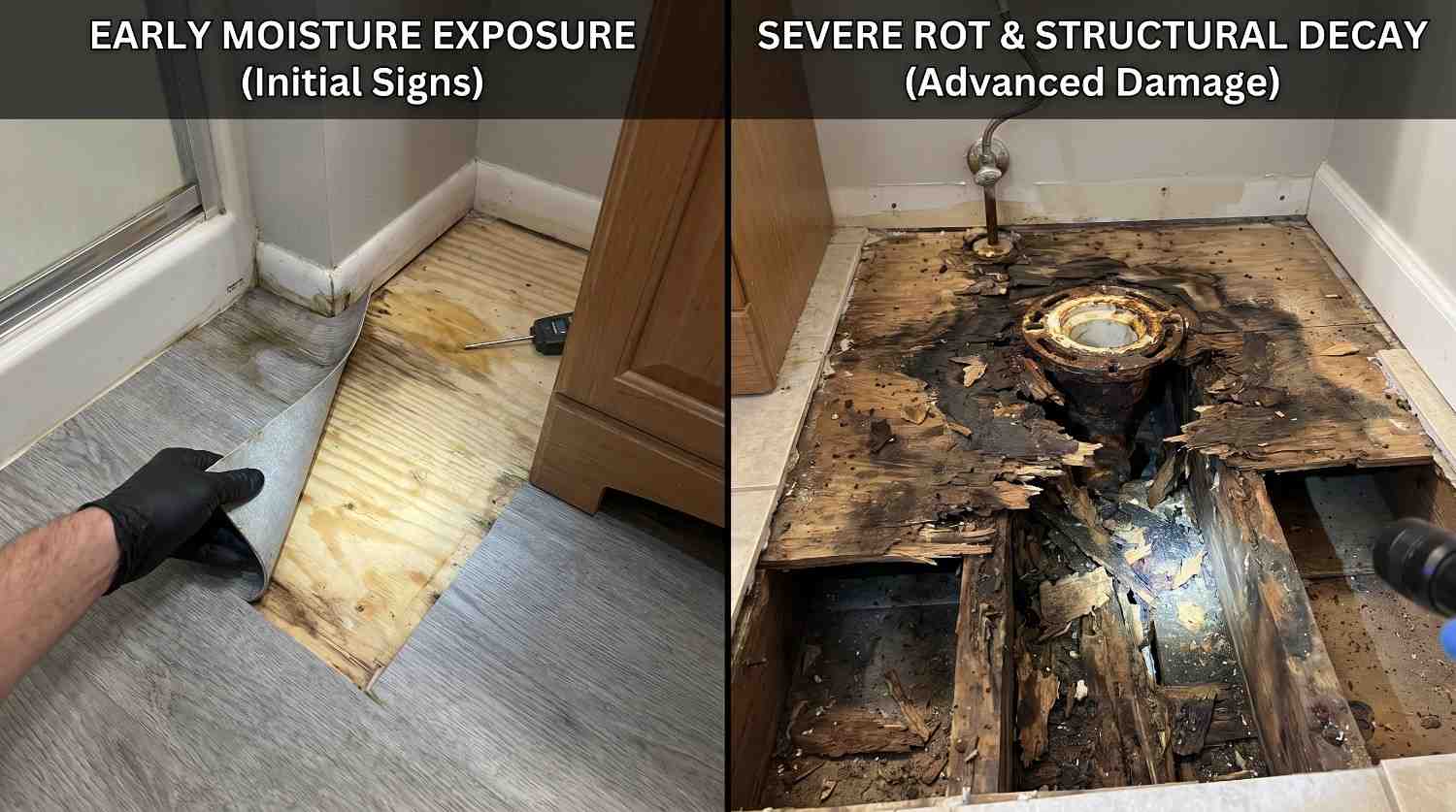
The subfloor in most US homes is ¾-inch plywood or OSB. It supports everything above it tile, vinyl, the toilet, and you. When water reaches it, the wood fibers break down and the board loses rigidity. By the time you feel softness underfoot, the damage is usually weeks or months old. A soft area smaller than a dinner plate is early-stage and repairable. Larger than two feet likely means the rot has already reached the floor joists beneath.
What Causes a Spongy Bathroom Floor Near the Toilet?
Reason 1 : Failed Wax Ring
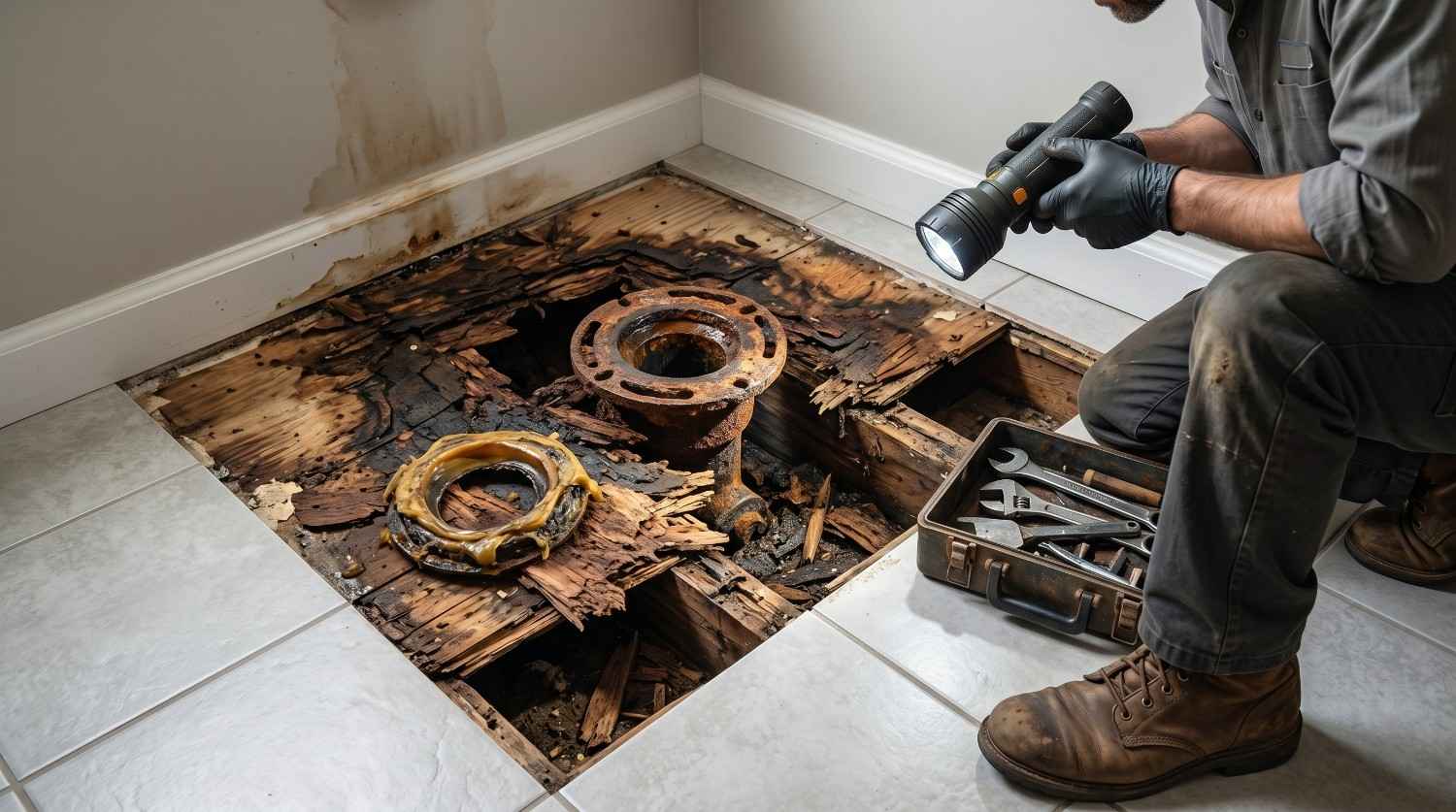
The wax ring seals the toilet base to the drain. It fails when the toilet rocks each shift breaks the seal slightly, letting wastewater escape with every flush. Because the leak goes down into the subfloor rather than outward onto the floor, you may never see standing water.
Signs: toilet rocks when you sit on it; faint sewer smell after flushing; soft floor concentrated directly under the toilet base.
Reason 2 : Cracked or Corroded Toilet Flange
The flange is the fitting anchored to the drainpipe that the toilet bolts to. Cast iron flanges in homes built before 1980 corrode from the inside out. PVC flanges crack if overtightened or if the floor shifts. A broken flange leaks on every flush and simultaneously destabilizes the toilet accelerating wax ring failure at the same time.
Signs: toilet wobbles even after tightening the bolts; soft floor extends slightly beyond the toilet footprint.
Reason 3 : Slow Supply Line or Tank Leak
Braided supply lines last 10–12 years before the inner lining degrades. A pinhole leak drips too slowly to notice but saturates the subfloor over weeks. Tank condensation moisture forming on the cold tank exterior causes identical subfloor damage with no plumbing failure at all.
Signs: mineral staining or moisture near the supply line connection; water pooling at the back of the toilet base.
Reason 4 : Poor Original Installation or Aged Subfloor Material
Homes built before 1980 sometimes used ½-inch OSB or particleboard as subfloor. Particleboard degrades from bathroom humidity alone, no active leak required. If softness spreads across the whole bathroom rather than concentrating near the toilet, aged subfloor material is the likely cause.
How Can I Tell Which Cause I Have?
Use the paper towel test before calling anyone. Dry the entire area around the toilet. Place paper towels at the base, under the tank, and along the supply line. Flush four times. The wet towel identifies the source.
How Much Does It Cost to Fix a Soft Bathroom Floor Near the Toilet?
The smaller the soft area, the cheaper the repair and the longer it spreads, the more expensive it becomes.
What Should I Do Right Now?
Stop using the toilet if it rocks or the floor flexes more than ¼ inch underfoot a compromised subfloor can fail under weight.
Shut off the supply valve located on the wall behind the toilet; turn clockwise to close.
Run the paper towel test to pinpoint the leak source before spending money on a plumber.
Do not caulk around the toilet base. Sealing the gap traps moisture underneath and accelerates rot.
Call a licensed contractor if the soft area is larger than a dinner plate, the toilet rocks, or a musty smell is present. Flange repair and subfloor replacement are not DIY jobs.
Find pre-vetted bathroom repair contractors in your area at Nationwide Builders search by service type and read verified homeowner reviews before reaching out.
Frequently Asked Questions
Can I replace the wax ring myself?
Yes, if the flange is intact. The ring costs $5–$15 and the job requires shutting off the water, disconnecting the supply line, and lifting the toilet (60–100 lbs). If the flange is cracked, stop and call a licensed plumber. Flange repair involves cutting into the drainpipe and is not a DIY repair.
How long does a toilet leak take to rot the subfloor?
Rot begins within 24–48 hours of sustained moisture exposure. Most toilet leaks are slow, so softness typically develops over weeks to months of undetected leaking. By the time you feel it underfoot, the damage is usually well established and actively spreading outward.
Will my homeowner's insurance cover this?
Sudden failures such as a supply line that bursts are typically covered. Slow leaks categorized as gradual damage or a maintenance failure are usually excluded. Photograph the damage before any work begins and contact your insurer before authorizing repairs.
My floor is soft but I can't find any active leak why?
Three possibilities: the leak has stopped but the damage remains; tank condensation is the moisture source rather than a true plumbing leak; or the subfloor has degraded from years of bathroom humidity with no single leak event. All three require subfloor repair the root cause only changes what upstream fix is needed first.