
Shower grout turns black primarily because mold has colonized its porous surface but black discoloration can also come from embedded soap scum, hard water minerals, or grout that is physically deteriorating. Each cause looks similar but requires a different fix. Cleaning works for surface mold and staining. It does not work for embedded mold or failing grout. Identifying which problem you have before reaching for a scrub brush saves time and prevents recurring blackening.
TL;DR
Shower grout turns black mainly due to surface mold growing in damp, poorly ventilated conditions.
If the black returns quickly after cleaning, the mold has penetrated inside the grout and cannot be removed by scrubbing alone.
Hard water minerals and soap scum can also darken grout and require acid-based cleaners rather than standard scrubbing.
If grout is cracking, crumbling, or falling apart, the material itself is failing and must be regrouted.
Poor ventilation is the main reason grout keeps turning black because moisture stays trapped after every shower.
Permanent fixes require sealing grout, improving airflow, and replacing any deeply contaminated sections not repeated surface cleaning alone.
Why Does Shower Grout Turn Black?
Cement grout is porous. It absorbs water, soap residue, body oils, and airborne spores with every shower. In a poorly ventilated bathroom, grout stays damp for hours after each use exactly the conditions black mold needs to grow. Standard grout without a sealer absorbs moisture directly into its structure, making the interior of the grout line a permanent habitat for mold rather than just the surface.
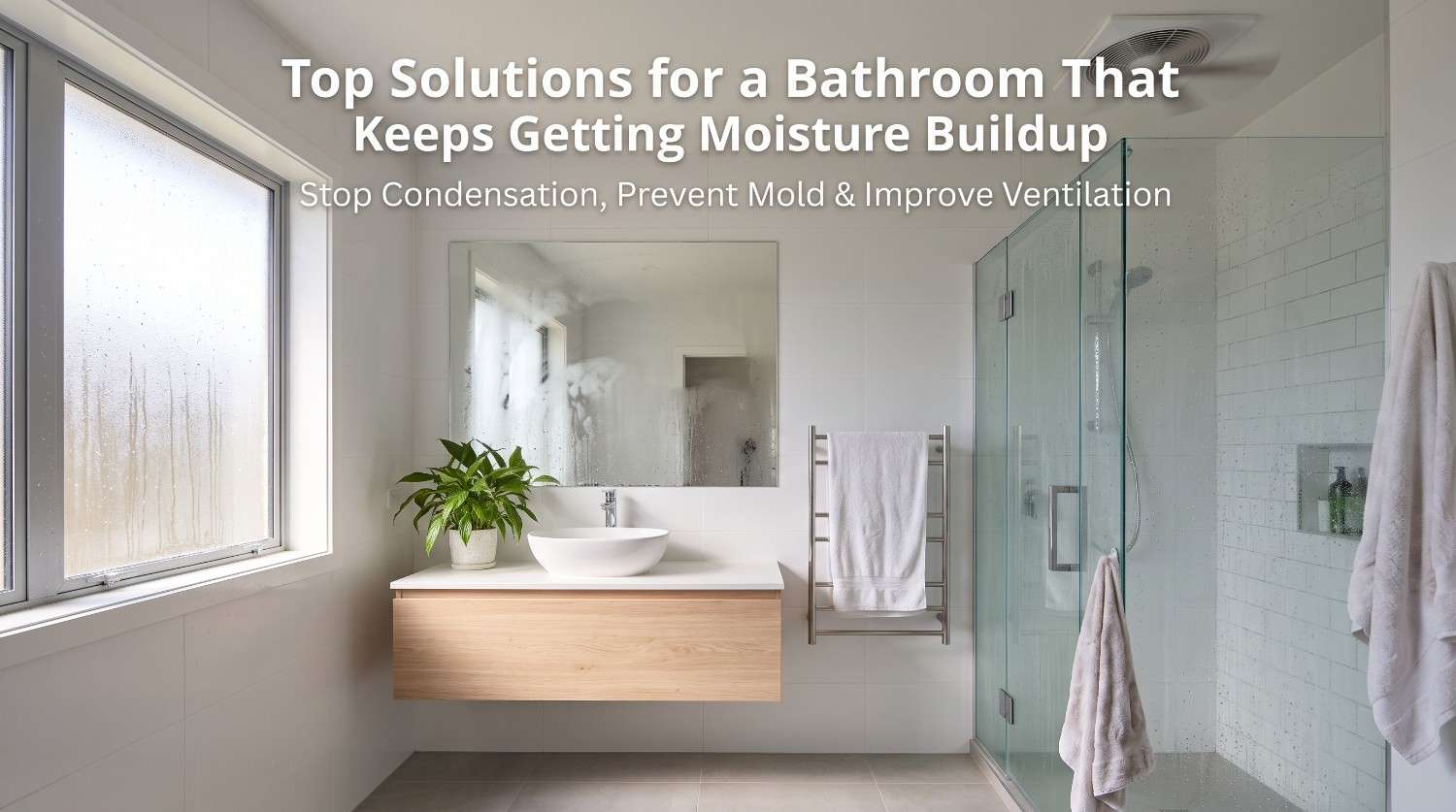
Poor ventilation is the single biggest driver. An exhaust fan that fails to clear humidity within 15–20 minutes of a shower allows moisture to settle repeatedly into the same grout lines, building mold colonies layer by layer over weeks.
Is It Mold, Staining, or Failing Grout?
Knowing which one you have determines the fix. Run this simple test:
Spray a small area of the black grout with undiluted white vinegar. Wait five minutes. Scrub with a stiff brush.
Never use bleach for this test. Bleach bleaches discoloration temporarily without killing embedded mold roots the black returns faster and you lose the diagnostic signal.
What Causes Each Type of Blackening?
Black Mold on the Surface
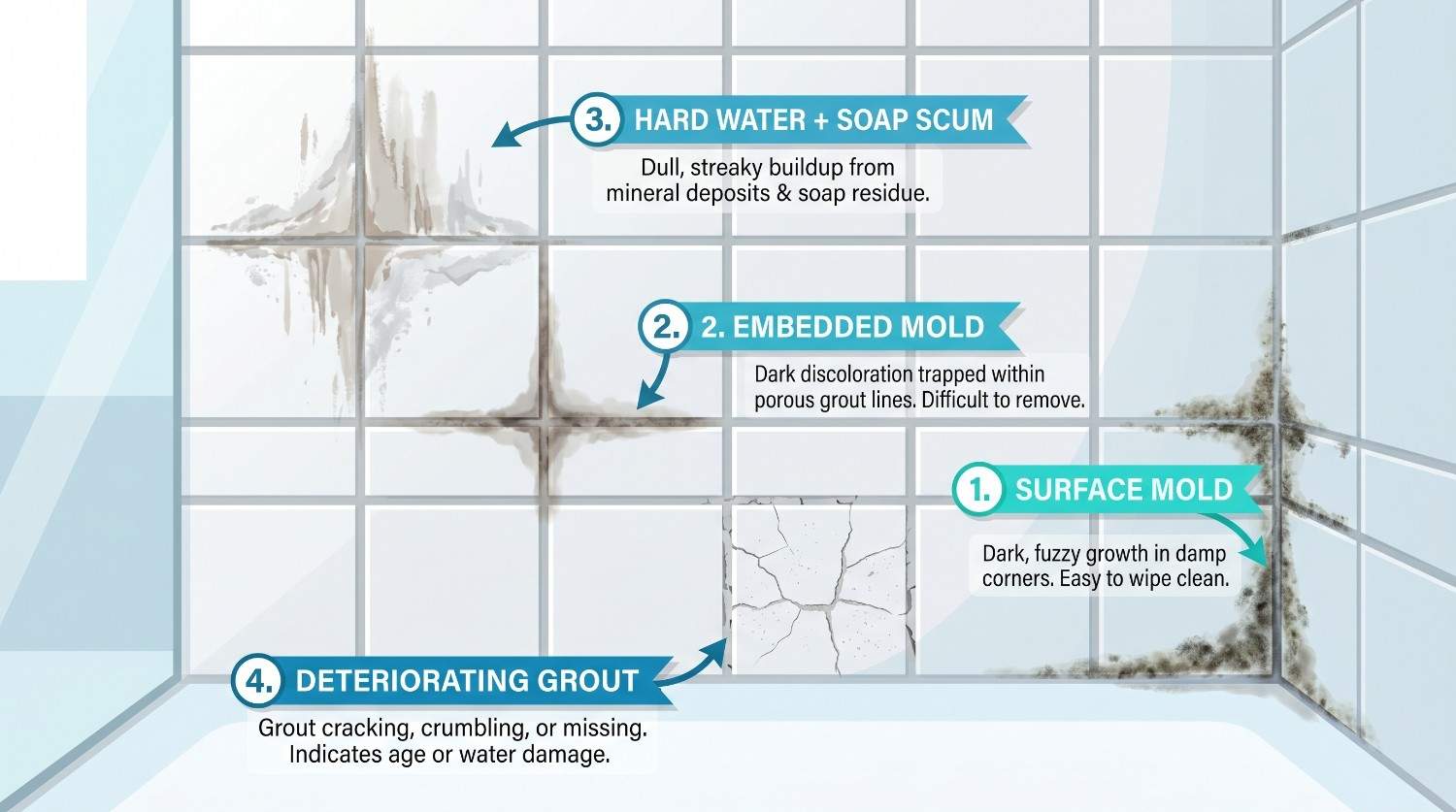
Surface mold forms when spores land on damp grout and colonize the outer layer. This is the most common cause and the easiest to fix. It appears first in corners, along the base of the shower, and around fixtures anywhere water pools longest. A bathroom without a working exhaust fan produces surface mold repeatedly, even after thorough cleaning, because the moisture source is never removed.
Embedded Mold Inside the Grout
When surface mold goes untreated, the mycelium grows into the grout's porous structure. At this stage, cleaning the surface removes the visible black but leaves the root system intact which is why the grout turns black again within days of cleaning. Embedded mold cannot be removed by scrubbing. The affected grout must be ground out and replaced.
Hard Water and Soap Scum Staining
Iron and manganese in hard water leave dark streaks that follow the path of water runoff. Soap scum mixed with mineral deposits oxidizes over time and darkens grout from tan to near-black. This type of blackening does not scrub off with standard cleaners because it has bonded chemically to the grout surface. It requires a pH-neutral stone-safe acid cleaner or an oxalic-acid-based product applied with a stiff brush.
Deteriorating Grout
Grout that was never sealed, was applied too thin, or is simply old begins to break down. The surface becomes rough and pitted, trapping more debris than intact grout which darkens it faster and makes cleaning less effective each time. If grout crumbles, cracks along the joints, or has gaps where it meets the tile, cleaning is pointless. Regrouting is the only fix.
How Do I Clean Black Grout That Is Surface Mold?
Use this sequence in order do not start with bleach:
Mix one part hydrogen peroxide with one part baking soda into a paste. Apply to all black grout lines.
Let it sit for 15 minutes. Do not rinse early.
Scrub with a stiff grout brush not a toothbrush, which is too soft for embedded debris.
Rinse thoroughly with warm water.
For stubborn lines only: apply undiluted 3% hydrogen peroxide, wait 10 minutes, scrub and rinse.
Once clean and fully dry (24 hours), apply a penetrating grout sealer. This is not optional, unsealed grout will repeat the blackening cycle within weeks.
When Do I Need to Regrout or Call a Pro?
Partial regrout for a standard shower costs $200–$600 DIY in materials or $500–$1,500 with a contractor, depending on the area affected. Full shower regrout typically runs $1,000–$3,000 professionally installed.
Find vetted tile and bathroom renovation contractors in your area at Nationwide Builders.
How Do I Prevent Grout From Turning Black Again?
Seal grout every 12–18 months with a penetrating silicone-based sealer this is the single highest-impact prevention step
Run the exhaust fan during and 20 minutes after every shower an undersized or blocked fan is the most common reason mold returns
Squeegee or wipe tile walls after each shower to remove surface moisture before it absorbs into grout
Fix any dripping fixtures a slow-dripping showerhead keeps grout permanently damp
Frequently Asked Questions
Is black shower grout dangerous?
Surface mold on grout poses mild risks irritated eyes, nose, and throat for most people. The concern rises with Stachybotrys chartarum (commonly called black mold), which produces mycotoxins linked to more serious respiratory symptoms. The CDC recommends treating any persistent black mold as a health concern. If the blackening is widespread, the smell is strong, or household members are experiencing symptoms, get a professional inspection before attempting to clean it yourself.
Why does my shower grout turn black again right after I clean it?
The mold has embedded into the grout structure below the surface layer. Cleaning removes the visible colony but leaves the root system (mycelium) intact inside the porous grout. The surface re-colonizes within days from these internal roots. The only permanent fix is to grind out the affected grout and regrout combined with sealing to prevent the cycle from restarting.
Can I use bleach on black shower grout?
Bleach lightens black mold staining and kills surface spores, but it does not penetrate deeply enough to kill embedded mold roots. For colored grout, bleach can cause permanent discoloration. Hydrogen peroxide is equally effective on surface mold, penetrates slightly deeper, and is safe for all grout colors. Use bleach only as a last step on white grout that hasn't responded to hydrogen peroxide treatment.
Should I use black grout to hide future darkening?
Intentionally dark or black grout does hide discoloration but it does not prevent mold growth. Mold growing in dark grout still poses the same health risks; you simply cannot see it forming. A better solution is to use light grout, seal it correctly, and run proper ventilation so visible blackening serves as an early warning signal.