
A bathroom that smells like mildew after cleaning means the odor source is somewhere cleaning can't reach. Surface scrubbing removes visible mold and mildew, but it cannot touch growth behind drywall, inside drain pipes, under caulk, or beneath flooring. The smell comes back because the moisture feeding it was never removed, only the symptom was. Finding and eliminating the moisture source is the only fix that lasts.
TL;DR
A mildew smell that returns after cleaning usually means there is hidden mold or trapped moisture somewhere cleaning cannot reach.
The most common causes are clogged drains, poor bathroom ventilation, leaking plumbing, mold behind caulk, or damp bath mats and towels.
If the smell gets stronger after showers, the source is usually inside the shower drain, behind shower walls, or under failing caulk.
Surface cleaners remove visible mildew but do not kill mold growing behind drywall, under flooring, or inside porous materials.
Start by removing damp fabrics, cleaning all drains, testing the exhaust fan, and replacing cracked caulk before assuming major damage.
If the smell persists, walls feel damp, or odor is strongest near one fixture or wall, you likely have a hidden plumbing leak or behind-wall mold that requires professional inspection.
Why Doesn't Cleaning Get Rid of the Mildew Smell?
Cleaning removes surface mildew the growth you can see on tile, grout, and caulk. But mildew smell is produced by spores, and spores travel through air from growth you cannot see. If the source is behind a wall, under a floor, or inside a drain, no amount of scrubbing the visible surfaces will stop the odor. The smell returns within days because the hidden colony is still active and still releasing spores into the room.
Mildew is also distinct from mold in one important way: mildew dies quickly when dried out, but mold embeds into porous materials and survives cleaning products that only reach the surface layer. If the smell persists after thorough cleaning, assume mold not mildew is present somewhere hidden.
Where Is the Mildew Smell Actually Coming From?
Poor or Blocked Exhaust Ventilation
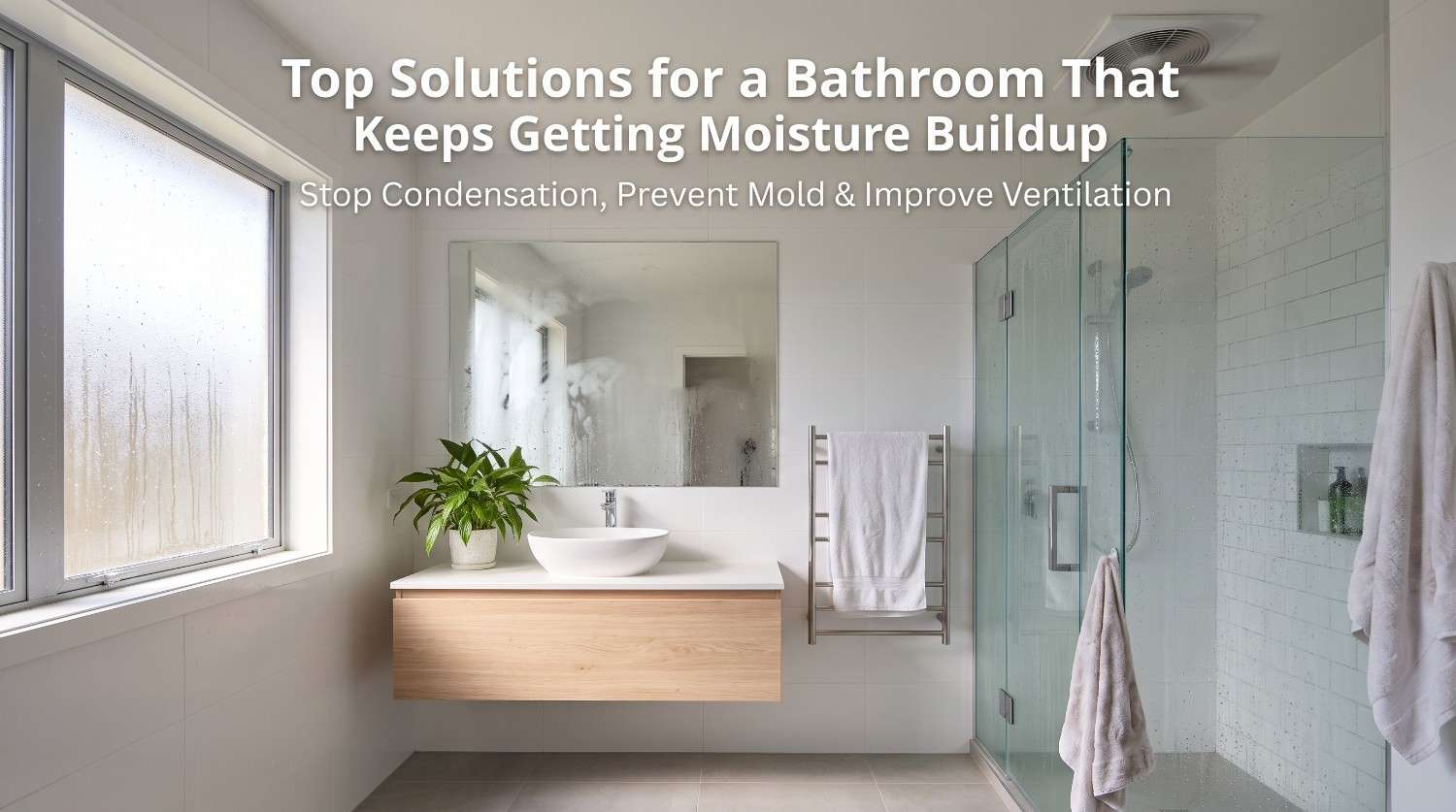
An undersized or underperforming exhaust fan leaves moisture in the air long after every shower. Bathroom exhaust fans should be rated for at least 1 CFM per square foot of bathroom area and run for a minimum of 20 minutes after each shower. A fan clogged with dust moves little air regardless of its rating. Moisture that stays airborne settles into grout, caulk, and ceiling corners exactly the places that smell even after they've been cleaned.
Drain Buildup
Hair, soap scum, and biofilm accumulate inside the shower and sink drains. This organic material decays and produces a persistent musty smell that wafts upward every time water runs. Most homeowners clean around the drain, not inside it which is why the smell stays. A drain that smells like mildew even after the surrounding tile is clean is almost always a biofilm problem inside the pipe, not on the surface.
Hidden Plumbing Leak
Slow leaks behind walls, under sinks, or beneath the toilet feed continuous moisture to drywall, subfloor, and wood framing all porous materials that grow mold quickly. Because caulk, tile, and paint seal these areas off, the mold grows undetected for months before the smell becomes noticeable. By that point, surface cleaning has no effect because the growth is entirely behind the finished surface.
Signs of a hidden leak: smell is strongest near one specific wall or fixture; smell is present even in a freshly dried bathroom; you can smell it more after the toilet flushes or water runs.
Failed or Moldy Caulk and Grout
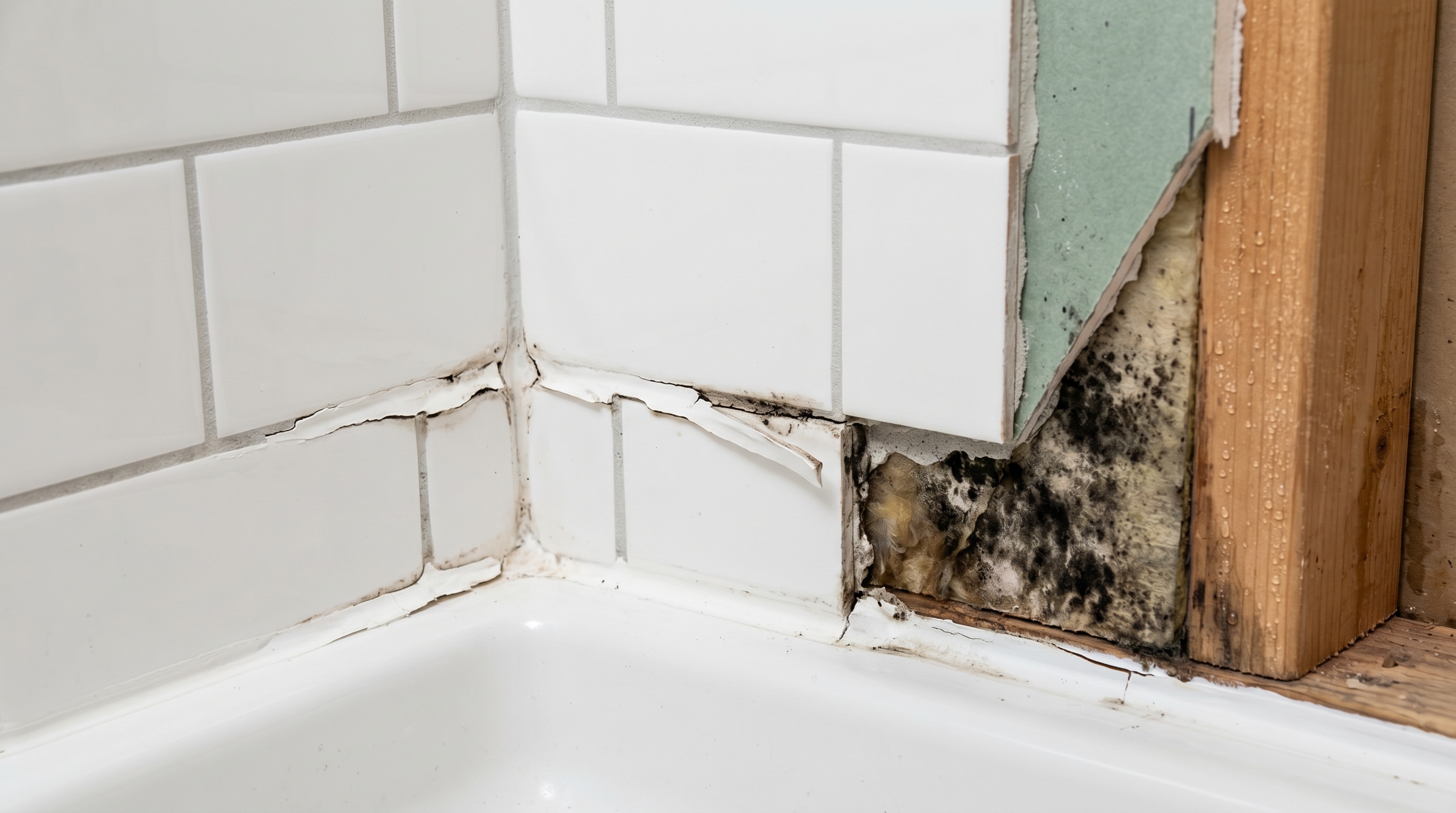
Old caulk cracks and lifts at the edges. Water gets under it and feeds mold in the gap between the caulk and the tile. Cleaning the caulk surface removes discoloration temporarily, but the mold colony under the caulk bead survives and regenerates within days. Recaulking not cleaning is the only fix for mold that lives beneath the caulk line.
Wet Fabrics
Bath mats, towels, and shower curtains that stay damp between uses grow mildew rapidly. A single damp bath mat in a poorly ventilated bathroom can produce enough spore load to make the entire room smell musty. This is the cheapest cause to fix and the most commonly overlooked.
How Do I Find the Source?
Work through this sequence before spending money:
Remove all fabrics. Take out the bath mat, towels, and shower curtain. If the smell drops significantly within 24 hours, wet fabrics were the primary cause.
Clean the drains. Remove the drain cover. Pour ½ cup baking soda followed by ½ cup white vinegar down the drain. Wait 15 minutes, then flush with hot water. Repeat for all drains. If the smell drops, biofilm was the source.
Run the exhaust fan test. Turn the fan on and hold a single sheet of toilet paper to the grille. If it doesn't hold the paper flat against the grille, the fan is underperforming. Clean or replace it.
Inspect caulk lines. Look for caulk that is dark, cracked, or separating from the tile. Press along the line soft or hollow spots indicate water infiltration. This caulk must be removed and replaced, not cleaned.
Check for hidden moisture. Use the back of your hand along the base of walls near the toilet, sink, and shower. A cool or damp wall surface indicates moisture behind it. This requires a contractor to investigate.
When Do I Need a Contractor?
DIY fixes for surface causes cost $20–$150 in materials. Hidden leak repair and mold remediation ranges from $500–$3,000+ depending on the extent of damage. Find vetted bathroom repair and mold remediation contractors in your area at Nationwide Builders.
Frequently Asked Questions
Why does my bathroom smell like mildew only after a shower?
Steam from hot showers raises humidity rapidly, which activates dormant mold and mildew spores. The heat releases more volatile organic compounds from existing mold colonies, amplifying the smell. If the odor appears specifically after showering, the source is almost certainly in the shower enclosure inside the drain, under failing caulk, or behind the shower wall. Run the exhaust fan during and 20 minutes after every shower while you investigate.
Can mildew smell make you sick?
Mildew itself causes mild symptoms irritating eyes, nose, and throat in most people. Mold is more serious. The CDC links indoor mold exposure to respiratory symptoms, coughing, and worsening asthma, particularly in children and people with existing respiratory conditions. If the smell is persistent and household members are experiencing symptoms, treat this as a mold problem and get a professional inspection.
How do I get rid of the mildew smell in bathroom drains permanently?
Weekly maintenance prevents biofilm from rebuilding. Pour boiling water down the drain after every shower to flush loose debris. Once a week, use the baking soda and vinegar flush. Once a month, remove the drain cover and manually clear hair and soap scum using a drain snake or zip-it tool. A consistently clean drain does not produce mildew odor.
My bathroom has an exhaust fan but it still smells. Why?
Three possibilities: the fan is undersized for the room, the fan duct is disconnected or venting into the attic rather than outside, or the fan runs for too short a time. Check that the duct exits through an exterior vent cap attic-venting fans create worse moisture problems over time. Run the fan for at least 20 minutes after every shower, not just during it.