
When it comes to your bathroom, choosing the right vanity isn’t just about style it’s about functionality, durability, and maximizing space. The wrong vanity can lead to cramped layouts, water damage, mold, and insufficient storage. With countless sizes, materials, and sink configurations available, making the right choice can feel overwhelming.
This guide walks you through every decision point: measurement, sink type, vanity style, materials, storage, and installation, so you can select the perfect bathroom vanity for your needs.
Why Choosing the Right Bathroom Vanity Matters
A bathroom vanity is a central functional piece. Choosing the wrong size, material, or configuration can cause:
Water damage from poor material selection
Mold or mildew in high-humidity areas
Cluttered or inefficient storage
Costly plumbing adjustments if the vanity doesn’t fit
By approaching your choice methodically, you ensure a bathroom that’s functional, durable, and stylish for years.
Step 1: Measure Your Bathroom Correctly
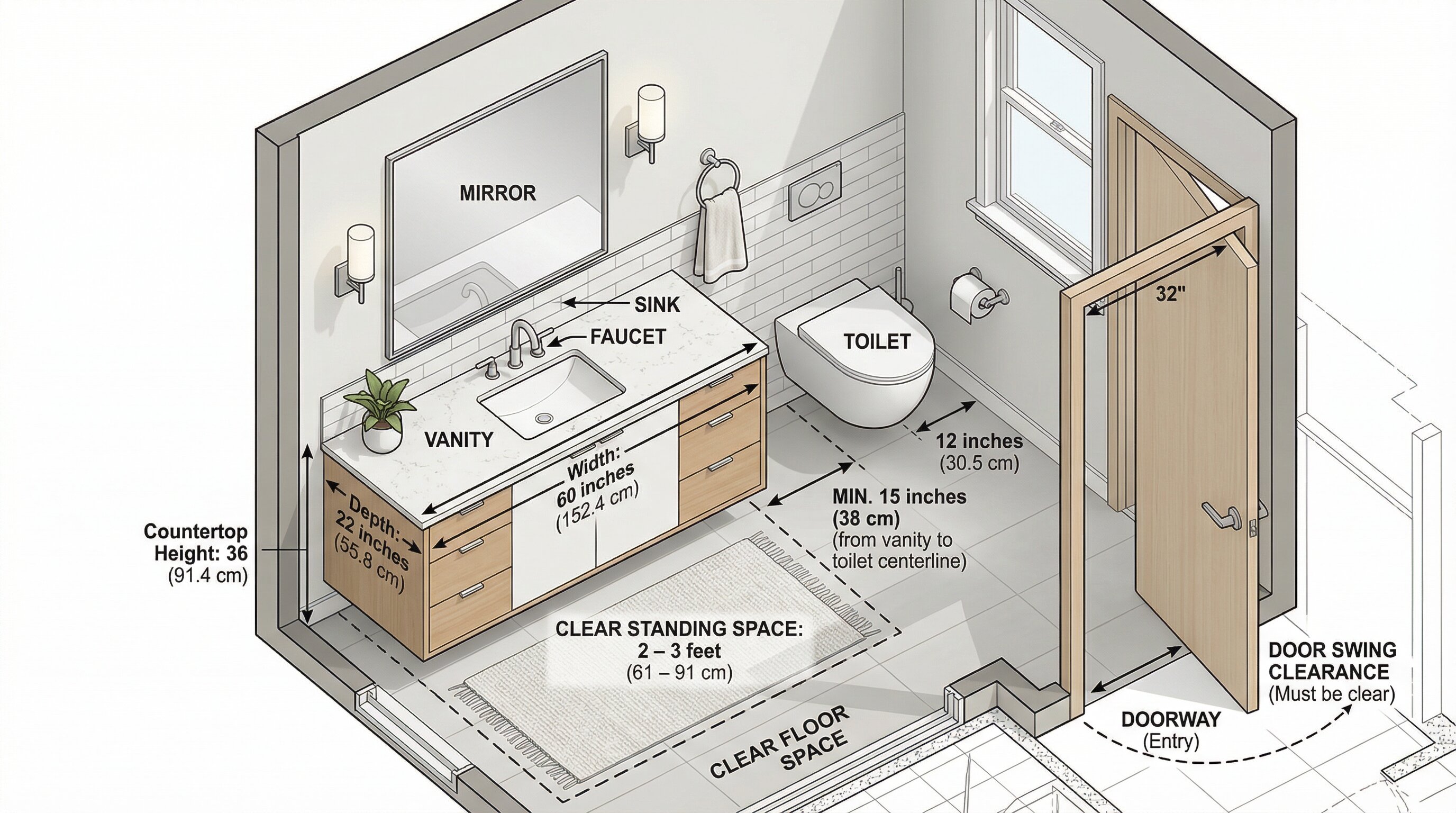
Width, Depth, and Height Guidelines
Accurate measurements are crucial. Use a tape measure to determine:
Vanity width: Leave at least 2–3 feet of walking space in front
Vanity depth: Standard 21–24 inches, adjust for narrow bathrooms
Height: Standard height is 32–36 inches; consider comfort and accessibility
Clearance and Space Planning
Ensure at least 30 inches clearance from toilet or shower
Allow door swing without obstruction
Keep counter overhangs minimal to prevent bumping
Step 2: Single vs Double Sink Vanity
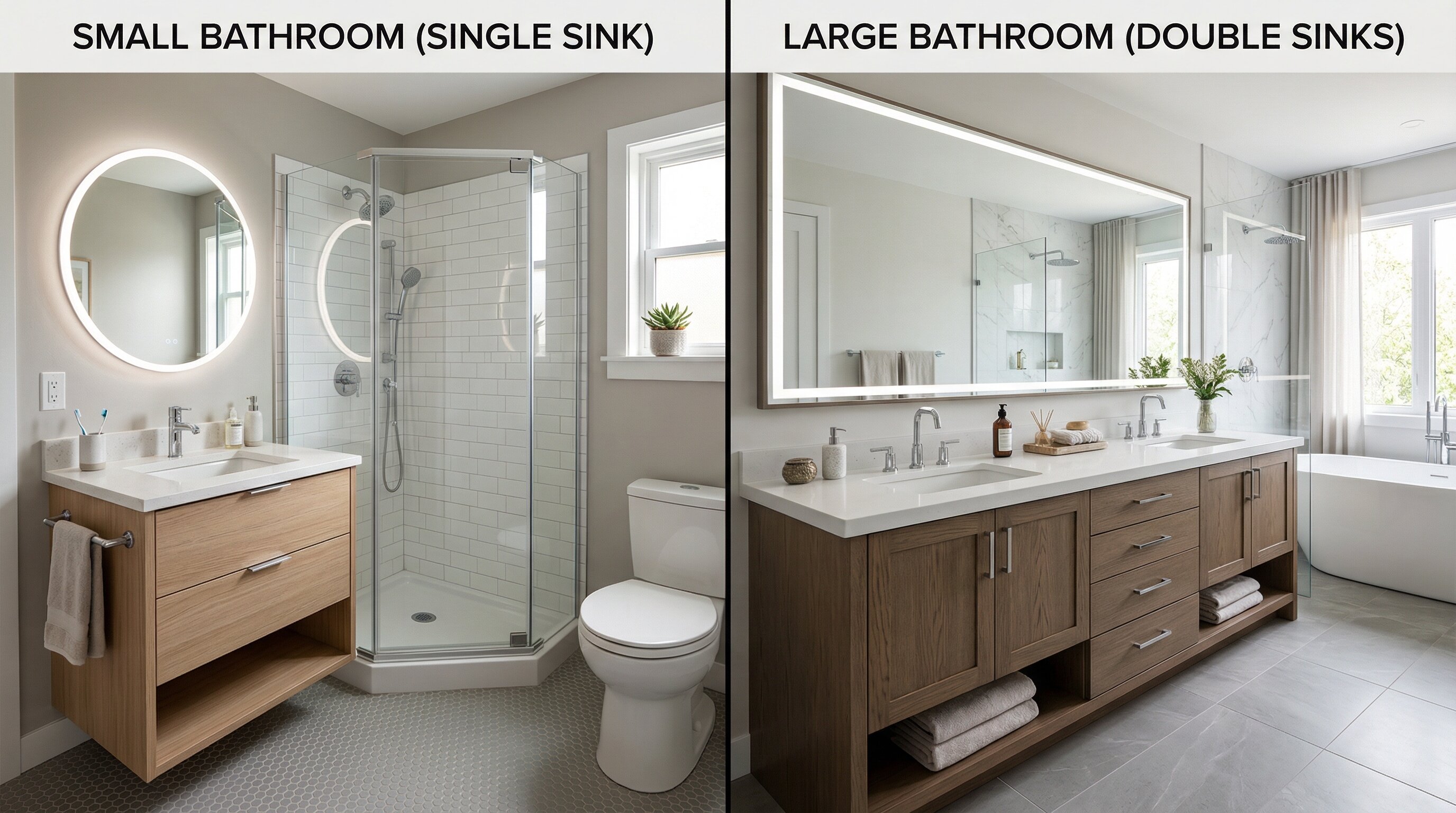
Single Sink: Ideal for small bathrooms, powder rooms, or spaces with limited plumbing
Double Sink: Perfect for shared family bathrooms, couples, or high-traffic areas
Decision Tip: Always match the sink type to bathroom size and user needs. Double sinks require wider vanities and careful plumbing planning.
Step 3: Choose the Type of Vanity
Before diving into materials and style, select the type of vanity that best suits your bathroom layout and usage.
Single Sink Vanities
Ideal for small bathrooms or powder rooms
Provides essential storage without crowding the space
Can also be used in larger bathrooms to maximize countertop space
Double Sink Vanities
Ideal for shared or family bathrooms, allowing two people to use the space simultaneously
Typically larger, offering more storage options beneath the sinks
Wall-Mounted (Floating) Vanities
Creates a clean, modern look
Maximizes floor space, making small bathrooms appear larger
Requires stud support and precise plumbing alignment
Freestanding Vanities
Traditional design, often resembling furniture pieces
Flexible placement and easier installation
Works well in classic or transitional bathrooms
Corner Vanities
Compact, wedge-shaped design for tight spaces
Ideal for powder rooms or guest bathrooms
Efficiently uses corners without feeling cramped
Decision Tip:
Small bathrooms → Single sink or wall-mounted vanities
Shared bathrooms → Double sink or larger freestanding units
Tight corners → Corner vanities maximize space efficiently
Step 4: Vanity Style: Wall-Mounted vs Freestanding
Freestanding Vanities: Classic look, easier to install, fits most layouts
Wall-Mounted Vanities: Modern aesthetic, allows easier floor cleaning, requires stud support and precise plumbing alignment
Decision Tip: Choose wall-mounted for small bathrooms to maximize floor space; freestanding for traditional or larger bathrooms.
Step 5: Choose the Right Materials
Cabinet Materials
Countertop Materials
Quartz: Non-porous, durable, low maintenance
Granite/Marble: Elegant, durable, needs sealing
Laminate: Affordable, easy to clean, less heat-resistant
Solid Surface: Seamless, water-resistant, scratch-resistant
Tip: Always match countertop materials with bathroom moisture levels to prevent damage and stains.
Step 6: Vanity Storage & Functionality
Drawers vs Cabinets: Drawers provide better access to small items; cabinets for larger storage
Open vs Closed Shelving: Open shelves are stylish but require maintenance; closed cabinets keep clutter out of sight
Organizational Accessories: Consider dividers, trays, and pull-out shelves for maximum efficiency
Step 7: Installation & Plumbing Considerations
Rough-In Plumbing: Verify the position of water supply and drain before purchasing
Vanity Depth vs Pipe Placement: Ensure proper space behind the cabinet for plumbing
DIY vs Professional: Wall-mounted and custom vanities may require professional installation
Accessibility: Ensure easy access to shut-off valves and plumbing fixtures
Step 8: Style & Aesthetic Considerations
While function is critical, style shouldn’t be ignored:
Match vanity finish to flooring, wall color, and fixtures
Consider contrast for visual appeal or light finishes to make a small bathroom feel larger
Avoid purely decorative choices that compromise functionality
Frequently Asked Questions
What size bathroom vanity do I need?
Start by measuring your available space and considering how the bathroom is used. Small bathrooms usually fit 24–36 inch vanities, medium spaces 36–60 inches, and larger bathrooms 60–72 inches or more. Always leave enough clearance for movement, door swings, and nearby fixtures.
How to measure for a bathroom vanity?
Measure the width, depth, and height of the available space using a tape measure. Make sure to leave clearance for doors, toilets, and showers, and account for plumbing access and countertop overhang. Proper measurements ensure the vanity fits comfortably without blocking movement.
What is the standard bathroom vanity height?
The standard height ranges from 32 to 36 inches, with 36 inches being more common in modern bathrooms for better comfort. Taller vanities reduce bending for adults, while shorter heights may be better for children or accessibility needs.
Single vs double vanity which is better?
A single vanity works best in small bathrooms or low-traffic areas where space is limited. A double vanity is ideal for shared bathrooms, as it allows two users at once, but it requires more space and additional plumbing.
Wall-mounted or freestanding vanity, which should I choose?
Wall-mounted vanities create a modern look and make small bathrooms feel more spacious by exposing floor space. Freestanding vanities are easier to install, offer more storage options, and suit traditional or larger bathroom layouts.
What are the best materials for humid bathrooms?
Choose moisture-resistant materials like plywood for cabinets and quartz or solid-surface for countertops. These materials resist water damage better than MDF or particleboard, making them more durable in high-humidity environments.
Conclusion
Choosing the right bathroom vanity comes down to balancing size, function, materials, and installation. Start with accurate measurements, then select a layout that fits your space single sinks for smaller bathrooms and double sinks for shared use. Choose moisture-resistant materials to handle humidity, and always plan around plumbing and clearance requirements. When these elements work together, you get a vanity that is both stylish and built to perform for years.