
For bathroom mold remediation, you need a certified mold remediation contractor not a general contractor. A certified remediator contains airborne spores, eliminates the hidden moisture source, removes contaminated materials, and confirms the job is done through independent clearance testing. A general contractor treats surfaces; a certified remediator fixes the root cause. Bathroom mold needs a certified mold remediation specialist credentials to look for: IICRC AMRT or NORMI CMR. A general contractor is only acceptable for mold under 10 square feet on non-porous surfaces with no moisture problem behind the wall. Only 7 U.S. states require a government-issued mold remediation license in all other states anyone can legally advertise mold services. Bathroom mold almost always penetrates behind tile and drywall surface cleaning without moisture source repair guarantees recurrence. Use Nationwide Builders to compare certified mold remediation contractors near you with verified reviews and credentials side-by-side. Bathrooms are the most mold-prone room in any home. Constant humidity, limited ventilation, and hidden pipe leaks create conditions where mold colonizes wall cavities not just visible surfaces. The EPA is clear: mold covering more than 10 square feet, or linked to sewage or HVAC systems, requires a trained professional. Bathroom mold almost always crosses that threshold by the time it's visible. Nationwide Builders lists certified mold remediation contractors across the U.S., with verified reviews and credential listings so you can compare professionals before making a single call. A general contractor is the wrong hire for bathroom mold because mold remediation is a biological contamination job, not a construction job. The three things a general contractor typically cannot do: set up negative-air-pressure containment to stop spores spreading, identify and eliminate the moisture source causing growth, and conduct post-remediation clearance testing to verify the job is complete. A certified mold remediation specialist does all three. According to the IICRC S520 standard the industry benchmark proper remediation requires containment, HEPA filtration, material removal, source correction, and independent verification. Without all five steps, mold returns. A licensed general contractor with documented IICRC training is acceptable for one scenario only: mold under 10 square feet, on a non-porous surface, with no moisture penetration behind walls. That means a small grout or caulk stain with no smell, no soft drywall nearby, and no history of water damage. If any of these warning signs are present, call a certified remediator not a GC: Mold keeps returning after cleaning Musty smell is stronger than the visible patch suggests Drywall feels soft or spongy near the tub surround Any plumbing leak or water event in the past two years Mold area is larger than a 3×3 ft patch Nationwide Builders lets you filter by contractor type and read verified job histories so it's easy to confirm whether a contractor has documented mold remediation experience before you reach out. Which Contractor Type Is Right for Your Bathroom Mold Situation? IICRC AMRT (Applied Microbial Remediation Technician) is the primary field credential. It requires in-person training, a prerequisite WRT certification, and a proctored exam. There is no online-only path technicians physically build containment and practice PPE protocols during training. Recertification is required every four years. NORMI CMR (Certified Mold Remediator) is the second recognized credential. It covers the same core competencies and is accepted in both licensing and non-licensing states. Both credentials verify that a contractor knows the IICRC S520 standard containment protocols, HEPA filtration, material removal procedures, and clearance testing requirements. Only 7 U.S. states require a government-issued mold remediation license. In all other 43 states, no license is legally required anyone can advertise mold services. What this means for homeowners: In most states, a contractor's IICRC or NORMI certification is the only meaningful quality signal you have. Always verify credentials before hiring. Step 1 : Ask for the IICRC certification number. Verify it directly at iicrc.org. A lapsed credential should be treated as no credential. Step 2 : Confirm pollution liability insurance. General liability alone does not cover microbial contamination. Request a certificate showing both general liability and pollution liability are active. Step 3 : Require independent clearance testing. The EPA recommends post-remediation verification by a party independent of the contractor who did the work. Any contractor offering to self-verify is a red flag. Step 4 : Get a written scope of work. It must itemize: containment setup, materials to be removed, moisture source correction, and clearance testing protocol. Avoid any contractor who resists this. On Nationwide Builders, contractor profiles include credential listings, verified customer reviews, and work history making credential checks faster and reducing the risk of hiring an unqualified contractor. What Are the Red Flags That Signal an Unqualified Mold Contractor? Watch for these warning signs before signing anything: No containment setup workers starting removal without plastic sheeting and an air scrubber are spreading spores through your home. "Guaranteed mold-free forever" claims mold cannot be permanently eliminated; remediation returns it to normal ambient levels. Quote that excludes clearance testing an incomplete job presented as a complete one. Pressure to sign same-day with no written scope of work. No pollution liability insurance general liability alone does not cover mold contamination claims. Only in seven states New York, Florida, Texas, Louisiana, Maryland, Washington D.C., and Tennessee is a state mold remediation license legally required. In all other states, no government license is required. IICRC AMRT or NORMI CMR certification is the primary credential to verify, alongside active general liability and pollution liability insurance. No not for anything beyond surface cleaning. A plumber can fix the moisture source (leaking pipe, failed valve), but is not trained in mold containment, biological removal, or clearance testing. A handyman without mold-specific certification should not remove mold behind bathroom walls. Surface grout stains under 10 sq ft may be cleaned by any competent professional; wall cavity mold requires a certified remediator. Mold removal is surface treatment wiping or cleaning visible growth. Mold remediation is the full process: assessment, containment, physical removal of contaminated materials, moisture source correction, and independent clearance testing. The EPA uses "remediation" because complete permanent removal is impossible. The goal is restoring mold to normal ambient levels with the root cause fixed. Ask for the certification number and verify it at iicrc.org's certified firm directory. The directory shows whether the credential is active or lapsed. Do not accept a printed certificate as proof verify current status yourself at the issuing organization's site. It depends on the cause. Mold from a sudden covered water event (burst pipe, appliance overflow) is often partially covered. Mold from long-term moisture or maintenance neglect is typically excluded. Certified remediation contractors document work with line-item estimates, moisture logs, and timestamped photos — the format insurers require. Lump-sum bids from general contractors often lack this documentation. A bathroom job limited to the shower surround with no wall cavity involvement typically takes 1–3 days. Jobs requiring tile removal and wall cavity work run 3–7 days for remediation, plus additional time for structural rebuild. Clearance test results take 24–48 hours after remediation is complete. Yes. Nationwide Builders lists verified contractors across the U.S., including mold remediation specialists. You can search by location, read verified customer reviews, compare credentials side-by-side, and get cost estimates — all before committing to any contractor.TL;DR
Why Can't a General Contractor Handle Bathroom Mold Remediation?
When Is a General Contractor Acceptable for Bathroom Mold?
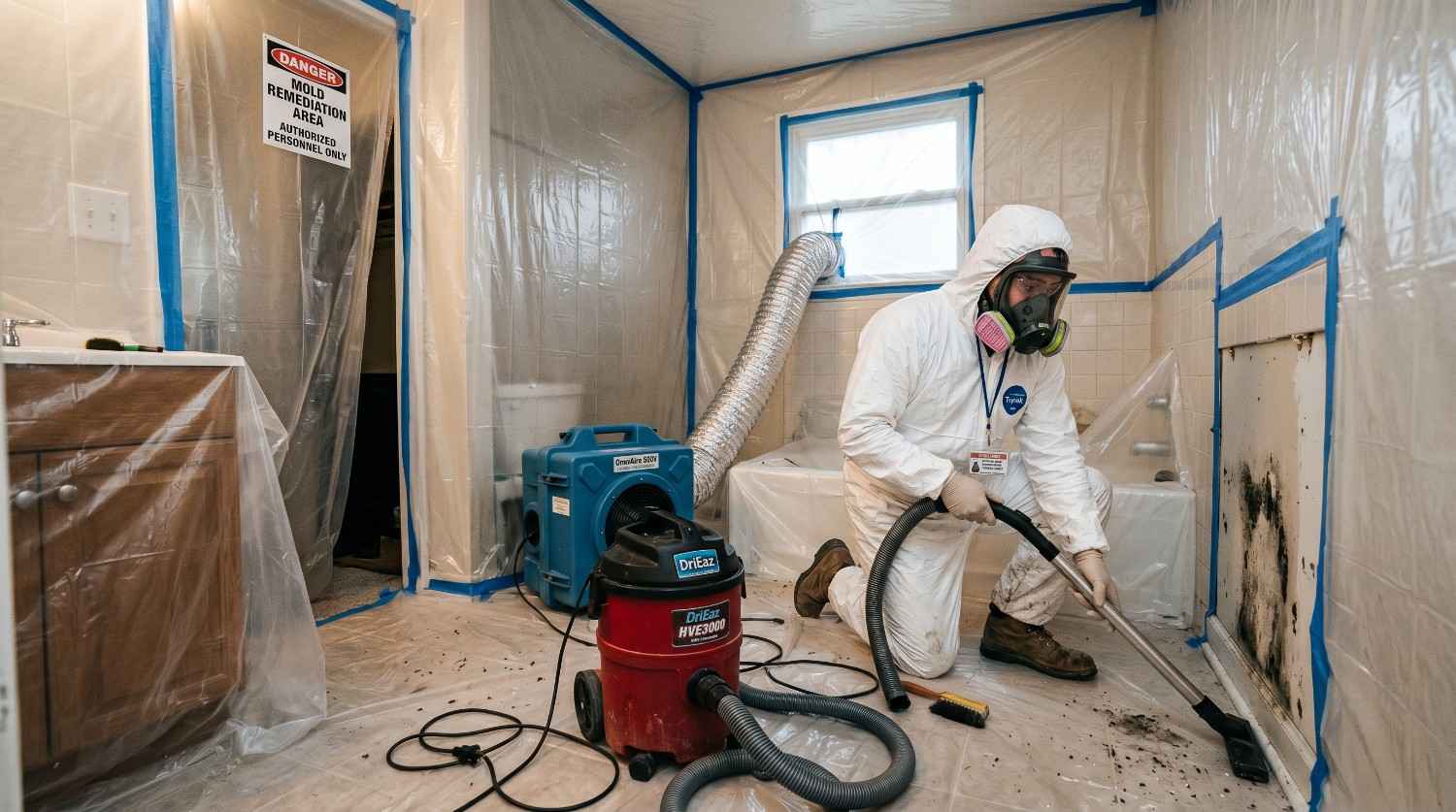
What Certifications Should a Bathroom Mold Contractor Have?
Which States Require a Mold Remediation License?
How Do You Verify a Mold Contractor's Credentials Before Hiring?
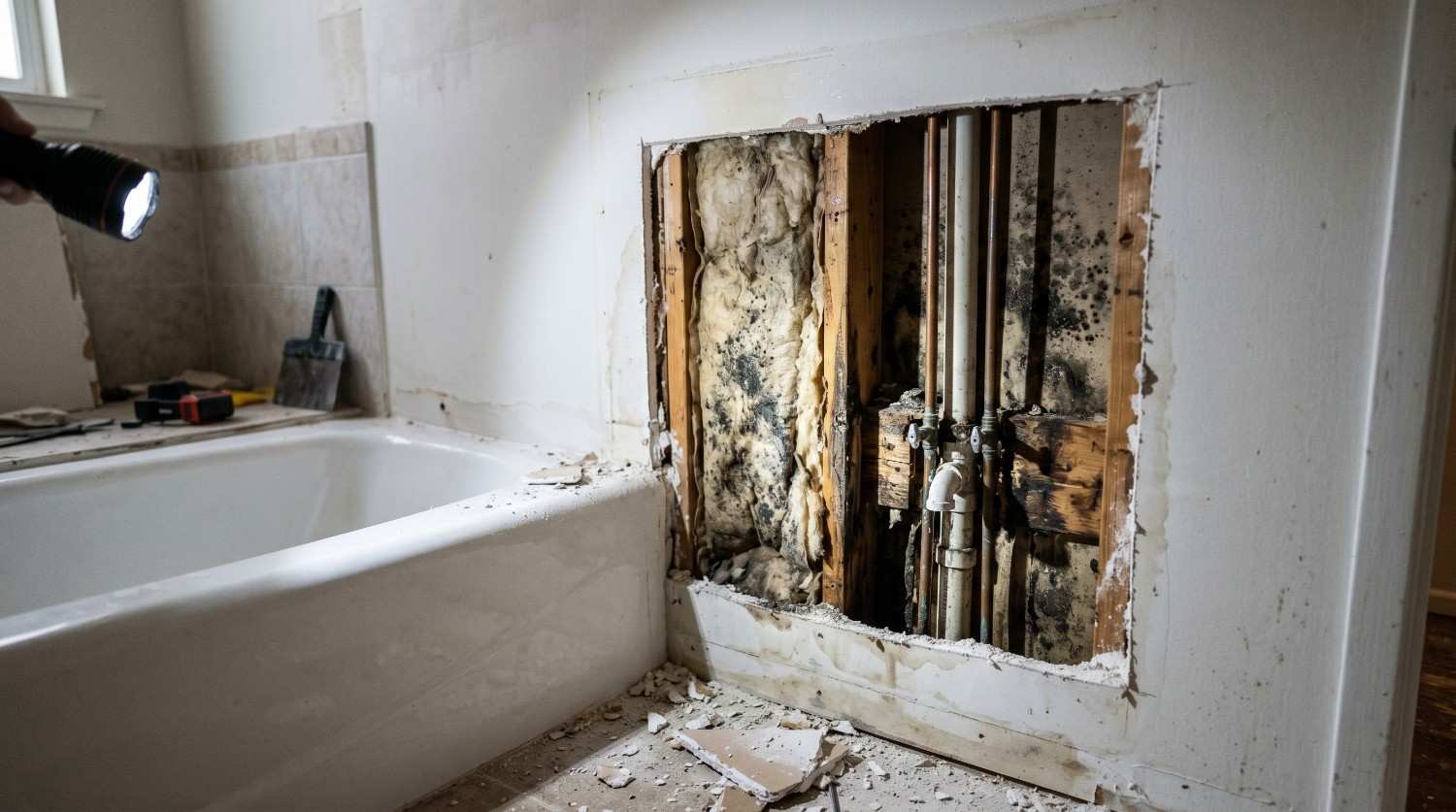
Frequently Asked Questions
Does a bathroom mold contractor need to be licensed in my state?
Can a plumber or handyman handle bathroom mold?
What is the difference between mold removal and mold remediation?
How do I verify a contractor is actually IICRC certified?
Does homeowner's insurance cover bathroom mold remediation?
How long does bathroom mold remediation take?
Can I find a certified mold remediation contractor on Nationwide Builders?
- Why Can't a General Contractor Handle Bathroom Mold Remediation?
- When Is a General Contractor Acceptable for Bathroom Mold?
- What Certifications Should a Bathroom Mold Contractor Have?
- Which States Require a Mold Remediation License?
- How Do You Verify a Mold Contractor's Credentials Before Hiring?
- Frequently Asked Questions
- Does a bathroom mold contractor need to be licensed in my state?
- Can a plumber or handyman handle bathroom mold?
- What is the difference between mold removal and mold remediation?
- How do I verify a contractor is actually IICRC certified?
- Does homeowner's insurance cover bathroom mold remediation?
- How long does bathroom mold remediation take?
- Can I find a certified mold remediation contractor on Nationwide Builders?
What Type of Contractor Do I Need for Bathroom Mold Remediation?
For bathroom mold remediation, you need a certified mold remediation contractor not a general contractor. Learn which credentials to check, what states require licenses, and how to find a verified pro near you.

Written by Zohaib Ali
More on Nationwide BuildersRead more Home Improvement Tips blogs





Pros
Support