
Remodelling your bathroom and want it to look classy, not just functional, but genuinely well-designed for the space you actually have?The problem most people run into is not the size. It is making the wrong choices for it. The tub that looks perfect online but is two inches too long for your footprint.
The tile layout that makes the ceiling feel lower instead of higher. The layout change that suddenly requires moving a drain and doubling the budget. A small bathroom remodel with a tub works when the right decisions are made early the right tub for your exact footprint, the right layout, the right finishes that make the room feel open and considered rather than cramped and compromised.
Small Bathroom Remodel With Tub and Shower Combo
In most small bathrooms, a separate tub and shower is not practical. A tub–shower combo uses the same footprint for both, making it the most efficient and common solution.
In a standard 5×8 layout, the alcove tub already defines the space. Adding a shower above it requires no extra floor area and avoids costly plumbing changes.
What makes a combo work well
A few details determine whether the setup feels functional or cramped:
Showerhead placement: Center it along the tub wall for even coverage
Valve position: Place it within reach from outside the spray to avoid getting wet when turning it on
Ceiling height: Aim for at least 80 inches from tub floor to ceiling for a comfortable shower
What Size Bathroom Can Fit a Tub?
Most small bathrooms measure 5×8 feet 40 square feet of floor space. A standard alcove tub runs 60"×30". That combination works, but only if the clearances are respected.
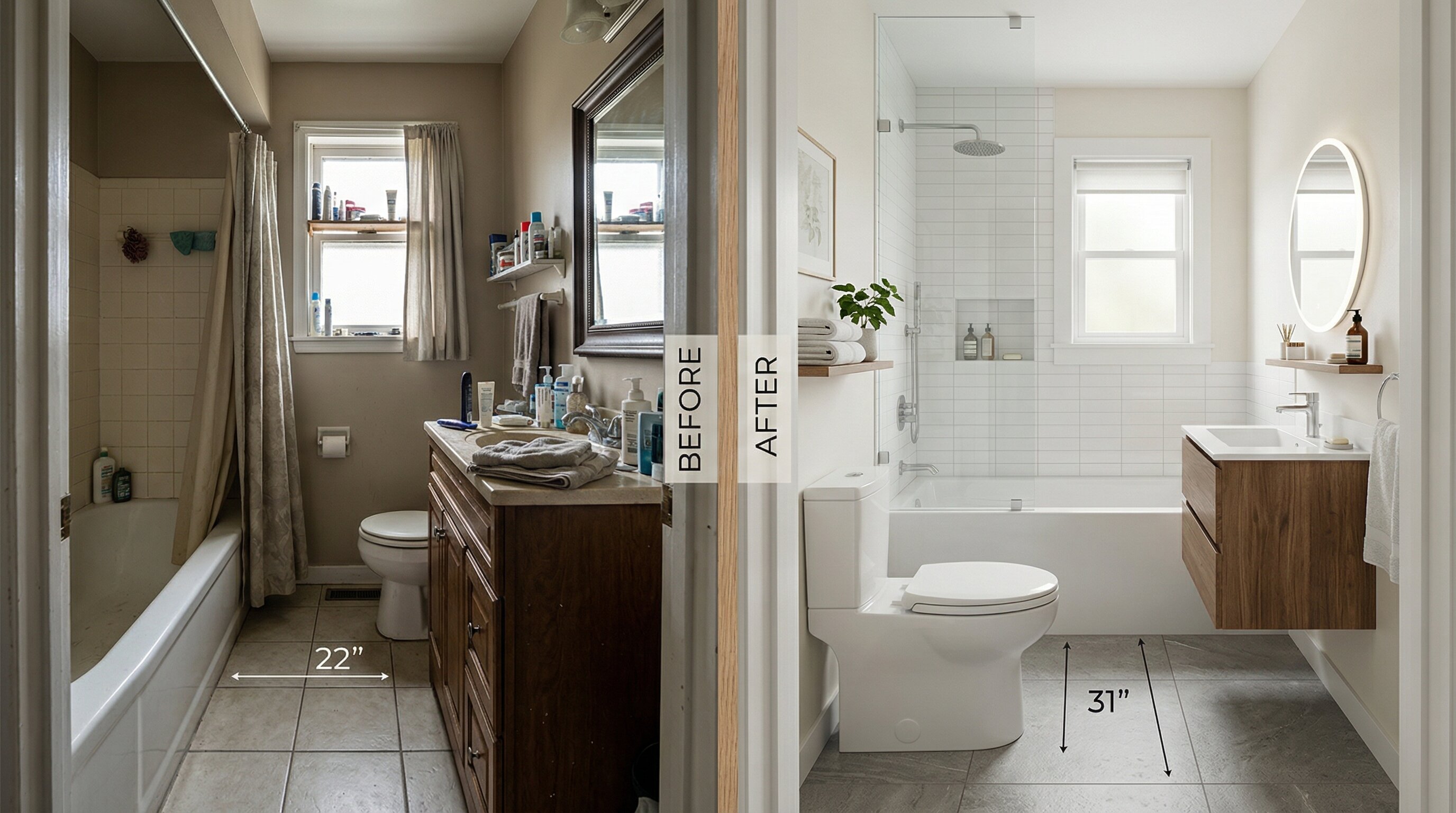
The National Kitchen and Bath Association sets two minimums: 21 inches of clear floor space in front of the tub, and at least 12 inches on the open side. These are not suggestions. Skipping them makes the room difficult to use and flags on inspection at resale.
The 5×8 bathroom: the most common small bathroom layout
In a standard 5×8, the alcove tub sits against the short wall. That leaves 36 inches across the remaining width for the toilet and vanity. It is tight but functional. The layout works because the tub occupies dead corner space and leaves the center of the room open.
Switching to a freestanding or corner tub in this footprint requires moving at least one drain or supply line. That is a different project and a different cost.
When moving the tub requires a permit
Relocating a drain or supply line triggers a plumbing permit in most jurisdictions. No permit means the work is not inspected. Uninspected plumbing work voids homeowner's insurance for water damage claims and surfaces as a red flag during a home sale inspection. Pull the permit. The fee is minor. The protection is not.
Tub Types That Work in Small Bathrooms
Not every tub style suits a small bathroom. The five types below are ordered from most to least space-efficient.
Alcove tub: the most space-efficient choice
Three walls enclose an alcove tub on three sides, and the fourth opens to the room. Standard dimensions run 60"×30", though 54" and 48" models exist for tighter spaces. Because the tub tucks flush against the walls, it does not consume any floor clearance on its sides. It is also the easiest base for a tub-shower combo a curtain rod or glass door closes the opening without any additional plumbing work.
Corner tub: uses wall space instead of floor space
A corner tub sits diagonally across a corner, which frees up the side walls while requiring slightly more floor area than an alcove. The diagonal line draws the eye across the room, which reads as space. This style works best in bathrooms slightly larger than 5×8. If your bathroom is a standard 5×8, an alcove tub or a Japanese soaking tub will serve you better both fit the footprint without requiring layout changes.
Freestanding tub: style-forward, space-aware
Compact freestanding models start at 54 inches. They need 12 inches of clearance on all sides, which is the primary planning challenge in a small bathroom. The faucet placement matters more here than with any other tub type. A floor-mounted faucet eats the clearance you saved by choosing a compact model. Use a wall-mounted faucet instead it keeps the floor clear and the sightline clean.
Clawfoot tub: vintage look, genuine small footprint
Clawfoot tubs are available in 54–55 inch lengths, which makes them viable in rooms that cannot fit a standard 60-inch model. They need clearance all around, like a freestanding tub. One practical note: cast iron clawfoot tubs are heavy. For upper-floor bathrooms, confirm the floor structure can support the load before purchasing.
Japanese soaking tub: deepest soak, smallest footprint
A Japanese soaking tub runs 48–52 inches long and is designed for sitting upright rather than lying flat. The shorter length and greater depth make it the best option for bathrooms too small for any other tub. Few competitors mention this style. That is a mistake, because it solves the most common small bathroom problem not enough length directly.
Walk-in tub: accessibility first, compact footprint
Walk-in tubs have a small floor footprint, but the inward-swinging door requires clear floor space in front of the tub. If accessibility is the goal, pair the tub with a hand shower, grab bars on both sides, and a non-slip floor surface. These are more expensive than standard tubs and should be treated as a long-term investment rather than a remodel trend.
Tub type comparison
Small Bathroom Remodel Cost With Tub
Before you commit to a remodel, you need to know what it will cost and the answer depends less on the size of your bathroom than on how much of it you are changing.
Cost by remodel scope
Most homeowners remodeling a small bathroom with a tub fall in the mid-range. The tub itself is rarely the biggest line item labor, tile, and waterproofing are.
What drives cost up
Moving plumbing is the single largest cost multiplier. Keeping the tub in its current location and replacing it in-kind is always less expensive than relocating it. Tile selection is the second variable large-format tiles cost more per square foot and take longer to install. Permit fees add $100–$500 depending on the jurisdiction but are not optional when plumbing moves.
Design Ideas That Make a Small Bathroom With Tub Feel Larger
Every idea in this section comes with the mechanism the reason it works not just the recommendation.
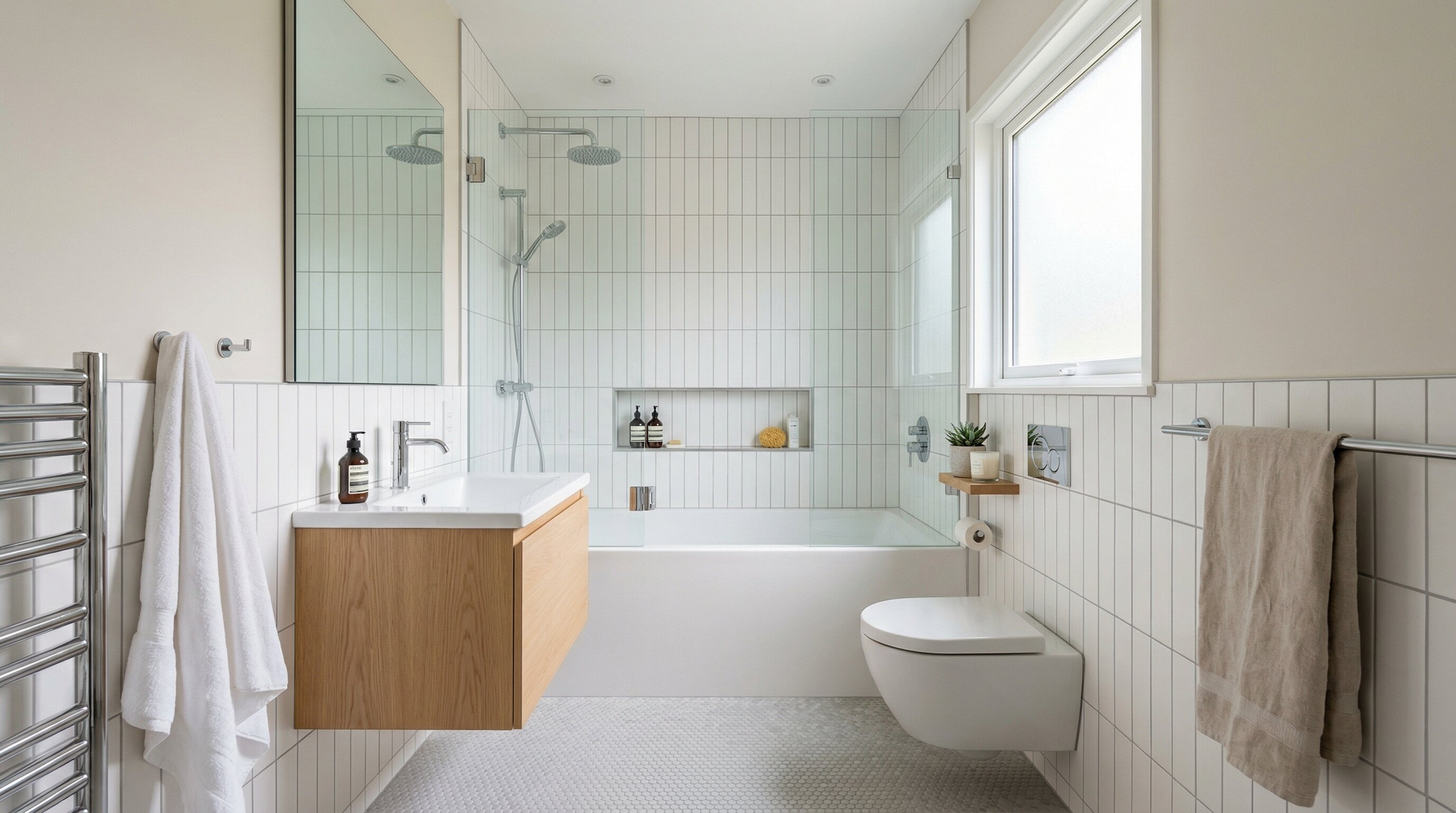
Tile: vertical layouts, large format, and the grout line effect
Vertical tile works because the eye follows the grout lines. When grout lines run floor to ceiling, the eye travels upward, and the room reads as taller than it is. Horizontal lines do the opposite they anchor the eye at waist height and compress the perceived height of the room.
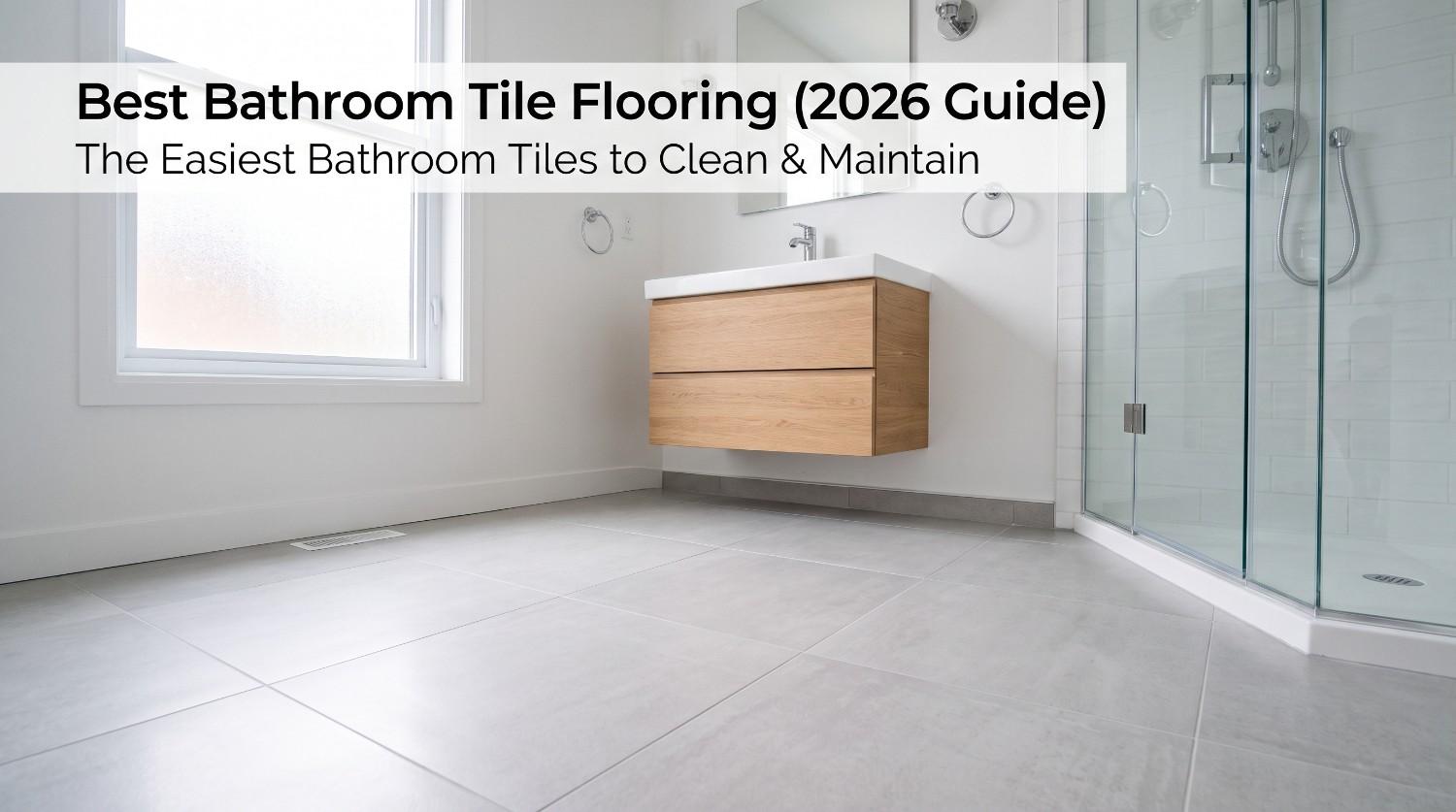
Large-format tiles (12"×24" or larger) reduce the number of grout lines in the field. Fewer grout lines mean less visual fragmentation. The wall reads as a single surface, which reads as larger. Keep grout color close to the tile color. High-contrast grout creates a grid pattern that breaks the surface into small units and makes the room feel smaller.
Glass doors vs shower curtains
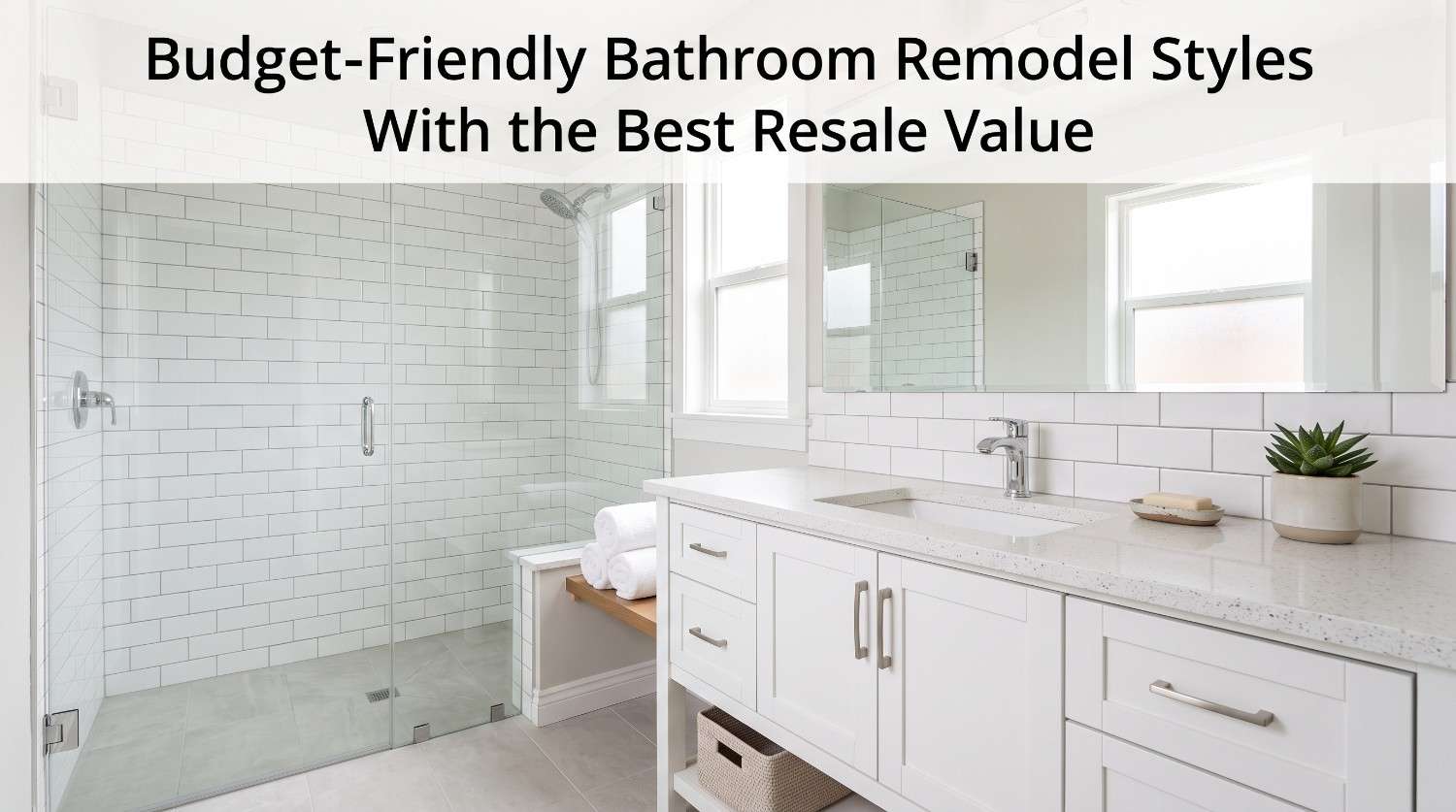
A frameless glass door maintains a continuous sightline from the door of the bathroom to the back wall of the tub. The room reads as one uninterrupted space. A curtain stops the eye at the tub line and effectively cuts the room in half. For the smallest bathrooms, a frameless glass door is the single highest-impact design decision after choosing the right tub size.
Lighting and mirrors
A large mirror above the vanity reflects the tub area and doubles the perceived depth of the room. Recessed ceiling lights above the tub zone eliminate shadows shadows compress space, even light expands it. An LED strip behind or around the mirror adds task lighting without adding ceiling fixtures.
Color and keeping the floor visible
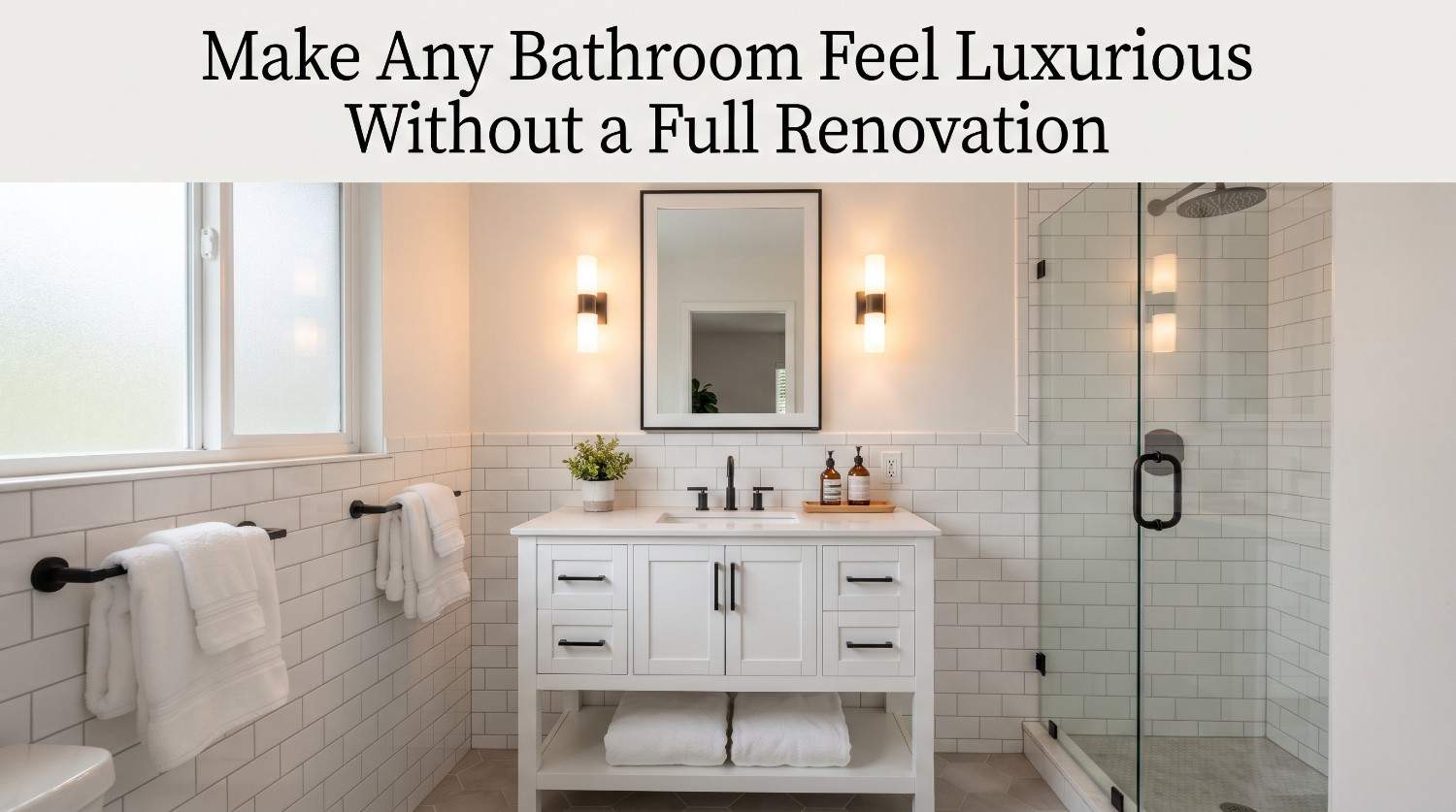
A wall-mounted vanity with an open floor beneath it makes the floor read as longer. The eye reads the continuous floor surface and registers more space. To avoid two-tone color splits at waist height a tile wainscot with a painted wall above cuts the room horizontally and makes the ceiling feel lower. Keep the color consistent from floor to ceiling wherever possible.
Storage Ideas for a Small Bathroom With Tub
Storage is the first thing a small bathroom runs out of, here is how to build it into the space without giving any of it away.
Recessed niche in the tub surround
A recessed niche sits between the wall studs, which means it takes up zero additional floor or wall space. Standard size is 12"×24". It must be waterproofed before tiling cement board and a waterproof membrane, not drywall. Place it on the side wall of the tub at shoulder height, not on the plumbing wall where supply lines run.
Over-tub shelf options
A freestanding over-tub caddy spans the tub width and is removable useful for renters or bathrooms where cutting into the wall is not possible. Choose stainless steel or teak. Chrome-plated steel caddies rust at the joints within a year of regular moisture exposure.
Wall shelves above the tub line
The wall above the splash zone (above 36 inches from the tub deck) is usable storage space. Floating shelves in the same color as the wall add function without visual weight they seem to disappear. Limit to two shelves. More than two reads are cluttered rather than organized.
Common Mistakes in a Small Bathroom Tub Remodel
Choosing a tub that fits on paper but not in practice. A 60-inch tub in a room with only 18 inches of clearance in front of it is technically installed. It is not comfortably usable. Measure clearances before selecting the tub, not after.
Moving plumbing without a permit. Covered above. It is worth repeating because it is the most common and most expensive mistake to correct later.
Using a floor-mounted faucet with a freestanding tub. The faucet consumes the side clearance you chose the compact tub to preserve. Mount the faucet on the wall instead.
Dark grout on light tile. It creates a visible grid across the entire tub surround. The grid makes the room feel smaller. Match the grout to the tile within two shades.
Skipping waterproofing on the tile niche. An untreated niche behind a tile surface traps moisture inside the wall. The damage is invisible until it is structural. Waterproof every surface of the niche before tiling.
Not checking ceiling height for a shower rod. A standard shower curtain rod needs a minimum of 78 inches from the floor to the ceiling at the mounting point. Older homes with lower ceilings sometimes fall short. Measure before purchasing.
Frequently Asked Questions
What is the smallest bathroom that can have a tub?
A 5×7 bathroom can fit a standard 60"×30" alcove tub, though clearance will be minimal. A Japanese soaking tub at 48 inches opens up options for bathrooms as small as 4×6. The key constraint is always clearance in front of the tub, not just the tub length itself.
How much does a small bathroom remodel with a tub cost?
A mid-range small bathroom remodel with a tub typically runs $6,000–$12,000. Full gut renovations that move plumbing and replace all fixtures can reach $25,000 or more. Keeping the tub in its existing location and replacing it in-kind is the most cost-effective approach.
Will removing my tub hurt resale value?
Yes, in most cases. If this is the only full bathroom in the home, removing the tub reduces its appeal to buyers with children, buyers with accessibility needs, and buyers who simply expect a full bath to have one. Homes with a single full bath consistently hold stronger resale value when that bath includes a tub. If there is a second full bath in the home, the calculus changes but for a single-bath property, keeping the tub is the stronger financial decision.
What ROI can I expect from a small bathroom remodel with a tub?
Mid-range bathroom remodels return approximately 70% of the project cost at resale, according to the Remodeling Cost vs Value report. Keeping the tub in a home's only full bath preserves more resale value than removing it the tub itself contributes to the return, not just the finishes around it.
Conclusion
A small bathroom with a tub rewards the people who plan it properly. The footprint is fixed. Everything else the tub type, the layout, the tile, the storage, the light is a decision. And every decision either makes the room work harder or gives space back to the problem.
If this is the only full bath in your home, treat this remodel as a long-term investment, not a cosmetic refresh. The right choices here a tub that fits properly, durable tile, a recessed niche, a frameless glass door will still be the right choices a decade from now.