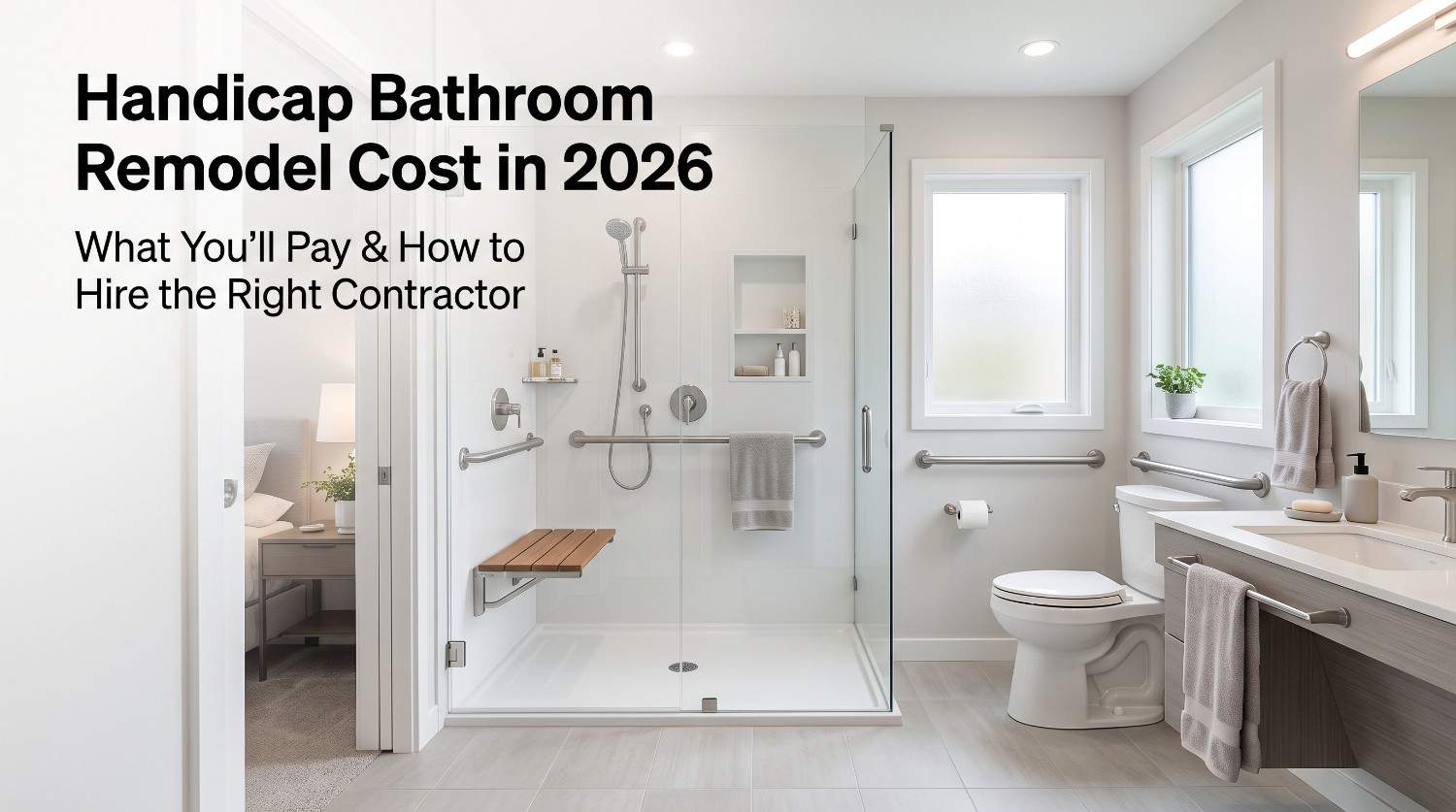

Most bathroom remodel disputes trace back to one moment: something agreed verbally, never written down, remembered differently by both sides. A signed contract closes that gap before the first tool enters your home.
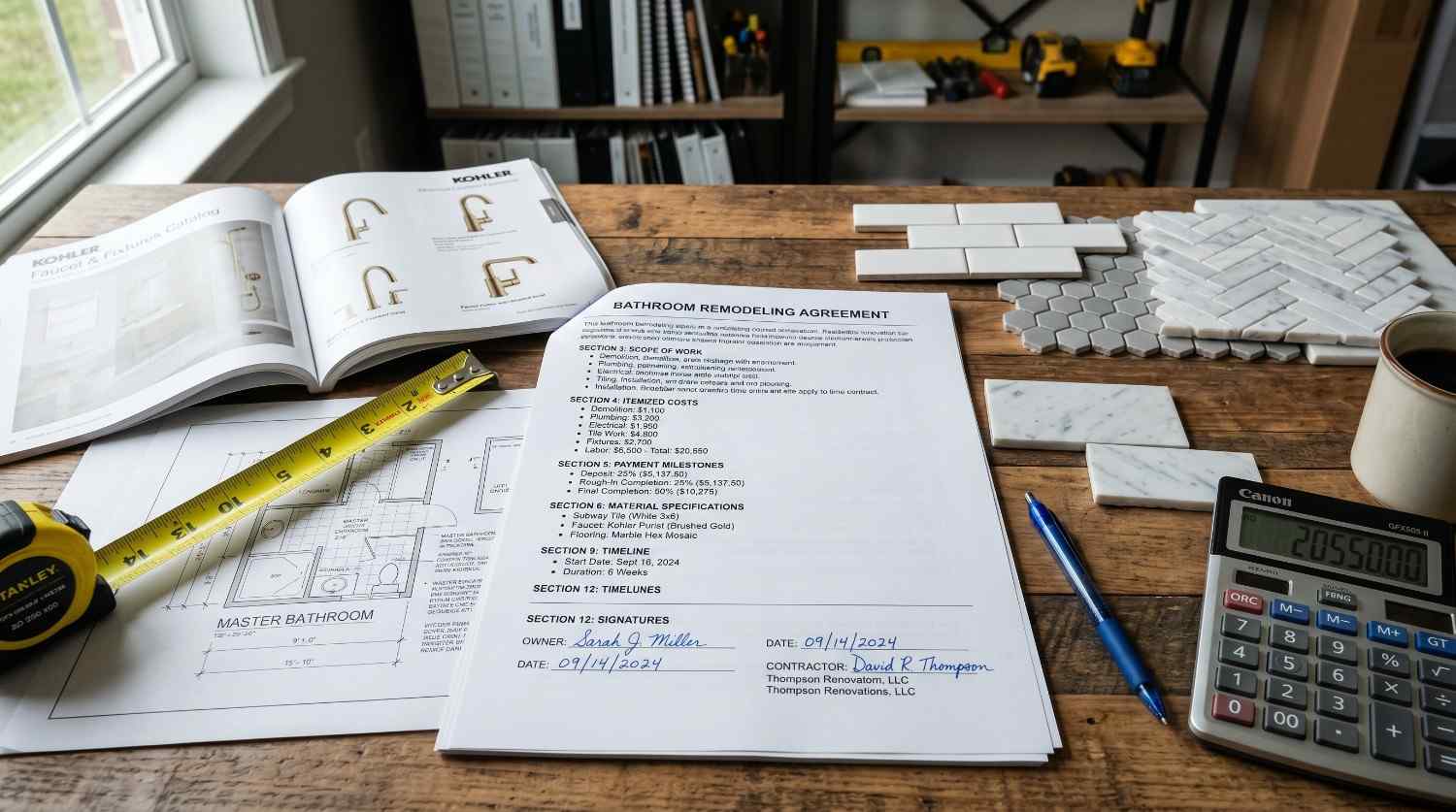
A bathroom remodel contract must include scope of work, itemized cost breakdown, payment schedule, project timeline, and change order procedures, all in writing before work begins.
Never pay more than 10 to 33% upfront. Most states legally cap deposits at that range.
The change order clause is the most overlooked section. Hidden plumbing or electrical issues routinely add 10 to 20% to the original estimate once demolition starts.
If a permit responsibility clause is missing, you can be held personally liable for unpermitted work at resale.
What Is a Bathroom Remodel Contract and Why Does It Legally Matter?
A contract for bathroom renovation is a binding legal agreement defining the work, price, timeline, and responsibilities of both parties. Estimates and proposals are non-binding. Only a signed contract creates enforceable obligations.
Most U.S. states require home improvement contracts above $500 to $1,000 to be in writing. California's Contractors State License Board, for example, mandates written agreements before work begins on any job above $500. Contractors who skip this requirement risk license suspension.
What Should the Scope of Work Section Say?
The scope of work describes every task by trade: demolition, plumbing, electrical, waterproofing, tile, fixture installation, and finish work. It must also list what is explicitly excluded. Scope gaps are where cost overruns originate.
Specify materials by manufacturer, model number, finish, and color. A scope that says "install new faucet" leaves the contractor free to choose the cheapest qualifying fixture. A scope that names the exact model leaves nothing to interpretation.
How Should Contractor Payment Terms Be Structured?
Contractor payment terms should follow a milestone schedule tied to verified completion stages.
Many states legally cap deposits at 10 to 33%. A contractor requesting 50 to 70% upfront is a documented red flag. Professional contracts also include a lien waiver at each payment stage. Without it, a subcontractor the GC failed to pay can file a mechanic's lien against your property even after you paid in full.
Nationwide Builders contractor listings include licensing and insurance details because payment protection starts before money changes hands.
What Should the Bathroom Remodel Timeline Section Include?
The timeline section should specify start date, estimated completion date, and milestones in between. A contract that only says "approximately 6 weeks" gives a contractor unlimited flexibility with no breach trigger.
Key milestones to require: mobilization date, demolition completion, rough-in inspection window, waterproofing completion, final inspection, and substantial completion date. Guest bath remodels typically run 3 to 4 weeks. Primary bathrooms with layout changes run 6 to 10 weeks.
What Does an Itemized Bathroom Remodel Cost Breakdown Look Like?
A lump-sum price prevents comparison, blocks dispute resolution, and makes it impossible to verify completed work. Every contract for bathroom renovation should break costs into line items.
The contingency line is not padding. Demolition routinely uncovers water damage, mold, or outdated wiring. Nationwide Builders publishes cost guides by category so homeowners can verify whether bids are within market range before signing.
What Is a Change Order and Why Does Every Contract Need One?
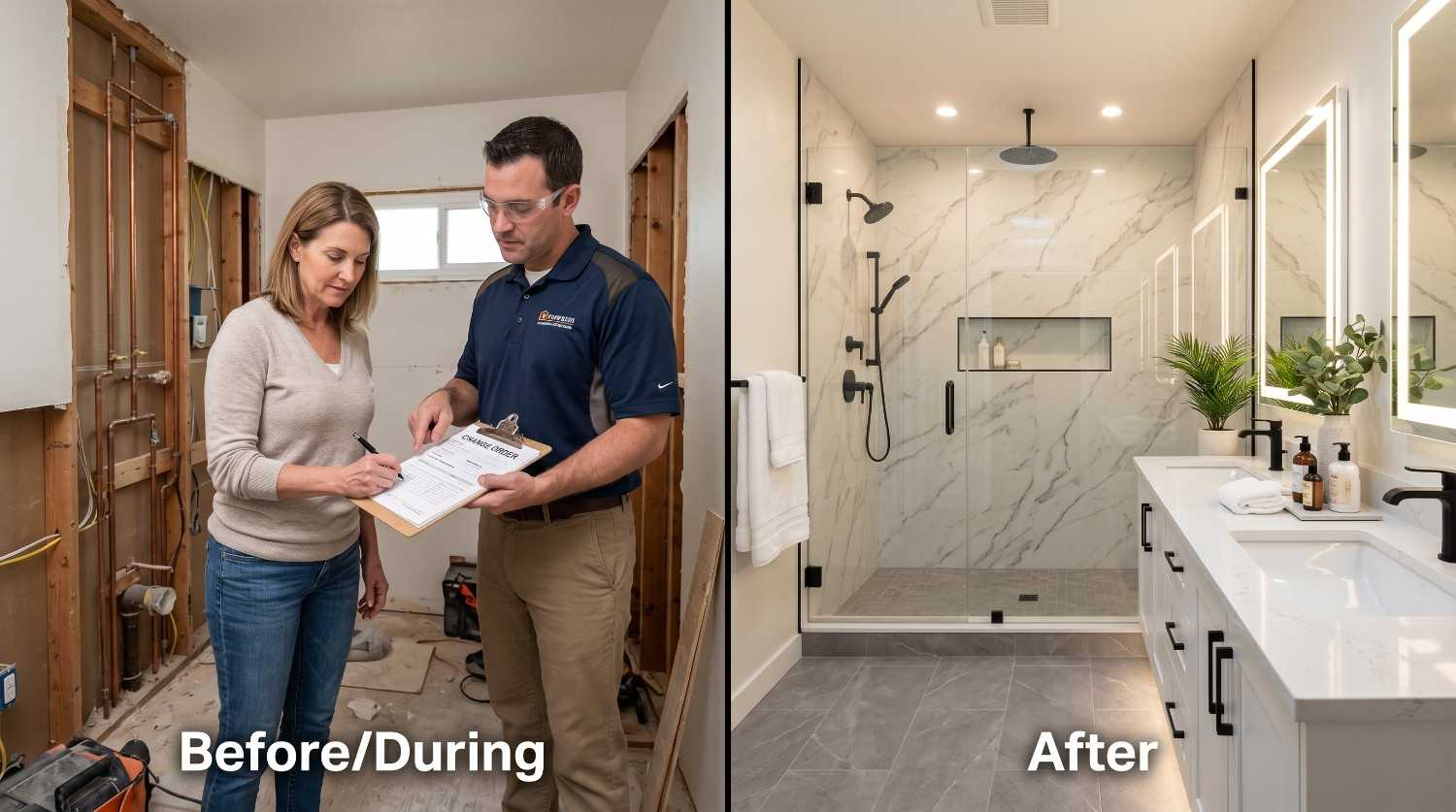
A change order is a written amendment documenting any modification to scope, cost, or timeline after signing. Both parties sign it before additional work begins. Without this, disputes over unexpected costs are nearly inevitable.
The process: contractor identifies a deviation, submits written description with cost and timeline impact, homeowner signs, the change order becomes a binding addendum. If a contractor says "I'll add it to the final bill," that is a problem the change order clause prevents.
What Permits, License, Insurance, and Warranty Language Should a Contract Include?
The permit section should name who pulls permits (the contractor), which permits apply (building, plumbing, electrical, mechanical), and who is responsible if work is done without them. Unpermitted bathroom work surfaces at resale. Title companies flag it, lenders reject it, and in some states the homeowner pays to fix it.
For credentials: require the contractor's license number, a general liability certificate of at least $1 million per occurrence, and workers' compensation naming you as a certificate holder. Also require confirmation that subcontractors carry their own coverage.
The warranty section should include a workmanship warranty of one to two years covering labor defects, plus manufacturer warranties on fixtures and materials. Define what is covered, what is excluded, and how to make a claim.
Nationwide Builders contractor profiles include licensing and insurance verification, reducing the documentation burden before you request a first bid.
 What Red Flags Should You Never Ignore?
Walk away if a contract shows: lump-sum price with no breakdown, deposit above 33%, no change order procedure, vague timeline with no milestones, permit responsibility unaddressed, missing license or insurance documentation, no warranty section, or no dispute resolution clause. Pressure to sign "today only" is a sales tactic, not a business reality.
Frequently Asked Questions
What should I do if a contractor refuses to give me a written contract?
Walk away. A written contract is legally required in most U.S. states for home improvement work above $500 to $1,000. Refusal to provide one may indicate unlicensed operation. Use Nationwide Builders to find verified, licensed contractors with homeowner reviews before reaching out.
How much should a bathroom remodel deposit be?
Between 10% and 33% of the total project cost. Many states cap it at one third. A contractor requesting 50% or more upfront is a documented red flag. Tie every payment to a signed contract milestone, not a verbal request.
What happens when a contractor wants to do extra work not in the contract?
Require a signed change order before any new work begins. It should describe the scope, cost, and timeline impact. Charges added to a final invoice without a signed change order are disputable.
Who is responsible for pulling permits?
The licensed general contractor in almost all cases. A contractor who asks you to pull permits is transferring legal liability to you. Unpermitted work discovered during a home sale typically requires remediation at your expense.
What does a contract that does not mention materials mean?
It means the contractor chooses materials within their budget. Without manufacturer, model, finish, and color specified in writing, they can legally install the cheapest qualifying product. Always require written material specifications.
Is a bathroom remodel contract different from a general home improvement contract?
The structure is the same, but bathroom contracts need more detail in three areas: plumbing and electrical permit coverage, waterproofing specifications, and fixture specifications. Generic templates often miss all three.
How do I find a contractor I can trust?
Start with verified listings that include license status, insurance, and real homeowner reviews. Nationwide Builders connects homeowners with local bathroom remodeling professionals so you can compare contractors before requesting bids.