
Planning a bathroom remodel and unsure if you need a permit? You are not alone. Permit rules confuse most US homeowners because there is no single national standard. This guide explains exactly which bathroom jobs require a permit, which do not, what permits cost, and what happens if you skip the process.
A US bathroom remodel needs a permit when work changes plumbing, electrical, structural, or ventilation systems cosmetic updates like paint, tile, and fixture swaps usually do not.
The dividing line comes from the International Residential Code (IRC), adopted in some form by most US jurisdictions.
Replacing a toilet, faucet, or vanity in the same spot, without moving pipes, is exempt in most areas.
Permit Cost for standard bathroom remodel run roughly $200–$1,000, depending on scope and trades involved.
Skipping a required permit risks fines, forced demolition, denied insurance claims, and problems selling your home.
Do You Need a Permit to Remodel a Bathroom in the US?
Yes, you need a permit for any US bathroom remodel that alters plumbing, electrical wiring, structure, or ventilation, but purely cosmetic work is exempt. This rule is set by your local building department, not a federal agency.
There are no federal or state-level permit standards homeowners follow directly. Requirements come from your individual city or county. Most adopt the International Residential Code as their baseline.
The IRC rule is simple. If you construct, alter, or replace any regulated building system, you need a permit first. Finish work like painting, tiling, and countertops is explicitly exempt.
Which Bathroom Remodel Jobs Require a Permit?
A bathroom job needs a remodeling permit when it touches one of four regulated systems. The table below shows the most common projects on each side of the line.
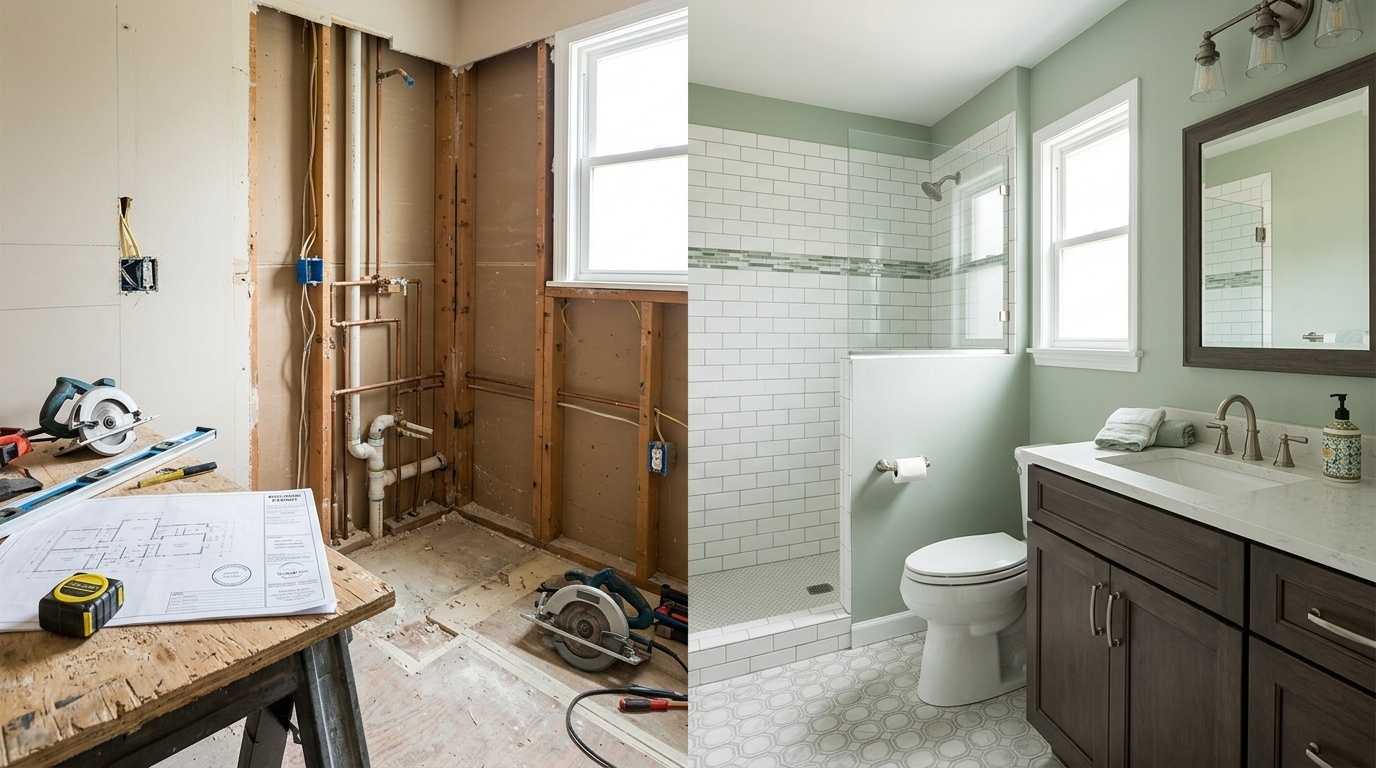
Any project that opens or penetrates walls usually triggers a permit. New pipes, new wiring, or moved fixtures are the clearest signals you need one.
Which Bathroom Jobs Do Not Need a Permit?
Cosmetic and like-for-like work is exempt in most US jurisdictions. The IRC specifically excludes painting, papering, tiling, carpeting, cabinets, and countertops from permit requirements.
Replacing a fixture in its exact current location is also exempt, as long as no pipes move. Swapping an old toilet onto the same flange or changing a faucet fits this rule. The same applies to replacing a showerhead or a light fixture on existing wiring.
One caveat matters here. Even exempt work must still meet current code. No inspector visits, but bad work behind a wall becomes your problem to fix later.
What Are the Gray-Area Bathroom Projects?
Some bathroom jobs sit between clearly permitted and clearly exempt. These trip up homeowners most often, so confirm locally before starting.
Tub-to-shower conversions are the classic example. Some jurisdictions treat a same-footprint swap as like-for-like, while others call it new work because waterproofing and drains change. Shower-pan and water-heater replacements fall in the same uncertain zone.
A free phone call to your local building department settles every gray area. Inspectors would rather answer a question upfront than write a violation later.
What Do Bathroom Remodel Permits Cost in the US?
A bathroom remodeling permit typically costs between $200 and $1,000, depending on jurisdiction and project scope. Many remodels need separate plumbing, electrical, and building permits, each with its own fee.
Local departments calculate fees in three common ways. Many use project valuation, charging a percentage of total material and labor cost. Others use a flat fee per permit type or charge per inspection.
A simple single-trade job might run $200–$400 in permits, while a full gut renovation touching all systems can exceed $800. Because permit costs can add up quickly alongside labor and materials, many homeowners factor them into their Bathroom Remodel Financing plans to avoid unexpected expenses during the project. Always check your local department's current fee schedule before finalizing your budget. Skipping a required permit creates financial and legal risk that almost always exceeds the permit's cost. The consequences follow you long after the remodel ends. Inspectors can issue stop-work orders and fines, sometimes charged per day until corrected. They can also force you to tear out finished work to inspect what is behind the walls. Unpermitted work can void homeowners insurance claims for related damage. It also complicates resale. Most states require disclosing known unpermitted work, and buyers, appraisers, and lenders may all push back. A retroactive permit can fix this, but usually costs several times the original fee. No, replacing a toilet in its existing location usually does not require a permit. The IRC exempts removing and reinstalling a toilet as long as you do not replace or rearrange the valves, pipes, or fixtures. This covers swapping an old toilet onto the same drain flange. You will need a permit if you move the toilet to a new spot, since that reroutes the drain line. No, a bathroom remodel only needs a plumbing permit when pipes are moved, added, or resized. Relocating a sink, toilet, or shower drain triggers the requirement, as does adding a fixture that was not there before. Replacing a faucet or fixture in the same position, without disturbing pipes, is generally exempt. Rules vary by city, so confirm with your local building department. Either the homeowner or a licensed contractor can apply for a bathroom permit in most jurisdictions. If you hire a general contractor, they usually pull the permit, schedule inspections, and take responsibility for code compliance. If you do the work yourself, you can apply as an owner-builder and take on those same duties. Some areas require owner-builders to sign an affidavit confirming the home is their primary residence. A straightforward bathroom permit review often takes a few days to a couple of weeks. Plan reviewers check your drawings against the building code before issuing the permit. Projects involving structural changes can take longer because they need more detailed review. Permits also expire, commonly within 6 to 12 months, so do not pull one long before work begins. Yes, permit rules differ by state, city, and county because there is no federal standard. Most US jurisdictions adopt the International Residential Code as a baseline, which creates broad consistency. However, local amendments, valuation thresholds, and fee structures vary widely. Always verify requirements with your specific local building department before starting any bathroom renovation work.What Happens If You Skip a Required Permit?
Frequently Asked Questions
Do I need a permit to replace a toilet in the US?
Does a bathroom remodel always need a plumbing permit?
Who applies for a bathroom remodel permit, me or my contractor?
How long does a bathroom remodel permit take to get?
Do permit rules for bathroom remodels differ by state?