
Is your bathroom trying to tell you something? A dripping faucet that keeps you up at night. A shower that barely trickles. A drain that takes forever to clear. A toilet that never stops running. That faint sewer smell you keep hoping will just go away.
These are not random inconveniences. They are early warnings. Ignore them long enough and a $5 washer becomes a $500 repair. A running toilet silently wastes 200 gallons of water every single day that is 6,000 gallons per month pouring straight into your water bill, per EPA WaterSense. A hidden leak under the sink quietly rots the subfloor for months before you notice the soft spot.
This guide covers the 6 most common bathroom plumbing problems: leaky faucets, clogged drains, running toilet, low water pressure, sewer smell, and hidden leaks.
1. Leaky Faucets and Dripping Pipes
Symptom: Dripping sound, water pooling under the sink, or a spike in your water bill.
Single-handle faucet drip: Caused by a worn cartridge or O-ring. Turn off the shut-off valve under the sink, remove the handle, pull out the cartridge, and bring it to the hardware store. Cartridges are brand-specific. Install the new one and reassemble. Cost: $10–$20.
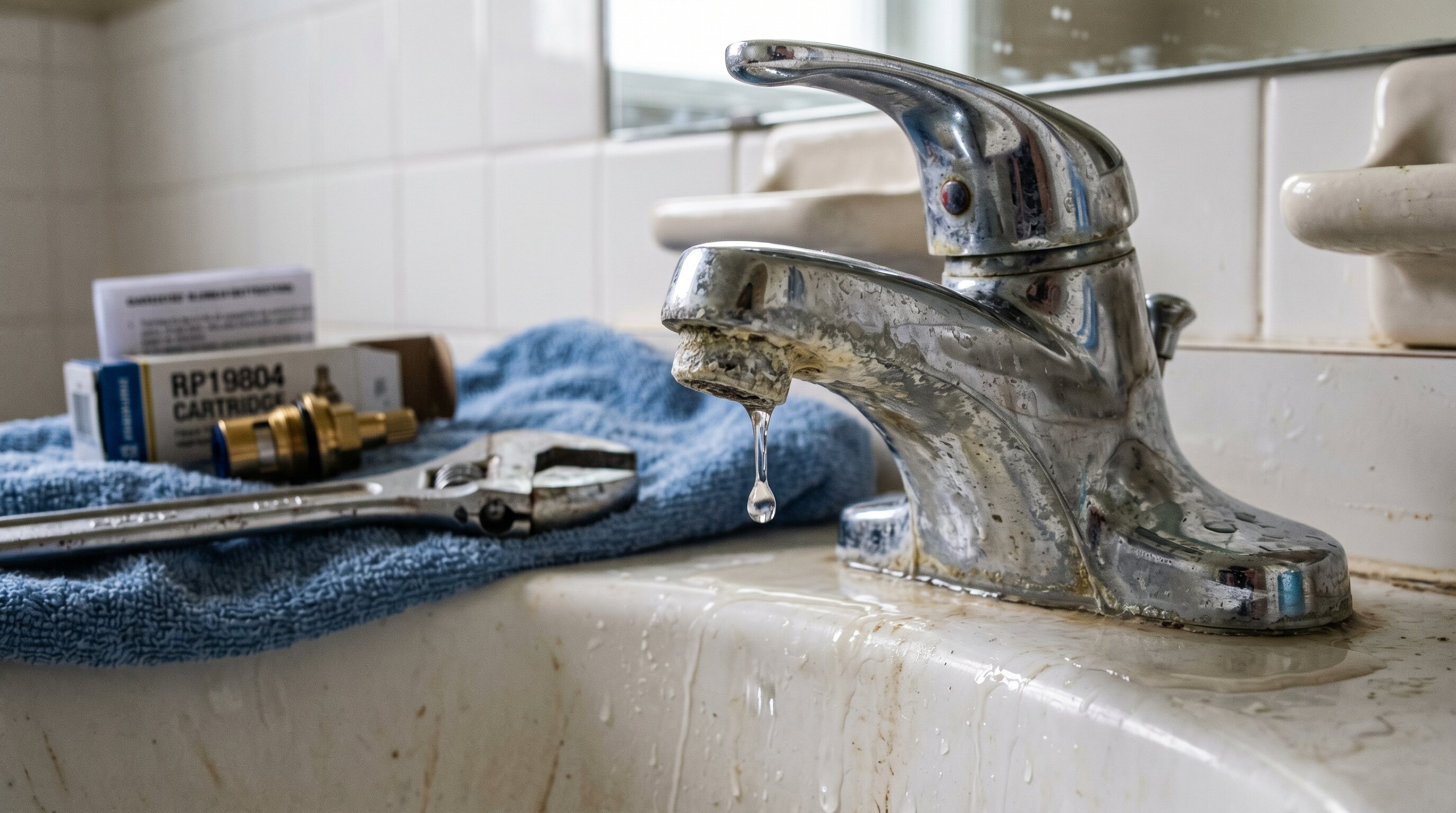
Double-handle faucet drip: Caused by a worn rubber washer inside the valve stem. Same process, replace the washer. Cost: $3–$5.
Leaking showerhead: Wrap the connection threads with PTFE plumber's tape 2 to 3 turns clockwise. Hand-tighten and test. If it still leaks, replace the rubber washer inside the connection. Cost: $2–$5.
Toilet leaking at the base: Failed wax ring. Signs are water pooling at the base, a sewer smell from the floor, and soft flooring around the toilet. Call a licensed plumber improper wax ring installation causes ongoing leaks.
Quick under-sink check: Look at the braided stainless-steel supply lines connecting the valve to the faucet. Rust, fraying, or broken braids mean the line is close to failing replace it. Also move bleach and drain cleaners out from under the sink storing chemicals there corrodes the supply lines from the outside.
When to call a plumber: Leak inside walls · corroded valve seat · soft floor near toilet. Cost: $150–$350.
2. Clogged Drains: Sinks, Showers and Toilets
Symptom: Water drains slowly or not at all. Standing water in the shower. Gurgling after the toilet flushes.
Cause: Hair is the primary culprit in bathroom drains. It binds with soap scum to form solid plugs. A slow drain is the early warning act now before a full blockage forms.
DIY fix:
Remove the drain cover and pull out visible hair by hand (gloves on).
Insert a drain snake rotate clockwise while pushing forward, hook the clog, pull back slowly.
Flush with hot water.
For a slow but not fully blocked drain: half a cup of baking soda followed by half a cup of white vinegar, plug the drain for 15 minutes, flush with boiling water.
Do not use chemical drain cleaners. Products containing sodium hydroxide or sulfuric acid corrode PVC pipe joints and accelerate corrosion in older metal pipes. A drain snake is safer, cheaper, and more effective. Use baking soda and vinegar for minor slow drains.
The plunger most people get wrong: A cup plunger (flat bottom) is for sinks and tubs. A flange plunger (extended rubber sleeve) is for toilets. A cup plunger on a toilet creates no seal, it does nothing. Use the right tool and the fix takes two minutes.
Never flush: Wet wipes (even "flushable") · cotton balls · dental floss · paper towels · feminine hygiene products.
Prevention: Drain strainer over every shower and sink clean it after every shower. Monthly enzyme treatment ($10–$20) breaks down organic buildup before it becomes a blockage.
When to call a plumber: Snake fails to clear clog · multiple fixtures draining slowly at once (main sewer line) · toilet backs up into the tub. Hydro-jetting: $300–$600.
3. Running Toilet
Symptom: Constant sound of running water in the tank. Water bill creeping up with no change in usage.
A running toilet wastes 200 gallons per day. Most homeowners hear the sound and ignore it. That is the most expensive mistake in bathroom plumbing.
The food colouring test: Add a few drops of food colouring to the tank. Wait 15 minutes do not flush. If colour appears in the bowl: the flapper is leaking. The fix takes 10 minutes.
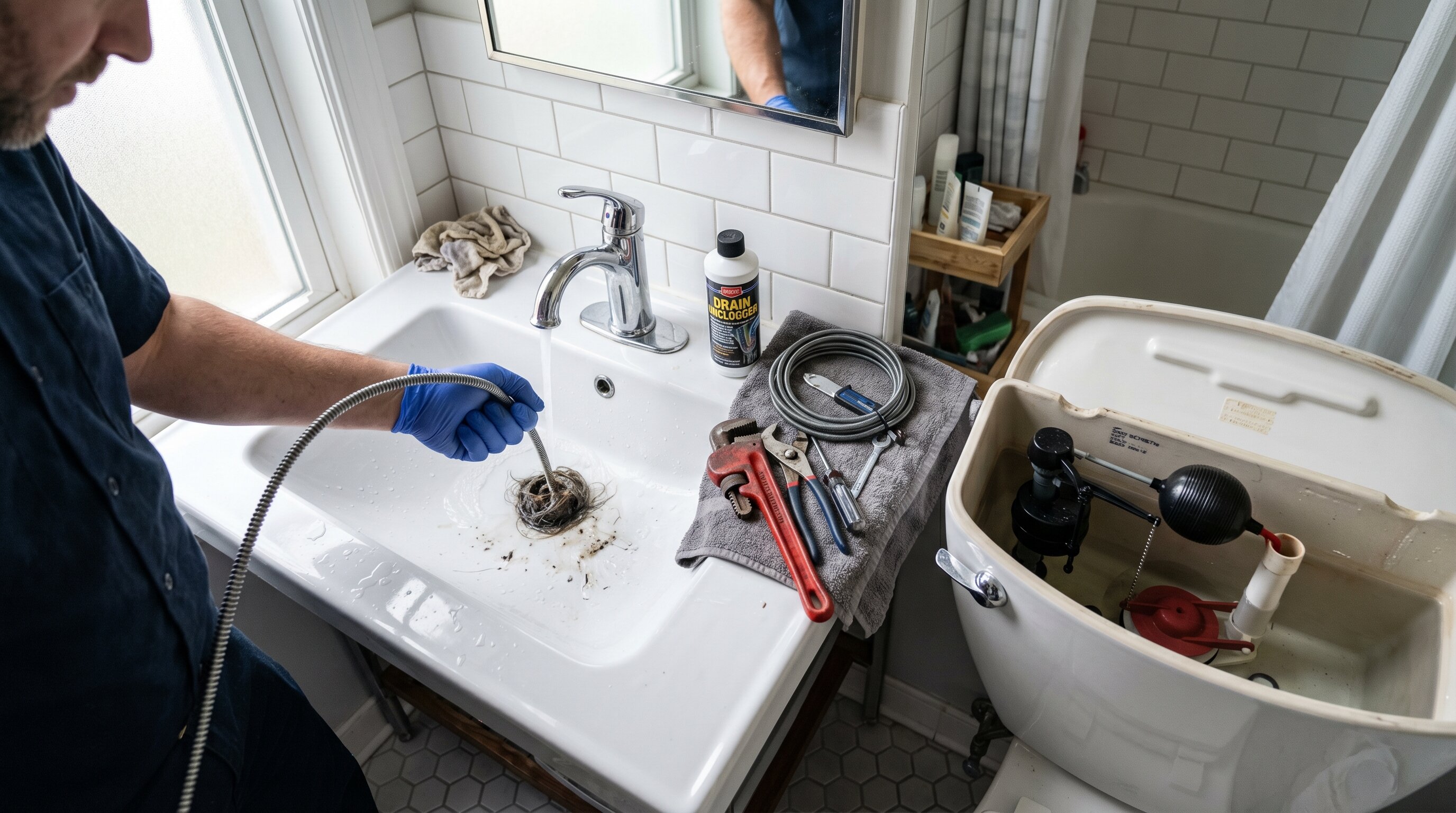
Flapper replacement:
Turn off the supply valve behind the toilet.
Flush to empty the tank.
Unhook the old flapper from the two pegs on the overflow tube.
Attach the new flapper and reconnect the chain with half an inch of slack.
Turn the water back on and test.
Cost: $5–$15. Simplest repair in bathroom plumbing.
Float adjustment: If water is running into the overflow tube: lower the float. Bend the ball float arm down or slide the cup float clip down. Water level should stop 1 inch below the top of the overflow tube.
Warning: In-tank bleach tablets degrade the flapper rubber over time they cause the running toilet they claim to prevent. Clean the tank manually instead.
When to call a plumber: Fill valve needs replacement · crack in the ceramic tank (shut off water immediately) · toilet base seal failure. Cost: $100–$200.
4. Low Water Pressure in the Bathroom
Symptom: Weak shower, faucet feels sluggish, takes longer to fill the sink.
First check: Is the shut-off valve under the sink fully open? A partially closed valve is the most overlooked cause of single-fixture low pressure.
Single fixture weak (one faucet or showerhead only): Mineral buildup in the aerator or showerhead.
Aerator: Unscrew counterclockwise from the faucet tip. Soak in white vinegar for 30 minutes. Scrub and reinstall. Cost: $0, or $3–$10 for a replacement.
Showerhead: Rubber-band a zip-lock bag of white vinegar over the head so it is fully submerged. Leave for 1 hour. Run hot water to flush.
Whole bathroom weak: Supply line restriction, worn shower valve cartridge, or a failing pressure reducing valve (PRV). Normal household pressure is 40–60 PSI. If pressure is low throughout the whole home bathroom, kitchen, and laundry the PRV on the main supply line may be failing. PRV replacement: $200–$600, licensed plumber required.
Prevention: Clean aerators and showerheads annually. Test household water pressure once a year with a $10 gauge at the outdoor hose bib.
When to call a plumber: Whole-bathroom low pressure after checking valves · PRV suspected · pressure fluctuations or banging pipes. Cost: $200–$600.
5. Sewer Smell in the Bathroom
Symptom: Rotten egg or sulfur smell, especially near a drain that is not used often.
In most cases this is a dry P-trap a fix that takes 30 seconds.
What is a P-trap? Every drain has a curved pipe beneath it that holds a small amount of water. That water blocks sewer gas from rising into the bathroom. An infrequently used drain (guest bathroom, floor drain) dries out through evaporation. Sewer gas comes straight up.
Fix: Pour 1 cup of water down the unused drain. Run the tap for 10 seconds. Smell should clear within minutes. Add a small amount of mineral oil on top it sits on the water surface and slows evaporation significantly.
If the smell persists: Check the toilet wax ring for cracks sewer gas escapes at floor level when the seal fails. Listen for gurgling drains after flushing this signals a blocked plumbing vent pipe (debris or a bird nest at the roof stack), which forces sewer gas back through the drains.
Musty vs rotten egg: A musty smell is biofilm in the drain treat with baking soda and vinegar monthly. A rotten egg smell is hydrogen sulfide (true sewer gas) check P-traps and wax rings first, then call a plumber if it persists.
When to call a plumber:
- Smell persists after all P-traps are filled.
- gurgling drains.
- smell spreading beyond the bathroom.
- Vent clearing: $150–$450.
6. Hidden Water Leaks
Symptom: Unexplained water bill increase, soft floor near the toilet, musty smell without visible mold, water stain on the ceiling below the bathroom.
The average household hidden leak wastes 10,000 gallons per year. Most go undetected for months.
The water meter test:
Turn off every fixture and appliance using water.
Locate the water meter and note the reading exactly.
Wait 30 minutes and use no water.
Re-check. If the dial moved: there is an active leak in the system.
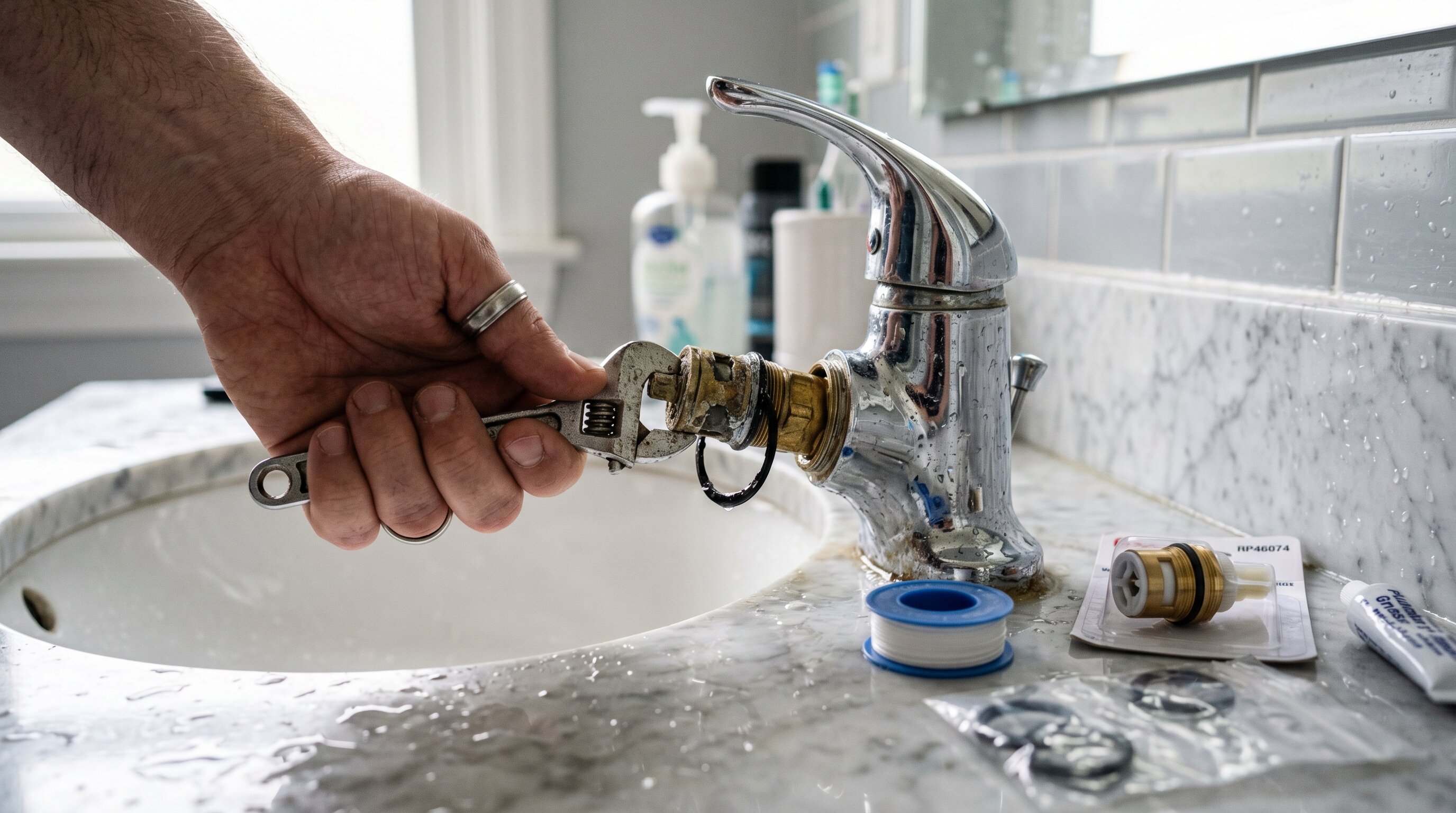
Under-sink check: Open the cabinet under every bathroom sink. Look at the braided supply lines rust, fraying, or broken braids mean imminent failure. Takes 30 seconds to check. Replace a failing line before it bursts.
Smart leak sensor: A water sensor placed on the floor near the toilet and under sink cabinets connects to your smartphone and alerts you the moment water is detected. Cost: $20–$50. It is the difference between catching a leak on day one and finding it after three weeks and thousands of dollars in water damage. Undetected leaks commonly cause mold growth inside ceiling cavities and walls see our bathroom mold prevention guide.
When to call a plumber:
- Leak inside walls
- soft floor near toilet
- meter test confirms leak but location is unclear
Professional leak detection: $100–$400.
Frequently Asked Questions
How do I know if I have a hidden water leak?
Turn off all water in the house, note the water meter reading, wait 30 minutes, and re-check. If the dial moves, there is a leak. Other signs: unexplained bill increase, soft floor near the toilet, musty smell, and water stains on the ceiling below the bathroom.
Why does my bathroom drain smell like sewer?
Almost always a dry P-trap. Pour 1 cup of water down the unused drain and add mineral oil to slow re-evaporation. If the smell persists, check the toilet wax ring and listen for gurgling drains. A blocked plumbing vent pipe forces sewer gas back up through the drains.
Why is my toilet constantly running?
Almost always a worn flapper valve. Test with food colouring in the tank if colour appears in the bowl after 15 minutes without flushing, the flapper is leaking. Replacement costs $5–$15 and takes 10 minutes.
Should I use a chemical drain cleaner?
No. Sodium hydroxide and sulfuric acid corrode PVC pipe joints and metal pipes. Use a drain snake instead. Baking soda and vinegar handles minor slow drains safely.
How do I increase shower water pressure?
Soak the showerhead in white vinegar for 1 hour to remove mineral buildup. Check that the shut-off valve is fully open. If the whole bathroom is weak, a failing pressure reducing valve may be the cause call a plumber.
When should I call a plumber?
Call a licensed plumber for: leaks inside walls, toilet base seal failure, whole-home low pressure, sewer smell after filling all P-traps, multiple fixtures draining slowly at once, or a drain snake that fails to clear a clog.
How much do bathroom plumbing repairs cost?
DIY parts: faucet washer $3–$5 · cartridge $10–$40 · flapper $5–$15 · aerator $3–$10 · PTFE tape $3. Professional: faucet repair $150–$350 · drain clearing $100–$300 · running toilet $100–$200 · hydro-jetting $300–$600 · leak detection $100–$400.