
Spotting dark patches on your bathroom ceiling is alarming. It is also almost always fixable. Small patches under 10 square feet on a painted ceiling are safe to handle yourself. Anything larger, soft drywall, or recurring mold means calling a certified professional.
If you are dealing with mold elsewhere in the bathroom on walls, grout, or shower curtains see our complete bathroom mold prevention guide. This article focuses specifically on ceiling mold: why it forms there first, how to remove it safely, and how to stop it coming back for good.
Why Does Mold Grow on the Bathroom Ceiling? (And Not the Walls First)
Hot shower air rises and hits the coolest surface, the ceiling. Moisture condenses on the paint and drywall paper while the walls dry faster from circulating air. Mold spores germinate within 24 to 48 hours on a consistently damp surface.
If your bathroom is on the top floor, the risk is even higher. Less insulation between the ceiling and the exterior roof means a colder ceiling surface, more condensation, and faster mold growth particularly in corners above exterior walls.
Is It Mold or Mildew: And Does It Matter?
Mildew is light grey, flat, and wipes off cleanly. Mold is darker green-black, brown, or orange smells musty, and returns within days because roots embed below the surface.
The four species most common on bathroom ceilings: Alternaria (dark speckled, most common), Aspergillus (any colour, asthma trigger), Cladosporium (olive-green, cool temperature grower), and Stachybotrys chartarum (true black mold requires a sustained leak, not shower steam). Most dark ceiling mold is NOT Stachybotrys.
Condensation mold spreads diffusely across the ceiling. A roof leak creates concentrated mold in one spot with a yellow or brown ring. If it tracks a line, fix the leak before cleaning anything. See our mold vs mildew guide for the full comparison.
What Actually Causes Mold on a Bathroom Ceiling
Most bathroom ceiling mold comes down to one thing: moisture that cannot escape. But the specific reason it cannot escape varies and getting that diagnosis right is the difference between cleaning once and cleaning forever.
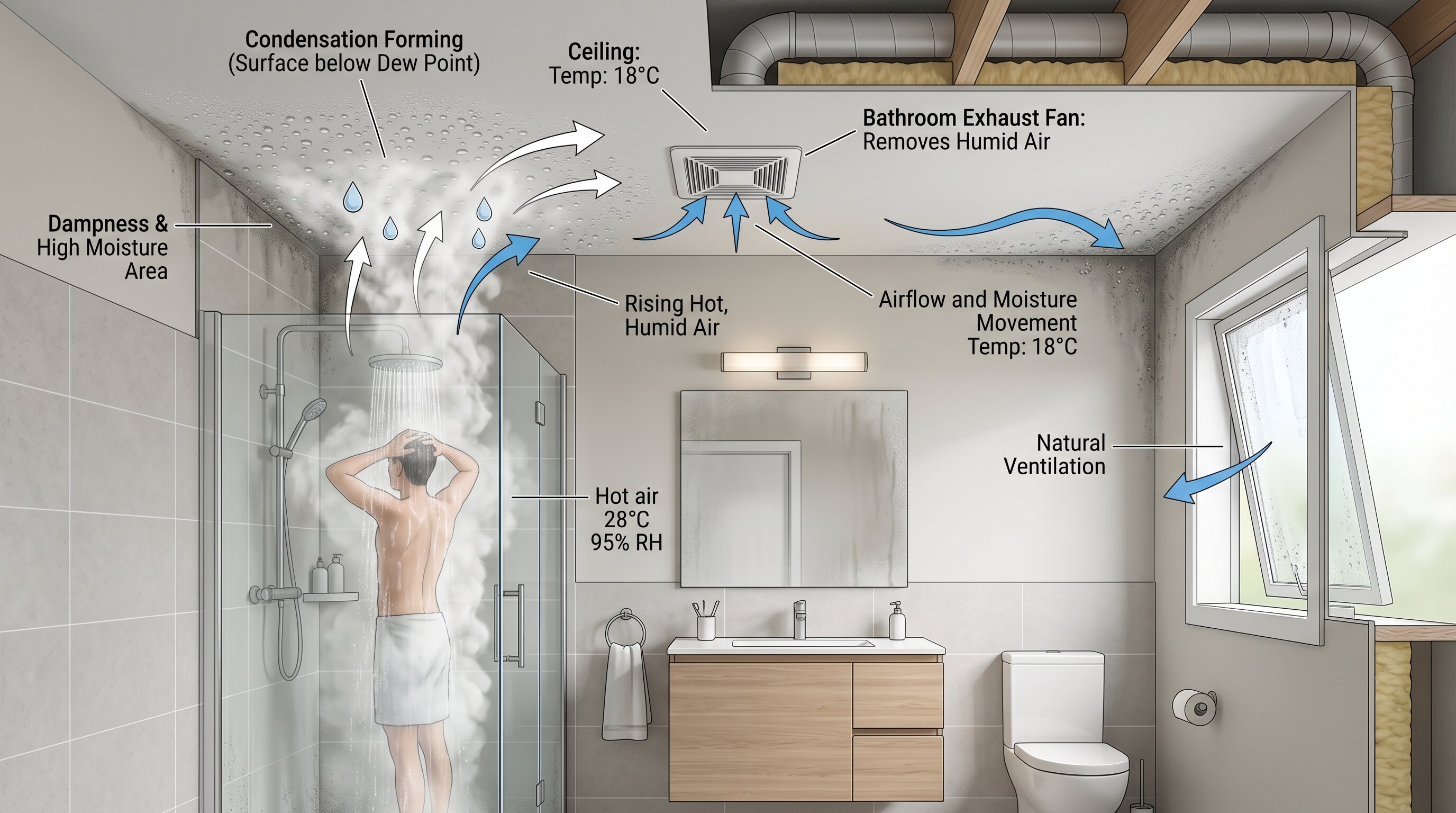
Poor ventilation is the leading cause of the fan being too small, running too briefly, or not moving air effectively.
Attic duct venting is the most missed cause. When the exhaust duct ends inside the attic instead of exiting outdoors, moist air falls back onto the ceiling. Mold returns no matter how well you clean. Check the attic after a hot shower if the duct ends inside, re-route it to the exterior.
Physical fan failures are easy to overlook: crushed flex duct, seized exterior vent louvers, stuck damper, or dust-clogged grille. Hold toilet paper to the grille while the fan runs if it does not cling flat, airflow is insufficient.
Other contributors: humidity above 60 percent, roof or plumbing leaks, poor ceiling insulation, and lack of natural light. The CDC recommends keeping indoor humidity below 50 percent. Mold thrives between 40°F and 80°F year-round.
Is Mold on the Bathroom Ceiling Dangerous?
For most healthy adults: mild respiratory irritation, sneezing, congestion, sore throat, itchy eyes worse in the bathroom, better when you leave. Children, elderly, and anyone with asthma or compromised immunity face more serious reactions. Aspergillus can cause Aspergillosis, a potentially life-threatening lung infection in immunocompromised individuals.
Stachybotrys produces mycotoxins never DIY this one. Ceiling mold is riskier than wall mold because spores fall directly toward your face during showers and cleaning.
How to Remove Mold from a Bathroom Ceiling: Step-by-Step
Check the drywall first. If the paper face is soft, blistered, or deteriorated replace the panel. No cleaner reaches mold roots in compromised drywall.
Step 1: PPE. N95 respirator, rubber gloves, safety goggles. Spores fall downward the N95 is non-negotiable.
Step 2: Prep. Lay a drop cloth. Turn off the HVAC supply vent to stop spores spreading through ducts. Open a window.
Step 3: Mist first. Lightly mist the mold with water before applying cleaner. Damp spores do not become airborne. Do not skip this step.
Step 4: Apply the right cleaner.
Bleach cannot penetrate drywall use on non-porous surfaces only. CDC ratio: 1 cup bleach per 1 gallon of water. Never mix bleach with ammonia. Leave any solution 10 to 15 minutes before scrubbing.
Step 5: Scrub gently with a soft-bristle brush. Never sand dry mold.
Step 6: HEPA vacuum after scrubbing to capture loose spores.
Step 7: Rinse and dry completely with fans and a dehumidifier.
Step 8: Repaint correctly. Never paint over mold; it keeps growing beneath. Sequence: remediate → dry 48+ hours → shellac-based stain-blocking primer → mold-resistant semi-gloss or eggshell. Never flat latex on a bathroom ceiling; it holds moisture. For heavy-use bathrooms, pre-catalyzed epoxy is the professional-grade option. Avoid oil-based primer before latex it traps moisture at the interface.
How to Stop Bathroom Ceiling Mold Coming Back
Cleaning removes visible mold. Fixing moisture stops it returning.
Run the fan during every shower and for 30 minutes after (CDC minimum). Size it correctly: CFM = bathroom square footage × 1.1. If mold persists despite running the fan, check the duct to confirm it exits through the exterior wall or roof, not into the attic.
Keep humidity below 50 percent (CDC). A hygrometer costs $10 to $20 check 30 minutes after showering. Leave the shower door open when not in use to prevent trapped humid air feeding the ceiling.
Monthly checklist: Check humidity · clean fan grille · wipe ceiling corners · inspect caulk and grout · look for new staining · run dehumidifier on humid days · wash towels and mats · check plumbing drips · test fan with toilet paper · leave the shower door open.
When to Call a Professional Mold Remediator
Call when: mold exceeds 10 square feet · ceiling feels soft or sagging · mold returns within weeks of cleaning · musty smell spreads outside the bathroom · mold is near HVAC vents · mold followed a sewage backup.
Professionals use negative-pressure containment, HEPA filtration, infrared cameras for hidden moisture, and quaternary ammonium compounds. Look for IICRC S520 certified technicians and a written scope of work before any work begins.
Cost: $500 to $1,500 for surface mold. $1,500 to $3,000+ if mold has penetrated drywall or spread into the attic.
Frequently Asked Questions
Why does mold keep coming back on my ceiling?
The moisture source was not fixed before cleaning. Check whether the duct exhausts into the attic, whether a crushed duct or seized louver is blocking airflow, and whether the fan is correctly sized.
Is black mold on the bathroom ceiling dangerous?
Dark ceiling mold is almost always Alternaria or Cladosporium not Stachybotrys, which requires sustained water damage, not steam. Slimy mold tracking a path suggests a leak call a professional.
How fast does mold spread on a bathroom ceiling?
Germination begins within 24 to 48 hours on a damp surface. A small patch can double in size within days if humidity stays above 60 percent.
Can bathroom ceiling mold spread to other rooms?
Yes. HVAC systems carry spores through ducts into other rooms. Turn off the supply vent during removal.
I have mold after a water leak. What do I do?
Fix the leak first. If the ceiling is soft or sagging, get a professional assessment before cleaning.
When should I call a professional?
Mold over 10 square feet, soft or sagging ceiling, recurring mold, persistent musty smell outside the bathroom, or household members with respiratory symptoms.
How much does professional mold remediation cost?
$500 to $1,500 for surface mold. $1,500 to $3,000+ if drywall is compromised or mold has reached the attic. A professional inspection costs $300 to $1,000 before remediation begins.
Conclusion:
Most bathroom ceiling mold is a ventilation problem with a fixable solution. The ceiling gets it first because that is where warm moist air goes. The fan is the first thing to check not just whether it runs, but whether it actually moves air out of the building. Fix the fan. Fix the humidity. Fix the moisture source before you clean. Do those three things and the ceiling stays clean.