
A leaking pipe inside a wall is one of the most stressful plumbing problems because the damage is usually hidden while it spreads silently behind surfaces. Most homeowners discover it only after seeing damp walls, rising water bills, or a mold smell, which means the damage has already started. The cost to repair a leaking pipe in a wall typically ranges from $500 to $5,000+, depending on how early the leak is found and how much hidden damage has already developed.
If water is actively leaking, the first step is always to shut off the main water supply to stop further damage before any repair work begins.
How Much Does It Cost to Repair a Leaking Pipe in Wall?
The cost depends on how difficult it is to access the pipe and how far the water damage has spread inside the wall structure. A simple leak near accessible drywall costs far less than a hidden leak behind tile, concrete, or insulation.
Water Leak in Wall Repair Typical Cost Ranges
Small, easy-access leak: $150 – $500
Standard wall leak repair: $500 – $2,500
Hidden or damaged wall leak: $2,500 – $5,000+
Severe water damage with mold: $5,000 – $10,000+
The reason costs rise quickly is because plumbing repair is only one part of the job wall opening and restoration often cost just as much as the pipe fix itself.
Why Wall Pipe Leaks Become Expensive
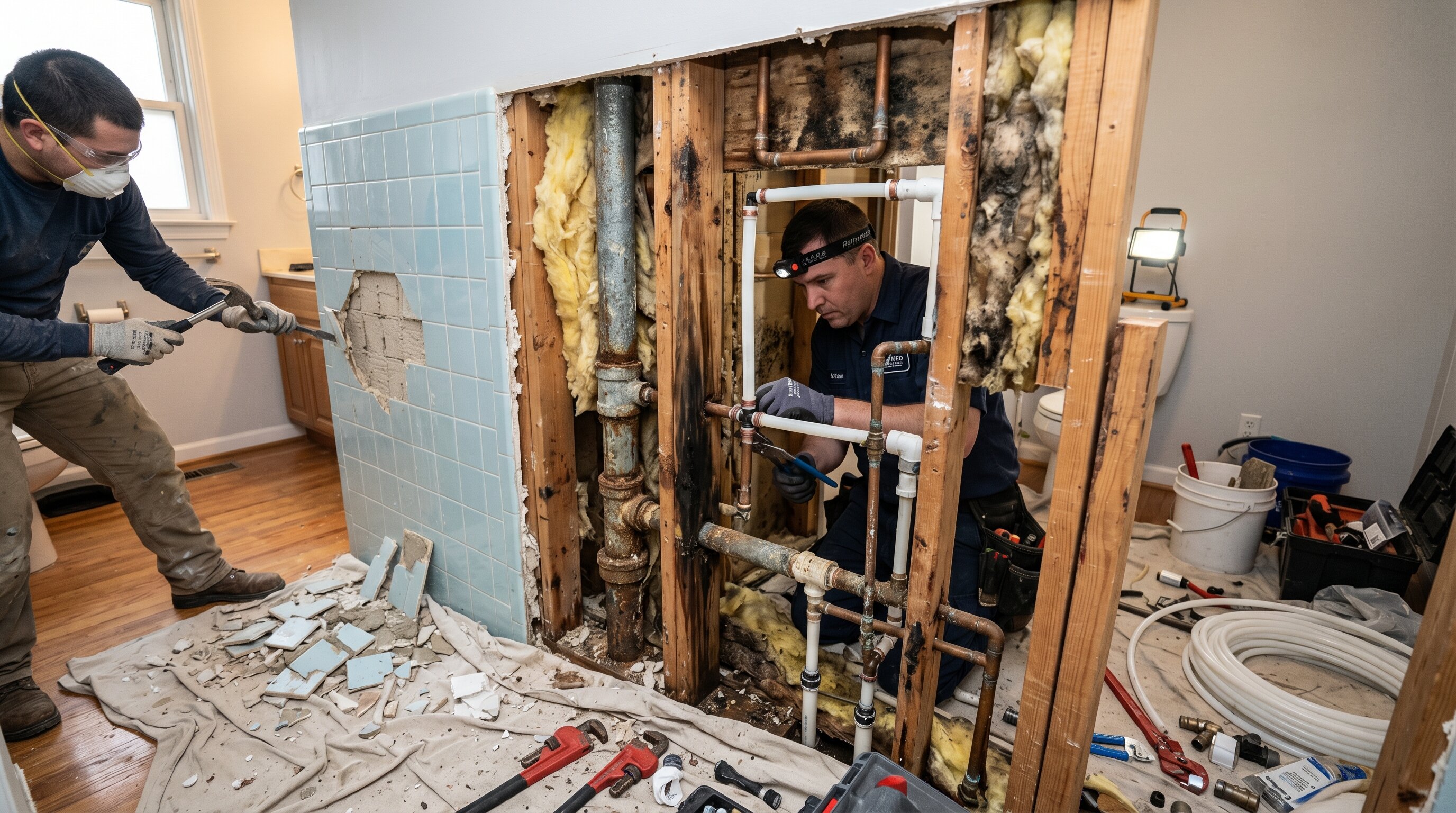
A leaking pipe inside a wall is expensive because the problem is never just the pipe. The wall must often be opened, the leak located, the pipe repaired, and the damaged structure restored.
Each layer adds cost and labor time, which is why prices increase quickly when leaks are hidden for long periods.
Cost Breakdown of Repairing a Leaking Pipe in Wall
Understanding the breakdown helps you see where your money actually goes and why estimates vary so much.
The total cost increases when more damage is discovered during wall opening.
What Actually Affects the Repair Cost?
There a few most important points be consider that effect repair cost:
Location of the leak
Leaks behind tile or concrete take longer to access and repair, increasing labor costs significantly.
How long the leak has been active
Older leaks usually cause hidden structural or mold damage, which increases total repair cost.
Pipe material and condition
Old copper or galvanized pipes are harder to repair compared to modern PEX or PVC piping.
Accessibility inside the wall
If pipes are buried behind insulation or structural framing, the repair becomes more labor-intensive.
Emergency vs scheduled repair
Emergency plumbing services cost more because they require immediate labor, often outside normal hours.
The Hidden Cost Most Homeowners Don’t Expect
The biggest mistake homeowners make is assuming the cost ends at pipe repair, but in reality, wall restoration often costs just as much.
If the leak has been active for days or weeks, additional costs may include:
Drywall replacement
Structural drying
Flooring repair
Painting and repainting
These hidden costs are the reason a small leak can turn into a multi-thousand-dollar repair.
Cost of Delaying Repair (Why Time Matters)
In the first 24–48 hours, damage is usually limited to plumbing repair
After a few days, drywall begins absorbing moisture and weakens
Within a week, mold growth can begin inside the wall
After extended delay, full restoration may cost $5,000–$10,000+
This is why early detection directly reduces total repair cost.
Common Repair Methods for Wall Pipe Leaks
Spot repair
Used when the leak is small and easily accessible. Only the damaged pipe section is replaced.
Pipe section replacement
A section of damaged pipe inside the wall is removed and replaced with new piping.
Pipe relining (when possible)
A liner is inserted into the pipe to seal damage without fully replacing the pipe, but it is only suitable in certain conditions.
Full pipe replacement
Required when pipes are old, corroded, or have multiple weak points that may fail again.
Repair vs Replace Pipe: What’s More Cost-Effective?
Repair is typically cheaper in the short term, but replacement can be more cost-effective if the pipe system is aging.
Choose repair when
Damage is limited to one area
Pipes are relatively new
No repeated leaks exist
Choose replacement when
Multiple leaks have occurred
Pipes are old or corroded
Water damage keeps returning
Hidden Costs Homeowners Overlook
Mold removal: $500 – $3,000+
Drywall replacement: $300 – $1,200
Floor repair: $500 – $2,500
Water extraction and drying: $200 – $1,000
Inspection and leak detection: $100 – $400
These costs are often the reason final bills exceed initial estimates.
Does Insurance Cover a Leaking Pipe in Wall?
Sudden pipe burst is usually covered
Slow leaks over time are often not covered
Water damage may be covered even if pipe repair is not
Insurance companies typically require proof that the damage was sudden and not due to long-term neglect.
Emergency vs Regular Repair Cost
The cost of repairing a leaking pipe in a wall can vary significantly depending on how quickly the service is needed. Emergency repairs are more expensive because they require immediate response, often outside normal working hours, while scheduled repairs allow for planned work at standard pricing.
Emergency repair
Costs are typically 1.5x–3x higher than normal rates due to urgent call-outs
Available during nights, weekends, or holidays when standard labor is not scheduled
Results in a higher total bill because of immediate response and priority service
Scheduled repair
Charged at standard labor rates with no emergency surcharge
Allows plumbers to properly assess and plan the repair before starting work
Gives better control over timing, budgeting, and overall restoration process
Frequently Asked Questions
How much does it cost to fix a leaking pipe in a wall?
The cost usually ranges from $500 to $2,500, depending on accessibility and damage level, but severe cases with hidden water damage can exceed $5,000.
Can a plumber fix a pipe without opening the wall?
In limited cases, plumbers can use small access points or specialized repair methods, but most hidden leaks require partial wall removal for proper repair.
How long does wall pipe repair take?
Most repairs take a few hours, but full restoration including drywall, tile, and painting can take 1–3 days depending on damage.
How fast does mold grow after a leak?
Mold can begin developing within 24–48 hours in damp, enclosed wall spaces if moisture is not removed quickly.
Is a leaking pipe in the wall an emergency?
Yes, because even a small leak can silently damage walls and lead to expensive structural and mold problems if not repaired quickly.
Conclusion
A leaking pipe inside a wall becomes expensive not because of the pipe itself, but because of the hidden damage it creates behind walls. The total cost depends on how quickly the leak is detected and how much restoration work is required afterward. Small leaks are relatively affordable to fix, but delays can multiply costs due to drywall damage, mold growth, and structural repairs. Acting early is the most effective way to keep repair costs low and prevent long-term damage to your home.