
You have spotted something growing in your bathroom. It is dark in the corner, or powdery on the grout, or slimy and pink near the shower drain. And you are not sure whether to grab a sponge or call a professional.
About 70% of homes worldwide have some form of mold or mildew. Most people cannot tell the two apart and that gap matters, because they require different cleaners, carry different health risks, and signal very different levels of urgency. This guide tells you exactly how to identify what you are looking at, how dangerous it is, and the fastest way to deal with it.
Mold vs Mildew at a Glance
What Is Mildew?
Mildew is surface-level fungus. The EPA defines it as a type of mold that grows flat and stays on the surface, it does not root into materials.
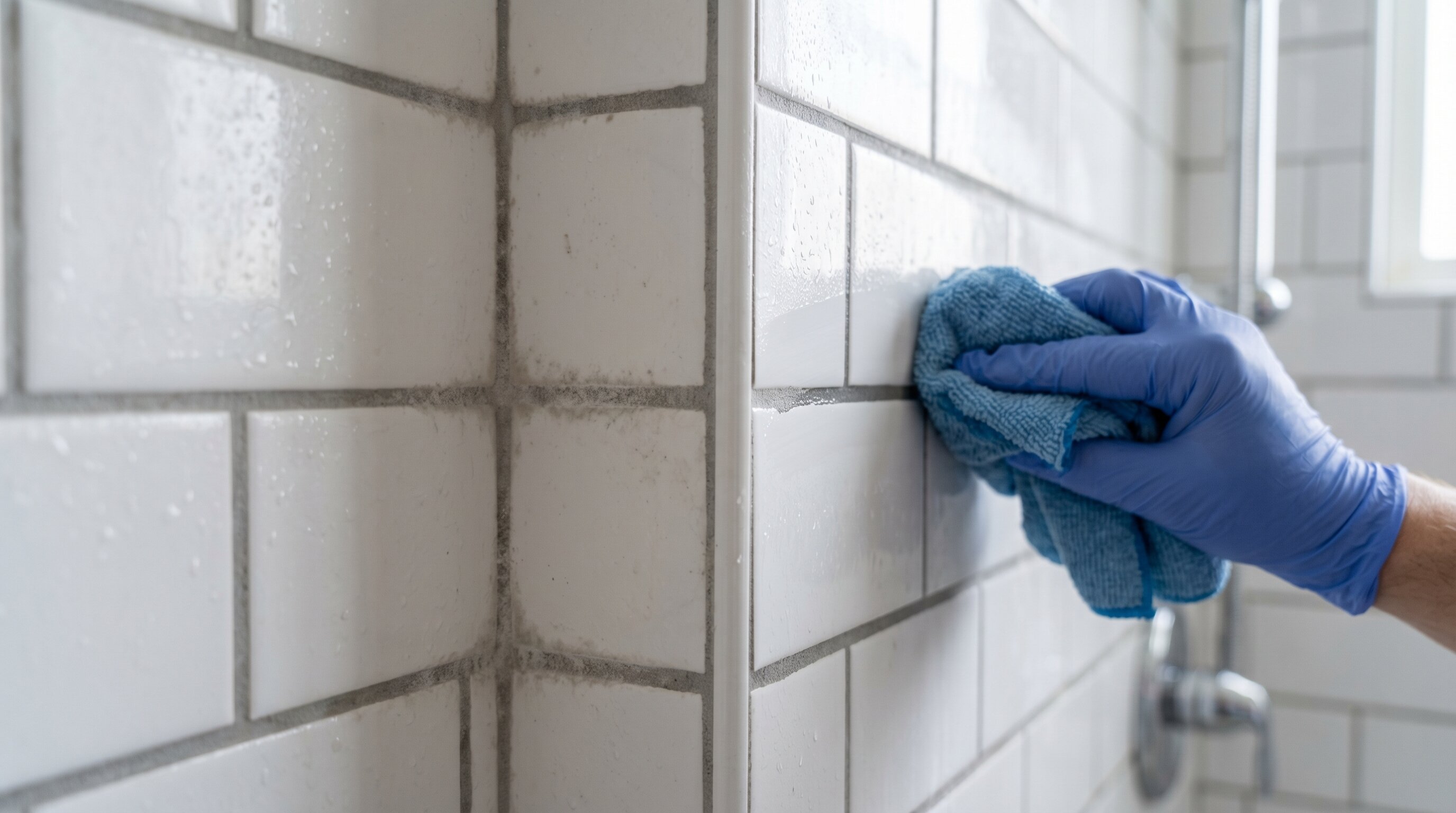
What does mildew look like in a bathroom?
It starts as a white or light grey powdery film. Always flat, never raised. Left untreated it turns yellow, then brown. You will find it on grout, shower curtains, window sills, damp towels, and the corners of walls where condensation collects.
FEMA describes mildew as early-stage mold. That framing matters ignore mildew long enough and you create the conditions for something worse to follow.
Is mildew dangerous?
It is not harmless. Most healthy adults experience mild irritation, sneezing, headaches, and sore throat. For people with asthma, allergies, or weakened immunity, reactions can be more persistent. Symptoms typically resolve once the mildew is removed.
What Is Mold?
Mold is a multicellular fungus that grows through root-like filaments called hyphae. Those roots embed below the surface of porous materials drywall, grout, wood, caulk. The visible growth is only the top. The problem goes deeper.
What does mold smell like in a bathroom?
Mold produces microbial volatile organic compounds MVOCs as it metabolises organic material. That is what creates the strong, heavy, earthy smell. Mildew smells milder and sourer by comparison. A persistent musty odour you cannot source often means mold is growing somewhere hidden behind tiles, inside walls, under the floor. Mold spores are always present in the air. On a consistently wet surface they begin germinating within 24 to 48 hours.
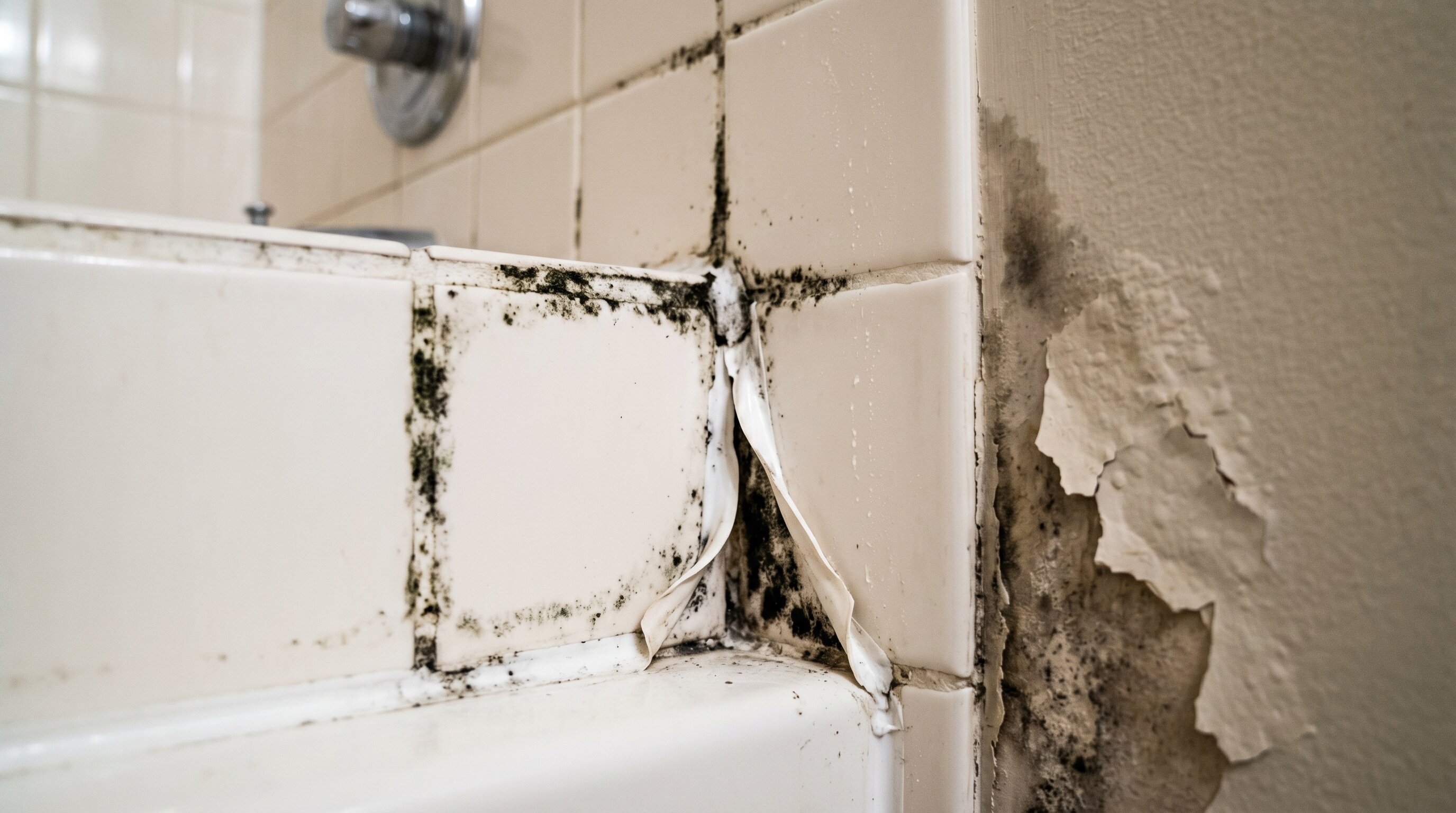
Six species found in bathrooms:
Alternaria: dark velvety patches in corners, caused by chronic moisture. Common asthma trigger.
Aspergillus: yellow, green, or black clusters. Causes Aspergillosis, a serious lung infection, in immunocompromised individuals.
Cladosporium: olive green to black, around drains and under sinks. Grows in cooler temperatures than most molds.
Penicillium: bluish-green and fuzzy. Leaves stains even after removal.
Fusarium: pink, red, or white. Fast-growing. Produces mycotoxins toxic compounds harmful to health.
Stachybotrys chartarum (black mold): dark greenish-black, slimy. Requires sustained water damage to establish. Produces mycotoxins linked to respiratory and neurological effects. Most dark bathroom mold is NOT Stachybotrys; it requires more than a steamy shower to form.
6 Ways to Tell Them Apart
1. Appearance: Powdery and flat: mildew. Fuzzy, slimy, or raised: mold.
2. Colour: White or grey: mildew. Black, dark green, brown, or red: mold. Mildew never goes black on its own.
3. Smell: Mild sour odour: mildew. Strong earthy smell (MVOCs): mold.
4. Surface wipe test: Spray household cleaner and wipe. Comes off completely: mildew. Stains or returns quickly: mold rooted below the surface.
5. Material check: Growth on drywall, raw wood, or behind loose tiles strongly suggests mold embedded beneath the surface.
6. The bleach test: Apply two to three drops of household bleach to the growth. Wait two minutes. Lightens immediately: mildew. Little or no colour change: likely mold. This is the most reliable at-home test, and almost no other article covers it.
Quick rule: powdery and light = mildew. Darker, fuzzy, penetrating = mold.
The Pink Stuff
Pink or orange slimy film on grout, caulk, or around the toilet is not mold or mildew.
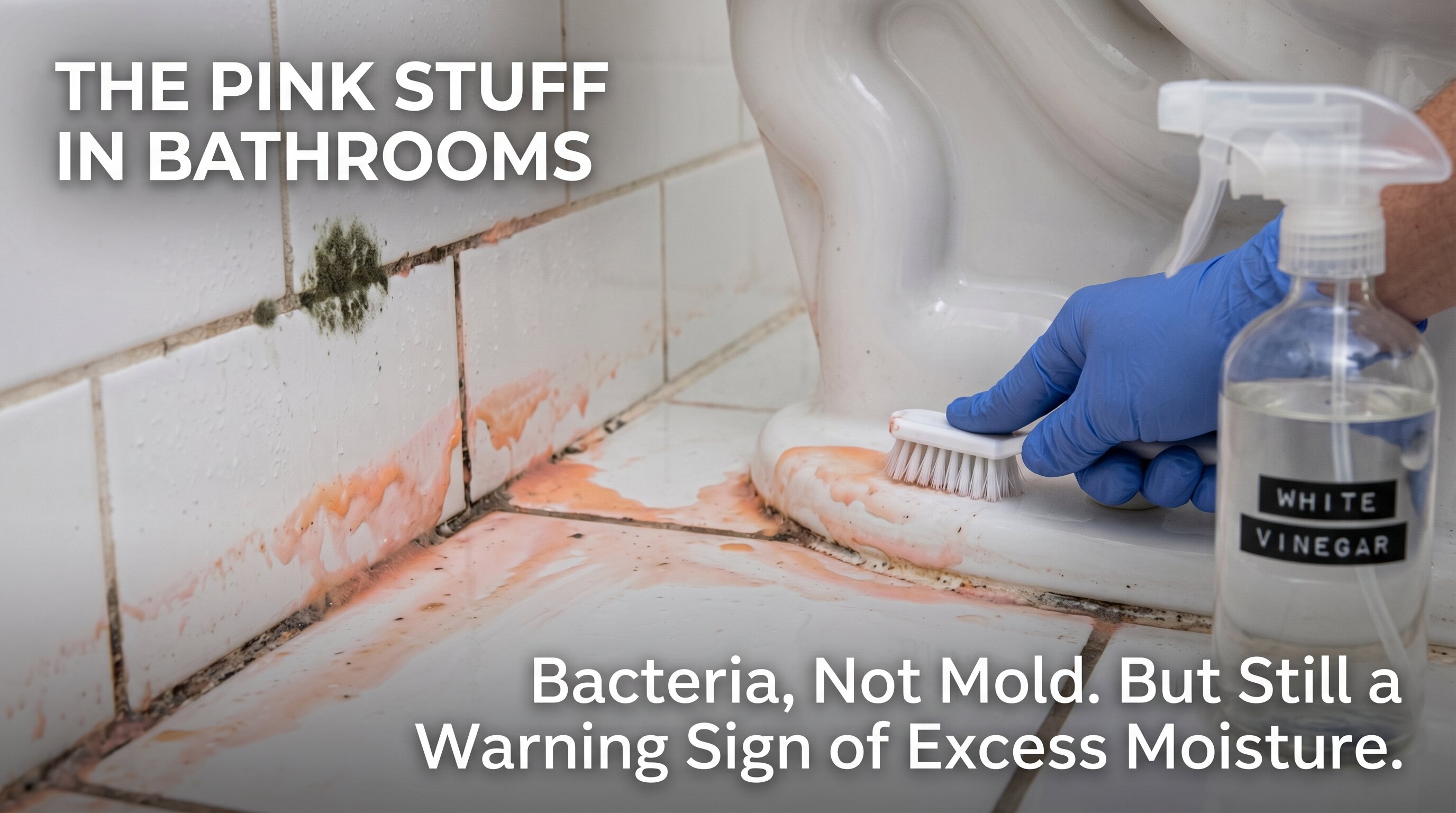
Serratia marcescens is a bacteria. It thrives in the same damp conditions as mold but is a completely different organism. It appears as a slimy pink, orange, or reddish film. For healthy adults the risk is low. For immunocompromised individuals it can cause urinary tract infections. Treat it with white vinegar spray or diluted bleach, scrub with a stiff brush, and fix the moisture.
One exception: if the pink growth is fuzzy and raised rather than slimy, it may be Fusarium mold which produces mycotoxins. Apply the bleach test. If it does not lighten, treat it as mold.
Slimy and pink = bacteria. Fuzzy and pink = possible Fusarium mold. Both signal your bathroom is staying too wet.
Health Risks
Mold is significantly more dangerous than mildew, but both deserve action.
Mildew causes mild irritation for most people, sneezing, sore throat, headaches. Can mildew make you sick? Yes, though symptoms are mild for healthy adults and resolve once exposure ends.
Mold is more serious. Difficulty breathing, eye irritation, skin rashes, chronic congestion, and fatigue are common. Aspergillus can trigger severe asthma and cause Aspergillosis, a lung infection in immunocompromised individuals. The CDC links prolonged mold exposure to lung infections in vulnerable groups.
High-risk groups: children, elderly, people with asthma, mold allergies, or compromised immunity.
The practical test: if symptoms consistently improve when you leave the bathroom and return when you go back in mold or high humidity is the cause.
Why Your Cleaner Choice Matters
Why does mold keep coming back after bleaching?
Porous surfaces (grout, drywall, wood, caulk) let mold root below the surface. Bleach does not penetrate deep enough to reach those roots. The surface looks clean. The mold comes back.
Non-porous surfaces (tile, glass, porcelain) do not let mold root. Bleach works perfectly here.
The right cleaner for the right surface:
Tile and glass → bleach solution (1 cup per 1 gallon CDC ratio) or white vinegar
Grout → hydrogen peroxide 3% spray, wait 15 min, scrub with a stiff brush
Fabric and shower curtains → white vinegar in a machine wash
Baking soda → paste on grout lines for mildew. Scrub, rinse, follow with hydrogen peroxide
Bleach on grout removes the colour of mold it does not kill the roots. Hydrogen peroxide does.
How to Remove Mildew and Mold
Mildew
Wear gloves and eye protection
Spray white vinegar or a mildew cleaner on the affected area
Wait 5 to 10 minutes do not skip this
Scrub with a soft brush on tile, stiff brush on grout
Rinse well and dry completely
Shower curtain: machine wash warm with white vinegar. Air dry fully. If mildew will not wash out after two cycles, replace it.
Mold
EPA threshold: under 10 square feet DIY. Over 10 square feet professional.
N95 respirator, rubber gloves, and goggles non-negotiable
Mist the mold lightly so spores do not become airborne
Apply dish soap and water or diluted vinegar
Wait 10 to 15 minutes
Scrub with a stiff brush; toothbrush for grout lines
Rinse and dry completely
Follow with diluted bleach on non-porous surfaces
Never mix bleach with ammonia. It produces toxic chloramine gas. Use bleach alone, diluted, with the window open.
If mold returns within 2 to 3 weeks: the moisture source is still active. Stop cleaning and find what is feeding it, a hidden leak, failed caulk, or an inadequate exhaust fan.
Quick cleaner reference
If mold returns within 2 to 3 weeks of cleaning: the moisture source is still active. No amount of cleaning solves a hidden leak or an exhaust fan that is not doing its job. Fix the source first.
Prevention in Brief
Mold needs four things: air, water, food, and temperature between 41–104°F. You cannot change the air or temperature. You can remove the water and food.
Exhaust fan: run during every shower and for 30 minutes after CDC minimum
Humidity: keep below 50%. A hygrometer costs under $15 and removes all the guesswork
Grout sealer: apply once a year
Caulk: replace every 5 to 8 years, once mold enters silicone, the silicone must be removed entirely
Wipe surfaces: soap scum contains organic matter that feeds fungi. Remove it weekly before it builds up
Fix leaks immediately: a slow drip keeps a surface damp around the clock
For the full prevention guide fan sizing formula, location-specific tips, and the complete monthly checklist see our bathroom mold prevention article.
Frequently Asked Question
Is mildew a type of mold?
Yes, mildew is considered a surface-level form of mold. It usually grows flat and powdery on damp surfaces like bathroom tiles or grout. While all mildew is mold, not all mold is mildew because deeper mold can grow inside materials like drywall or wood.
Does mildew turn into mold?
Yes, mildew can develop into more serious mold if moisture is not controlled. Mildew is often the early stage of fungal growth, and when conditions stay damp, it can spread deeper into surfaces and become full mold growth. The key prevention step is removing moisture early.
What is the pink stuff in my shower?
The pink or reddish slime commonly found in showers is usually Serratia marcescens, which is a type of bacteria, not mold. It thrives in warm, damp environments like soap residue in bathrooms. If it appears fuzzy or dark, however, it may indicate actual mold growth instead.
How fast does mildew spread in a bathroom?
Mildew can begin forming within 24 to 48 hours on consistently wet surfaces. If humidity and moisture are not controlled, it can spread quickly across grout, tiles, and corners. Regular drying and ventilation significantly reduce its growth speed.
When should I call a professional for mold or mildew?
You should contact a professional if the affected area is larger than about 10 square feet, keeps returning after cleaning, or if drywall feels soft or damaged. It is also important to seek help if household members experience ongoing allergy or respiratory symptoms. Certified professionals (such as IICRC-certified specialists) typically handle inspections and remediation safely.
Is shower mildew dangerous?
For most healthy adults, shower mildew is low risk but should still be cleaned promptly. However, it can trigger allergies, asthma, or respiratory irritation in sensitive individuals, children, or elderly people. Keeping showers dry and well-ventilated helps reduce any potential health risks.
Final Thought
Mildew sits on the surface and signals that conditions are getting too wet. Mold roots below the surface and signals that conditions have been too wet for too long. Both have the same cause of moisture and poor airflow. Learn more about prevent mold growth in bathrooms. Fix the conditions first. Then clean with the right product for the right surface. A bathroom that dries properly after every shower simply does not grow mold.