
Terracotta tiles are becoming popular again in bathroom design, but many homeowners still feel unsure about using them. The main concern is simple: the color feels strong, and people worry it might make the bathroom look too dark, too heavy, or outdated over time.
This uncertainty usually comes from not knowing where to use terracotta, how much is enough, and what colors or materials work with it. Most inspiration content shows beautiful bathrooms, but it rarely explains the decisions behind them.
This guide focuses on solving that gap. Instead of just showing ideas, it explains how to use terracotta tiles correctly in real bathrooms, with clear logic on placement, balance, lighting, and mistakes to avoid.
Why Terracotta Tiles Work in Bathroom Design
Terracotta tiles bring a natural warmth that most bathroom materials lack. Bathrooms often feel cold because they rely heavily on white, grey, or glossy surfaces. Terracotta solves this by introducing earth tones that feel grounded and inviting.
Key benefits of terracotta tiles:
Adds natural warmth and depth
Works well with both modern and rustic styles
Creates a soft, organic atmosphere
Adds texture instead of flat surfaces
However, terracotta is naturally porous. This means it must be properly sealed before use in wet areas like bathrooms. When used correctly, it becomes both durable and visually strong.
Terracotta Bathroom Floor Ideas
The floor is the safest and most effective place to start using terracotta tiles. It anchors the space visually without overwhelming the walls.
Best floor ideas:
Full terracotta floor with light walls Creates balance by keeping the lower half warm and the upper half bright.
Patterned terracotta flooring (herringbone or checkerboard) Adds movement and prevents the space from feeling flat.
Small bathroom floor strategy Use terracotta only on the floor to avoid making the room feel smaller.
Why it works:
Keeps walls visually light
Grounds the space naturally
Prevents overuse of strong color
Terracotta Bathroom Wall Ideas
Walls require more control because they have a stronger visual impact than floors. Using terracotta everywhere can quickly make a bathroom feel heavy, so balance is essential.
Effective wall applications:
Accent wall behind vanity Creates a focal point without overwhelming the space.
Half-wall terracotta design Terracotta on lower half + light paint or tile above for balance.
Feature wall in larger bathrooms Works when paired with white fixtures and strong lighting.
Design logic:
Walls define mood more than floors
Controlled usage keeps space open
Contrast is necessary to avoid heaviness
Terracotta Shower Ideas
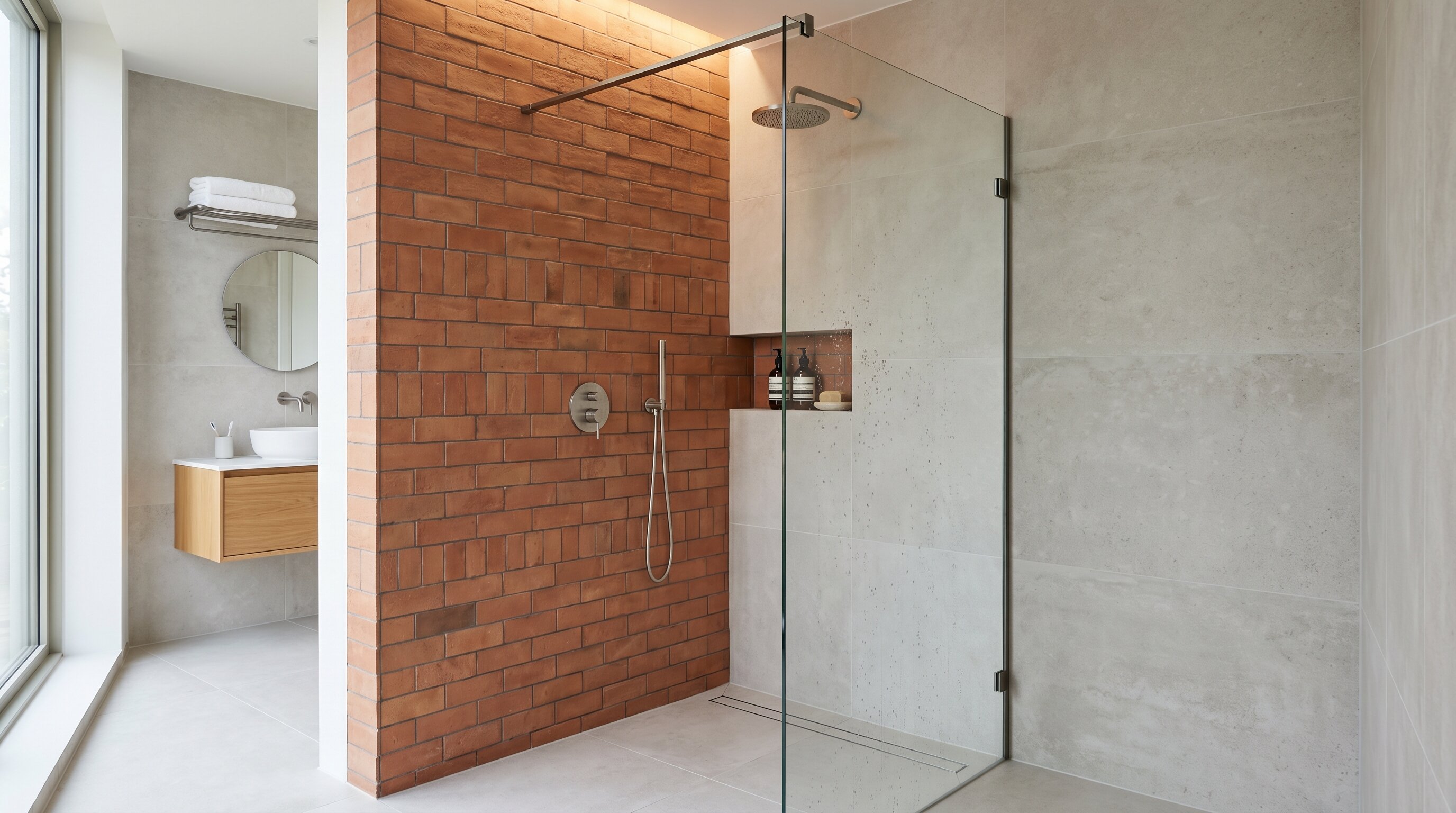
The shower is a high-moisture zone, so design decisions must be more intentional here. Terracotta works best when used as an accent, not full coverage.
Smart shower ideas:
Terracotta feature wall inside shower Creates visual focus without full exposure to moisture.
Shower niche with terracotta tiles Adds detail in a controlled, low-risk area.
Partial terracotta + neutral tile mix Balances durability with design impact.
Important note:
Full terracotta showers should only be used with proper sealing, strong ventilation, and balanced lighting.
Small Bathroom Terracotta Ideas
Small bathrooms need careful planning because strong colors can easily overpower the space. Terracotta must be used strategically.
Best approach:
Use terracotta only on the floor
Keep walls white or very light neutral
Use reflective surfaces like mirrors
Limit terracotta to one focal point
Why this works:
Prevents visual crowding
Reflects more light
Makes the bathroom feel larger
Terracotta Tile Patterns and Layout Ideas
Tile layout plays a big role in how terracotta feels inside a bathroom. The same material can look modern or traditional depending on pattern choice.
Popular layout styles:
Herringbone pattern Adds movement and works well in narrow bathrooms
Stacked layout Clean, minimal, and modern appearance
Checkerboard mix (terracotta + neutral tile) Reduces heaviness and adds visual rhythm
Tonal variation layout Uses slightly different terracotta shades for depth
Why layout matters:
Controls visual weight
Affects perception of space size
Adds personality without extra color
Best Color Pairings for Terracotta Bathrooms
Color pairing determines whether terracotta feels balanced or overwhelming. The goal is to support its warmth, not compete with it.
Effective combinations:
Terracotta + White
Brightens the space
Prevents heaviness
Creates clean contrast
Terracotta + Black
Adds modern definition
Creates strong visual contrast
Terracotta + Wood
Enhances natural, earthy feel
Builds warm, cohesive design
Terracotta + Green
Adds freshness and balance
Works well with plants and natural light
How to Balance Terracotta in a Bathroom
Balance is the most important factor when using terracotta tiles. Too much can overwhelm, but too little can feel incomplete.
Smart balancing rules:
Use terracotta in only one main area
Keep surrounding surfaces neutral
Add contrast through light colors or textures
Avoid repeating terracotta on every surface
Lighting Tips for Terracotta Bathrooms
Lighting has a direct impact on how terracotta appears. Without proper lighting, even well-designed bathrooms can feel dull.
Lighting effects:
Warm lighting
Enhances terracotta’s richness
Creates cozy atmosphere
Natural lighting
Shows true color variation
Makes space feel open
Cool lighting
Can reduce warmth
Makes terracotta appear muted
Design insight:
Lighting should always be planned alongside tile selection, not added later.
Common Mistakes to Avoid
Many design issues with terracotta bathrooms come from misuse, not the material itself.
Avoid these mistakes:
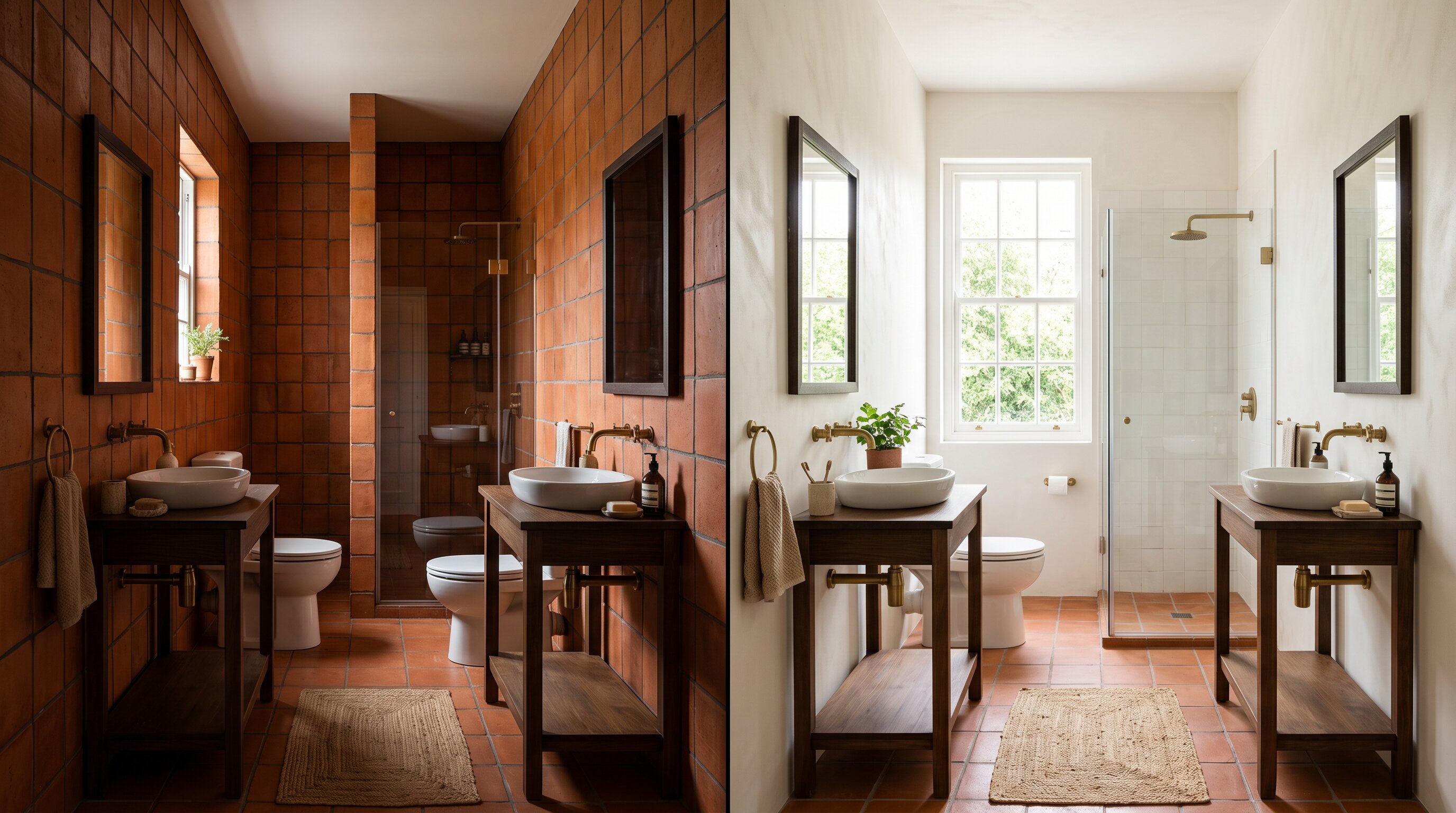
Overusing terracotta across all surfaces
Pairing with overly cool grey tones
Ignoring lighting conditions
Using unsealed tiles in wet areas
Lack of contrast in design
Where Terracotta Works Best (Decision Guide)
Choosing the right placement depends on your goal and bathroom size.
Best usage options:
Floor focus: safest and most balanced choice
Wall accent: strong visual impact without overload
Shower feature: stylish but controlled use
Full design: only suitable for large, well-lit bathrooms
Final Design Tips for a Cohesive Look
A successful terracotta bathroom is not about using more material it’s about using it correctly.
Key principles:
Keep one dominant focal point
Balance warm tones with light neutrals
Use texture to add depth
Maintain visual breathing space
Let lighting support the material
FAQs: Terracotta Tile Bathroom Ideas
Are terracotta tiles good for bathrooms?
Yes, terracotta tiles can work well in bathrooms when properly sealed. They add warmth, texture, and a natural look that most bathroom materials don’t provide. However, because they are naturally porous, they should be used carefully in wet areas and maintained properly to ensure durability.
Where should terracotta tiles be used in a bathroom?
Terracotta tiles work best on bathroom floors, accent walls, or feature areas like behind the vanity. Using them selectively helps maintain balance and prevents the space from feeling too dark or heavy. In smaller bathrooms, floor-only use is usually the safest option.
Do terracotta tiles make a bathroom look smaller?
They can make a bathroom feel smaller if overused, especially on both floors and walls. However, when paired with light-colored walls and good lighting, terracotta tiles can actually create depth and warmth without reducing the sense of space.
What colors go best with terracotta tiles in a bathroom?
Terracotta pairs best with white, beige, wood tones, black accents, and soft green. These colors balance its warm earthy tone and prevent the bathroom from feeling too heavy or visually overwhelming.
How do you stop terracotta bathrooms from looking too dark?
The key is balance. Use terracotta in one main area, keep surrounding surfaces light, and ensure good lighting. Natural light or warm artificial lighting helps maintain brightness and enhances the natural color of the tiles.
Are terracotta tiles high maintenance in bathrooms?
They require moderate maintenance. Since terracotta is porous, it needs sealing to protect against moisture and stains. Regular gentle cleaning and occasional resealing help keep them in good condition over time.
Can terracotta tiles be used in shower areas?
Yes, but with caution. They should be properly sealed and used in controlled designs like feature walls or partial coverage rather than full enclosure. Good ventilation is also important to maintain durability.
What bathroom style works best with terracotta tiles?
Terracotta tiles work well in Mediterranean, rustic, bohemian, and modern natural-style bathrooms. They also fit minimalist designs when used sparingly as an accent material.
Conclusion
Terracotta tiles can transform a bathroom when used with intention. The key is not to treat them as a full-surface material, but as a design feature that adds warmth, depth, and character. When combined with the right placement, lighting, and color balance, terracotta creates bathrooms that feel natural, modern, and visually grounded without becoming overwhelming or heavy.