
Bathroom mold is one of the most common household problems because it grows where moisture stays trapped after daily use. Most homeowners notice it first on shower tiles, grout lines, ceilings, or around caulking, and try quick cleaning methods that only remove the surface layer.
The problem is that mold often returns when the cleaning method does not match the surface type or the moisture source is not fixed. Bathrooms naturally create a high-humidity environment, especially after hot showers, making them a long-term growth zone for mold spores.
This guide explains a practical, surface-based system for how to get rid of mold in bathroom areas, including ceilings, walls, grout, and shower curtains, so you can remove it effectively and prevent it from returning.
Why Bathroom Mold Keeps Coming Back
Mold is not just a cleaning issue, it is a moisture control problem. Even after scrubbing, it returns if conditions stay favorable.
Common root causes include:
Poor ventilation or weak exhaust airflow
Constant humidity after showers
Hidden plumbing leaks under sinks or behind walls
Porous materials like grout and drywall trapping moisture
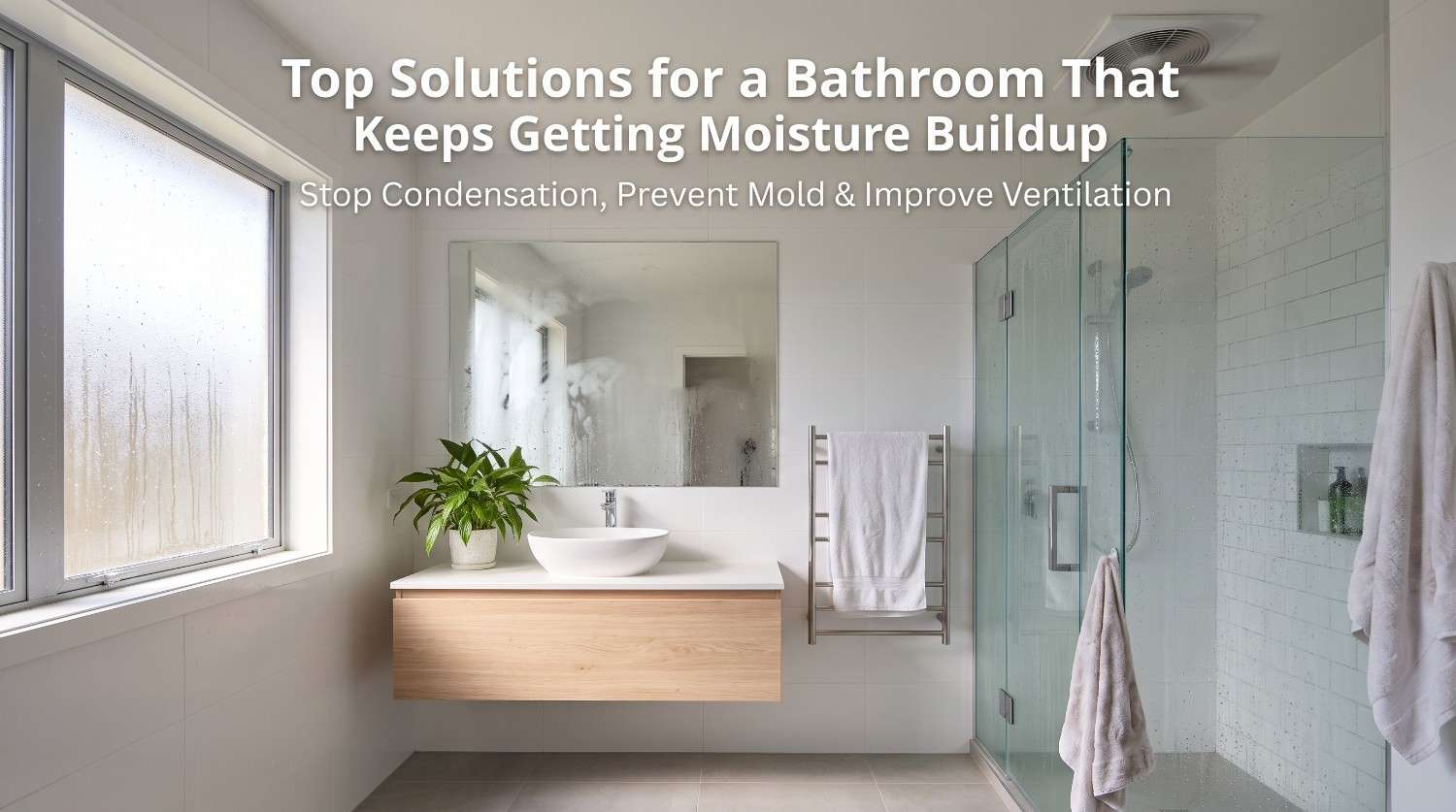
In many homes, ventilation is the most overlooked issue. A properly sized exhaust system is critical. A simple guideline is: Bathroom square feet × 1.1 = minimum CFM airflow needed
If airflow is too low, moisture remains in the room long after showers, leading to repeated mold growth.
Safety First Before You Clean Mold
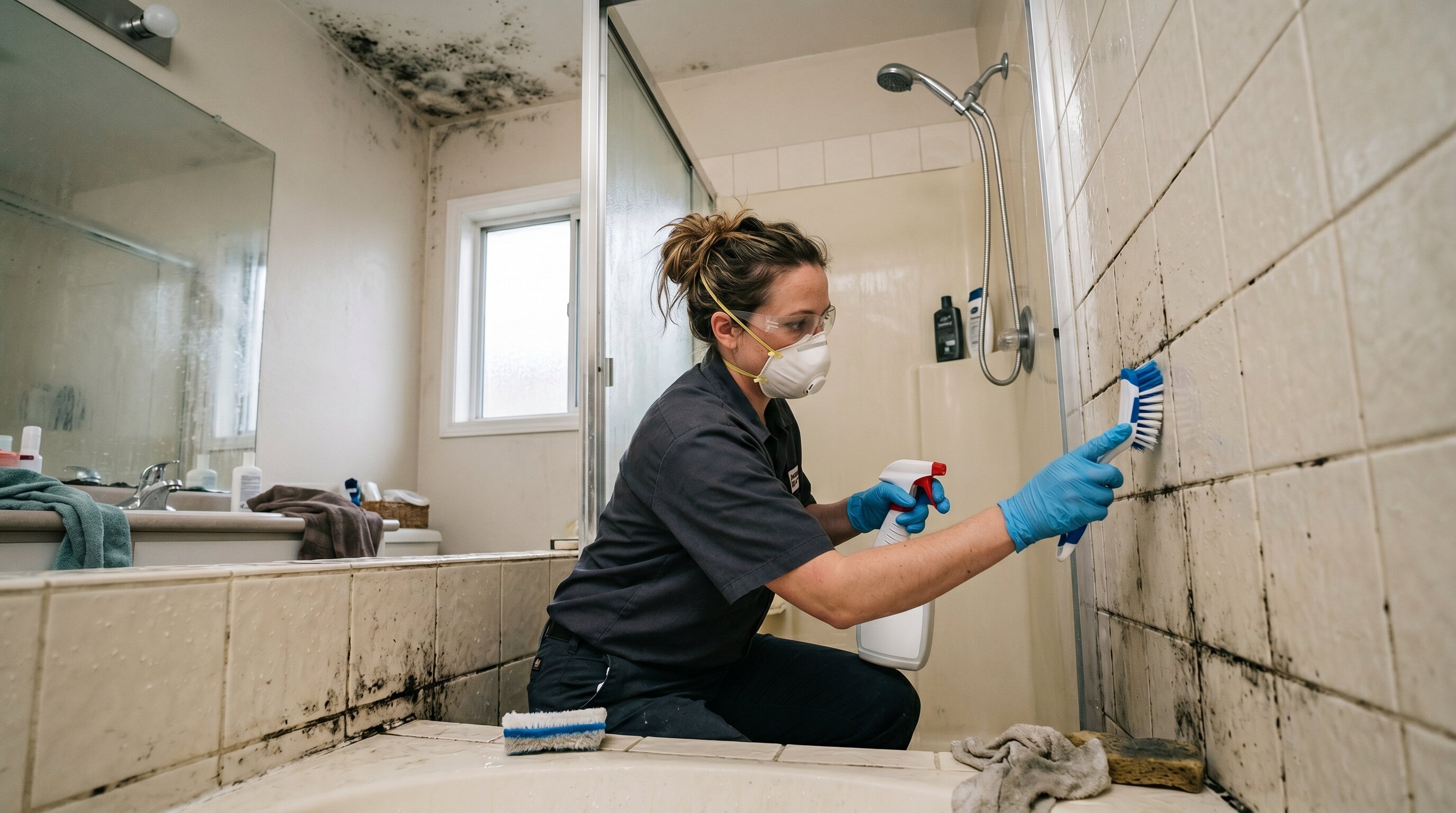
When learning how to clean mold in bathroom spaces, safety must come first because mold spores spread when disturbed.
Basic safety steps:
Wear gloves and a mask to avoid inhalation
Keep windows or exhaust fans running
Do not mix cleaning chemicals (especially bleach and ammonia)
Keep children and pets away during cleaning
All bathroom mold should be treated seriously regardless of color, including dark or black patches commonly found in corners and grout.
Step 1: Identify the Surface and Mold Type (Critical First Step)
Before you start cleaning, you must identify what type of surface the mold is growing on. This determines whether the mold can be fully removed or will require deeper treatment.
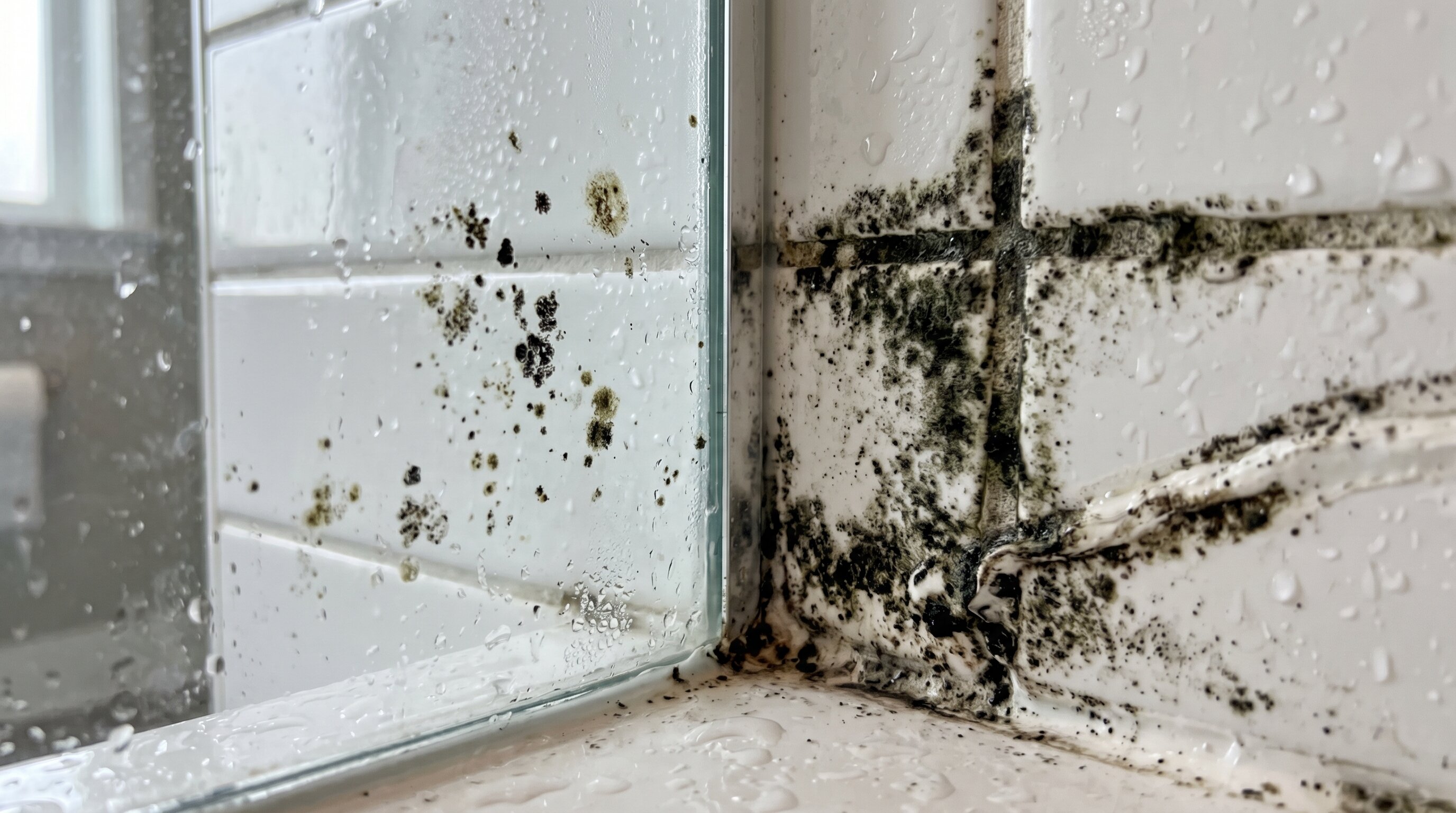
Non-porous surfaces (easy removal)
These surfaces do not absorb moisture deeply, so mold stays on the surface.
Examples:
Ceramic tiles
Glass shower doors
Bathtubs
Mold on these surfaces is usually removable with proper cleaning.
Porous surfaces (deep mold penetration)
These materials absorb moisture, allowing mold to grow inside.
Examples:
Grout lines
Silicone caulk
Painted drywall or ceilings
Mold here is harder to fully remove and often needs stronger treatment or replacement.
Step 2: Prepare the Bathroom and Ensure Safety
Before cleaning, you must make the environment safe. Mold spores can spread into the air when disturbed, especially in enclosed bathrooms.
Preparation checklist:
Open windows or turn on exhaust fan for ventilation
Wear gloves and a mask for protection
Remove towels, mats, and personal items
Keep children and pets away
Never mix cleaning chemicals like bleach and ammonia, as this can release toxic gases.
Step 3: Clean Mold Based on Surface Type (Core Removal Step)
This is the most important action step in the entire process. Using the correct cleaner for each surface ensures mold is properly removed.
Clean Mold from Tiles and Glass (Non-Porous Surfaces)
Tiles and glass allow surface-level cleaning because mold does not penetrate deeply.
Steps:
Apply diluted bleach or bathroom cleaner
Let it sit for 10–15 minutes (dwell time)
Scrub with a sponge or brush
Rinse and dry completely
Dwell time is essential because it allows the solution to break down mold before scrubbing.
Clean Mold from Grout (Porous Surface)
Grout absorbs moisture, making mold harder to remove.
Steps:
Use vinegar or hydrogen peroxide
Apply directly to grout lines
Leave for 20–30 minutes
Scrub with a stiff brush
Porous surfaces require longer contact time because mold grows deeper inside.
Step 4: Remove Mold from Bathroom Ceiling (High-Risk Area)
Ceiling mold usually forms due to steam rising after showers and condensing at the top of the bathroom.
Steps:
Spray vinegar or mold cleaner lightly
Let it sit for 15–20 minutes
Gently scrub using a soft sponge
Avoid soaking the surface
If mold returns quickly or paint peels, moisture is trapped inside and repainting or repair may be needed.
Step 5: Remove Mold from Shower Curtains
Shower curtains stay damp for long periods, making them a common mold hotspot.
Fabric Curtains
Wash in hot water with detergent
Add vinegar for deeper cleaning
Air dry completely
Plastic Curtains
Soak in vinegar solution for 30–60 minutes
Scrub lightly
Rinse and dry fully
If stains remain after cleaning, replacement is usually more effective.
Step 6: Eliminate Moisture Sources to Prevent Regrowth
Cleaning removes mold temporarily, but controlling moisture prevents it from coming back.
Common moisture causes:
Poor ventilation or weak exhaust fans
Hidden leaks under sinks or behind walls
Long hot showers without airflow
Wet surfaces left uncleaned
Prevention actions:
Run exhaust fan during and after showers
Fix leaks immediately
Wipe down wet surfaces after use
Improve airflow by slightly opening doors
Mold will always return if moisture is not controlled at the source.
Why Mold Keeps Returning After Cleaning
Even when learning how to clean mold in bathroom areas correctly, recurrence happens if the moisture source remains active.
Main reasons:
Hidden water leaks behind walls or under sinks
Weak ventilation or undersized exhaust fans
Poor drying habits after showers
High humidity trapped in enclosed spaces
Without fixing these causes, mold removal is only temporary.
Frequently Asked Question
How to get rid of mold in bathroom quickly?
The fastest way to remove bathroom mold is to first identify whether the surface is porous or non-porous. Then apply the correct cleaning solution, allow proper dwell time so it can break down the mold, and scrub gently before fully drying the area.
How to remove mold from bathroom ceiling safely?
To clean ceiling mold safely, use vinegar or a bathroom-safe mold cleaner and let it sit for about 15–20 minutes before scrubbing lightly. Make sure the bathroom is well-ventilated during and after cleaning to reduce moisture buildup and prevent the mold from returning.
How to get rid of mold on bathroom walls?
Use vinegar or hydrogen peroxide to treat mold on bathroom walls and gently wipe the affected area without damaging the paint. After cleaning, dry the surface completely, as recurring mold often indicates trapped moisture or poor ventilation behind the wall.
How to remove mold from shower curtain?
Fabric shower curtains can be washed in hot water with detergent, while plastic curtains can be soaked in a vinegar solution for deep cleaning. If stains remain after cleaning, replacement is usually the most effective long-term solution.
Conclusion
Understanding how to get rid of mold in bathroom spaces is not about using one cleaning product everywhere. It is about identifying the surface, applying the correct treatment, and fixing the moisture source that caused the problem. When these three factors are handled correctly surface type, cleaning method, and ventilation mold removal becomes long-lasting instead of temporary.