
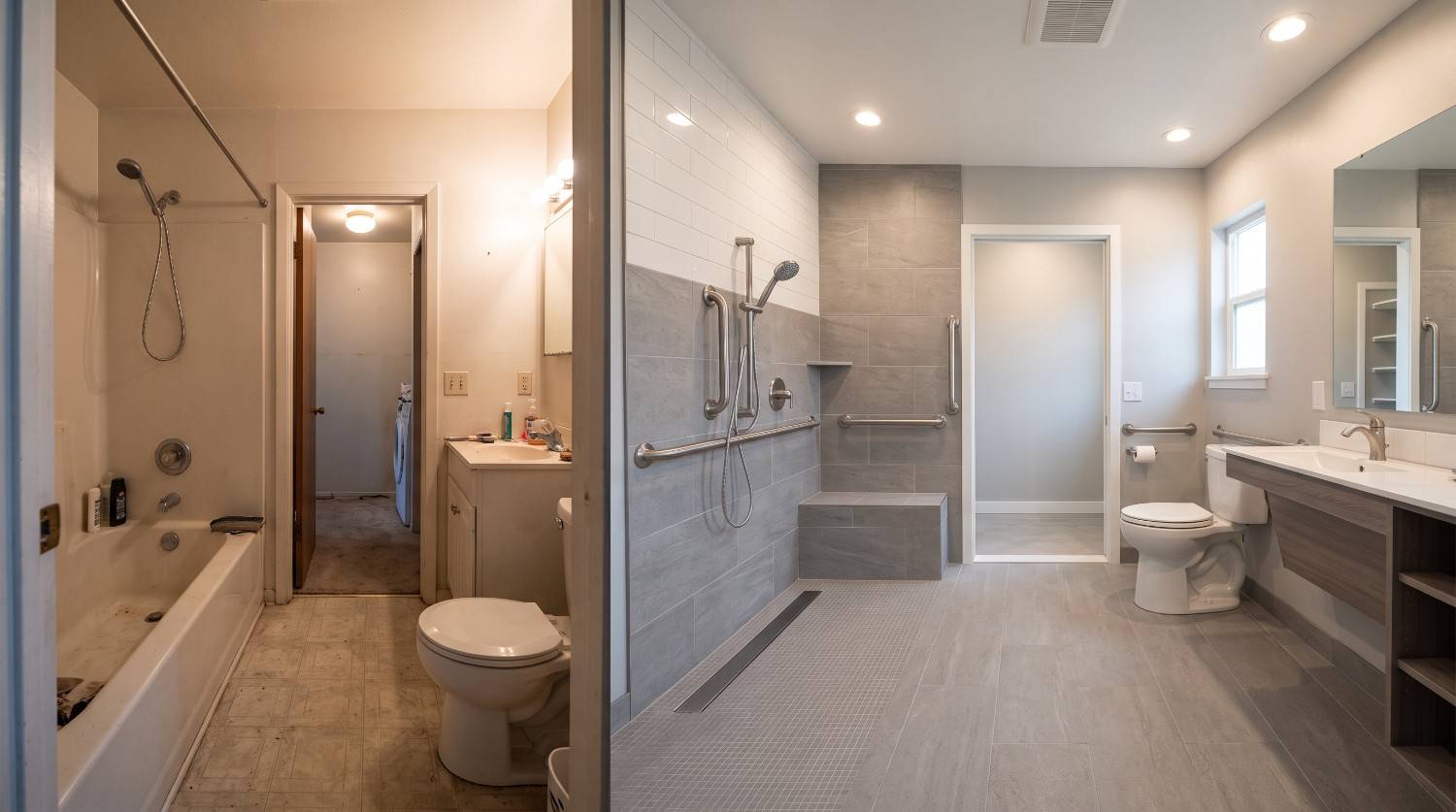
A handicap bathroom remodel costs $2,000 to $50,000+, depending on the scope. Most full accessible remodels land between $15,000 and $25,000. Basic safety upgrades (grab bars, non-slip flooring, comfort-height toilet): $2,000–$5,000. Tub-to-walk-in-shower conversion, the most common senior upgrade: $5,000–$18,000. Full accessible remodel with wider doorways and a roll-in shower: $15,000–$35,000; luxury versions run $75,000+. The CDC reports about 1 in 4 adults 65+ falls each year, and falls send over 3 million older adults to the ER annually, often from the bathroom. Nationwide Builders' own quote data puts a walk-in tub install at a national average of $5,000, and grab bar installation at $150. The biggest cost risk isn't fixtures. It's hiring someone who's never done accessible work and gets the clearances wrong. "Handicap bathroom remodel" can mean three grab bars and a new toilet, or gutting the room to move plumbing and widen doorways, a different scope than a standard bathroom remodel. Which one you're planning determines the price, not the search term used to find a contractor. Guardrail: these numbers assume the work is done correctly. A grab bar not anchored into a stud can tear out under weight, and a suspiciously low quote often means someone is skipping the steps that matter for safety. Plumbing or framing changes. Same-footprint tub-to-shower swaps stay near $5,000–$10,000. Widening a doorway (standard is 24–28 inches; wheelchair access needs 32–36) adds framing and electrical, pushing past $15,000. Fixture tier. Prefab acrylic shower: $3,000–$6,000. Custom tile with a bench: $6,000–$12,000. Basic walk-in tub: $3,000–$5,000. Hydrotherapy: $5,000–$8,000. Bariatric: $6,000–$12,000. Blocking and electrical. Grab bars need studs or added blocking, roughly $100–$300 per bar. New lighting or outlets near water need an electrician at $65–$85/hour. Permits. Anything touching plumbing, wiring, or structural walls typically needs one; budget $100+ and inspection time. Our bathroom remodel permit guide breaks down which ones apply. The details most guides skip. Comfort-height toilets (17–19 inches vs. standard 15) cost $400–$800 and matter more day to day than most upgrades. Lighting needs roughly double a standard bathroom's brightness for aging eyes, and doorway width is the item most often mis-measured on a quote. A walk-in tub has a built-in door and seat, costs $3,000–$12,000 installed, and requires sitting inside while it fills and drains, adding 15–25 minutes to a bath. A walk-in or roll-in shower removes the step entirely, with zero wait time. Zero-threshold versions cost $8,000–$15,000; wheelchair-ready roll-in showers with a fold-down bench run $10,000–$18,000. If balance and transfers are solid and soaking baths are preferred, a walk-in tub works. If a wheelchair or walker is likely within a few years, build the roll-in shower now; replacing a tub with a shower later costs more than doing it once. How to Find a Contractor Who Knows This Work Finding a contractor is easy. Finding one who understands clearance widths and grab bar load ratings is a different search. Certified Aging-in-Place Specialist is an NAHB credential requiring three courses in accessible design plus proof of liability insurance. Not mandatory, but a strong signal the contractor studied this rather than guessed. a state license verified with your state board, current liability insurance in writing, three references from aging-in-place projects specifically, a written contract with payment schedule, and no large upfront deposit (a materials deposit is normal; 50% before work starts is not). Red flags: same-day sign-up pressure, no permit mentioned for work that needs one, verbal-only quotes, or a contractor who can't name a single aging-in-place project. Comparing several contractors at once beats calling five companies separately. Nationwide Builders lets you search bathroom remodelers by location and check reviews, project history, and licensing side by side before requesting a quote, free to use. $15,000–$35,000 for a mid-range remodel, or $2,000–$5,000 for basic safety upgrades. Full wheelchair conversions with structural changes can reach $40,000–$75,000+. $1,500–$3,000 for a walk-in door insert on an existing tub, or $3,000–$12,000 for a full walk-in tub replacement. A walk-in shower instead runs $3,000–$18,000. Usually yes, if plumbing, wiring, or structural walls are involved. Grab bars alone typically don't need one; check with your local building department. Check for a CAPS credential, verify the license with the state board, ask for aging-in-place references specifically, and get everything in writing. Generally no, though Part B may cover a home safety evaluation; Medicaid waivers, VA grants, and HUD/USDA programs are more likely funding sources. Timeline: 1–2 days for safety upgrades, 1–2 weeks for a tub-to-shower conversion, 4–8 weeks for a full remodel with permits.What Does a Handicap Bathroom Remodel Cost?
Cost by Project Scope
What Actually Moves the Price
Walk-In Tub or Walk-In Shower?
Look for CAPS:
Before signing, confirm:
Frequently Asked Question
How much does it cost to make a bathroom handicap accessible?
How much does it cost to make a bathtub handicap accessible?
Do I need a permit for a handicap bathroom remodel?
How do I know if a contractor is qualified for accessible bathroom work?
Will Medicare help pay for this, and how long does the project take?
- What Does a Handicap Bathroom Remodel Cost?
- Walk-In Tub or Walk-In Shower?
- Frequently Asked Question
- How much does it cost to make a bathroom handicap accessible?
- How much does it cost to make a bathtub handicap accessible?
- Do I need a permit for a handicap bathroom remodel?
- How do I know if a contractor is qualified for accessible bathroom work?
- Will Medicare help pay for this, and how long does the project take?
Handicap Bathroom Remodel Cost in 2026 (And How to Find a Contractor Who Won't Cut Corners)
Real 2026 costs for handicap and senior bathroom remodels, walk-in tubs, and grab bars, plus how to vet a contractor before you sign anything.

Written by Zohaib Ali
More on Nationwide BuildersRead more Home Improvement Tips blogs
Pros
Support