
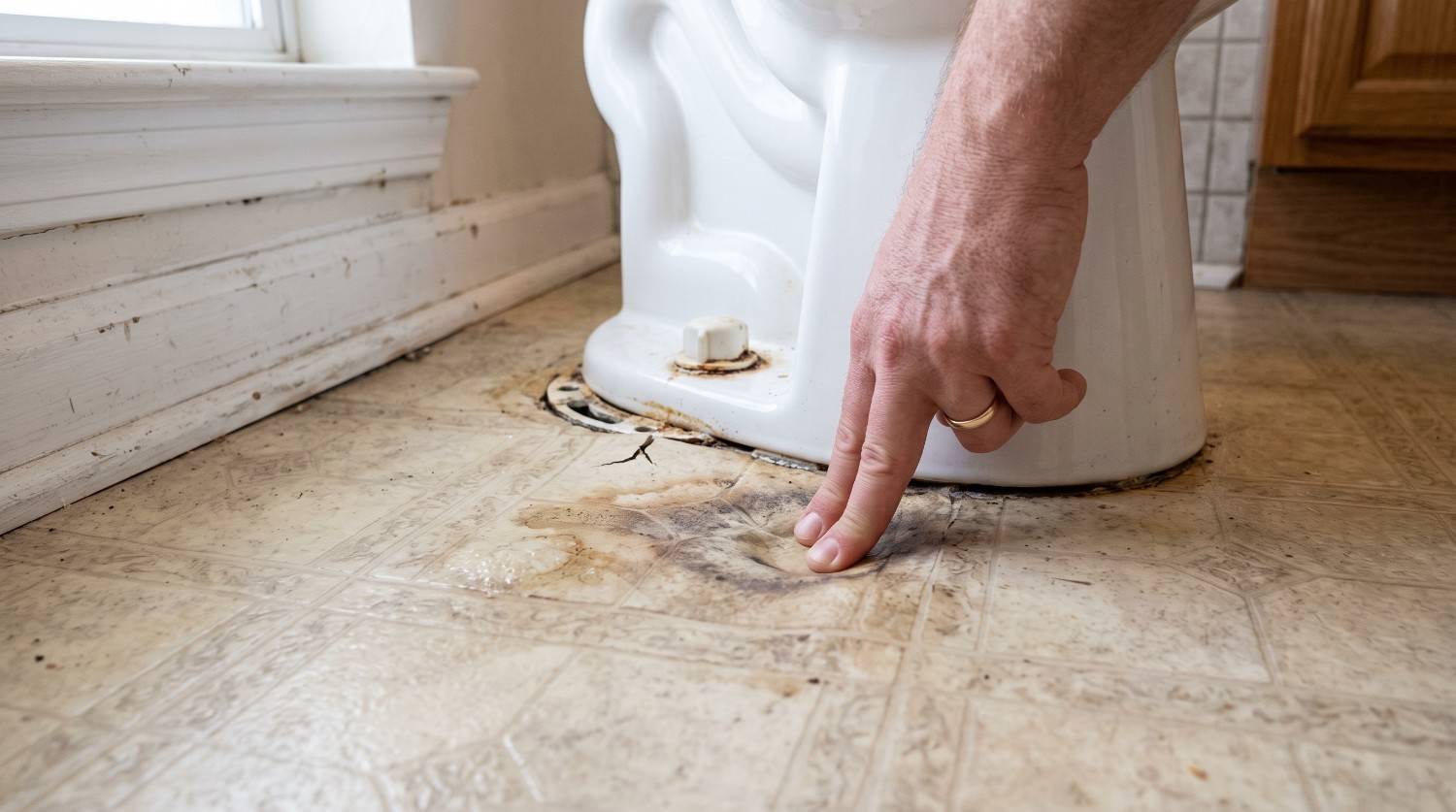
Nobody notices a subfloor until it gives way underfoot. By the time a soft spot shows up near the tub or toilet, the rot has usually spread for months. This guide covers spotting it, fixing it from above and below, and what it costs to replace. Rotted subfloor repair runs $500 to $3,000 per room, climbing to $35 to $80 per square foot once the damage is severe. Small, isolated rot can be patched from above by cutting out the damaged panel and fitting new plywood. Rot near a tub or toilet often calls for repair from underneath, if a crawlspace or basement gives you access. Replacing a bathroom floor and subfloor together usually costs more than subfloor repair alone once tile, waterproofing, and fixtures come out. Full subfloor replacement makes sense once rot reaches the joists or spreads past a few square feet. You fix a rotted subfloor by cutting out the soft, water damaged section down to solid wood, checking the joists underneath for rot, and fitting a new plywood or OSB patch fastened with construction adhesive and screws. Nationwide Builders' own floor repair cost data puts subfloor repair between $500 and $3,000 per room, rising to $35 to $80 per square foot once rot spreads past a small patch. That range holds for most homes with standard plywood or OSB subflooring over dimensional lumber joists. This guide covers standard wood subfloors on framed joists. It does not cover concrete slab subfloors, engineered I-joist systems, or rot caused by a leak that's still active. Fix the water source first, or any repair fails again within a few months. If mold has developed alongside the rot, treat that separately before closing the floor back up. A rotted subfloor feels soft or springy underfoot, usually near a tub, toilet, or exterior door, with cracked or lifted tile and a slight dip above it. Look for dark patches, a musty smell, and give near a fixture base. From below, check for water stains on the panel underside or the joists. A spongy bathroom floor is one of the clearest early warning signs. When it's not rot. A floor that feels stiff but slightly sloped, with no soft spots, is usually old settling. A screwdriver pressed into the suspect area tells you fast: solid wood resists, rotted wood crumbles. Standing water left unaddressed for more than 24 to 48 hours also raises the risk of mold on top of the rot itself. Fixing a rotted subfloor from above means cutting out the bad section and patching it with new plywood. It's the standard approach whenever you can reach the area through the finished floor. Remove the flooring on top first, tile, vinyl, or carpet. Mark the damaged area with a chalk line just past the stain, so you're cutting into solid wood. Set a circular saw to the subfloor's exact thickness to avoid wiring or plumbing below, then pry out the damaged piece. Before patching, press on the joists under the cut. If solid, cut a matching plywood piece, leave a small gap for expansion, and fasten with construction adhesive and screws every six inches into each joist. If the joists give at all, read the next section before patching anything. Teams working through Nationwide Builders handle this exact sequence on bathroom subfloors most often, since tub and toilet leaks are the most common cause of rot found this way. Most subfloor guides only cover cutting from above. Repair from underneath matters most when removing the finished flooring is costly, or the damage sits directly under a tub, where cutting from above means demolition first. With a basement or crawlspace under the room, you can often skip removing the flooring entirely. Locate the rot from below with a flashlight and a screwdriver probe, checking each joist bay until the wood gives. Cut a plywood panel slightly smaller than the joist bay, coat the joist tops with construction adhesive, and push the patch into place, screwing up into the existing subfloor to hold it flush. This works for panel rot that hasn't fully failed, not for a floor that's already sagged or cracked. Repair from underneath only addresses the subfloor panel. If the joists themselves are soft, you still need access from above, or a structural contractor, to sister new lumber alongside them. Once rot reaches the joists, you're dealing with structural framing, not just a panel. Joists with less than about an inch of surface rot can sometimes be treated: scrape away the soft wood, fill with epoxy, and coat with wood preservative. Deeper damage needs sistering, bolting a new length of matching lumber alongside the damaged one to restore load capacity. This is where the job moves from a weekend project to one needing a permit and a licensed contractor, especially with more than one joist affected. Nationwide Builders connects homeowners with local pros who handle the leak, subfloor patch, and joist sistering as one job. How Much Does It Cost to Replace a Subfloor? Subfloor replacement costs $500 to $3,000 for most rooms, and up to $35 to $80 per square foot when the damage covers a large area or requires joist work as well. These figures track the same floor repair cost guide Nationwide Builders maintains for the full range of flooring materials. Labor runs $60 to $120 an hour on top of materials. Get at least two written quotes before committing, since the range widens fast once joists are involved. Replacing a bathroom floor and subfloor together costs more than subfloor repair alone, since tile removal, waterproofing membrane, and fixture resets get added to the work. A full bathroom floor and subfloor replacement typically runs from the low thousands into the $8,000 to $10,000 range for a standard bathroom, depending on tile choice and whether the tub or toilet needs pulling and resetting. Nationwide Builders' bathroom remodel cost data flags waterproofing and fixture reset as the two line items homeowners underestimate most. Repair the subfloor yourself when the damage is one small panel, the joists are solid, and you can reach the area without demolition. Call a contractor once joists are involved, the damage exceeds a few square feet, or the repair sits under a fixture that needs resetting. For bathroom jobs specifically, a bathroom remodeling pro can bundle the subfloor fix with the fixture reset in one visit. Important : if a screwdriver sinks easily into the joist, this is a structural repair, not a weekend patch, and worth a professional opinion before buying materials. Soft or springy underfoot, often near a tub or toilet, with cracked tile, dark stains, or a slight dip above it. From below, look for water stains on the panel or joists. $500 to $3,000 per room for most homes, rising to $35 to $80 per square foot for severe damage. Joist repair adds $2,000 or more. This matches the range Nationwide Builders tracks across its own floor repair cost guide. Only if the old subfloor is dry, solid, and flat. A new layer over rotted or damp wood traps moisture and lets the rot continue underneath. It depends on the cause. Sudden accidental leaks are often covered; slow leaks left unnoticed for months are usually excluded as a maintenance issue. This is general information, not insurance advice. Press a screwdriver into the soft area from below, or check for sagging spanning more than one joist bay from above. Panel rot stays localized; joist rot sags wider. Nationwide Builders' network of local pros can confirm this with an in-person inspection if you're unsure. Yes, for a small, isolated patch with solid joists underneath. Once joists need sistering or a permit is required, Nationwide Builders' network of local pros is the safer route. A rotted subfloor is rarely as dramatic as it feels underfoot. Most cases are a contained panel repair once the leak is fixed. The real decision point is the joists: solid joists mean a patch, soft joists mean a structural repair. Check that first, and the rest of the job follows from there.What Does a Rotted Subfloor Look Like Before You Cut Into It?
How Do You Fix a Rotted Subfloor From Above?
How Do You Repair a Rotted Subfloor From Underneath?
What Does Subfloor Water Damage Repair Involve When the Joists Are Also Rotted?
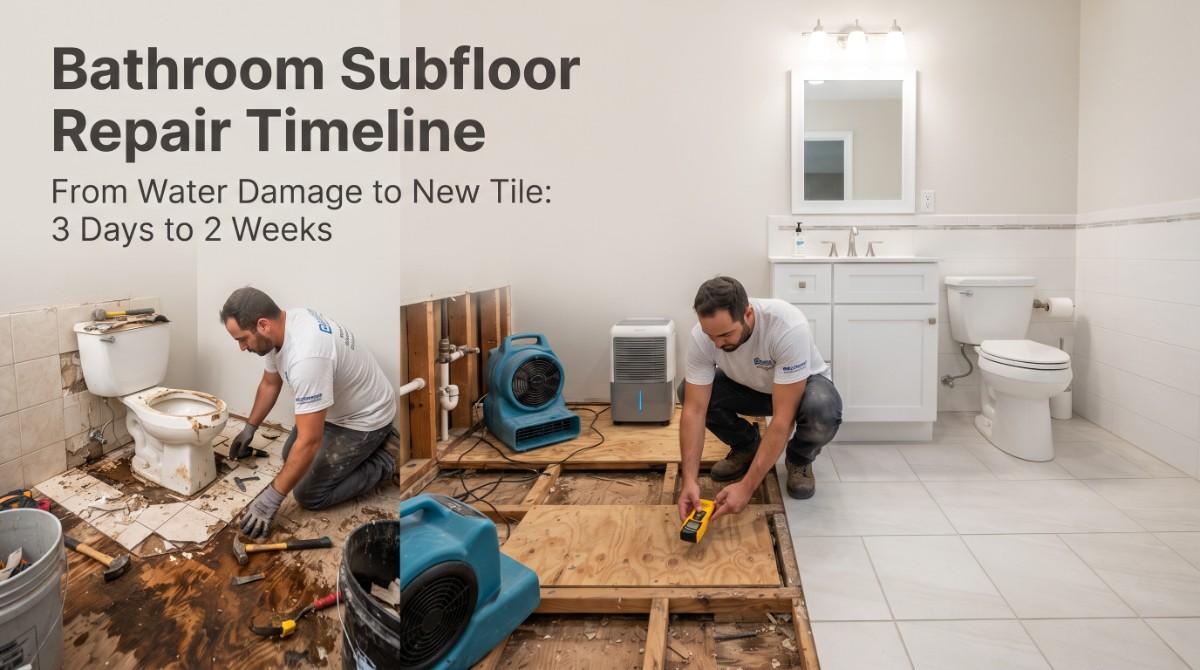
What Does It Cost to Replace a Bathroom Floor and Subfloor Together?
When Should You Repair the Subfloor Yourself vs Call a Contractor?
Frequently Asked Questions
What does a rotten subfloor look like?
How much does it cost to repair a rotten subfloor?
Can I put a new subfloor over an old subfloor?
Will homeowners insurance cover rotted subfloors?
How do I know if subfloor rot has reached the joists?
Can I repair a rotted subfloor myself?
Conclusion
- What Does a Rotted Subfloor Look Like Before You Cut Into It?
- How Do You Fix a Rotted Subfloor From Above?
- How Do You Repair a Rotted Subfloor From Underneath?
- What Does Subfloor Water Damage Repair Involve When the Joists Are Also Rotted?
- What Does It Cost to Replace a Bathroom Floor and Subfloor Together?
- When Should You Repair the Subfloor Yourself vs Call a Contractor?
- Frequently Asked Questions
- Conclusion
How to Fix a Rotted Subfloor: Repair Steps, Cost to Replace, and When to Call a Pro
Fix a rotted subfloor by patching from above or below, and know the real cost to replace it, $500–$3,000 per room, before you call a contractor.

Written by Zohaib Ali
More on Nationwide BuildersRead more Home Improvement Tips blogs









Pros
Support