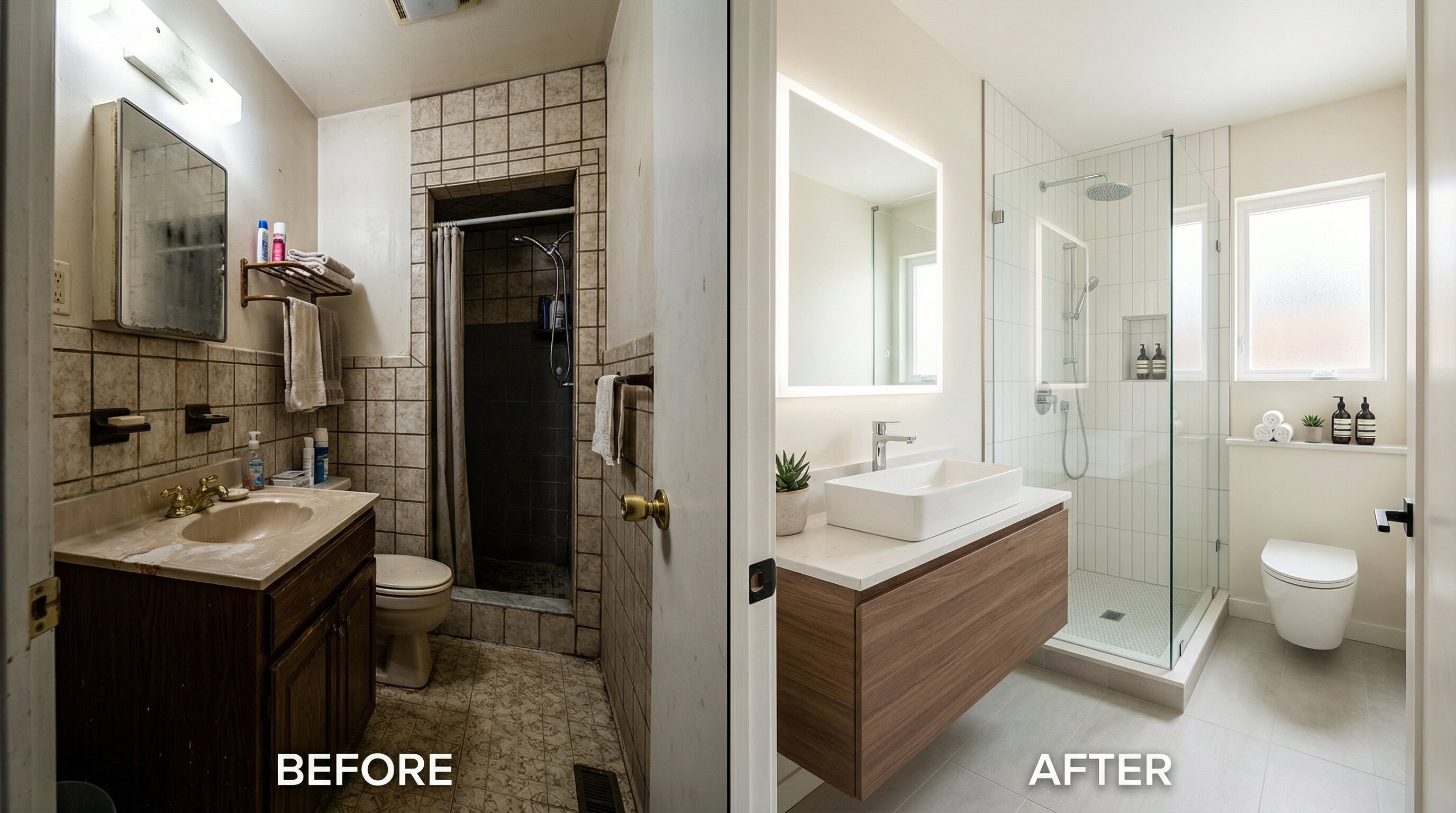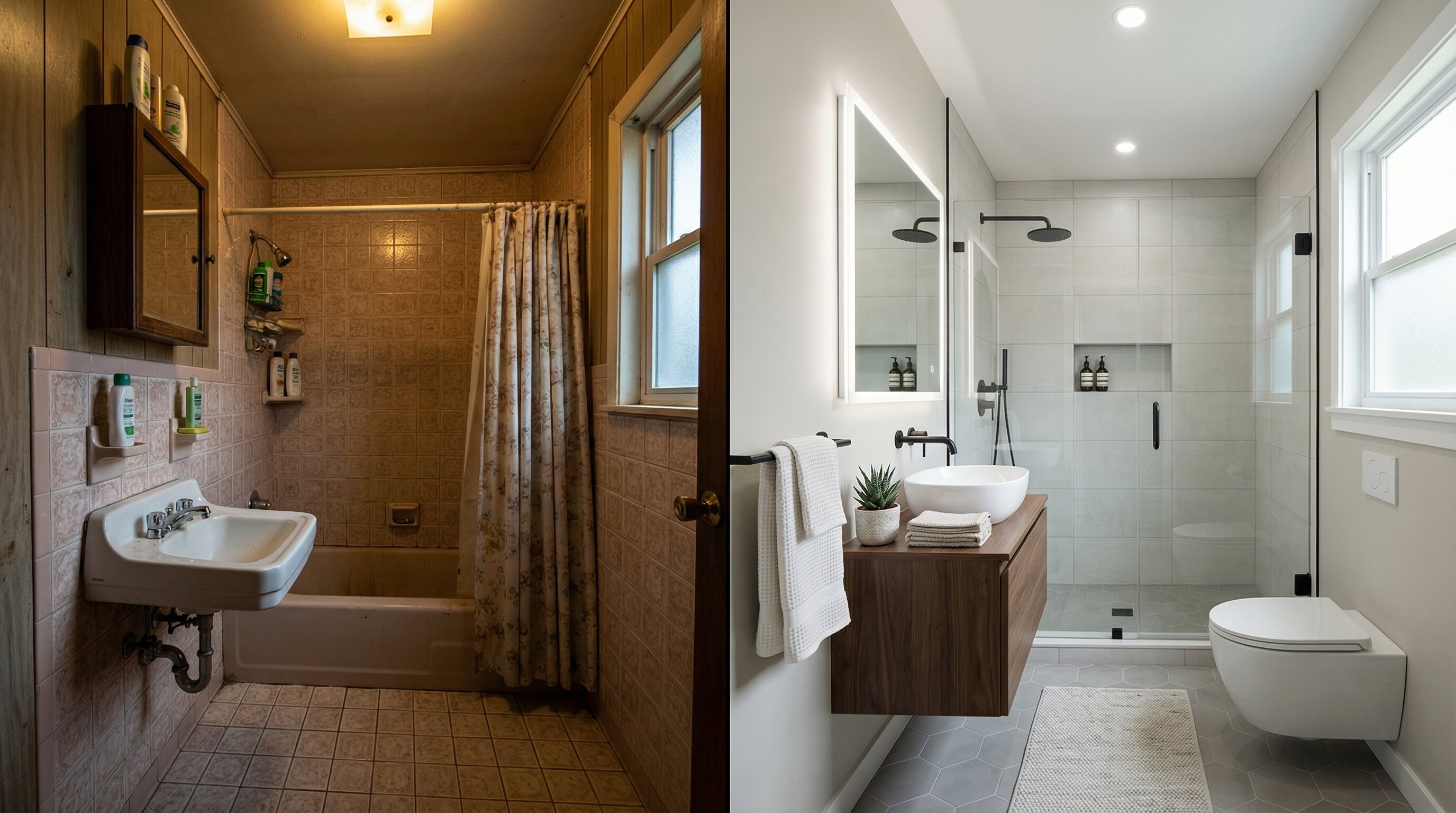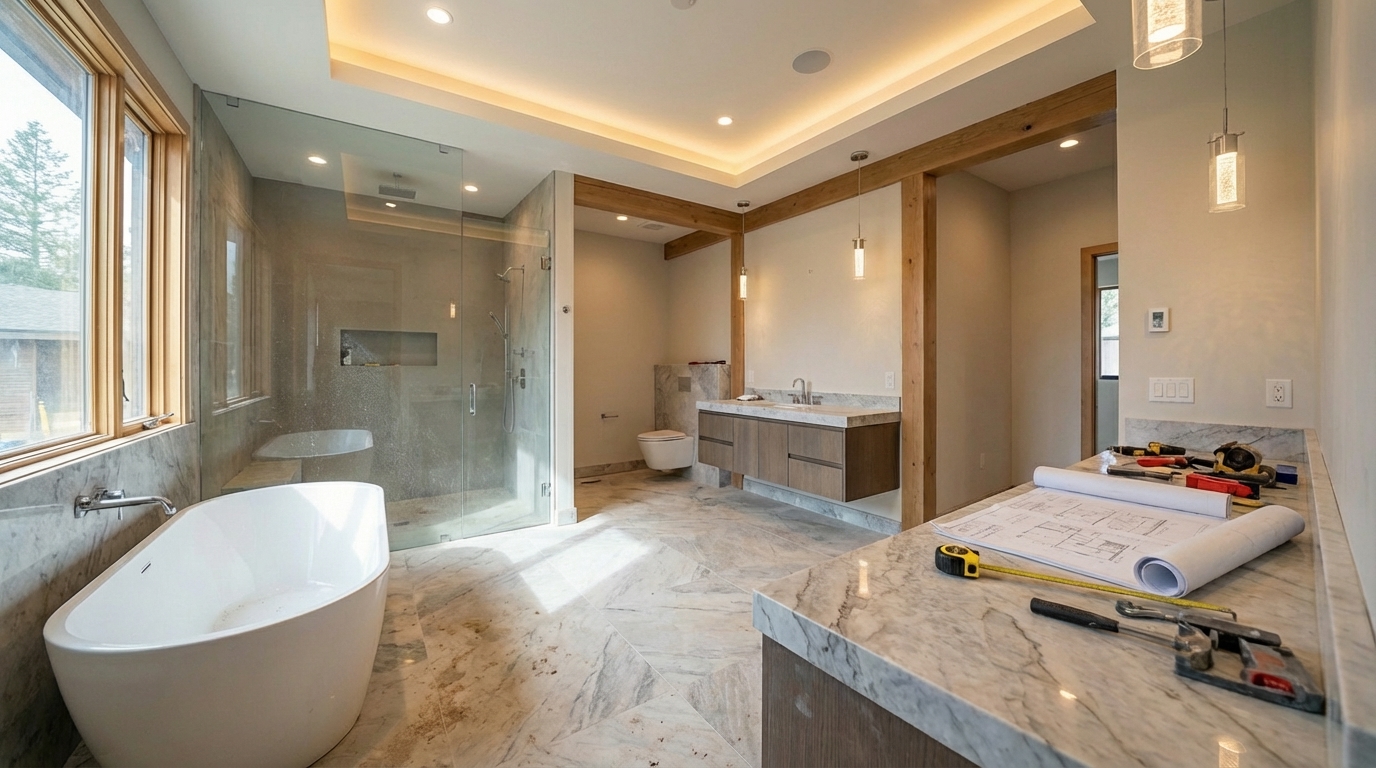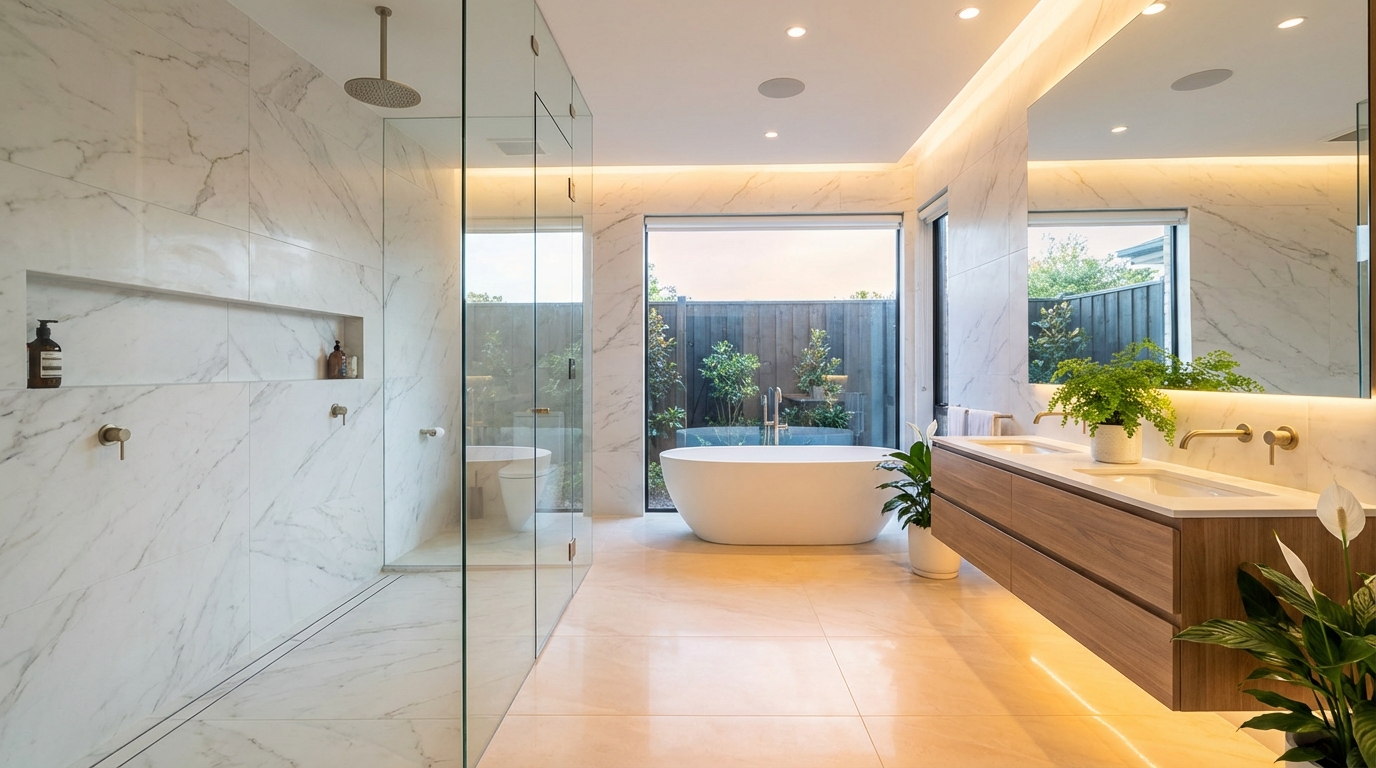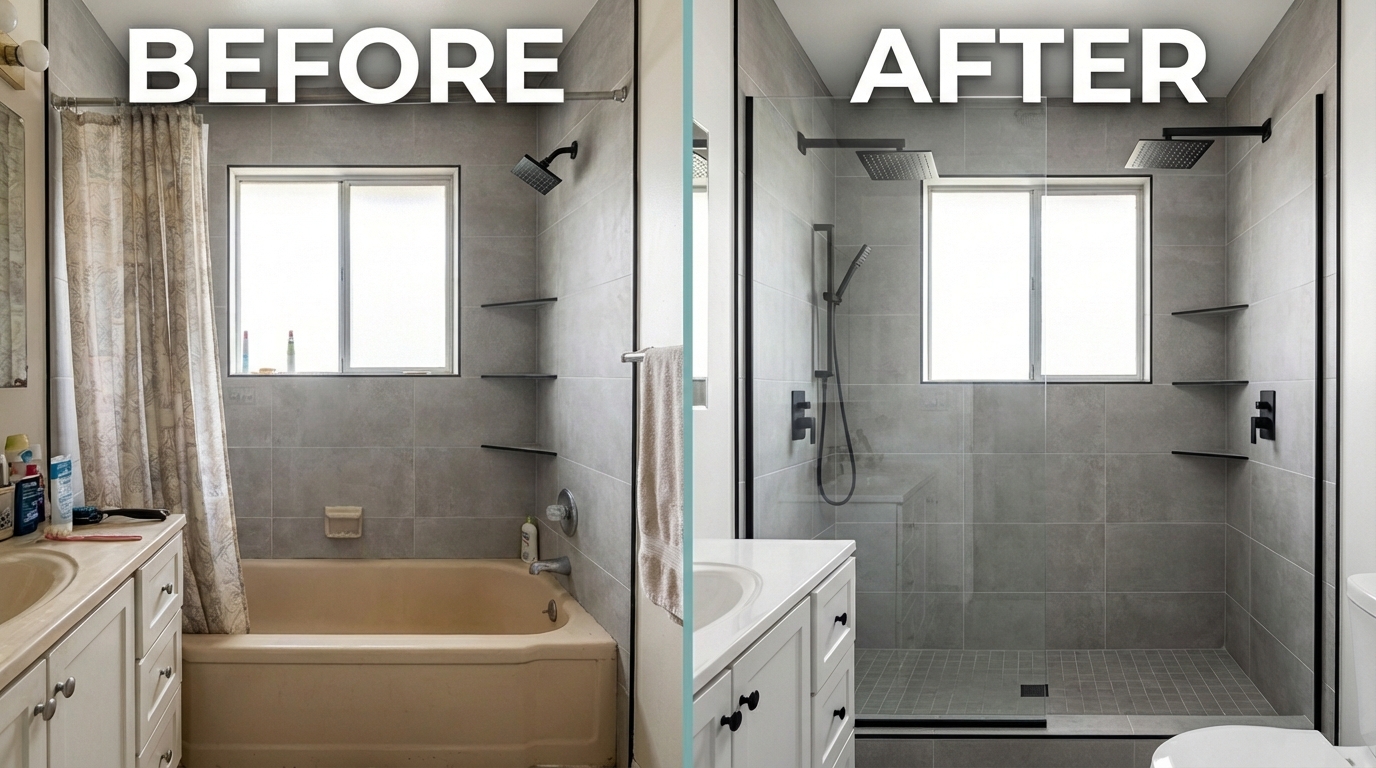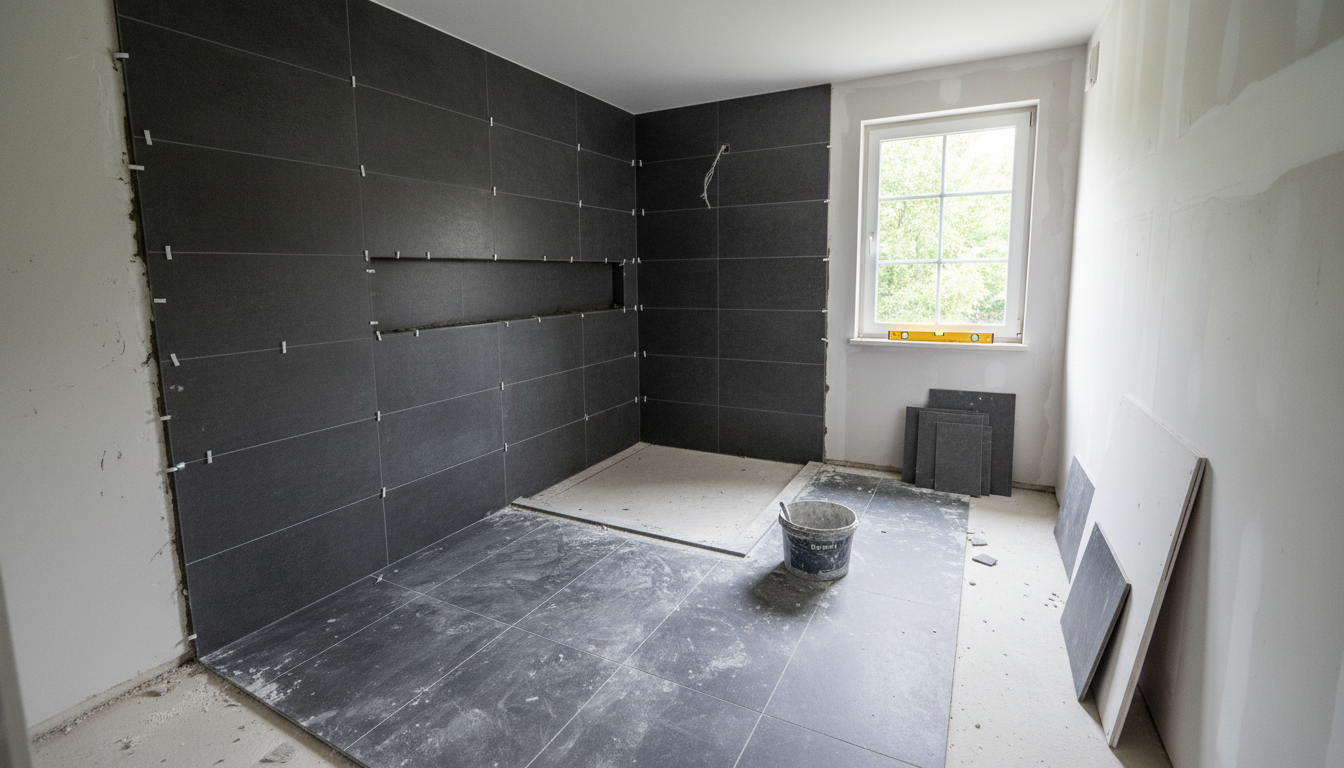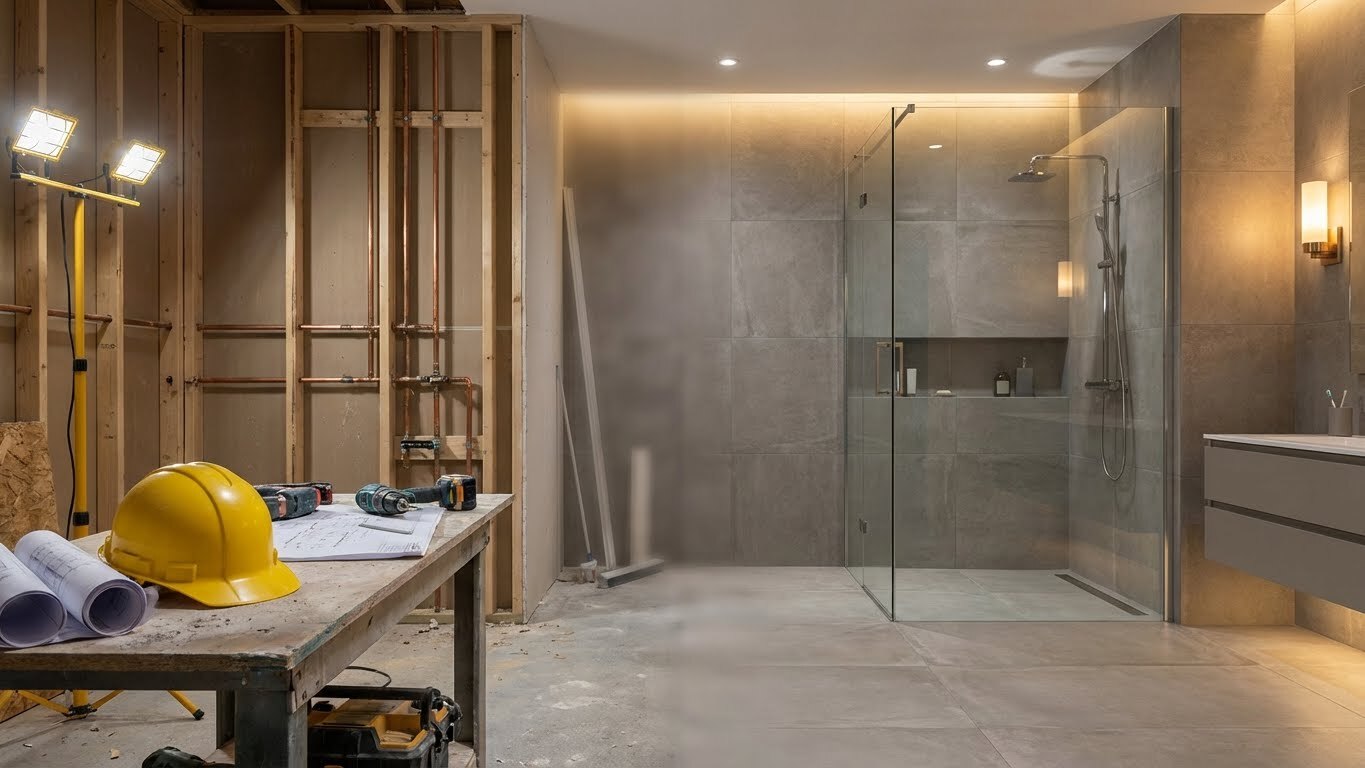
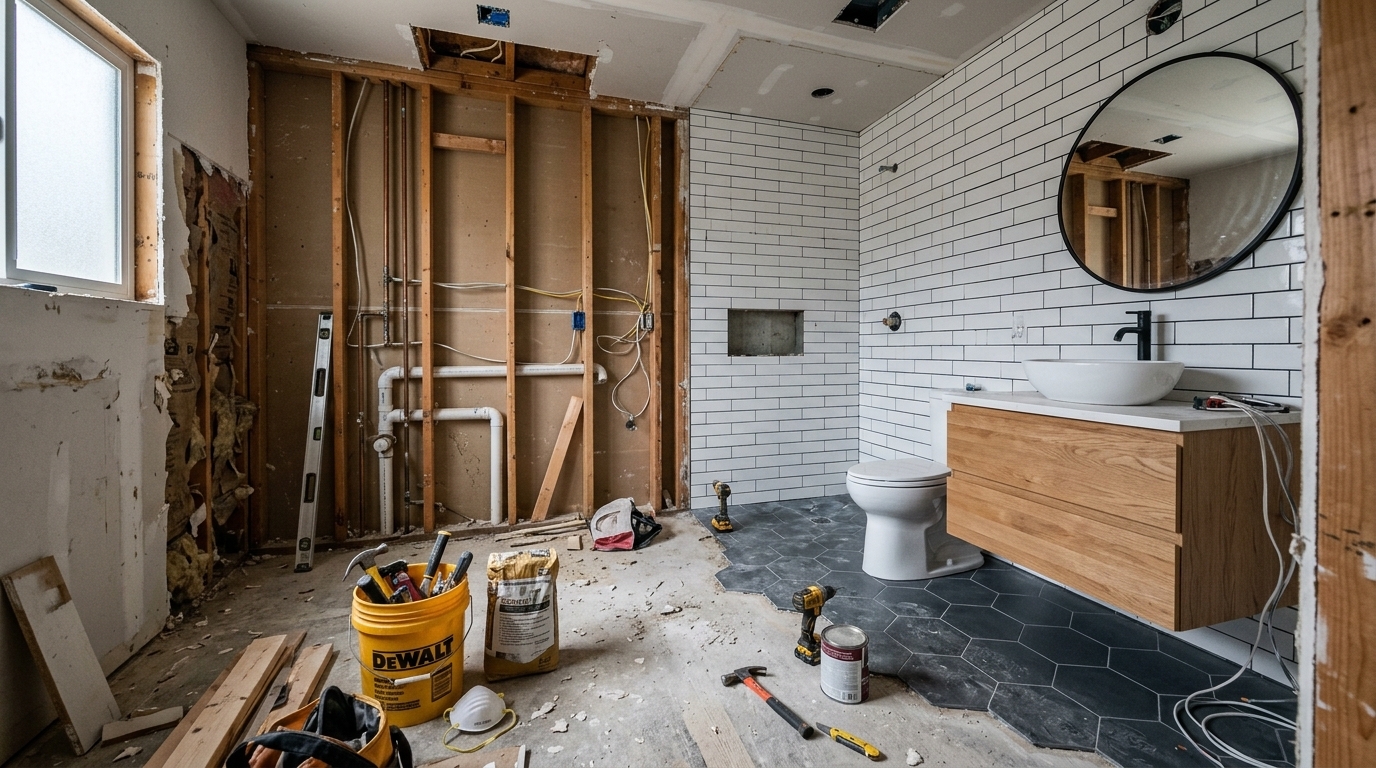

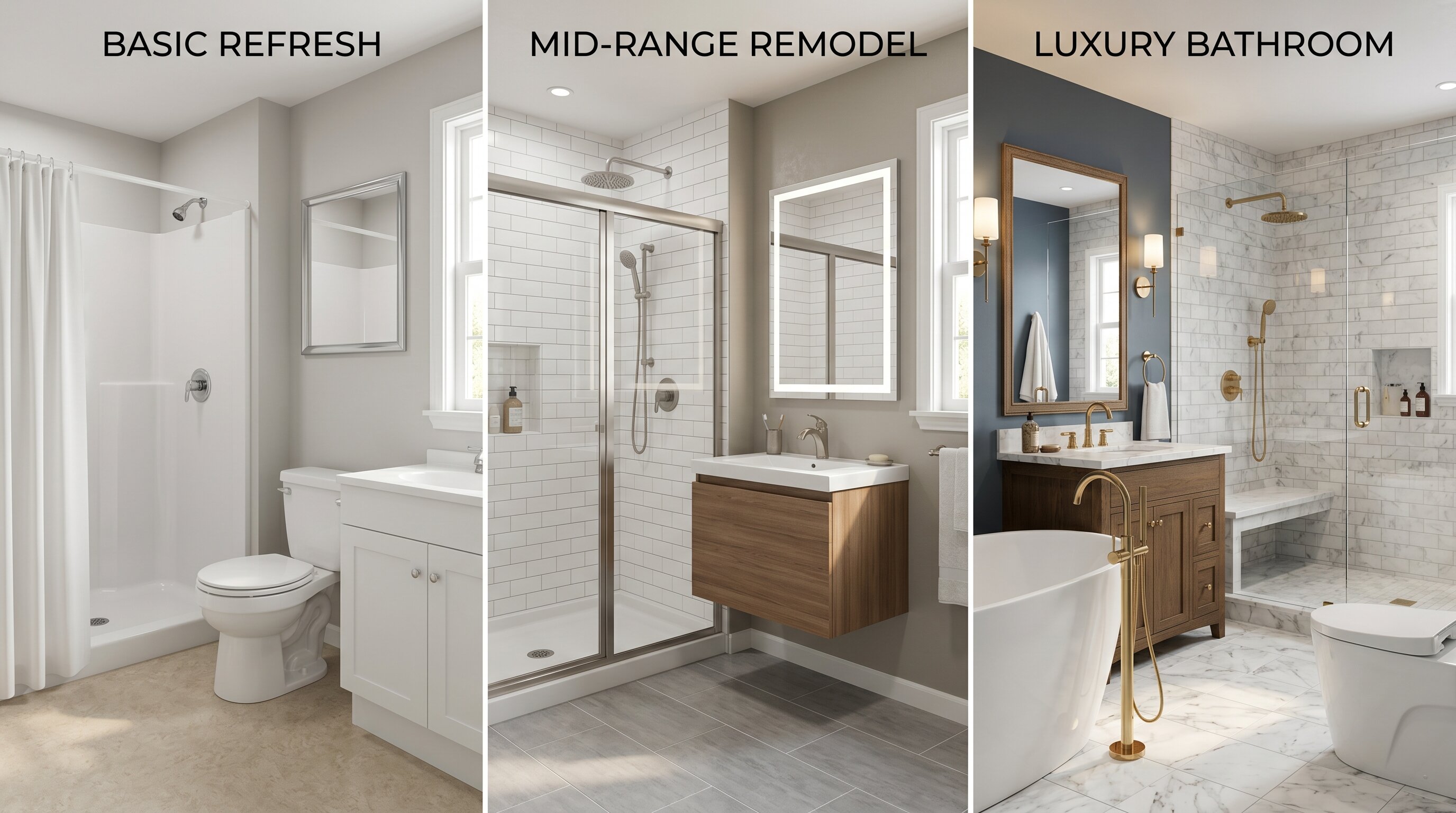
A 10×10 bathroom remodel in 2025 costs between $8,000 and $75,000. That range isn't a cop-out; the gap between swapping a vanity and repainting versus gutting the room and rerouting the drain is genuinely that large. For a proper full remodel real tile, real fixtures, professional labor most homeowners end up between $18,000 and $35,000. A cosmetic refresh stays around $8,000–$12,000. A gut renovation with layout changes and stone finishes clears $60,000 without much effort.
Three decisions drive most of the variance: whether you move the plumbing, what materials you use, and where you live. Everything else fills in around those.
1. How Much Does a 10×10 Bathroom Remodel Cost?
A 10×10 bathroom is 100 square feet big enough for a double vanity, separate tub and shower, and storage that isn't a joke. That's master bathroom territory, which is part of why remodeling one costs more than a guest bath.
Per square foot, expect $180–$400 in 2026 depending on finish quality. The national average across all bathroom sizes is $12,000 but smaller bathrooms pull that number down significantly. For 100 square feet with actual tile and professional labor, $20,000–$30,000 is a more honest starting point before you've decided anything.
2. Cost Breakdown by Category
Most homeowners budget for materials and get the quote back surprised by labor. Here's where the money actually goes.
Labor at 40–65% of the total isn't a contractor padding the bill. Bathrooms are tight, wet, code-regulated spaces where four separate trades often work the same room. That coordination takes time, and time in a bathroom costs real money.
3. What Affects the Price Most
Moving plumbing vs keeping it in place
This is the decision that most often turns a $20,000 remodel into a $30,000 one. Not the tile. Not vanity. Moving a drain line adds $2,000–$5,000 and in older homes, shifting one pipe often means upgrading surrounding plumbing to meet current code, which pushes that higher still. Keep the toilet, shower, and sink where they are whenever the layout allows it. That single choice saves more than any material downgrade.
Material choice
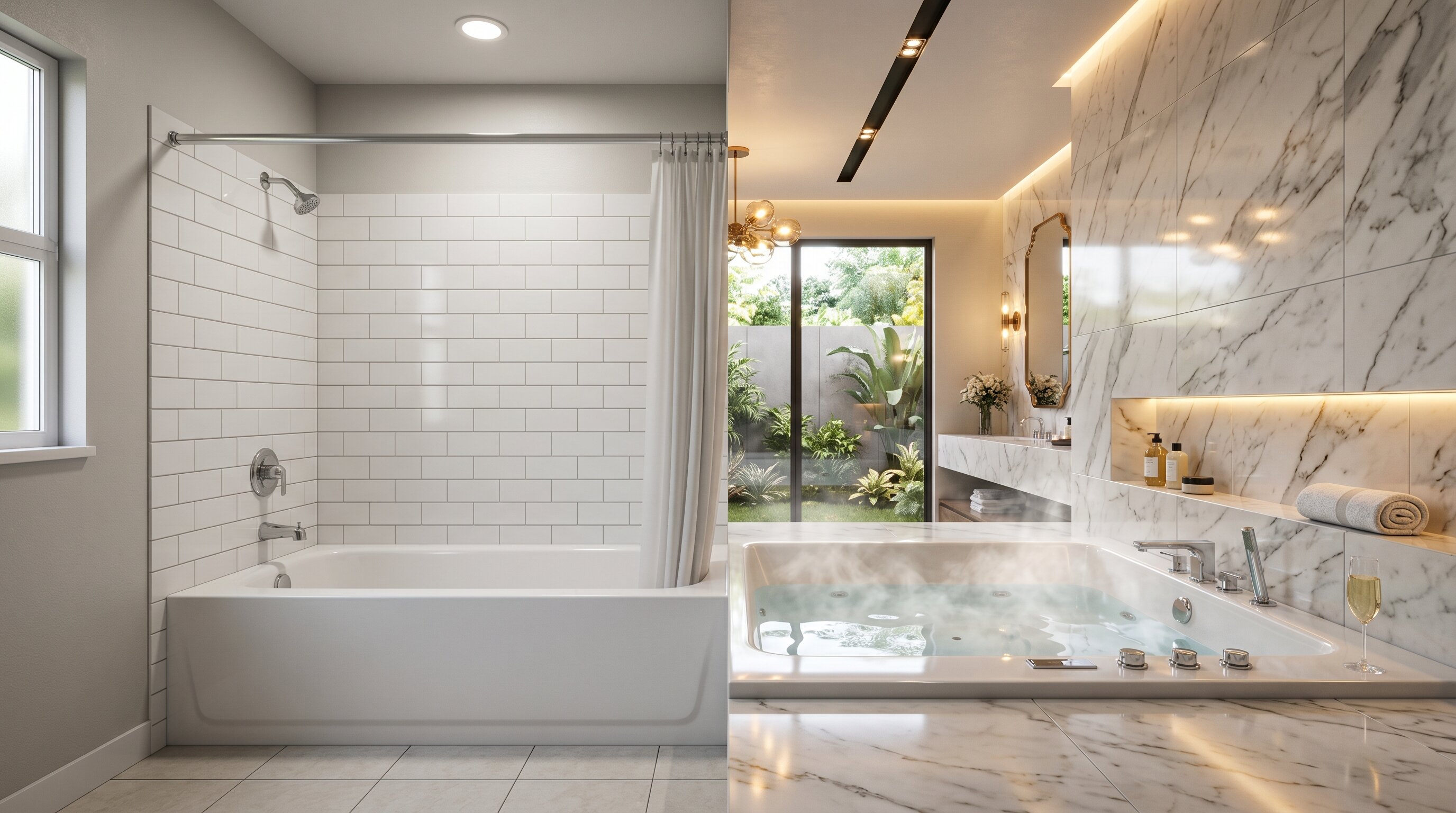
Ceramic tile runs $1–$15/sq ft. Marble and high-end porcelain run $15–$35/sq ft, and they take longer to set so labor goes up alongside the material cost. Quartz countertops are around $115/sq ft. Laminate does a similar visual job for $20–$50/sq ft. Whether that gap matters depends on how long you're staying and how much the finish bothers you in five years.
Location
The same project that costs $20,000 in Alabama costs around $30,000 in California identical scope, identical materials. Urban contractor rates, permit fees, and overhead all vary. Treat national averages as a planning framework. Get local quotes before you commit to a budget.
Gut renovation vs cosmetic refresh
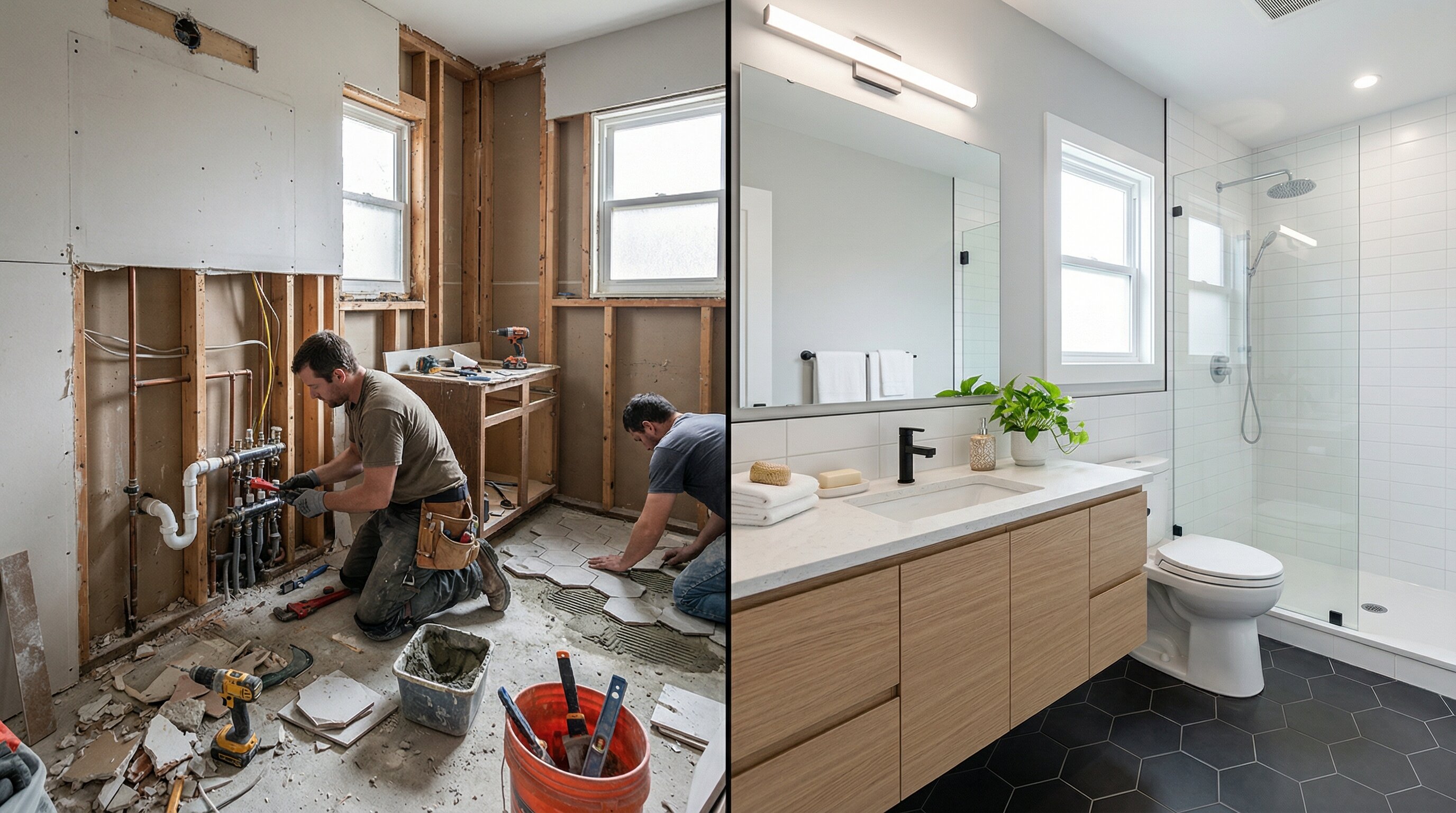
A gut renovation takes the room down to framing. It's right when there's water damage, mold, failing waterproofing, or wiring that's been a problem. In bathrooms built before 1990, opening the walls usually finds at least one issue. Add a 15–20% contingency to any gut estimate not as pessimism, just as acknowledgment that older bathrooms rarely open cleanly.
4. Labor Costs for a 10×10 Bathroom Remodel
Labor runs $5,000–$15,000 for a 10×10 bathroom, with licensed contractors typically billing $50–$75 per hour. Custom tile, plumbing rerouting, and electrical work push toward the high end.
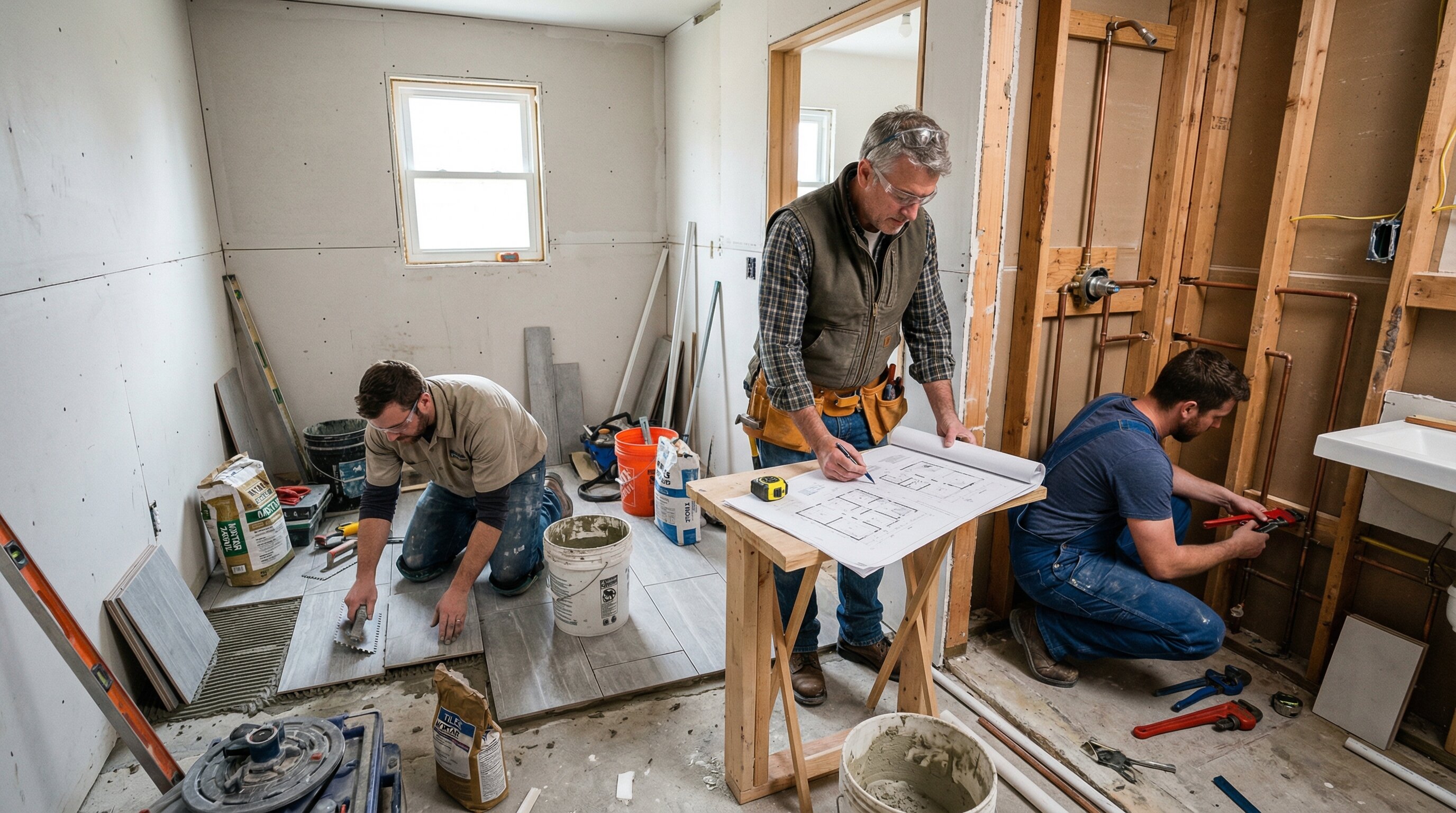
A full remodel usually involves four trades: a plumber for fixtures, drain work, and supply lines; an electrician for lighting and GFCI outlets; a tile setter for floors and walls; and a carpenter for the vanity, trim, and any framing. A general contractor coordinates all of them and adds 15–25% overhead. For a 4–6 week project across multiple trades, that coordination is genuine work. Scheduling four subcontractors yourself while holding a regular job is more time-consuming than most homeowners anticipate.
5. DIY vs Hiring a Contractor
Painting and basic installation you can handle yourself that saves $1,500–$3,000 on a mid-range remodel. Waterproofing is worth flagging separately because the failure mode is delayed. It doesn't leak the day you finish. It leaks six months later, under the tile, and the repair is far more expensive than hiring the job out originally.
6. Ways to Save on a 10×10 Bathroom Remodel
Don't move the plumbing. That one decision is worth $2,000–$5,000 before you've chosen a single material. Layout changes are where remodel budgets quietly double.
Bigger floor tiles save on labor. A 24×24 tile covers the same 100 square feet with fewer cuts and fewer grout lines than a 12×12. That's less installation time, roughly $500–$1,000 less on the bill. They also read as more expensive in a finished room, which is a useful bonus.
Semi-custom vanity instead of custom. Semi-custom runs $800–$2,500. Fully custom starts at $3,000 and often goes past $6,000. The difference in how they look when the bathroom is finished is genuinely smaller than the price gap suggests.
Book in winter November through February. Contractors have more availability, and the bathroom you've been putting off for nine months costs less to start in January than in May.
Refinish the tub if it still works and the layout is staying put. Refinishing is $300–$600. Replacing runs $1,500–$6,000 before installation. For a tub that gets used a few times a week, that's real money for a marginal difference.
Get three quotes. Contractor pricing for identical scope varies 20–40% in most markets. The lowest number isn't automatically right, but the spread tells you whether the quotes you're getting are in the same ballpark as the real market.
7. ROI: What a 10×10 Bathroom Remodel Actually Returns
A midrange remodel recoups 60–70% of its cost at resale, according to the 2025 Remodeling Impact Report (NAR). On a $20,000 project, that's roughly $12,000–$14,000 in added value. The ROI number is useful but easy to misapply. Most people don't remodel for resale value they remodel because the bathroom is outdated or the tile is failing or they're tired of it. The 60–70% figure is more useful as a spending ceiling than a return target.
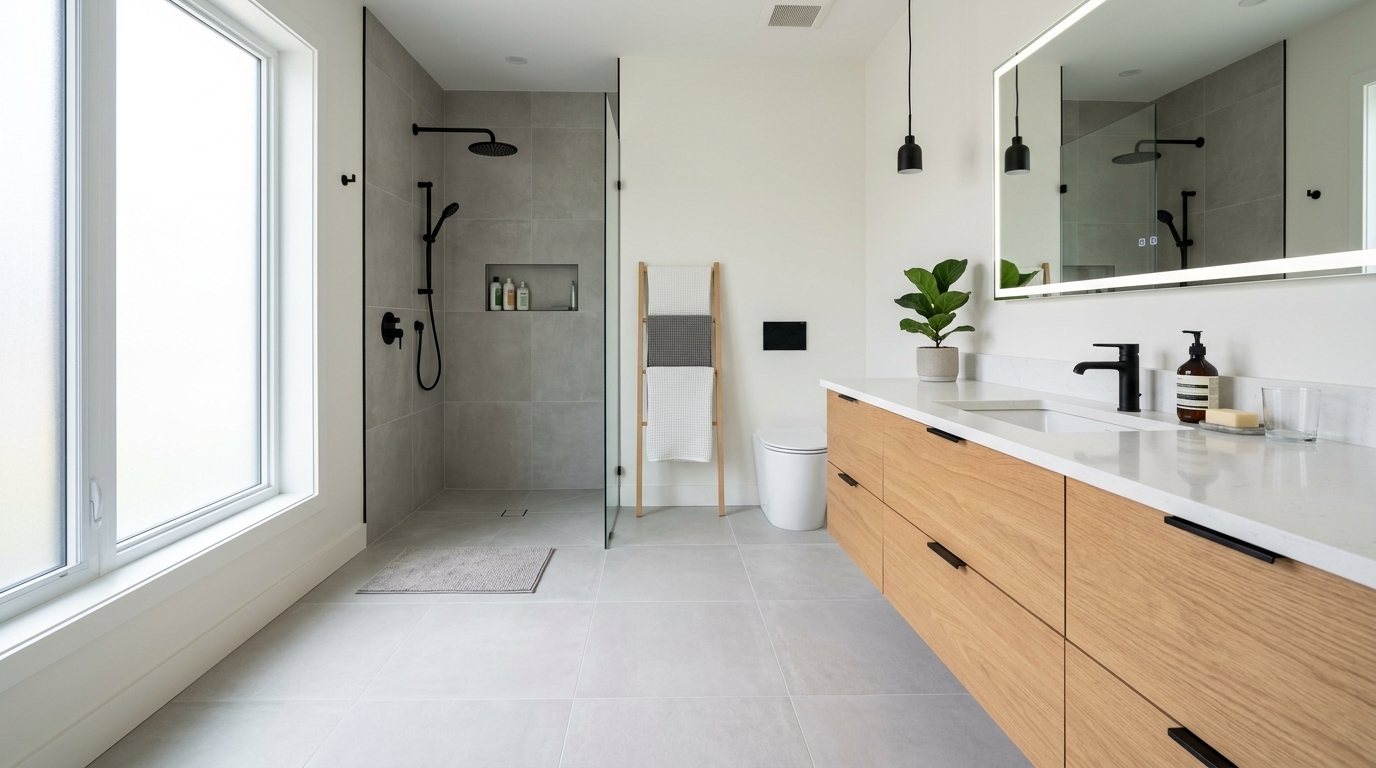
A rough rule that holds up: bathroom spend shouldn't exceed 10–15% of the home's total value. A $60,000 remodel in a $280,000 house is hard to recover. A $20,000 remodel in the same house makes sense. In a $700,000 home the math shifts premium finishes and custom work hold their value better in markets where buyers compare finishes.
Frequently Asked Questions
How much does a 10×10 bathroom remodel cost on average?
For a full mid-range remodel with professional labor, most 10×10 bathrooms run $18,000–$35,000 in 2026. A cosmetic refresh starts around $8,000. A gut renovation with premium finishes regularly hits $60,000–$75,000.
How much does a 10×10 bathroom remodel cost per square foot?
$180–$400/sq ft in 2026 depending on finish level and local labor rates. For 100 sq ft, that puts a mid-to-upper remodel at $18,000–$40,000 total.
How long does a 10×10 bathroom remodel take?
Three to six weeks for a standard full remodel once work begins. Gut renovations and layout changes push to 8–10 weeks. The most common delay in 2026 isn't labor availability it's materials. Custom tile, vanities, and glass enclosures often run four to six weeks on back-order. Order before you demo.
Can I remodel a 10×10 bathroom for under $10,000?
A cosmetic refresh, new vanity, toilet, fixtures, paint, prefab shower surround, no tile work, no plumbing moves can stay under $10,000. A full remodel with tile and professional labor in a 100 sq ft bathroom will usually exceed that.
Does a bathroom remodel increase home value?
It adds value, but usually less than what you spent. The NAR puts midrange recoup at 60–70%. A $25,000 remodel typically adds $15,000–$17,500 at resale. That's not a loss you also lived in the bathroom but it's not a dollar-for-dollar return and shouldn't be treated as one.
What costs the most in a bathroom remodel?
Labor. At 40–65% of the total budget, it's the biggest line item by a significant margin. After labor, the tub or shower system and tile work carry the most weight. Moving plumbing adds more than most people expect and less than they think they can avoid.
Conclusion
The budgets that blow up aren't usually the ones that chose expensive tile. They're the ones that planned only for materials, forgot about labor and permits, skipped the contingency, and then found something behind the wall. Set a realistic planning number before you get quotes $20,000–$30,000 for a full mid-range remodel and use the quote process to find out what labor actually costs in your market. That number varies more by zip code than anything else. Figure it out before you pick the vanity.