
Choosing a bathroom floor is two decisions: which tile looks and lasts the way you want, and how much cleaning it costs you over the next decade. Most guides answer only the first; this one answers both. Glazed porcelain is the best bathroom floor tile for most homes. It absorbs 0.5% water or less (the ANSI A137.1 "impervious" class), never needs sealing, and lasts 50 years or more. Grout is the real maintenance burden, not the tile. Cement grout must be resealed every 1 to 2 years; epoxy grout absorbs under 0.1% water and never needs sealing. Slip safety and easy cleaning pull against each other. Textured tiles grip better but trap grime; glossy tiles wipe clean but get slippery. Target a wet DCOF of 0.42 or higher. A bathroom floor must be water-resistant, slip-resistant, durable, and easy to clean. On all four, porcelain leads, then ceramic, natural stone, and luxury vinyl. In a Old House survey of 1,000 renovators, ceramic or porcelain tile was the top pick at 48%, with natural stone and vinyl each at 29%. One correction the popular guides get wrong: porcelain is not "100% waterproof." It is highly water-resistant, but a finished floor is only as watertight as its grout and the membrane beneath it. Treat any "waterproof tile" claim as marketing. What floor tile is best for a bathroom? The short answer is porcelain. Here is why it beats the field on the metrics that matter in a wet room. Porcelain is the densest tile made, carries a PEI wear rating of 3 to 5 (3 or higher is the residential floor minimum), and shrugs off stains and mildew. Its one weakness is that it is hard to cut, favoring professional installation. For a busy, wet floor, porcelain wins: denser, less absorbent, longer-lived. Our porcelain vs ceramic tile breakdown compares them in depth. Ceramic is the value pick and the friendlier DIY material, so many homeowners run porcelain on the floor and ceramic on the walls. Deciding what type of tile is best for a bathroom floor on a budget? Glazed ceramic in a secondary bath is a sound answer. Here is the part other articles skip: the easiest floor to keep clean is not decided by the tile alone, but by three specification choices that cut scrubbing time for the life of the floor. Glazed porcelain and ceramic wipe clean with a damp cloth and never need sealing. Porous stone and cement tile demand ongoing sealing and careful cleaning. Grout, not tile, is where soap scum, mildew, and staining collect. Large-format tiles such as 12 by 24 use far fewer joints, so there is less to scrub, and they make a small room read bigger. Epoxy grout stays impervious to water, resists mold, and holds its color for years with no sealing. Cement grout needs resealing every 1 to 2 years and stains in the meantime. Paying more for epoxy up front is the single most effective low-maintenance move in the project. Ventilation is the quiet fourth factor. Even impervious tile fails if trapped moisture keeps settling into grout, so a working exhaust fan protects the whole floor. For shower walls, our tile vs acrylic shower comparison weighs the same grout tradeoff. Look for a wet DCOF of 0.42 or higher, the threshold in ANSI A137.1 (measured under ANSI A326.3). Matte or lightly textured porcelain is the most reliable non-slip choice. Small mosaics add grip because their extra grout lines create traction, which is why they suit shower floors, where guidance points to a wet DCOF near 0.50. The tradeoff: heavy texture grips best but traps the most grime, and hitting 0.42 is a comparison point, not a guarantee against slipping. Glazed porcelain and glazed ceramic do not. The glaze is a glass-like layer water cannot penetrate. What needs sealing is the grout and any stone or cement tile. Marble and travertine should be resealed every 6 to 12 months, and sealing slows staining but does not stop acid etching. Only avoiding acidic cleaners (vinegar, lemon, bleach) prevents that. Bathrooms punish shortcuts. They need a waterproofing membrane, precise cuts around fixtures, and a level substrate so large tiles do not rock. Ceramic and vinyl suit a confident DIYer, but porcelain and stone reward a pro. Homeowners comparing installers can use a free directory like Nationwide Builders to reach local tile contractors and line up several quotes first. Glazed porcelain is the top choice for most bathroom floors. It absorbs 0.5% water or less, resists stains and mildew, needs no sealing, and lasts 50 years or more. Pick a matte finish with a wet DCOF of 0.42 or higher for slip safety. Large-format tiles like 12 by 24 are best. Fewer grout lines make the room feel larger and cut cleaning time. Save small mosaics for the shower floor, where the grout lines add grip and follow the drain slope. It is not bad, just demanding. Stone is porous, must be sealed, and calcium-based stones like marble etch permanently from acidic cleaners. Slate is the most forgiving option. For the look without the upkeep, choose marble-look porcelain. Yes, if it is frost-proof. The same low absorption that suits bathrooms makes porcelain and vitreous glass the best mosaic tiles for outdoor projects, because a 0.5% absorption rate resists freeze-thaw damage. Material runs about $0.50 to $10 per square foot for ceramic and porcelain, and $5 to $20 or more for stone. Professional labor adds roughly $4.50 to $18 per square foot, and rates vary by region, so compare a few local pros. A free directory like Nationwide Builders lets you gather several quotes without pay-per-lead fees before you commit.What is good material for a bathroom floor?
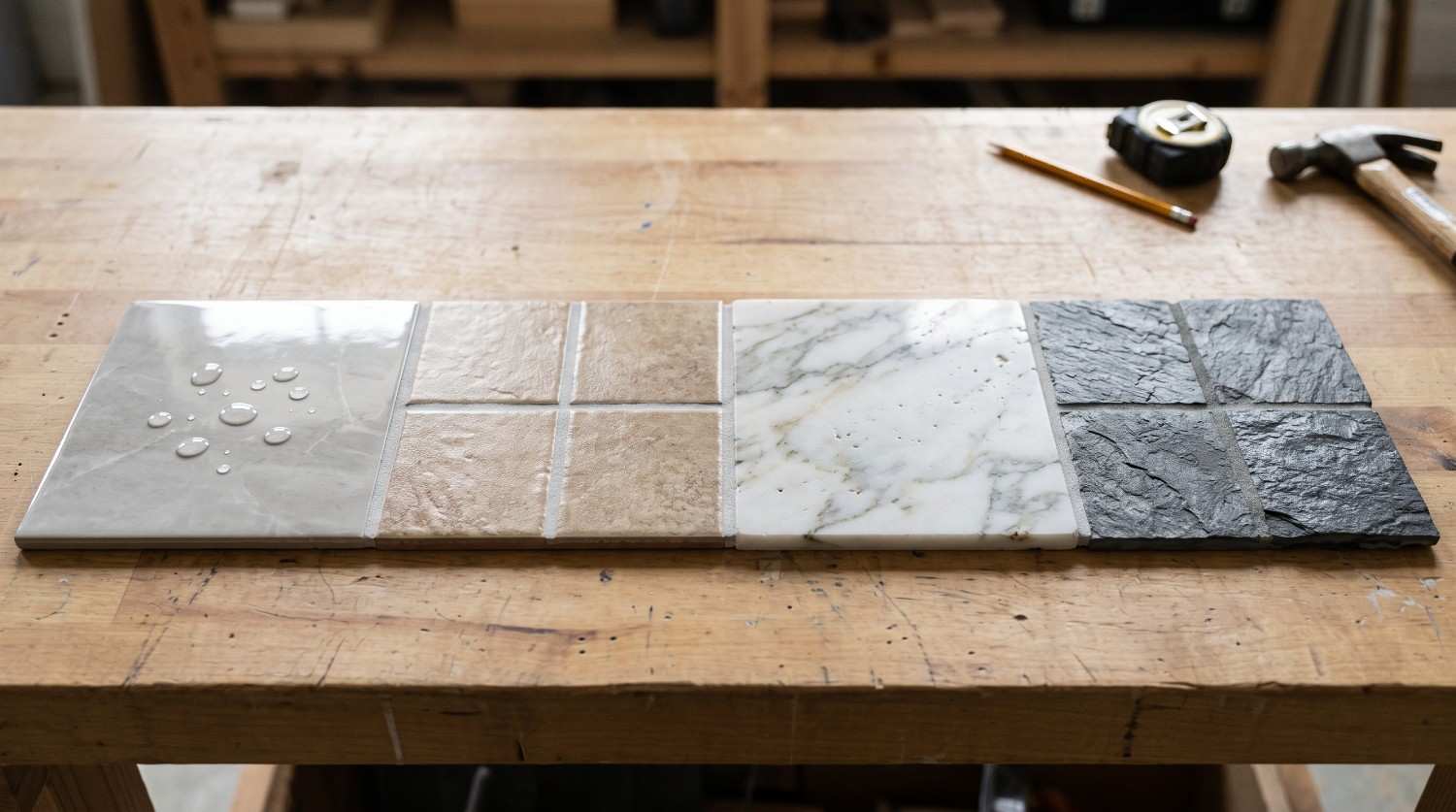
Is porcelain or ceramic the better choice?
Which bathroom tile is genuinely easiest to maintain?
Pick a non-porous glazed surface
Shrink the grout
Upgrade the grout you do use
What is the best non-slip bathroom floor tile?
Do bathroom floor tiles need to be sealed?
Getting the installation right
Frequently asked questions
What is the best tile overall for a bathroom floor?
What size tile is best for a small bathroom floor?
Is natural stone a bad idea in a bathroom?
Can bathroom tile be used outdoors?
How much does bathroom floor tile cost installed?
Best Bathroom Tile Flooring and the Easiest Type to Maintain
Glazed porcelain is the best bathroom tile flooring: 0.5% water absorption, no sealing, easiest to clean. See the full comparison, costs, and grout guide.

Written by Zohaib Ali
More on Nationwide BuildersRead more Home Improvement Tips blogs
Pros
Support