
A soft, sinking bathroom floor scares most homeowners, and the collapse question deserves a straight answer. The honest answer turns on one thing: whether the rot reached the joists or stopped at the subfloor. This guide shows how to tell which one you have and what to do today.
Yes, a spongy bathroom floor can collapse, but only when rot reaches the joists below.
Damage that stops at the subfloor panel risks a localized foot-through, not a full collapse.
The toilet base and tub edge carry the most weight, so they fail first.
A floor that drops more than about one inch needs a pro before anyone uses it.
Stop bathing and keep weight off the soft spot until the cause is confirmed.
A spongy bathroom floor can collapse, but only when water rot reaches the wooden joists under the subfloor. Damage that stops at the subfloor panel rarely causes a full collapse. It causes a localized failure where a foot or appliance leg punches through.
The subfloor is the panel under your tile or vinyl. The joists are the beams holding the whole floor up. Subfloor rot feels soft and patchy. Joist rot causes wide sagging and is the true danger. Bathrooms fail more than any other room. Slow leaks from the toilet, tub, and shower soak the wood for months unseen.
What Actually Collapses: The Subfloor or the Joists?
The subfloor fails first, and the joists fail last. This order decides whether you face a small repair or a real safety problem. A rotten panel compresses under load and can give way in one spot. People describe this as a leg going through near the tub.
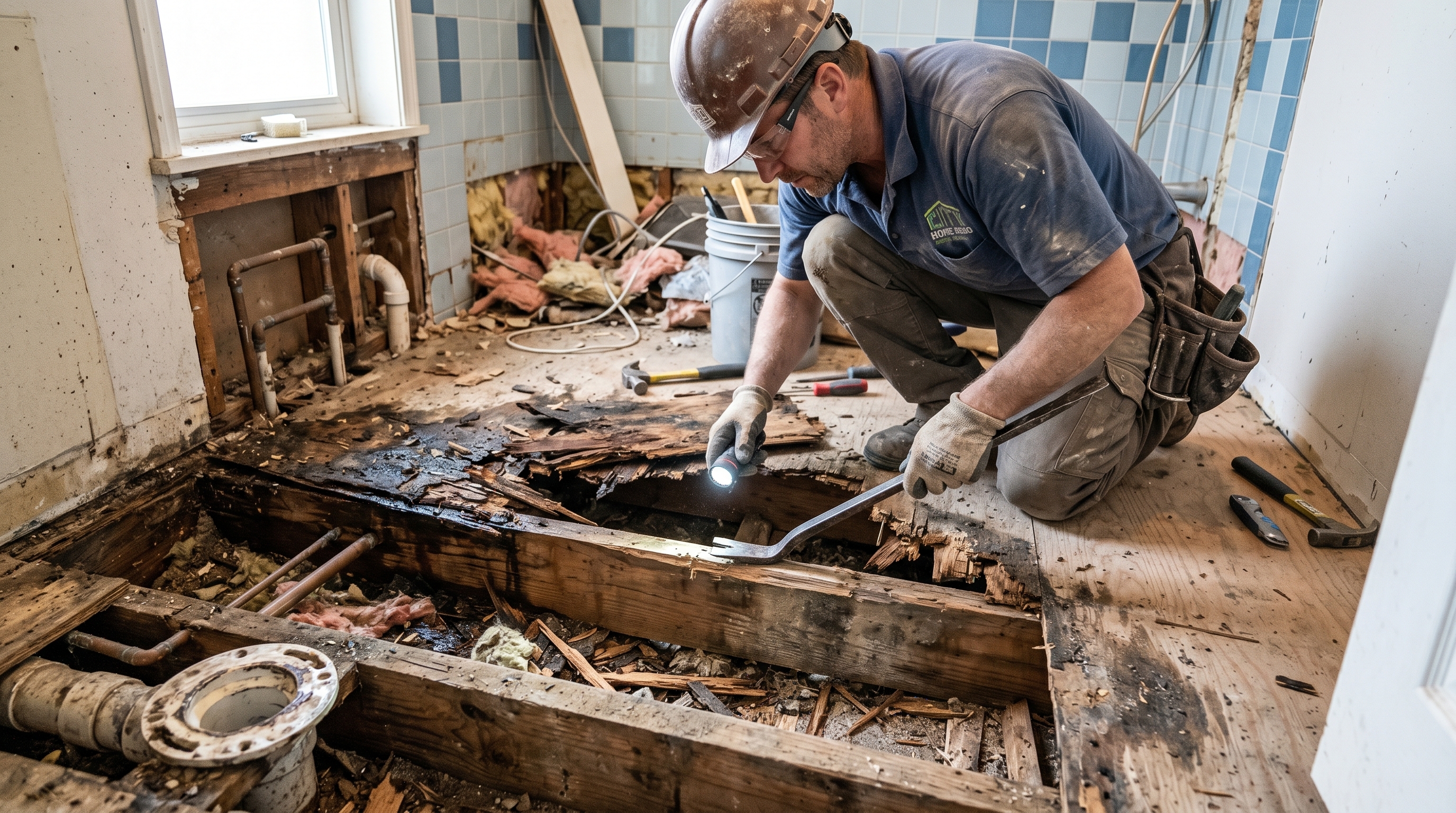
A whole-floor collapse needs rotten or cracked joists. A soft spot under a heavy fixture can fail under concentrated weight. Once the framing goes, large sections drop together. A stable, decades-old slope with no soft spots is usually old settling, not pending collapse.
Why Does a Bathroom Floor Feel Spongy When Walking on It?
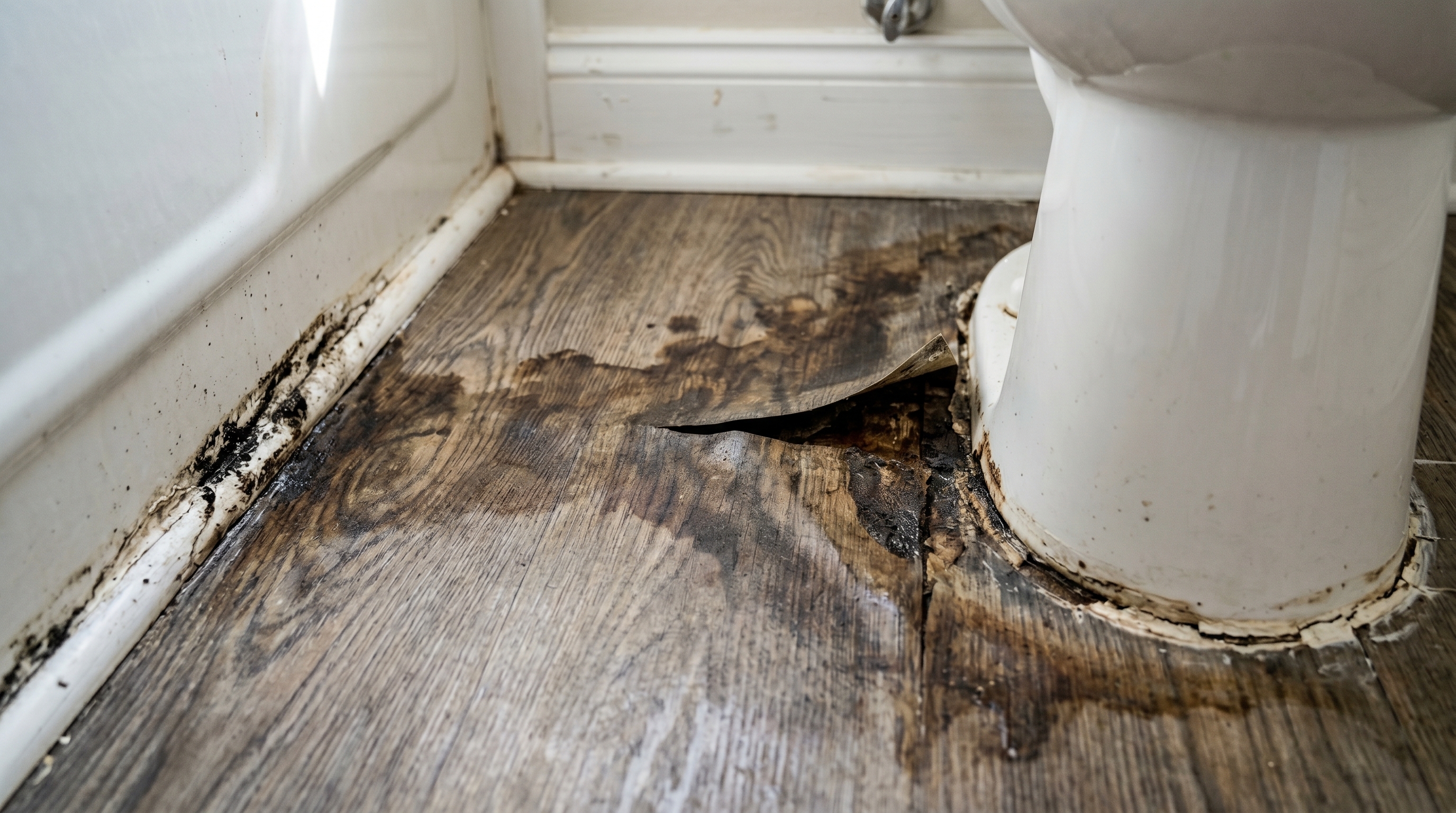
A floor feels spongy when walking because the layer under your feet flexes too much. Four causes explain almost every case. Moisture rot is the most common. Water weakens the wood until the panel compresses under each step. A subfloor that swelled from an old leak also stays soft and raised.
Loose fasteners let the panel lift off the joist and add bounce. Undersized or widely spaced joists flex even without rot. Only the rot and joist cases point toward collapse.
What Does Bathroom Floor Water Damage Look Like Before It Fails?
This damage shows clear warning signs weeks before any failure. Catching them early separates a patch from a full rebuild.
Watch for musty smells, dark stains near fixtures, lifting tile, bubbling vinyl, and a rocking toilet. From below, look for stained joists, drips, or mold on the underside. Spotting these water damage floor signs early stops both rot spread and collapse. If the soft area sits at the toilet or tub, treat it as urgent.
How Do You Test if a Spongy Floor Is Dangerous Right Now?
A soft floor turns dangerous when it sinks deeply, sags widely, or crumbles when probed. Walk slowly and find the deepest sink point. Press a screwdriver into the soft wood at an edge. If it crumbles or sinks in easily, the wood is rotten.
Then check from below, in a basement or the room underneath. Sagging beams or wet joists mean you stop using the floor. Match what you find to the table.
How Do You Repair a Water Damaged Bathroom Floor?
To repair water damaged floor sections, you cut out the bad subfloor and check the joists before patching. Skipping the joist check is the common mistake.
Fix the leak first, or the rot comes back. Cut the panel back to the center of sound joists. Replace it with matching plywood, glued and screwed. If the joists are soft, sister a new beam alongside each one. Nationwide Builders handles the leak, subfloor, and framing in one visit.
Frequently Asked Questions
Can a spongy bathroom floor collapse under one person's weight?
A single person rarely triggers a full collapse. The greater danger is your weight plus a heavy fixture on weak joists. If the floor sinks sharply near the tub, keep off it.
How long before a soft bathroom floor becomes dangerous?
There is no fixed timeline. A slow leak can soften a subfloor in months and reach joists within a year. Once the floor sags widely, the danger is already present.
Is a soft bathroom floor upstairs more dangerous?
An upstairs floor follows the same collapse rules. A failure there can drop into the room below. A foot-through over a kitchen is a real injury risk, so inspect it sooner.
Can you tile over a spongy bathroom floor?
No, tiling over a soft floor almost always fails. Tile is rigid and cracks when the floor below flexes. Any give in the subfloor loosens grout within months. Fix the soft area and confirm the joists are sound first.
Does home insurance cover a collapsed bathroom floor?
Coverage depends on the cause and your policy. Sudden accidental leaks are often covered, while slow long-term leaks are usually excluded. Insurers look at how long the damage was left. This is general information, not insurance or legal advice.
When does Nationwide Builders replace joists instead of the subfloor?
Nationwide Builders replaces joists when the framing is soft, cracked, or sagging. A subfloor patch only fixes local panel damage. Sistering joists restores the load strength.
Conclusion
A spongy bathroom floor is a warning, not always an emergency. Subfloor sponginess is usually fixable and low-risk. Joist rot is the real collapse threat. Judge the softness, stay off the bad spots, and fix the leak.