
If your bathroom keeps fogging up, dripping, or growing spots no matter how often you clean, the problem is rarely one thing. It is a moisture problem hiding behind a mold problem. Fix the moisture and the rest gets easier. The most reliable fix is a correctly sized exhaust fan vented outdoors, run during your shower and for 20 minutes after (Home Ventilating Institute). Keep indoor humidity between 30 and 50 percent; the EPA warns that above 60 percent, condensation and mold become likely. Moisture-resistant paint, primer, drywall, and wallpaper help, but they are backup, not the cure. "Suitable for damp locations" does not mean a fixture is safe inside the shower. Shower spray needs a wet-rated fixture. Absorbers like DampRid and mini "shower dehumidifiers" are supplements for small enclosed spaces, not a substitute for airflow. Your bathroom gets moisture buildup because more water vapor is being made than the room can remove, so it condenses on cold surfaces. Think of it in four layers: how much moisture you generate, how fast you remove it, where it condenses, and how vulnerable your surfaces are. Matching the fix to the layer that is actually failing is what stops the problem for good. Hot showers pump a lot of vapor into a small room in minutes. If air cannot escape, that vapor lands on the coolest surface it can find. As the EPA puts it, the key to mold control is moisture control. That is also why a windowless apartment bath and a cold top-floor bath fail for different reasons and need different fixes. Run a properly sized exhaust fan that vents outside, and keep it going for 20 minutes after you finish. The Home Ventilating Institute recommends 1 CFM of airflow per square foot for bathrooms up to 100 square feet, with 50 CFM as the practical minimum. Bigger bathrooms use fixture-based sizing, roughly 50 CFM each for the tub, shower, and enclosed toilet, and steam showers need more. One guardrail matters more than the fan itself. The fan must vent to the outdoors, never into an attic, soffit, or crawl space. Dumping humid air into the attic is a code violation in most areas and quietly grows mold on your roof sheathing. A moisture sensing bathroom fan is worth it if people forget the switch or leave before the steam clears. These fans read humidity and turn themselves on when it spikes, then run until the room dries. Broan-NuTone and Panasonic both make them, and some are simple wall-switch swaps that keep your existing fan. The threshold is usually adjustable between 30 and 80 percent, so the fan is not running all day. The catch is maintenance: a dusty or badly set sensor can run too long or too short, and replacement sensors are not cheap. Confirm the model still meets your CFM sizing before buying on features alone. Do bathroom or shower dehumidifiers actually work? A real dehumidifier works, but there is no magic "shower dehumidifier" that beats good ventilation. The tiny plug-in units sold for bathrooms pull almost no water. A proper compressor unit does help as a supplement to your fan, earning its place in a bath that stays damp when unused, a basement bathroom, or a windowless room with a weak fan. Safety is the real limit. A wet room and an electrical appliance are a bad mix, so many makers warn against bathroom use. Keep any unit away from water, on a GFCI circuit, or just outside the door, and aim to hold humidity in the 30 to 50 percent range. Calcium chloride absorbers like DampRid pull water vapor from the air and collect it as brine, with no power needed. They are useful in small, sealed, still spaces such as a vanity cabinet, a closet, or a rarely used guest bath. That is also where their usefulness ends. An open tub of absorber cannot keep up with the steam from a daily hot shower. In one chamber test, DampRid took a small sealed space from 80 percent humidity to 43 percent over three days, which tells you it is slow and space-limited. If your walls are wet minutes after a shower, an absorber is a bandage, not a repair. Keep it away from children, pets, metal, and leather. Moisture resistant paint for bathrooms slows mold, but it does not stop the moisture causing it. Bathroom and kitchen paints add mildew inhibitors and a tighter, washable film. Consumer Reports notes these paints resist water by forming a film and contain fungicides that kill mildew spores before they spread. Use satin or semi-gloss, not flat. A moisture resistant primer for bathroom does similar work underneath, and stain-blocking primers like Zinsser or KILZ add a mildew-resistant base coat. Two hard limits: never paint over existing mold, because it peels and the mold keeps growing, and neither paint nor primer is shower waterproofing, so keep both off direct-spray surfaces. Moisture resistant drywall for bathroom walls comes in a few grades, and where you can use each is set by code. Green board is moisture-resistant gypsum and is fine for general bathroom walls away from direct water. Purple board adds mold and mildew resistance. Here is the part most guides get wrong. Since the 2006 building code, green board is no longer approved as a tile backer inside a tub or shower; wet areas require cement board, glass-mat gypsum, or a foam backer. Even cement board is not the finish line, because it is water-resistant, not waterproof, so it needs a waterproofing membrane. Shower waterproofing is a licensed-contractor job, not a weekend project. Moisture resistant wallpaper for bathrooms works on walls outside the splash zone in a well-ventilated room. Vinyl and quality peel-and-stick papers are wipeable and shrug off everyday humidity. The key phrase is moisture-resistant, which is not the same as waterproof. Inside a shower or across a tub surround, wallpaper fails: the adhesive breaks down, edges bubble, and mold grows in the damp gap behind it. Clean, fully dry walls and a working fan decide how long it lasts. Leave a small gap at the floor and tub edge, and never run wallpaper into the shower enclosure. Moisture in bathroom ceiling and sweating walls come from condensation: warm, humid shower air hitting a surface below the dew point. The Department of Energy defines the dew point as the temperature at which air reaches 100 percent humidity and water starts turning back into liquid. Cold ceilings, exterior walls, single-pane windows, and uninsulated pipes are the usual victims, and top-floor baths are the worst because those surfaces run coldest. The fixes are to ventilate, raise the surface temperature with insulation or gentle heat, and wrap cold pipes, which the EPA specifically recommends. Condensation clears as the room warms. A stain that stays in one spot and never dries is more likely a leak, which is a different repair. Does "suitable for damp locations" mean a fixture is OK in the shower? No. A fixture rated "suitable for damp locations" is not approved for inside the shower spray zone. Electrical code treats a damp location as somewhere with moisture and condensation but no direct water, while a wet location is subject to splashing, dripping, or spray. Inside the shower, where spray hits the fixture, you need a wet-rated fixture. Damp-rated is fine for the general bathroom ceiling outside that zone, and a wet-rated fixture can always stand in for a damp one, never the reverse. This is exactly where a licensed electrician or remodeler earns their fee, because getting it wrong is both a code failure and a shock hazard. Nationwide Builders connects homeowners with vetted local pros for these jobs, from fan installation and ducting to shower waterproofing and insulation. When a fix crosses into electrical, duct routing, or wet-area waterproofing, matching the right contractor to the problem is what makes it last. A bathroom should sit between 30 and 50 percent relative humidity. The EPA advises keeping indoor humidity below 60 percent, and the CDC recommends no higher than 50 percent all day, since above 60 percent mold becomes likely. A $10 to $20 hygrometer lets you check it yourself. Control moisture with daily habits and airflow: run the fan during and after showers, squeegee the glass, leave the door open to dry, and fix leaks quickly. Since mold needs moisture to grow, drying the room within a day removes its fuel. If mold keeps returning, it may already be structural rather than surface, which is a different problem. Combine ventilation, air conditioning, and a dehumidifier to hold indoor humidity in the 30 to 50 percent range. Vent moisture-heavy rooms like bathrooms, kitchens, and laundry directly outdoors, and insulate cold pipes so vapor has fewer cold spots to condense on. Persistent whole-house dampness usually points to a ventilation or building-envelope issue worth a professional look. Sweating walls happen when a surface is colder than the dew point of the room air, which is common on exterior walls and in poorly insulated rooms. The fix is to raise the surface temperature through insulation and to reduce room humidity. If it is constant, a pro can check for missing insulation or a hidden moisture source. Usually yes, because a fan install involves electrical wiring and ducting the exhaust all the way outdoors. A fan vented into the attic instead of outside is a code violation and creates hidden mold. Nationwide Builders can match you with a vetted local contractor who handles the wiring, ducting, and correct sizing. Call a pro when moisture keeps returning after you have fixed ventilation and habits, when you see soft floors, peeling tile, or ceiling stains, or when a job involves waterproofing, wiring, or insulation. Those signs point to a building issue that materials alone will not solve. Nationwide Builders lets you compare vetted local contractors so you match the right specialist to the problem.Why does my bathroom keep getting moisture buildup?
How do I get rid of moisture in my bathroom fast?
Are moisture-sensing bathroom fans worth it?
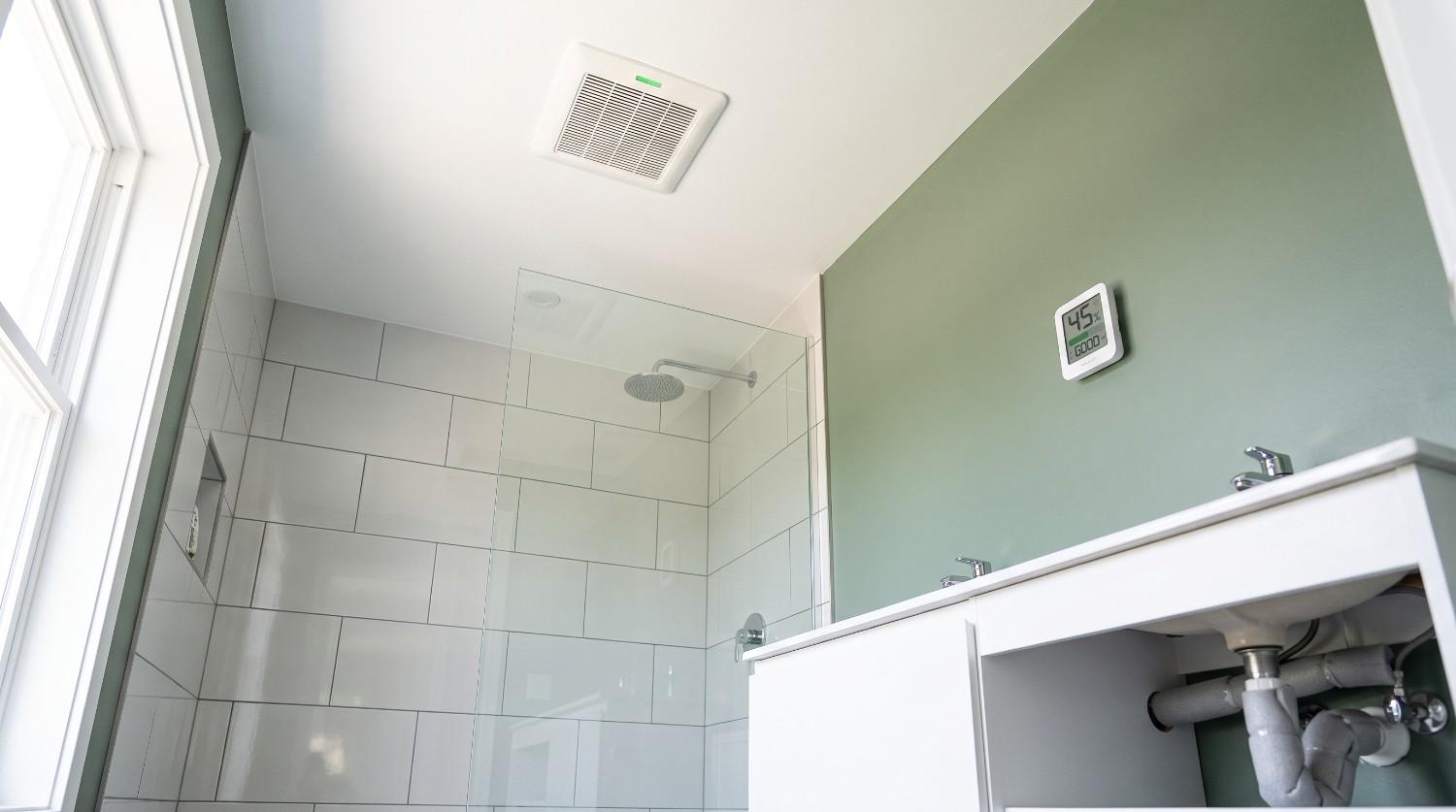
What absorbs moisture in a bathroom, and what DampRid cannot do?
Does moisture-resistant paint or primer stop bathroom mold?
What drywall is moisture-resistant, and where is green board not allowed?
Is moisture-resistant wallpaper safe for a bathroom?
Why is there moisture on my bathroom ceiling or sweating walls?
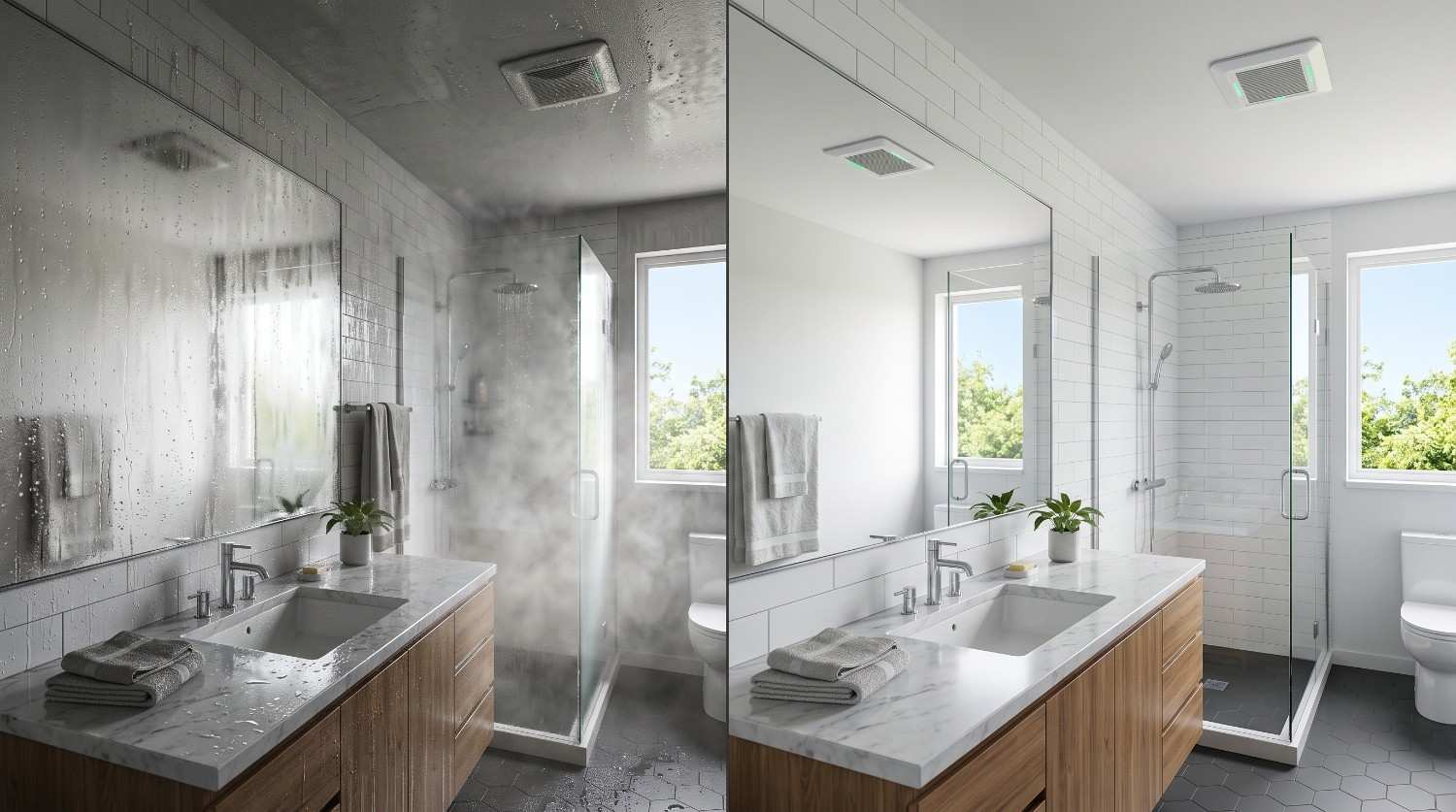
Match the fix to the problem: a quick guide
Frequently asked questions
What humidity level should a bathroom be?
How do I prevent mold in the bathroom without remodeling?
How can I lower humidity in my whole house, not just the bathroom?
Why are my bathroom walls sweating even when I am not showering?
Do I need a professional to install a bathroom exhaust fan?
When should I stop trying products and call a contractor?
- Why does my bathroom keep getting moisture buildup?
- How do I get rid of moisture in my bathroom fast?
- Are moisture-sensing bathroom fans worth it?
- What absorbs moisture in a bathroom, and what DampRid cannot do?
- Does moisture-resistant paint or primer stop bathroom mold?
- What drywall is moisture-resistant, and where is green board not allowed?
- Is moisture-resistant wallpaper safe for a bathroom?
- Why is there moisture on my bathroom ceiling or sweating walls?
- Match the fix to the problem: a quick guide
- Frequently asked questions
- What humidity level should a bathroom be?
- How do I prevent mold in the bathroom without remodeling?
- How can I lower humidity in my whole house, not just the bathroom?
- Why are my bathroom walls sweating even when I am not showering?
- Do I need a professional to install a bathroom exhaust fan?
- When should I stop trying products and call a contractor?
Top Solutions for a Bathroom That Keeps Getting Moisture Buildup
Fix a bathroom that keeps getting moisture: correct fan sizing, the 30-50% humidity rule, moisture-resistant materials, and when to call a pro.

Written by Zohaib Ali
More on Nationwide BuildersRead more Home Improvement Tips blogs









Pros
Support