
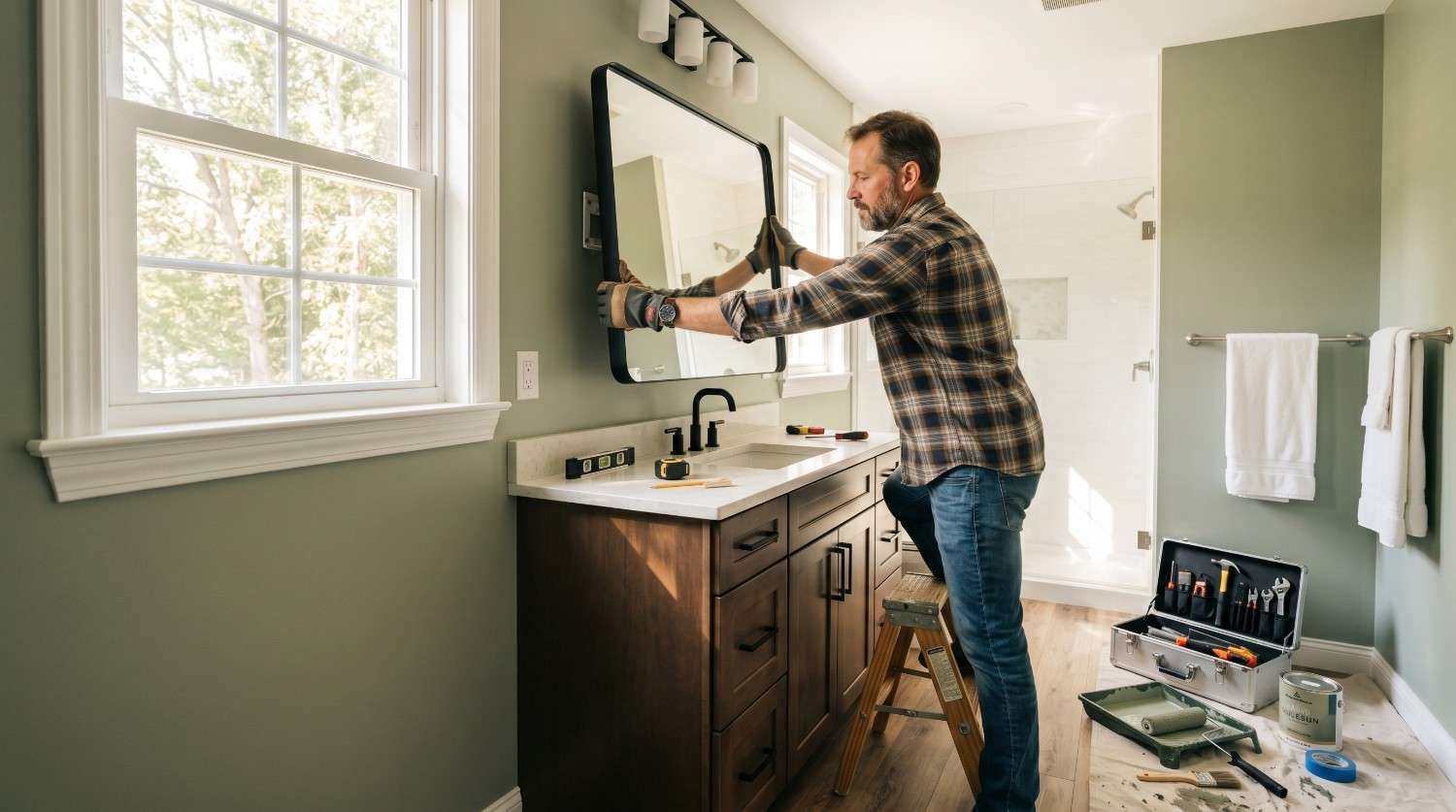
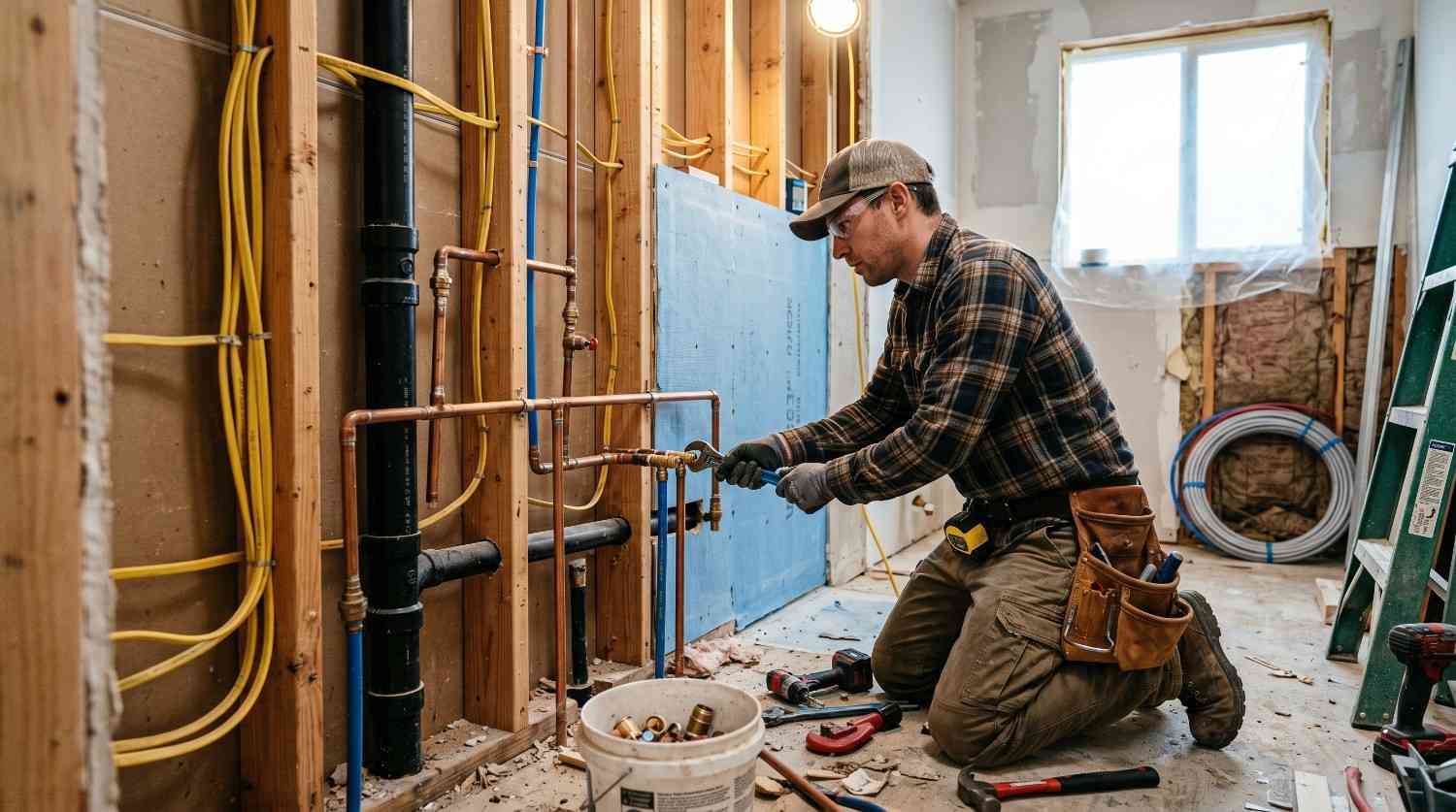
Most bathroom remodels stall at the same question: what can I actually do myself and what do I need to pay someone for? The answer comes down to one thing whether the work touches hidden systems behind your walls, floors, or ceiling. Get that line right and you save thousands. Get it wrong and you pay more to fix it than you would have paid a contractor in the first place. Paint, hardware swaps, faucet replacements, vanity swaps, and toilet replacements are safe DIY territory for most homeowners. Plumbing rough-in, new electrical circuits, structural wall removal, and shower waterproofing require a licensed contractor. Moving a drain, adding an outlet, or changing a bathroom layout triggers a building permit in virtually every U.S. jurisdiction. DIY labor savings run from $4,000 to $15,000 on a full remodel. One failed waterproofing job can cost more to fix than the entire original project. Most cosmetic and surface-level bathroom upgrades are safe to do yourself. Painting walls, swapping towel bars, replacing a faucet, installing a new mirror, updating cabinet hardware, and replacing a toilet in its existing location all belong here. These tasks need basic tools, follow clear manufacturer instructions, and carry low risk. If something goes wrong, the fix does not require a professional. The test that matters: does the project change anything hidden behind the wall, floor, or ceiling? If no, it is generally DIY-safe. If yes, treat it as contractor territory until you confirm otherwise. A first-timer can handle painting, hardware updates, caulk replacement, and mirror installation in a single weekend. Real visual impact, no permit required. Work that touches plumbing rough-in, electrical circuits, structural elements, or new shower waterproofing requires a licensed contractor in most jurisdictions. This is a code requirement, not a preference. Tasks that almost always need a licensed professional: Moving or adding drain lines or supply pipes Running new electrical circuits or adding outlets Installing a shower pan from scratch Removing or modifying load-bearing walls Enlarging the bathroom footprint Gas line connections for tankless water heaters Work hidden inside walls, floors, and ceilings must be inspected by a building official before it gets sealed up. Skipping that step can void homeowner's insurance on related claims, create title problems at resale, and result in fines or orders to tear out finished work for inspection. What Does a Building Permit Actually Cover? A building permit is required any time a bathroom project changes the structure, plumbing layout, or electrical system. Swapping a faucet in place, repainting, replacing a toilet in the same location, or retiling over a solid floor does not require a permit in virtually any U.S. jurisdiction. Moving a toilet to a different wall, adding an outlet, or relocating a shower drain does. Most jurisdictions offer a homeowner permit that lets you pull a permit and do regulated work yourself on your primary residence, with your own labor, subject to the same inspections a contractor would face. It does not waive any code requirement. It lets you do the work without hiring out the licensed trade. The International Residential Code, adopted in most states, sets three baseline requirements for bathrooms: waterproof backing behind tile in tub and shower surrounds, mechanical exhaust ventilation at 50 CFM minimum, and GFCI protection on all electrical receptacles. These are the floor, not optional upgrades. Most articles on this topic cover skill level and cost. Very few address the two consequences homeowners find out about too late. Unpermitted work in plumbing, electrical, and structural systems can void a homeowner's insurance claim when that work is connected to a loss. Water damage from an unpermitted pipe move. A fire from unpermitted wiring. An adjuster who finds unpermitted work in the affected area has grounds to deny the claim. At resale, unpermitted work becomes a disclosure obligation in most states. Buyers can demand permits be pulled retroactively, which means opening walls, passing inspections, and paying fines on top of the original work. Some states, including Florida, restrict resale for a set period after owner-builder construction. Pulling a permit for regulated work typically costs $100 to $500. That is the cheapest line item in any bathroom remodel. Can I replace my own toilet without a permit? Yes. Replacing a toilet in its existing location is classified as routine maintenance in virtually all U.S. jurisdictions. No permit needed. A permit becomes required only if you move the toilet to a different location, because that changes the drain rough-in. Do I need a permit to replace a bathroom vanity? Not if it stays in the same location with no plumbing changes. Move the sink, add a second one, or change drain and supply line locations and a permit is required. The deciding factor is whether any hidden plumbing is being altered. What bathroom work can homeowners legally do themselves? Painting, hardware replacement, faucet swaps, vanity replacement in place, flooring over an existing subfloor, and mirror installation are all legal without a license. For regulated work involving plumbing rough-in, electrical circuits, or structural changes, most jurisdictions let you pull a homeowner permit and do it yourself on your primary residence, subject to standard inspections. What happens if I do bathroom work without a permit? During the project, a stop-work order shuts everything down. After the project, an inspector can require demolition of finished work for review. At resale, unpermitted work is a disclosure issue buyers use to renegotiate or walk. Unpermitted plumbing or electrical work can also void an insurance claim on a related loss. The permit fee is almost always the cheaper outcome. Is shower waterproofing something I can handle myself? It is possible for an experienced installer, but it is the highest-stakes task in a bathroom remodel. A failed membrane causes structural damage, mold, and subfloor rot that are invisible until severe. If you proceed, use a sheet membrane with taped seams, follow manufacturer overlap specs exactly, and allow full cure time before tiling. Most contractors treat it as professional-only work for good reason. How long does a DIY bathroom remodel take? A full DIY remodel takes 4 to 10 weeks for most homeowners, compared to 2 to 4 weeks for a contractor. The difference is the learning curve, extra supply runs, and working weekends only. Individual tasks: painting takes one to two days, a faucet swap takes two to three hours, toilet replacement takes three to four hours, floor tile takes a full weekend minimum.Which Bathroom Upgrades Are Safe to DIY?
Which Bathroom Upgrades Require a Licensed Contractor?
What Most DIY Guides Skip: The Insurance and Resale Problem
Frequently Asked Questions
What Bathroom Upgrades Can You Do Yourself vs. What Needs a Contractor?
Painting, faucets, and vanity swaps are safe DIY projects. Plumbing rough-in, electrical circuits, and shower waterproofing require a licensed contractor.

Written by Zohaib Ali
More on Nationwide BuildersRead more Home Improvement Tips blogs






Pros
Support