
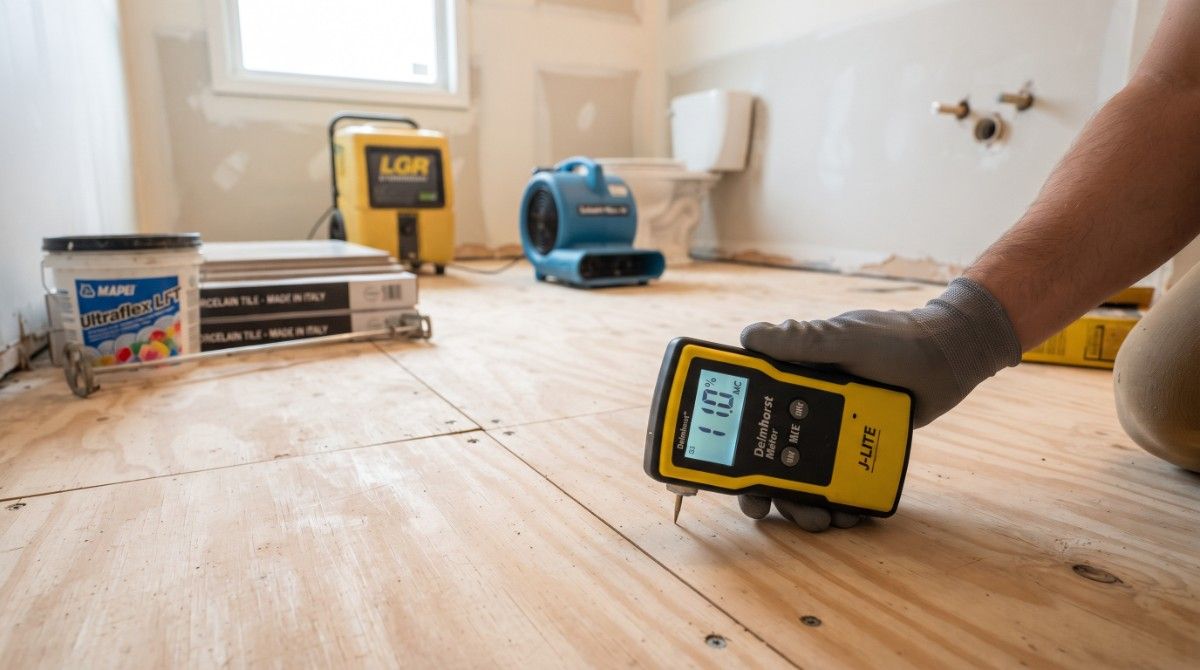
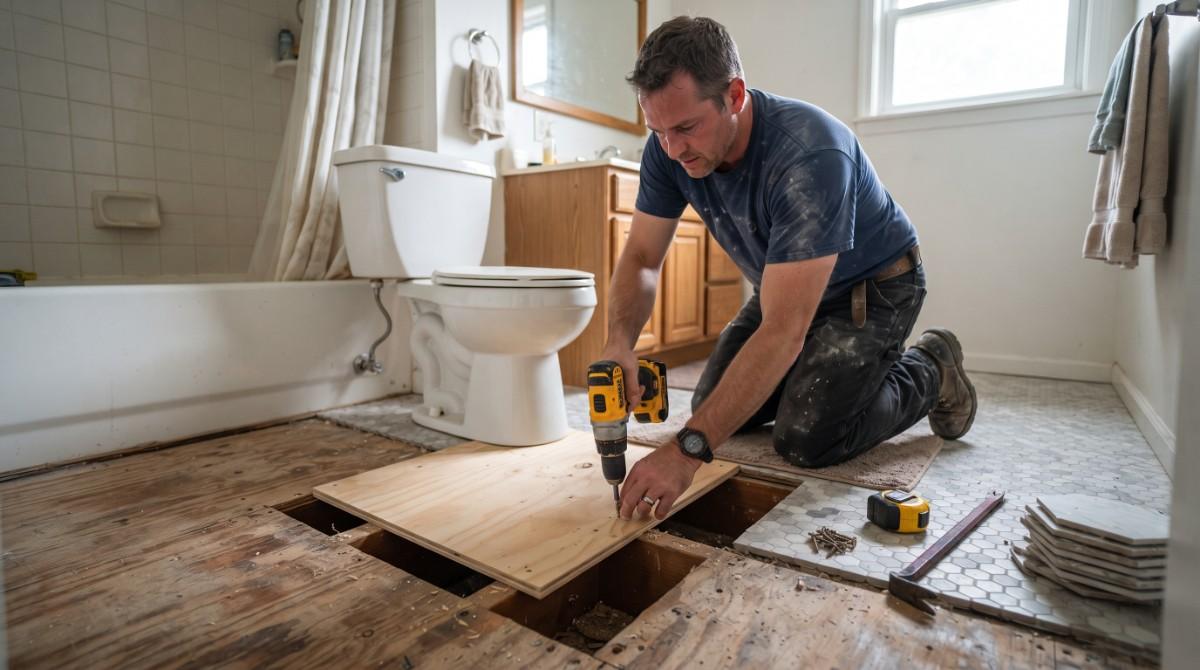
A soft spot by the toilet, a lifting tile, or a musty smell usually means trouble under the bathroom floor, and the first question is usually how long the fix takes. The short answer: drying matters more than carpentry. A small bathroom subfloor repair takes a few hours; a full subfloor replacement takes 3 to 5 days of work, but water damage often pushes the total to 1 to 2 weeks. The EPA advises drying wet materials within 24 to 48 hours to prevent mold, and professional drying alone takes 3 to 5 days. New wood must read under 12% moisture and thinset needs 24 to 48 hours to cure, so finished flooring is rarely same-day. Joist damage, active leaks, mold, and permits turn a simple fix into a multi-week project. Repairing a damaged bathroom subfloor takes a few hours for a small patch, one to two days for a partial section, and three to five days of work for a full replacement, though water damage or mold can stretch the total to one or two weeks. Most of that time is drying, not building. The EPA recommends drying wet materials within 24 to 48 hours to stop mold. These ranges assume damage limited to the subfloor and one or two joists. A hidden leak that has soaked the framing for months resets the timeline, and inspection comes first. The type of damage sets the clock. A localized repair is same-day; a full bathroom subfloor replacement spans several days. The gap between work time and elapsed time is drying and cure, which cannot be rushed. A bathroom subfloor repair contractor in the Nationwide Builders network can scope your damage, since the network connects homeowners with local pros at no lead cost. A typical water-damaged repair follows a predictable order. This illustrative sequence assumes tile over a wood-framed floor. Day 1: Shut off the water, remove the toilet and flooring, demo the damage, and inspect the joists. Days 1 to 3: Run structural drying until a moisture meter reads under 12%, usually the longest step. Day 3 to 4: Sister or replace rotted joists, then fasten new plywood. Day 4 to 5: Install backer board or an uncoupling membrane, then set tile in thinset. Day 5 onward: Cure the thinset, grout, then wait for full strength before heavy use. The joist repair itself takes only 4 to 8 hours; everything else waits on moisture. Why Does Drying Time, Not Carpentry, Drive the Timeline? Drying is the bottleneck because wet wood cannot hold fasteners or finished flooring. The carpentry is fast; drying the framing is slow. The EPA notes that materials dried within 24 to 48 hours usually avoid mold entirely. After that, professional drying commonly takes 3 to 5 days, and dense materials 7 to 10. Skipping it is the costliest mistake in any bathroom floor water damage repair, because tiling over damp framing traps moisture and forces a second teardown. Contractors found through Nationwide Builders can confirm the meter readings before rebuilding. You cannot tile the same day the subfloor goes in. New wood should read under 12% moisture first, and each layer above carries its own cure clock. Thinset needs 24 to 48 hours to cure before grouting, and cement grout reaches full cure in up to 7 days. The floor must be stiff enough: the Tile Council of North America sets a deflection limit of L/360 for ceramic and porcelain, so weak joists are reinforced first. For a slab-on-grade bathroom, a new concrete slab needs a 28-day cure before tile, running far longer. Four factors turn a one-day fix into a multi-week project: joist damage, an active plumbing leak, mold, and permits. Not every soft floor needs a full replace bathroom subfloor job. If the plywood is only surface-swollen and the joists are sound, a partial patch may be enough, and a spongy bathroom floor is not always structural failure. But if structural mold has reached the framing or a leak has rotted a joist, expect full removal, drying, and rebuilding. Permits add time too, since structural work often needs an inspection and bathroom remodel permits can add days. For cost specifics, the Nationwide Builders floor repair costs guide puts severe rot at $35 to $80 per square foot, and the network can match you with a contractor who files the permit. For the method itself, see the rotted subfloor guide. Frequently Asked Questions A subfloor usually takes 3 to 5 days to dry with professional air movers and dehumidifiers. Dense or thick materials can need 7 to 10 days. The EPA recommends starting the drying process within 24 to 48 hours to prevent mold. Do not install new flooring until a moisture meter reads under 12%. Yes, if the damage is localized and the joists are sound, a partial repair is usually enough. Only rotted, moldy, or delaminated sections need full replacement. This is common for a small subfloor replacement in bathroom areas near the tub or toilet. A contractor should confirm the joists are dry and solid first. Licensed flooring or general contractors handle bathroom floor replacement and structural repairs. Nationwide Builders connects homeowners with local pros on a free model, with no pay-per-lead charge. You describe the damage, and the network matches vetted contractors in your area. That turns a scattered bathroom subfloor repair near me search into a few direct quotes. Bathroom subfloor repair cost typically ranges from $500 to $3,000 per room, depending on damage and access. Severe rot runs $35 to $80 per square foot. Bathroom subfloor replacement cost rises with joist repair, mold removal, and permits. Nationwide Builders lists market ranges so you can compare quotes before hiring a bathroom renovation contractor. No. Minor surface swelling on plywood can sometimes be dried and reinforced. Full water damage subfloor repair is only needed when the wood is rotted, delaminated, or moldy. The deciding factor is moisture content and structural integrity, not appearance alone. Contractors in the Nationwide Builders network can run that moisture test before quoting.How Long Does a Bathroom Subfloor Repair Take by Type?
What Does a Bathroom Subfloor Repair Look Like Day by Day?
How Long Before You Can Tile Over a New Bathroom Subfloor?
What Makes a Water-Damaged Bathroom Subfloor Take Longer to Repair?
How long does a subfloor take to dry after water damage?
Can you repair a bathroom subfloor without replacing all of it?
How do I find a contractor to repair my bathroom subfloor?
How much does bathroom subfloor repair cost?
Does a water-damaged subfloor always need to be replaced?
How Long Does It Take to Repair a Damaged Bathroom Subfloor?
A small bathroom subfloor repair takes a few hours; a full replacement takes 3 to 5 days, and water damage can push it to 1 to 2 weeks. Full timeline inside.

Written by Zohaib Ali
More on Nationwide BuildersRead more Home Improvement Tips blogs










Top services
Homeowners
Support