
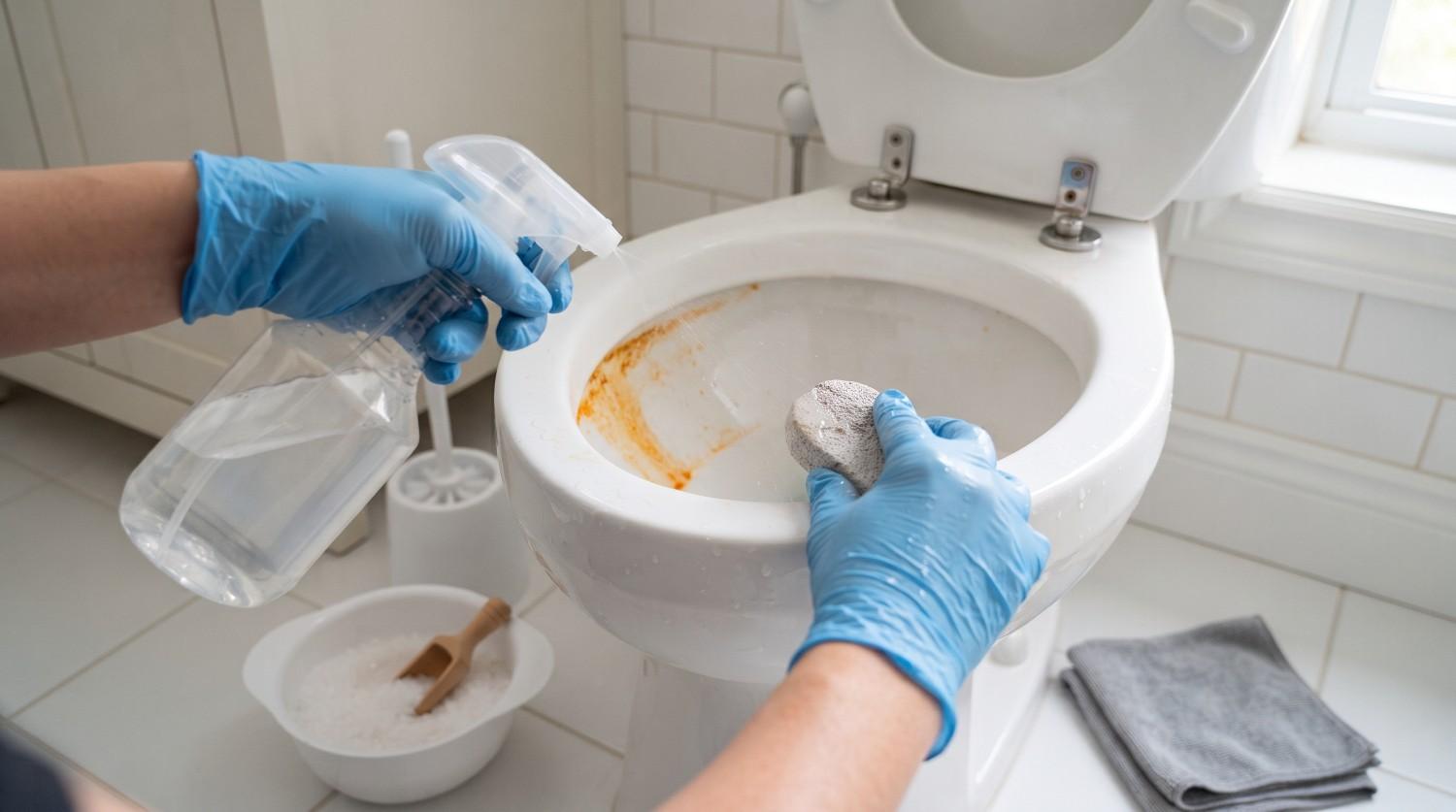
That orange ring that keeps coming back days after you scrub it is one of the most common bathroom complaints in older homes and homes on well water. The frustrating part is that cleaning barely helps. This guide covers what actually causes the stain, how to remove it, and how to stop it for good. Orange staining is almost always iron oxide from your water or plumbing, not the porcelain rusting. Porcelain cannot rust. The iron comes from one of three sources: your water supply, corroding parts inside the tank, or aging steel pipes. Finding the source is the whole game. Acid removes the stain (white vinegar, citric acid, or a wet pumice stone). Bleach makes it worse by setting the iron deeper into the porcelain. The EPA flags iron staining at just 0.3 mg/L, a level safe to drink but hard on fixtures. Over 23 million U.S. households on private wells deal with it directly. Orange rust staining in your toilet bowl is almost always iron oxide, not rust from the toilet itself. Porcelain has no iron to corrode, so the color comes from outside the bowl. Dissolved iron in your water is invisible until it hits open air, where it oxidizes into the orange-brown deposit you see at the waterline and streaking down from the rim holes. Iron at these levels is a cosmetic and plumbing problem, not a health emergency. The EPA classifies it as a secondary contaminant, with a 0.3 mg/L limit for iron set for taste and staining rather than safety. The one exception: people with hereditary hemochromatosis, about 1 in 200, should ask a doctor about iron in their drinking water. Where Is the Iron Actually Coming From? The orange color has exactly three possible sources, and identifying yours is the difference between a $30 fix and a $3,000 one. Take ten minutes here before buying anything. Your water supply. This is the most common source, especially on well water. More than 23 million U.S. households draw from private wells that the EPA does not regulate, and a USGS study of private well water quality found roughly one in five wells held a contaminant above a health benchmark. The tell is simple: if your sinks, tub, or white laundry also stain, the iron is in the water reaching the whole house. Your toilet's metal parts. If only one toilet stains and the rest of the house is clean, look in the tank. Older steel bolts, chains, and fill valves corrode and shed rust flakes into the water, which flush into the bowl. Orange residue on the bolts or chain confirms it. This is a cheap, contained fix. Corroded pipes. Homes built before the 1970s often ran galvanized steel pipe, which rusts from the inside after 20 to 70 years. The clue is timing: rusty water that is worst first thing in the morning, or that arrives with falling pressure, points to the pipes rather than the source water. Once you know which source you have, you know who to call. Nationwide Builders lets you search vetted local plumbers and water-treatment specialists near you by location, read verified reviews, and see cost estimates before you book, so a well-water problem and a pipe problem each reach the right pro instead of a guess. Acid dissolves iron oxide, so acid is the tool. This works whether the deposit is a week old or a year old. First, shut off the supply valve and flush to lower the water, so your cleaner sits on the stain instead of being diluted. To remove rust stains from a toilet bowl, coat them with white vinegar or a citric-acid paste and let the acid work. Twenty to thirty minutes handles light staining, while heavy deposits do better with an overnight soak using vinegar-soaked paper towels pressed against the streaks. After soaking, scrub with a stiff brush. For a hardened ring, a wet pumice stone removes the deposit without scratching the glaze, as long as both stone and porcelain stay wet. For the worst cases, a commercial oxalic-acid rust remover handles what vinegar cannot. Ventilate the room, wear gloves, and never mix products. Bleach sets iron stains deeper into the porcelain instead of removing them. This is the single most common mistake with rust, because bleach is the reflex for anything discolored. The chemistry is simple. Chlorine bleach is an oxidizer, and iron staining is already oxidized iron. Adding a strong oxidizer drives the reaction further and locks the color into the surface. Skip the blue bleach tablets in the tank too, since they do little for the stain and can speed up corrosion of metal tank parts. How Do I Stop the Stains for Good, and What Does It Cost? Cleaning is maintenance. If the source keeps feeding iron, the ring returns in days, so the real fix is removing the iron at its source. The right fix, and its price, depend on which source you found. Diagnose before you spend. A hardware source costs the price of a kit. A water source you fix once, and it protects every fixture, not just the toilet. Spending thousands on treatment before ruling out a $30 tank kit is the mistake to avoid. Test your water first, because ferrous, ferric, and bacterial iron each need a different system. Homeowners using Nationwide Builders can compare local installers side by side and pull free cost estimates for common bathroom projects to check a quote against their area first. Call a pro when the stain is a symptom the bowl cannot fix. Reach out when multiple fixtures stain, when rusty water runs worst in the morning or with dropping pressure, when the ring returns within days no matter what you do, or when you are on a well and have never tested the water. Nationwide Builders connects you with reviewed local plumbers, water-treatment installers, and remodelers, free to use and searchable by location, so the moment scrubbing stops working you are not starting from zero. No, not at staining levels. The EPA's 0.3 mg/L guideline for iron is about taste and appearance, not safety. The exceptions are people with hemochromatosis and infants, who should ask a doctor. Yes. White vinegar is a mild acid that dissolves light to moderate iron staining. Lower the water, apply it directly, and let it sit 20 to 30 minutes before scrubbing. Deep deposits need an overnight soak or an oxalic-acid product. Water and plumbing vary house by house. Yours may be on a well, have older galvanized pipes, or have corroding tank hardware. Check whether other fixtures stain, then test the water to find your cause. Yes. Corroding bolts, chains, or a failing valve shed rust into tank water that flushes into the bowl. If only one toilet stains, the hardware is the likely source, and a plastic or stainless kit usually fixes it for under $40. Sometimes. Years of iron and scrubbing can etch the glaze, and once the surface is pitted no cleaner fully restores it. If a proper acid soak and pumice pass leave a rough, cloudy surface, replacement is the practical call, and it pairs well with a wider update from local bathroom remodeling contractors.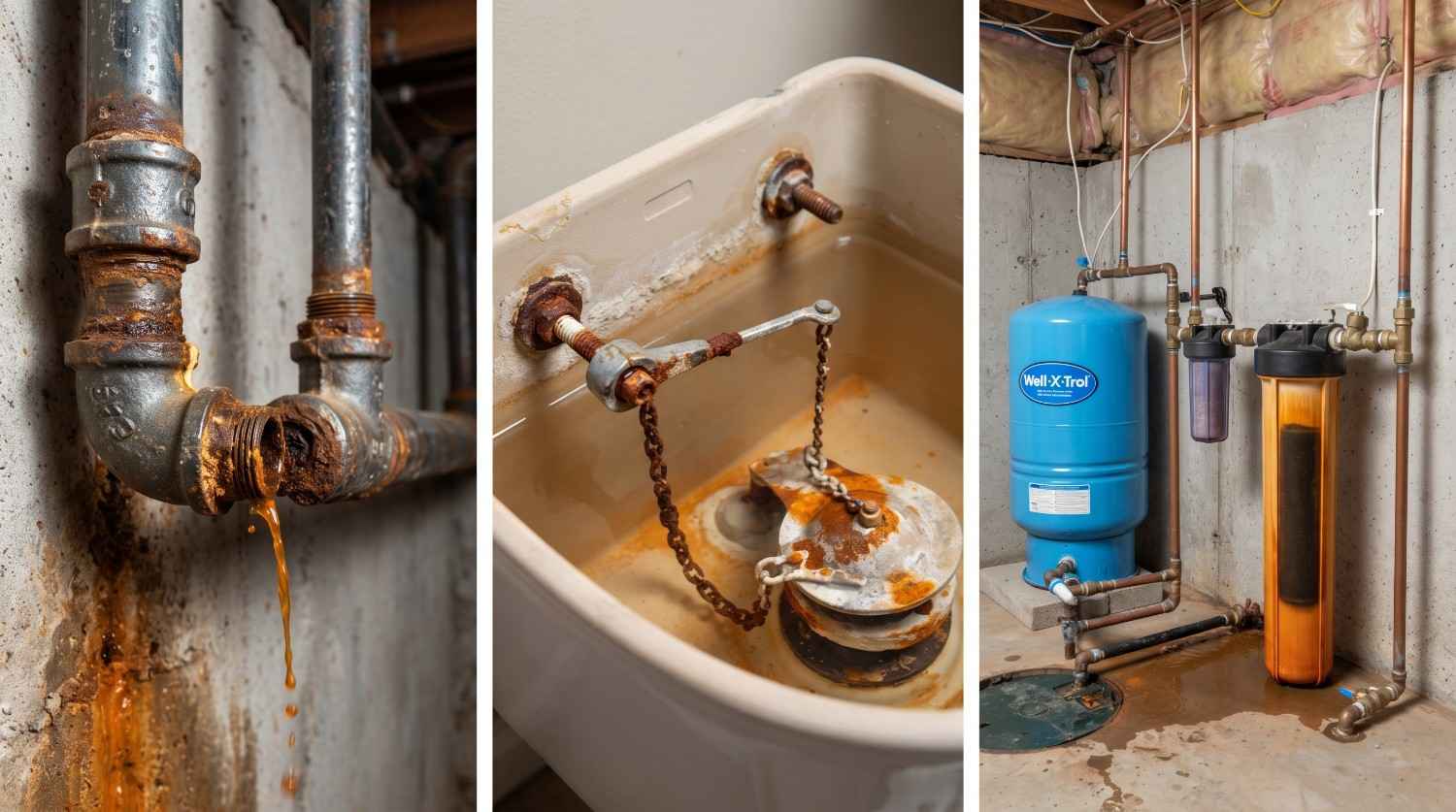
How Do I Get Rust Stains Out of a Toilet Bowl?
Why You Should Never Use Bleach on Toilet Rust Stains
When Should I Call a Plumber Instead of Scrubbing?
Frequently Asked Questions
Is orange rust staining dangerous to my health?
Will vinegar remove rust stains from a toilet bowl?
Why does my toilet stain orange but my neighbor's does not?
Can rusty tank parts really stain the whole bowl?
Do I need to replace a permanently stained toilet?
Why Is There Orange Rust Staining in My Toilet Bowl?
Learn what causes orange rust stains in your toilet bowl, how to remove them safely, and the best long-term solutions to stop them from coming back.

Written by Zohaib Ali
More on Nationwide BuildersRead more Home Improvement Tips blogs









Pros
Support