
Have you ever stepped into your bathroom and felt the lighting just doesn’t work? Maybe your face is in shadow in the mirror, the room feels dim and cramped, or your carefully chosen fixtures look flat and uninviting. Poor bathroom lighting can ruin daily routines, make grooming difficult, and make the space feel uninviting.
That’s why layered lighting combining ambient, task, and accent lights is the solution designers and homeowners trust. Layered lighting not only brightens every corner but also enhances mood, safety, and style, turning a functional bathroom into a space that feels professionally designed. In this guide, you’ll discover practical bathroom lighting ideas, design principles, and placement strategies that are both visually appealing and functional.
Understanding the Principles of Bathroom Lighting
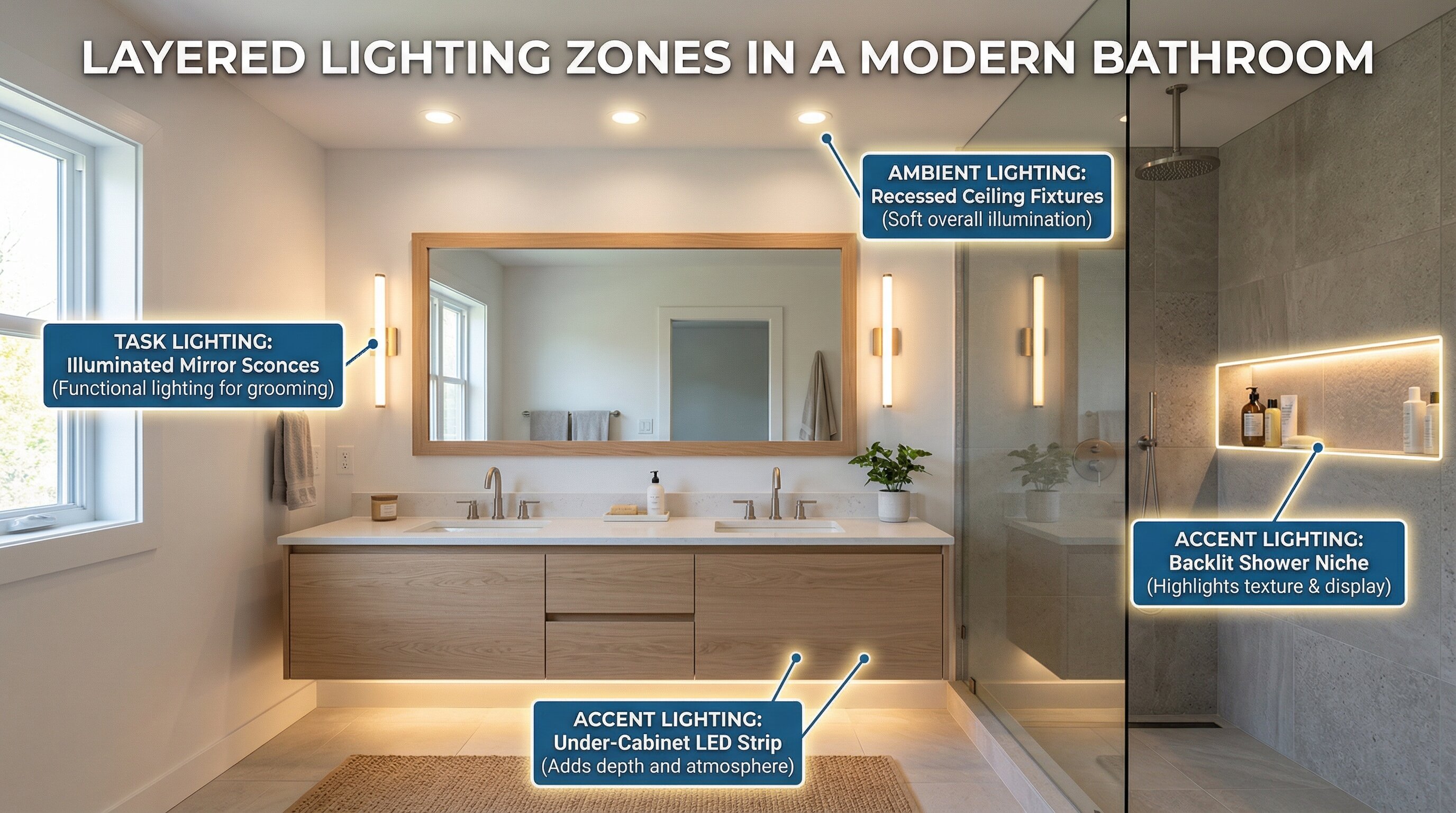
The key to effective lighting is layering. Rather than relying on a single overhead light, a layered approach ensures every corner is well-lit, tasks are easy, and your bathroom feels intentionally designed.
Ambient Lighting : The Base Layer
Ambient lighting provides overall illumination. Ceiling fixtures, recessed lights, or flush-mount lights create even brightness, ensuring the room feels open and welcoming. Without proper ambient light, a bathroom can feel shadowy and uncomfortable.
Task Lighting : Functional Precision
Task lighting focuses on areas where specific activities occur, like at the vanity or mirror. Side-mounted sconces or backlit mirrors provide shadow-free illumination for grooming, shaving, and makeup. Proper task lighting improves visibility and reduces eye strain.
Accent Lighting : Mood and Depth
Accent lighting highlights features or adds decorative flair. LED strips under a vanity, niche lighting, or toe-kick lights create depth, highlight textures, and add a designer touch. These small fixtures transform a functional space into a visually layered, sophisticated environment.
Bathroom Vanity Lighting Ideas
The vanity area is where lighting has the most impact on daily routines. Poorly positioned lights can cast shadows on the face, making tasks like shaving, applying makeup, or grooming frustrating and inaccurate.Choosing the right bathroom vanity setup with proper lighting can significantly improve both functionality and comfort.
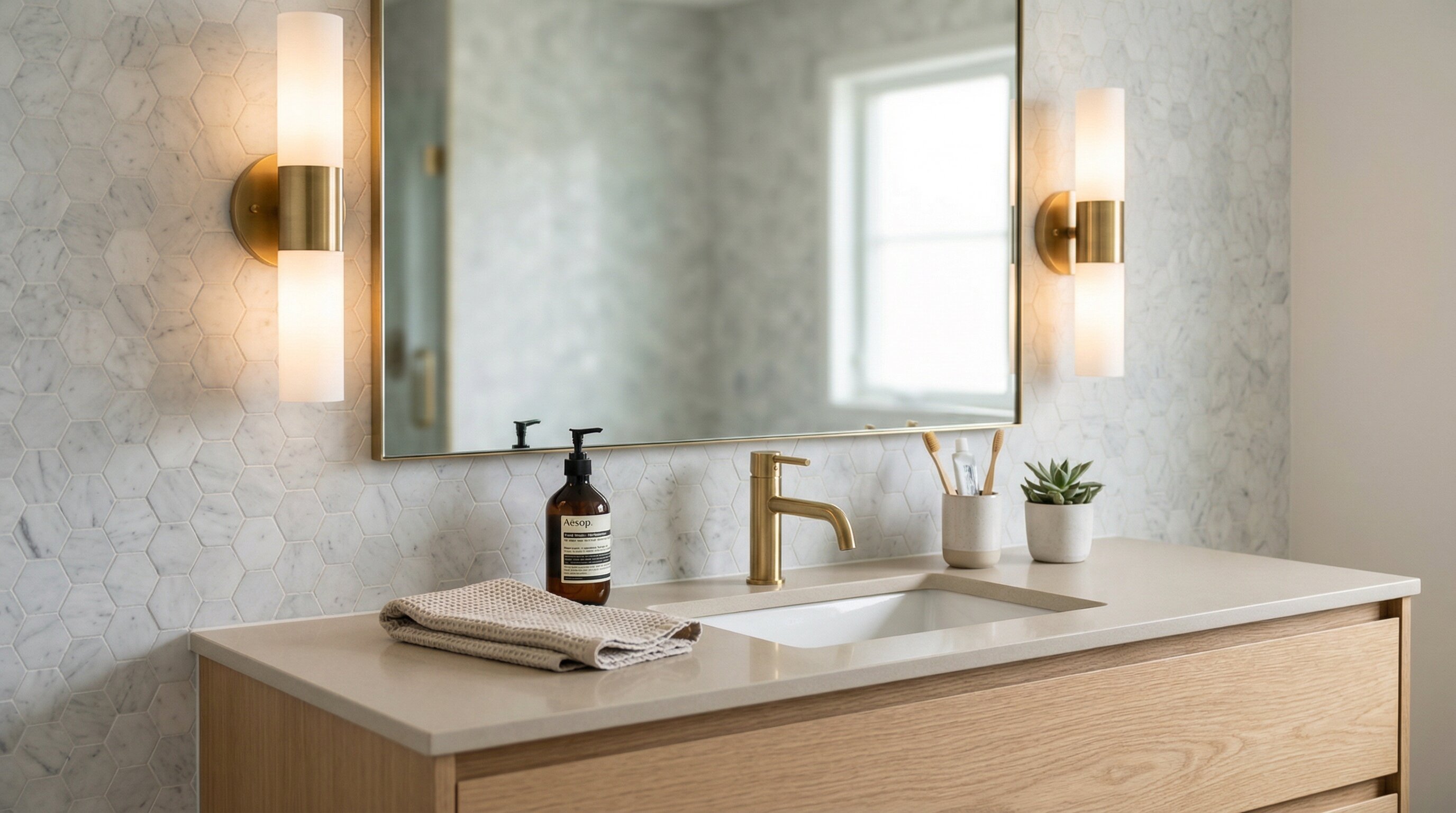
Side Sconces Beside the Mirror
Placing a bathroom sconce on each side of the mirror illuminates the face evenly, eliminating harsh shadows under the eyes, nose, and chin. This setup provides consistent lighting that makes grooming easier and more precise.
Lighting Above the Mirror
A single fixture mounted above the mirror casts light downward, which can create unflattering shadows. If used, it works best in combination with side lights or a wide fixture that spreads illumination evenly across the face.
Backlit Mirrors
Backlit mirrors provide a soft, diffused glow from behind the mirror surface. This reduces glare and shadowing, creating a clean and modern appearance while evenly lighting the face for detailed tasks.
Hollywood-Style Mirror Lighting
Mirrors with lights surrounding the edges offer uniform illumination that highlights natural skin tones and colors accurately. This setup ensures every task is easier, from applying makeup to grooming, while adding a touch of luxury to the space.
Bathroom Ceiling Lighting Ideas
Ceiling fixtures form the backbone of a bathroom lighting plan, providing general illumination.
Recessed Lighting
Recessed downlights distribute light evenly across the room without occupying visual space. They are ideal for small or modern bathrooms because they keep ceilings uncluttered while brightening corners that overhead fixtures might miss.
Flush Mount Lighting
Flush mount fixtures are perfect for low-ceiling bathrooms because they provide strong, uniform light while preserving headroom. Their placement in the center of the room ensures the entire space is illuminated.
Statement Ceiling Fixtures
In larger bathrooms, decorative pendants or chandeliers act as both light sources and visual focal points. Beyond style, they draw the eye upward, making the ceiling feel higher and the room more spacious.
Bathroom Lighting Ideas by Room Type
Every bathroom has unique needs based on size, natural light, and ceiling height. Selecting the right combination of fixtures ensures the space is functional, comfortable, and visually appealing.
Small Bathrooms
In compact bathrooms, space is limited, so lighting must be efficient and unobtrusive. Recessed ceiling lights or flush mounts provide strong general illumination without taking up room. Mirrors and reflective surfaces amplify light, making the space feel larger. Avoid oversized fixtures that crowd the area.
Bathrooms Without Windows
Without natural light, layered artificial lighting is essential. Bright ambient lighting combined with focused task lights at the vanity ensures every corner is visible. Neutral color temperatures (3500K–4000K) help colors appear natural and support precise grooming tasks. Accent lights can add warmth and dimension to prevent a sterile feel.
Master Bathroom Lighting Ideas
Larger master bathrooms allow more creativity and layering. Ceiling fixtures, sconces, and decorative pendants can work together to provide both function and luxury. Statement fixtures, such as chandeliers over a tub, create focal points while distributing light evenly. Mirrors and reflective surfaces further enhance brightness.
Low-Ceiling Bathroom Lighting Ideas
Low ceilings require space-conscious lighting. Flush-mount or recessed fixtures maximize headroom while providing uniform light. Avoid hanging pendants that reduce clearance. Using light-colored surfaces and strategically placed mirrors ensures the room feels open and well-lit.
Bathroom Lighting Ideas by Style
Lighting not only illuminates a bathroom but also defines its character and style. Choosing fixtures and finishes that complement the overall design makes the space cohesive and visually appealing.
Modern Bathroom Lighting
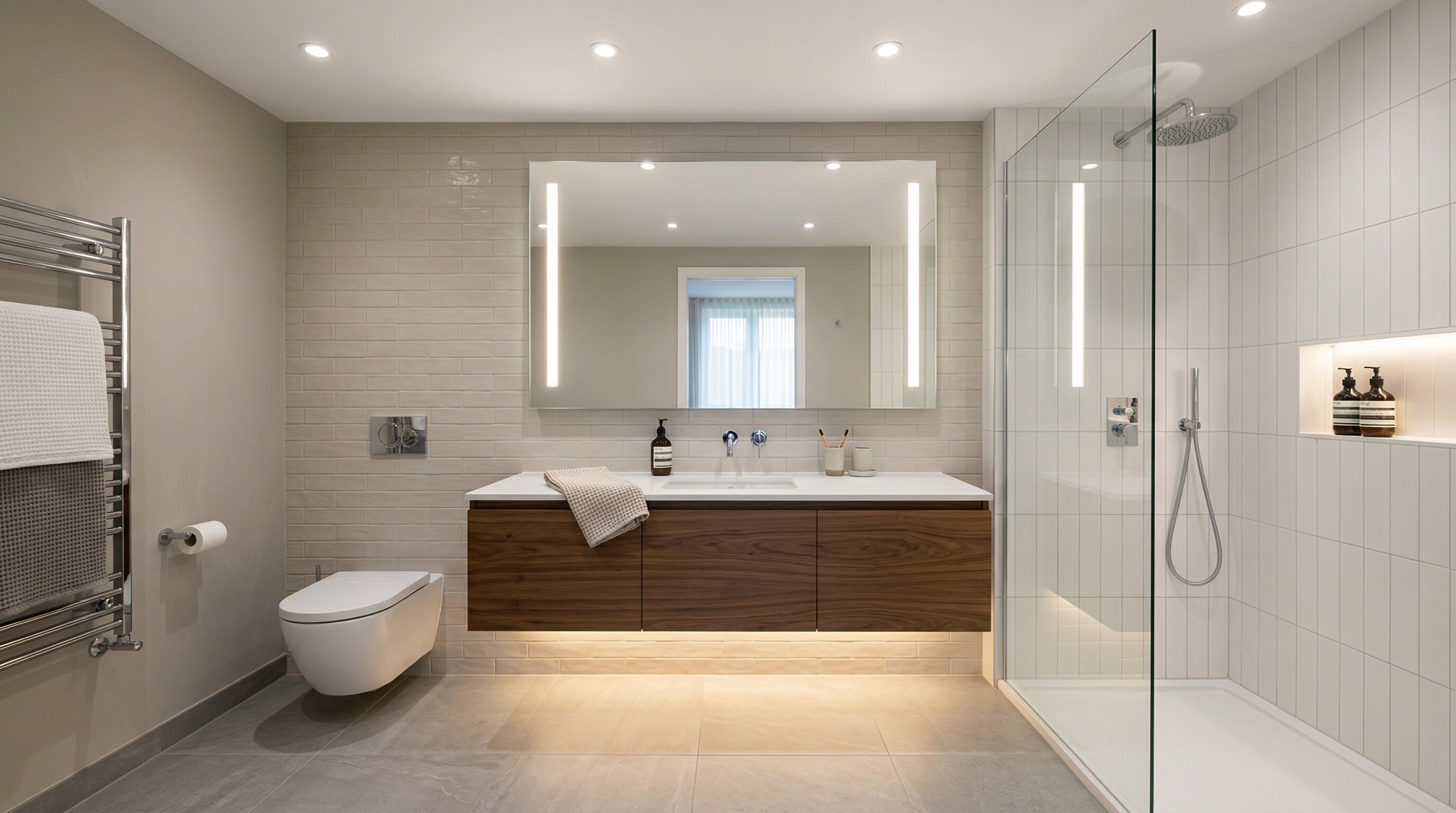
Modern bathrooms favor clean lines, minimal hardware, and integrated lighting. Brushed nickel, polished chrome, or matte white fixtures blend seamlessly into the space. Recessed lights, LED strips, and backlit mirrors maintain a sleek, clutter-free look while providing ample illumination.
Farmhouse Bathroom Lighting Ideas
Farmhouse style combines rustic textures with functional lighting. Matte black sconces, wire-caged pendants, and mason jar shades add character and complement wooden or shiplap surfaces. Layered light ensures both ambiance and task performance.
Vintage Bathroom Lighting Ideas
Vintage bathrooms embrace warmth and charm through exposed filament bulbs, antique brass, and oil-rubbed bronze finishes. Sconces with classic designs or globe fixtures create a nostalgic feel while still delivering functional task light for grooming areas.
Glamorous Bathroom Lighting
Glamorous bathrooms use statement fixtures such as crystal chandeliers or Hollywood mirror lights. These provide dramatic visual appeal while evenly illuminating vanities and key areas, enhancing both luxury and practicality.
Minimalist Bathroom Lighting Ideas
Minimalist spaces prioritize simplicity and functionality. Recessed lights, hidden LED strips, or integrated fixtures blend into architecture, providing essential light without disrupting the clean design. Accent lighting is subtle but adds depth and dimension.
Accent and LED Bathroom Lighting Ideas
Accent and LED lighting add dimension, mood, and practical highlights that standard overhead fixtures cannot provide. These lights enhance visual interest while supporting the layered lighting concept.
Under-Cabinet and Toe-Kick Lighting
Installing LED strips beneath cabinets or along toe-kicks illuminates the floor subtly, making the space feel larger and safer at night. This low-level lighting adds depth and creates a soft, ambient glow without overpowering the room.
Shower and Wet Zone Lighting
Waterproof, IP65-rated LED downlights inside showers provide bright, shadow-free illumination. Properly lit showers feel larger, cleaner, and safer while complying with safety standards. Avoid standard fixtures in wet zones to prevent hazards.
Mirror Backlighting
LED backlit mirrors offer diffused, even light across the face while reducing glare and shadows. They double as a stylish design feature, enhancing both function and aesthetics in modern bathrooms.
Color-Changing and Smart LED Lights
Smart or color-changing LEDs allow adjustable brightness and color temperature, creating relaxing or energizing atmospheres. Users can shift from warm, soft light for evening baths to neutral, accurate lighting for grooming tasks, all from a single fixture.
Accent Wall or Artwork Lighting
Directional LED spots or strips can highlight artwork, textured walls, or architectural details, adding depth and character. This layer turns ordinary bathrooms into visually dynamic, designed spaces.
Bathroom Lighting Placement Principles
Strategic placement ensures both function and comfort.
Over Mirror vs Beside Mirror
Side lighting eliminates shadows, while above-mirror lighting alone often creates harsh shadows. A combination or proper fixture width ensures even illumination.
Balance and Spacing
Evenly distributed lights prevent overlit or dark areas. Recessed lights should be spaced properly (e.g., 2 ft from walls, every 4 ft across the ceiling).
Avoiding Shadows
Multiple light sources at different heights prevent flat, shadowy illumination, creating a visually dynamic and functional space.
Safety, IP Ratings, and Practical Considerations
Bathroom lighting must balance design, function, and safety. Water and electricity are a dangerous combination, so fixtures must meet the proper IP ratings for their locations.
Understanding IP Ratings
IP ratings indicate a fixture’s protection against water and dust.
IP20: Suitable for dry zones, like ceilings away from water.
IP44: Required near sinks or vanity areas where splashes are possible.
IP65: Essential inside showers or wet zones for complete protection against water.
Fixture Placement Guidelines
Correct positioning prevents shadows, glare, and hazards.
Vanity lights should be mounted 75–80 inches from the floor for even facial illumination.
Side sconces should be positioned 60–65 inches from the floor, one on each side of the mirror, for shadow-free light.
Recessed downlights in wet zones must maintain proper spacing from walls and water sources.
Dimmer Switches for Control
Dimmer switches allow variable brightness, making a single fixture functional for both ambient and task lighting. This flexibility reduces the number of fixtures needed while creating adaptable moods throughout the day.
Energy Efficiency and Bulb Choices
LED bulbs are preferred for longevity, energy savings, and adjustable color temperatures. They consume 75–80% less energy than incandescent bulbs while maintaining consistent brightness, making them practical for both environmental and budget considerations.
Common Bathroom Lighting Mistakes to Avoid
Using only overhead lighting
Choosing the wrong color temperature
Poor mirror lighting placement
Failing to layer lighting
Avoiding these mistakes improves both visual appeal and usability.
Frequently Asked Questions
What is the best lighting for a bathroom?
The best bathroom lighting combines ambient, task, and accent layers to create a space that is both functional and visually appealing. Ambient lighting provides overall brightness, task lighting focuses on grooming areas like the vanity, and accent lighting adds depth and style. This layered approach ensures every corner is well-lit, shadows are minimized, and the room feels balanced.
Should bathroom lights be warm or cool?
Both warm and neutral light are important in a bathroom. Warm light (2700K–3000K) creates a cozy, relaxing atmosphere for ambient lighting, while neutral light (3500K–4000K) is ideal for task areas like mirrors, ensuring accurate color rendering for makeup, shaving, and grooming. Layering these tones allows the bathroom to feel inviting while remaining functional.
How bright should bathroom lighting be?
Bathroom lighting should be bright enough to perform everyday tasks without creating glare or harsh shadows. Using multiple layers such as ceiling lights for ambient illumination and vanity lights for task-focused brightness ensures the room is evenly lit. For reference, small bathrooms typically need around 4,000 lumens, while master bathrooms may require 6,000–8,000 lumens across all layers.
Where should bathroom lights be placed?
Proper placement is key to eliminating shadows and enhancing usability. Position task lighting around mirrors at face level, install ambient lights on the ceiling for overall brightness, and add accent or decorative lights in focal points or under vanities. This strategic layering ensures the bathroom is functional, flattering, and visually appealing from every angle.
Conclusion
Well-planned bathroom lighting is more than decoration; it's about functionality, comfort, and style. By layering ambient, task, and accent lighting, selecting the right color temperature, and placing fixtures thoughtfully, you can create a space that’s practical, safe, and visually stunning. Whether you have a small, windowless powder room or a spacious master bathroom, these ideas ensure every square foot is illuminated thoughtfully and beautifully.