
Waterproof bathroom flooring starts at $2 per square foot for basic sheet vinyl and runs to $22 installed for premium porcelain tile. The right choice depends on your budget, how wet the room gets, and how long you want the floor to last. This guide covers every option, with specific costs, lifespan figures, and a clear decision framework.
According to a 2026 National Association of Home Builders report, 80% of buyers now prioritize water-resistant flooring in bathrooms. Wrong choices here lead to warped floors, subfloor rot, and mold. The fix is expensive and avoidable.
Waterproof vs. Water-Resistant: The Distinction That Matters
Not all "waterproof" flooring is equal. Understanding this distinction prevents expensive mistakes.
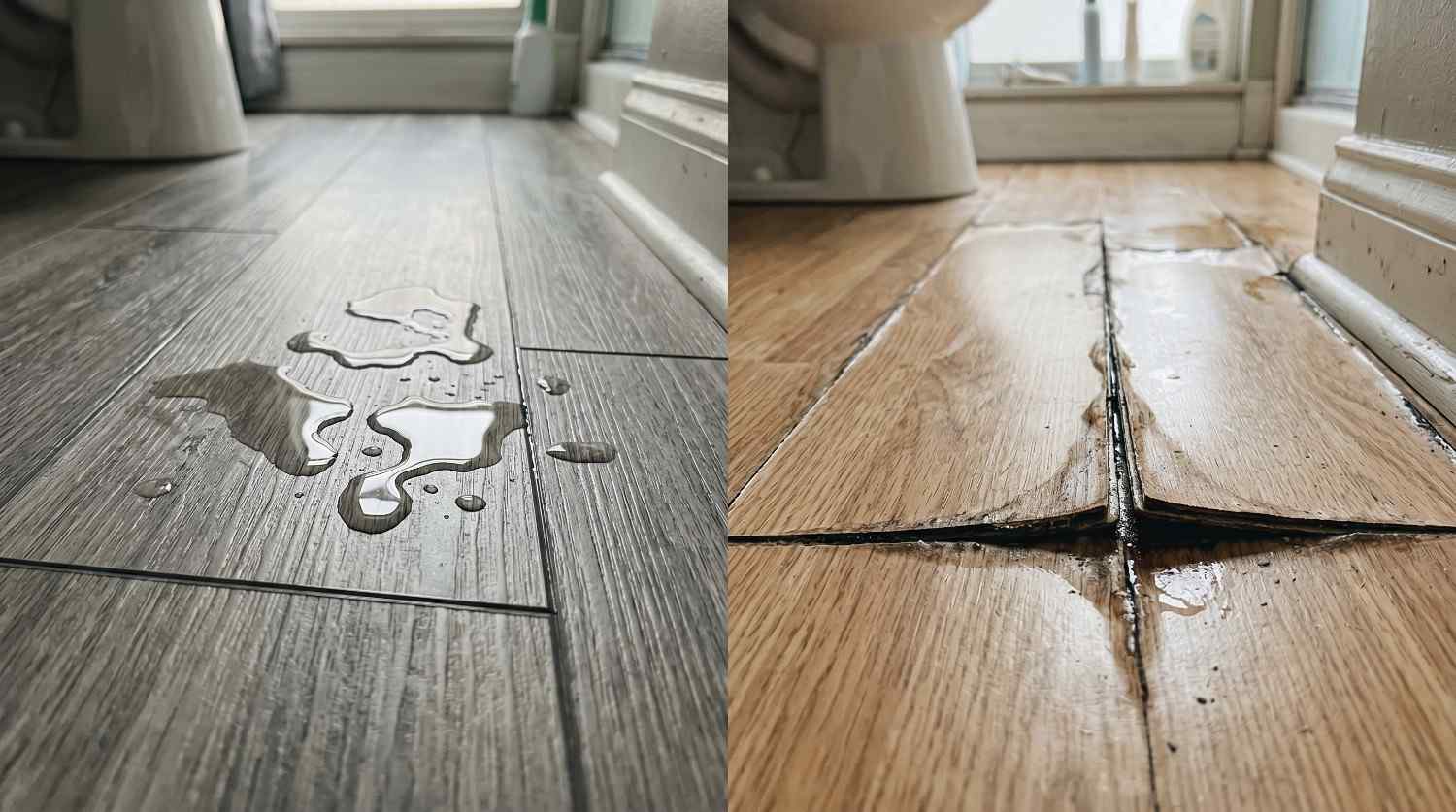
Truly waterproof means water cannot penetrate the core material, even under prolonged exposure or standing puddles. Porcelain tile (under 0.5% water absorption) and luxury vinyl with a solid polymer core both qualify.
Water-resistant means the surface handles splashes and brief spills. Most "waterproof" laminate falls here. The wood-fiber core can swell if water sits at seams or edges for more than a few hours.
The 4 Best Waterproof Bathroom Flooring Options
1. Porcelain Tile : Best for longevity and resale value
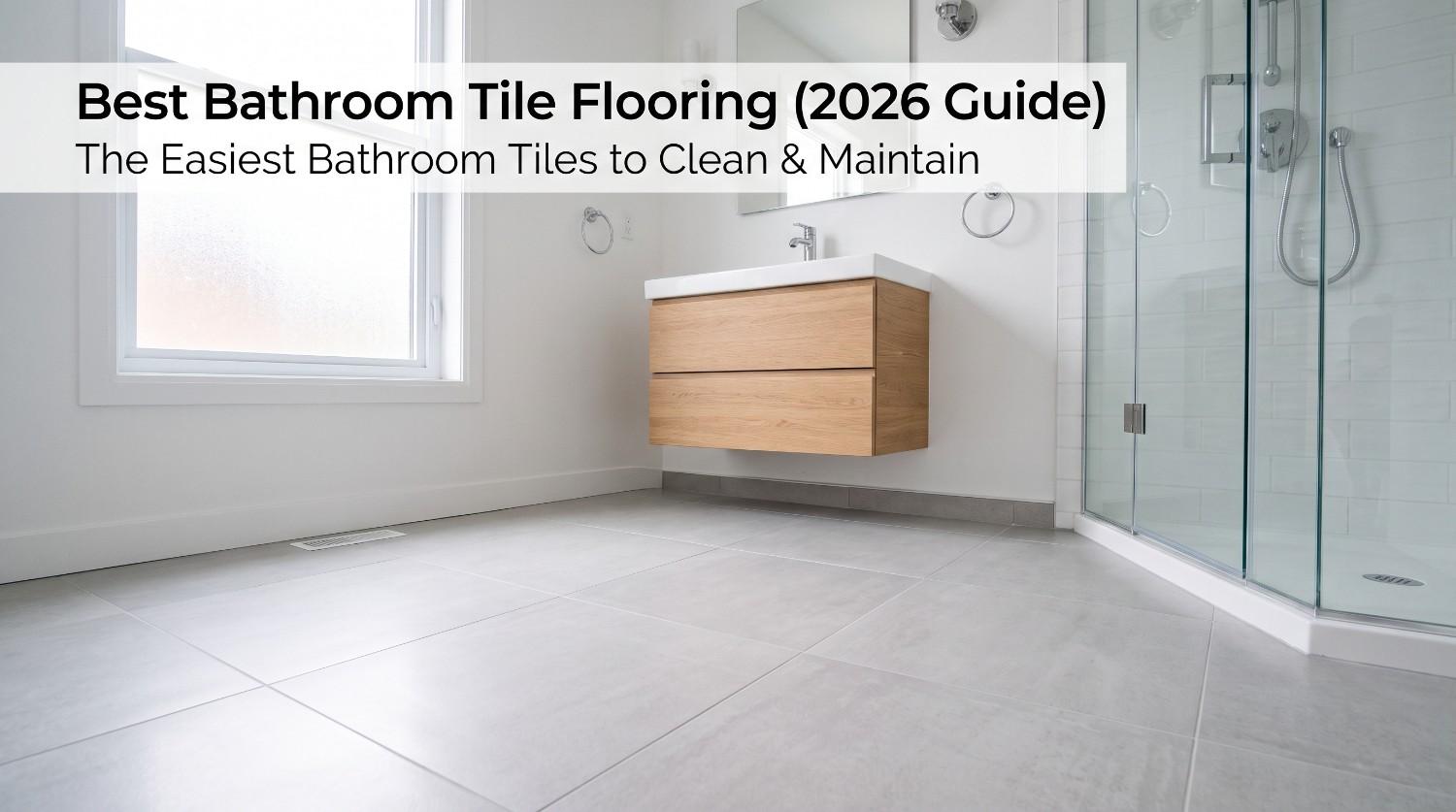
Porcelain tile is the gold standard for wet areas. Its water absorption rate stays under 0.5%, meaning it is essentially impervious to moisture when correctly installed. It resists stains, scratches, and decades of cleaning products without degrading.
The weak point is not the tile it is the grout. Standard grout is porous and must be sealed every 1–2 years. Skipping this step lets water infiltrate, causing the exact damage the tile is meant to prevent. Epoxy grout significantly reduces this maintenance burden.
Porcelain also runs cold underfoot. Pairing it with a radiant heating mat adds $500–$1,000 to the project but changes the experience dramatically. For slip safety, specify textured finishes or tiles with a DCOF rating of 0.42 or higher the ANSI minimum for wet floors.
A 2025 Zillow study found tiled bathrooms boost home sale prices by 4%.
Porcelain tile costs: $3–$12/sq ft (materials) · $8–$22/sq ft installed. A typical 50 sq ft bathroom runs $400–$1,100.
Lifespan: 30–50 years with grout maintenance.
2. Luxury Vinyl Plank (LVP) : Best for comfort, DIY install, and budget
Luxury vinyl plank has become the most popular bathroom floor choice in the US. The core either SPC (Stone Polymer Composite) or WPC (Wood Polymer Composite) is 100% waterproof. Water cannot reach the subfloor through the material itself.
SPC vs WPC: SPC is denser, more dimensionally stable, and performs better with radiant heating. WPC has a foam sublayer that makes it noticeably warmer and quieter underfoot. For bathrooms, either works well WPC wins on comfort, SPC wins on stability.
The minimum wear layer for bathroom use is 20 mil. Below 12 mil, the surface wears through faster in heavy-traffic areas. Premium LVP ranges from 20–28 mil.
Installation uses a click-lock floating system — no adhesive, no professional required in most cases. A 50 sq ft bathroom typically takes one day. Individual planks can be replaced if damaged, which keeps long-term maintenance costs low.
LVP costs: $2–$10/sq ft (materials) · $4–$16/sq ft installed.
Lifespan: 15–25 years.
3. Sheet Vinyl : Best for small bathrooms and tight budgets
Sheet vinyl comes in 6 or 12-foot wide rolls. For a standard bathroom, this often means zero seams and no seams means no gaps for water to enter. It is the most forgiving option for high-splash environments like kids' bathrooms.
Modern sheet vinyl has shed its cheap reputation. Today's products offer realistic stone and wood patterns, better durability, and a softer, warmer feel than tile. It is also the easiest to install in a straightforward rectangular room.
The limitation is repair. Damage to one area usually means replacing the entire floor, since patching sheet vinyl is visible. It also lacks the premium feel of tile or quality LVP.
Sheet vinyl costs: $1–$4/sq ft (materials) · $2–$10/sq ft lowest installed cost of all options.
Lifespan: 10–20 years depending on quality grade.
4. Waterproof Laminate : Best for wood-look on a budget, with caveats
Waterproof laminate offers a realistic hardwood appearance at lower cost than LVP. It handles everyday bathroom moisture splashes, wet footprints, and steam. The surface layer repels water.
The limitation is real: the core is still wood-fiber. If water sits at seams or edges, it will eventually swell. Waterproof laminate is appropriate for light-splash bathrooms, powder rooms, half-baths where standing water is not a concern. It is not suitable for wet rooms, kids' bathrooms, or any space where puddles form regularly.
Seal all seams during installation. Proper ventilation extends performance.
Waterproof laminate costs: $3–$8/sq ft (materials) · $4–$14/sq ft installed.
Lifespan: 10–15 years in bathroom conditions.
Full Cost Comparison Table
Bathroom flooring installation overall starts at $11–$20 per sq ft nationally (Homewyse, Jan 2026). Subfloor repairs add $2–$6/sq ft if needed. A waterproof membrane under tile in shower zones adds $1–$3.50/sq ft.
How to Choose the Right Waterproof Bathroom Flooring
Answer five questions before specifying a material.
1. How wet does this bathroom get? Walk-in shower, kids' bath, or pooling around the tub? Choose tile or solid-core vinyl. Light splash only (powder room, half-bath)? Waterproof laminate is viable.
2. What is your subfloor? Concrete slab allows any of the above. Wood subfloor with any flex or movement rules out rigid large-format tile unless you add backer board and floating membranes. LVP and sheet vinyl tolerate minor subfloor imperfections better than tile.
3. Do you want to DIY? LVP click-lock and sheet vinyl are realistic DIY projects for a competent homeowner. Tile requires backer board, thinset, grouting, and precise cuts most homeowners hire a professional for tile.
4. What is your priority upfront cost or total-life cost? Sheet vinyl is cheapest upfront. Porcelain tile costs more to install but lasts three times as long. Over 30 years, tile is often the more economical choice.
5. What does your bathroom need to feel like? Cold and hard (tile) vs. warm and quiet (LVP, sheet vinyl)? Style preferences matter. LVP's wood-look options now closely replicate hardwood. Large-format tile makes small bathrooms feel larger.
Installation Overview
Correct installation matters as much as material choice. Most waterproof flooring failures happen at seams, edges, or penetrations not through the material itself.
For LVP and floating floors:
Ensure the subfloor is level within 3/16 inch over 10 feet. Dips or humps cause click-lock joints to separate over time.
Install a vapor barrier if laying over a concrete slab.
Leave a 1/4-inch expansion gap at all walls covered with baseboard or trim.
Click planks together tightly. Gaps at seams are the only real water risk with LVP.
For tile:
Install cement backer board regular drywall absorbs moisture and causes tile failure.
Apply a waterproof membrane to shower zones and around tub decks before tiling.
Use thinset mortar rated for wet areas.
Seal grout within 72 hours of installation. Reseal annually, or switch to epoxy grout to eliminate this requirement.
Frequently Asked Questions
What is the best waterproof bathroom flooring overall?
Porcelain tile for maximum lifespan and resale value. Luxury vinyl plank (SPC or WPC core) for the best combination of performance, comfort, and installed cost. Sheet vinyl for small bathrooms on a tight budget.
Is vinyl flooring actually waterproof in a bathroom?
Yes, as long as it has a solid polymer core (SPC or WPC). The core does not absorb water. The surface, core, and backing are all impervious. Water ingress only occurs if the plank seams are left gapped or the perimeter is not sealed at the tub or toilet base.
Can you use laminate flooring in a bathroom?
With limits. Waterproof laminate handles surface splashes and steam. It is not suitable for wet rooms, areas near the shower, or rooms where standing water pools. The wood-fiber core swells if water penetrates the seams. For any bathroom that sees regular heavy moisture, LVP is a safer choice.
How long does waterproof bathroom flooring last?
Porcelain tile: 30–50 years. LVP: 15–25 years. Sheet vinyl: 10–20 years. Waterproof laminate: 10–15 years in bathroom conditions. All estimates assume proper installation and basic maintenance.
What flooring is best for a small bathroom?
Large-format tile (fewer grout lines, visually expands space) or sheet vinyl (seamless, budget-friendly). Both minimize visual interruptions on a small floor. Avoid narrow planks they add visual busyness to small spaces.
Do I need a waterproof membrane under the bathroom tile?
In dry-area bathrooms, yes for shower zones and around tub surrounds, not necessarily for the full floor. Waterproofing membranes add $1–$3.50/sq ft and prevent the tile assembly from failing when grout eventually cracks. In full wet rooms, membrane the entire floor.
What is the most low-maintenance waterproof bathroom floor?
Sheet vinyl and LVP are both near-maintenance-free, no grout to seal, easy to clean. Porcelain tile with epoxy grout is close behind. Standard porcelain with cement grout requires annual sealing. Natural stone is the most demanding, requiring sealing every 6–12 months.