
The decision between marble and porcelain tile comes down to one honest question most guides avoid: how much maintenance are you actually willing to do? Both are beautiful. Both last decades. The difference is what they ask of you in return and whether your specific bathroom makes the choice for you before you even open a catalogue.
What Each Material Actually Is
Marble
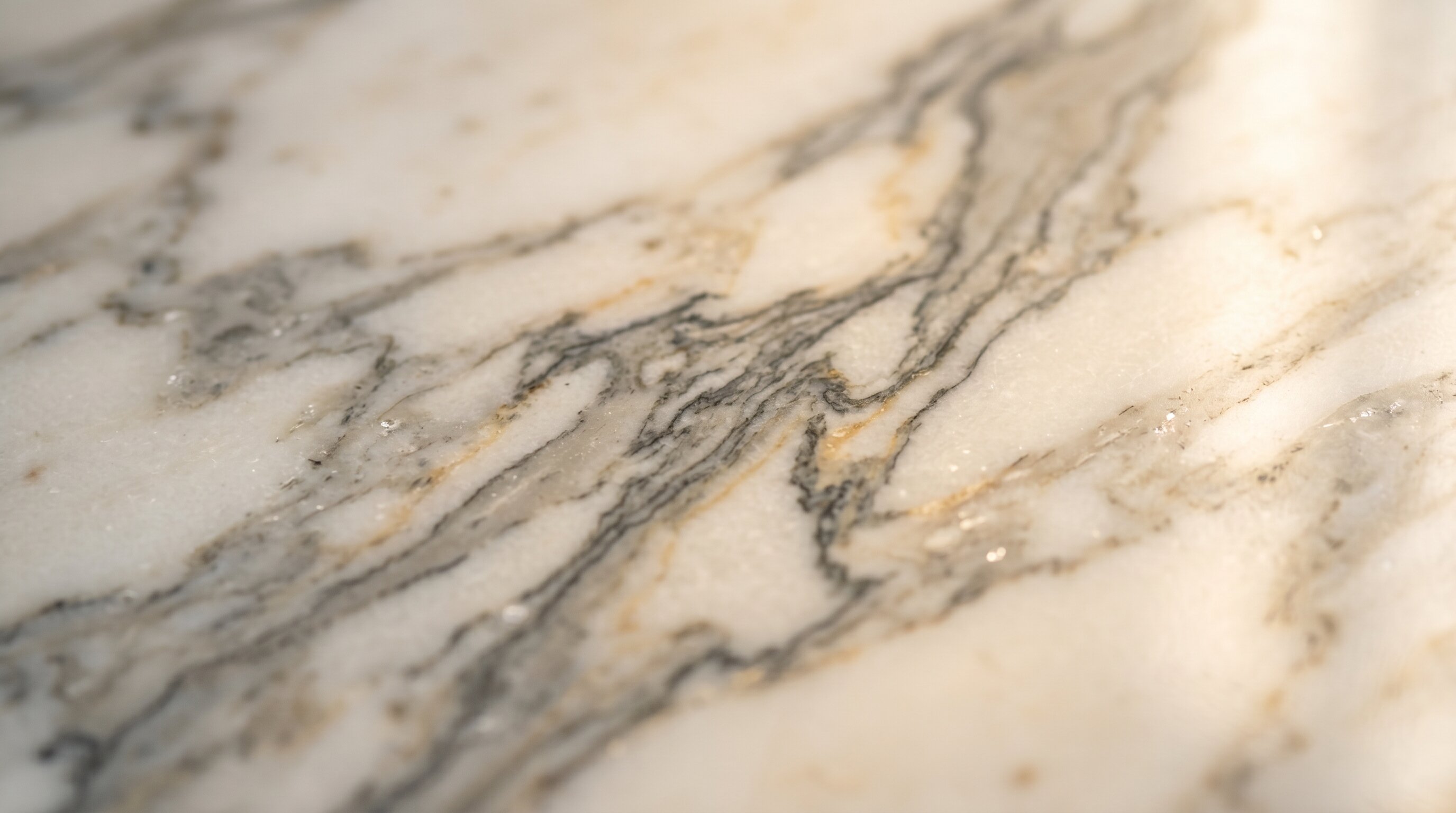
Marble is a metamorphic stone limestone transformed over millions of years under extreme heat and pressure. Every tile is cut from a geological record that can never be precisely repeated. The veining, crystal structure, and colour variation are the product of specific mineral conditions at a specific quarry. No two tiles are identical.
Light penetrates marble's crystalline surface and reflects back from within, producing a luminous depth that printed surfaces cannot replicate. From across a room or in a photograph, premium porcelain can look nearly identical to marble. In the room where you live, you notice the difference.
Porcelain
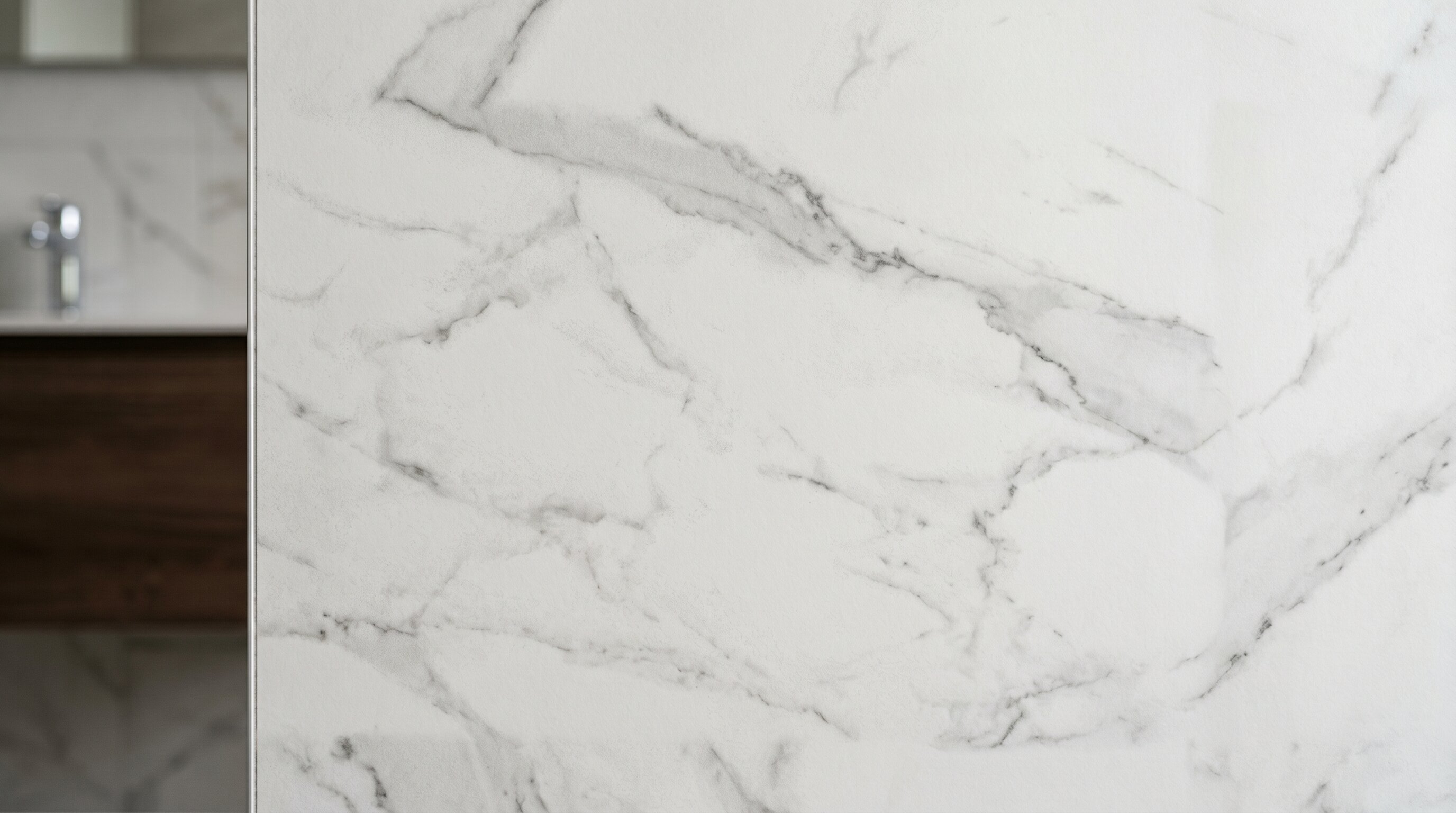
Porcelain is a manufactured ceramic product refined clay, feldspar, and silica fired at 1,200–1,400°C into an extremely dense, near-zero porosity material. Its visual pattern comes from high-resolution inkjet printing applied before a final glaze firing. The base material is uniform. The appearance is an applied image.
The best marble-look porcelain is genuinely impressive. It's also produced in production runs of 20–30 face designs, which means patterns repeat across a large installation. Natural marble never repeats.
The One Damage Distinction Every Article Gets Wrong
Every guide warns about marble "staining and etching" then lists them as the same problem. They're not.
Staining is absorption: pigmented liquid soaks into marble's pores and leaves colour. A coffee spill, red wine, cosmetics. Prevented by sealing. Solved by stone-specific cleaning products if caught quickly.
Etching is chemistry: acids react with the calcium carbonate in marble and dissolve a thin layer of the surface, leaving dull marks. Not absorbed chemically damaged. Sealing doesn't prevent etching. Nothing prevents etching except avoiding acid contact.
In a bathroom, this matters because the daily-use products in a bathroom are more acidic than most kitchens. Toothpaste, shampoo, conditioner, and even some soap formulations sit below pH 7. They etch marble. Not occasionally every morning if you're not wiping down after each use. This is the practical reality most marble bathroom guides leave out, and it changes the maintenance conversation significantly.
Head-to-Head Comparison
Where Each Material Wins
Marble wins on: Appearance, Resale, and Repairability
The appearance case for marble is genuine. The luminous depth, the unique veining, the organic richness of a material shaped by geology rather than a print head these are real differences that photographs don't fully convey. A polished Calacatta or honed Carrara floor brings something into a bathroom that porcelain, regardless of print technology, cannot exactly replicate.
Resale value matters too. Natural marble registers as a luxury material with buyers and appraisers in a way that porcelain, however well executed, doesn't. If premium property positioning is part of the calculation, marble earns it back.
The repairability advantage is less discussed but significant. Scratched, etched, or dulled marble can be re-honed or re-polished by a professional stone restorer; the tile itself isn't replaced. A chipped marble tile can often be repaired on-site with colour-matched filler. Porcelain must be replaced tile-by-tile, and matching a discontinued production run years later is its own problem.
Porcelain wins on: Maintenance, Durability, and Safety
Porcelain's maintenance case is simple: soap, water, done. No sealing schedule. No pH-neutral-only cleaner rule. No wiping down after each use to prevent acid contact. For a shared family bathroom used by multiple people under time pressure every morning, this matters more than people realise until they've owned marble.
Durability-wise, porcelain's near-zero porosity means moisture and common bathroom products have no path into the tile. Matte and textured finishes meet DCOF 0.42 wet safety benchmarks without any treatment. Polished marble on a bathroom floor is a safety consideration particularly in households with children or older adults.
The Third Option: Marble-Look Porcelain
Most comparison articles treat this as two choices. There are three.
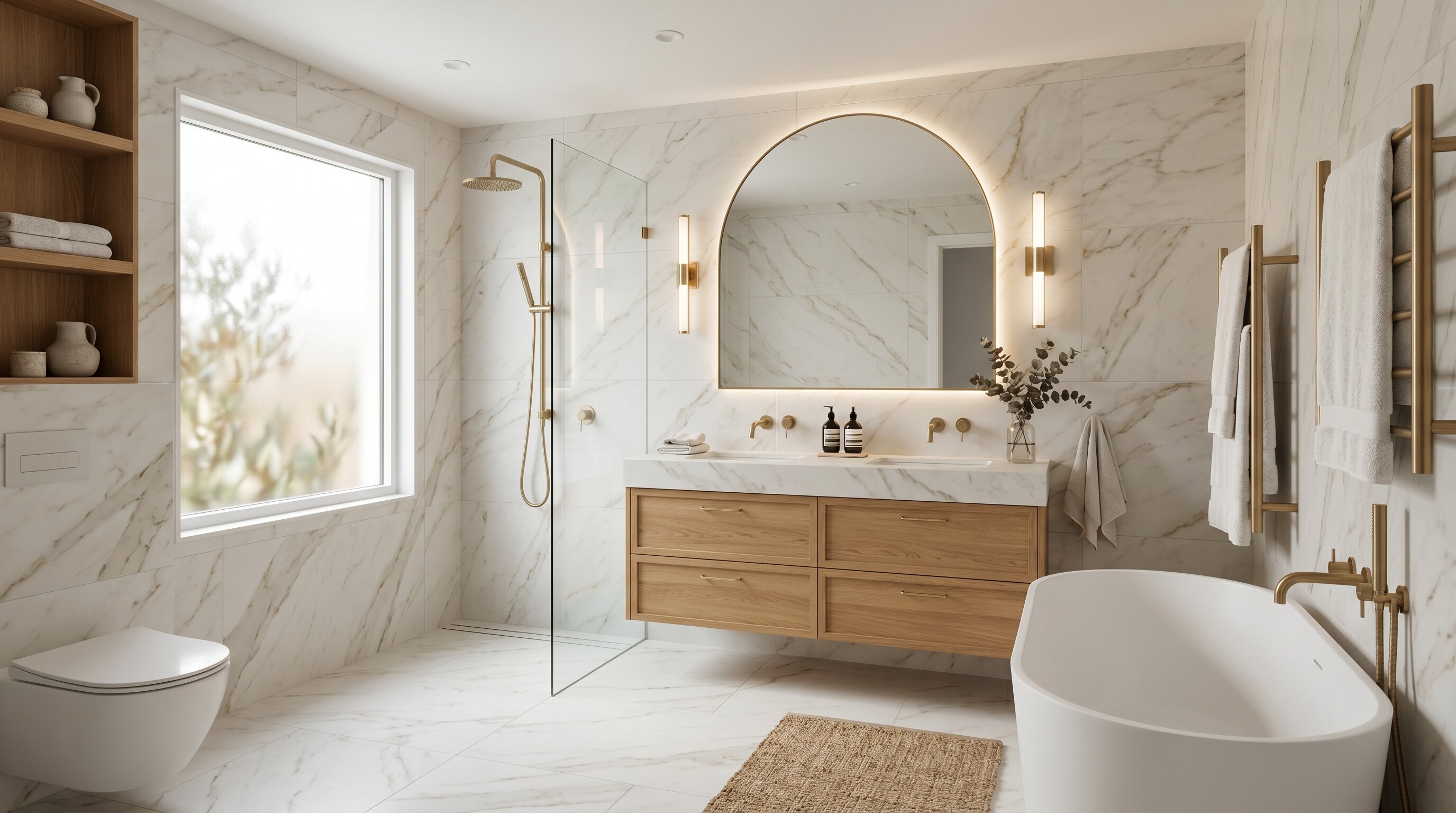
Marble-look porcelain occupies a specific niche: the appearance of marble, the performance of porcelain, at a cost between the two. For most family bathrooms, high-traffic floors, and shower floors, it makes genuine sense and the gap between premium marble-look porcelain and real marble is narrower than it was five years ago.
The honest limitation: pattern repeat. Even with 30 unique face designs in a production run, patterns recur across a large installation. In a small bathroom, this may not be noticeable. In a large primary bath with 100+ tiles, you'll see it particularly in the veining rhythm. Real marble never produces a repeated vein.
Where marble-look porcelain makes the most sense:
High-traffic bathroom floors where maintenance is the primary concern
Shower floors where slip resistance and waterproofing are non-negotiable
Households with young children or pets where acid contact from products is frequent
Rental properties or guest bathrooms where long-term maintenance may not be consistent
The Decision by Bathroom Type
This is the section most guides skip. The right material depends on which bathroom you're tiling.
Maintenance Reality: What You're Actually Signing Up For
Marble bathroom maintenance:
Seal every 6–12 months with an impregnating stone sealer
Clean exclusively with pH-neutral stone cleaner no standard bathroom sprays
Wipe acidic products off the surface immediately toothpaste, shampoo, conditioner left sitting will etch
Have the floor re-honed or re-polished professionally if it loses its finish
Handle spills promptly; pigmented liquids stain unsealed stone fast
Porcelain bathroom maintenance:
Sweep and mop with mild cleaner
Seal grout in wet areas grout absorbs moisture even when the tile doesn't
Avoid ammonia and bleach-based cleaners on coloured porcelain
Replace individual cracked tiles as needed
Neither routine is onerous if you know what you're committing to. The mistake is choosing marble for the look and then maintaining it like porcelain that produces an etched, dull surface within 12–18 months.
Frequently Asked Questions
Is marble or porcelain better for bathroom floors?
For most bathroom floors, porcelain is the more practical choice waterproof, slip-resistant in matte finishes, and maintenance-free. Marble works on bathroom floors when it's honed (not polished) and sealed regularly, but the daily acid exposure from bathroom products means the maintenance commitment is higher than most people expect. Shower floors specifically should be porcelain or mosaic for safety.
Does marble need to be sealed in a bathroom?
Yes, every 6–12 months. Sealing prevents staining from absorbed liquids but does not prevent etching. Products containing acid (toothpaste, shampoo, most soap formulations) will dull the surface through chemical reaction regardless of sealing. In a bathroom, this is a daily exposure risk.
Can you use marble tile in a shower?
Yes, on shower walls marble has performed in wet environments for centuries when properly sealed and maintained. Shower floors are different: polished marble is too slippery when wet. Use honed marble with mosaic or textured tile on the shower floor, or choose porcelain throughout.
What is the difference between marble etching and staining?
Etching is chemical: acid reacts with marble's calcium carbonate and damages the surface layer, leaving dull marks. It's not absorbed, it's destructive. Sealing doesn't prevent it. Staining is absorption: pigmented liquid soaks into the pores and leaves colour. Sealing prevents staining. In a bathroom, etching is the more serious and harder-to-avoid risk.
Does marble add resale value compared to porcelain?
Yes. Natural marble registers as a premium material with buyers and appraisers in a way porcelain typically doesn't. Porcelain tile, even excellent marble-look porcelain doesn't command the same premium property positioning. If resale impact is part of the decision, marble justifies the cost.
Which is easier to install marble or porcelain?
Both require professional installation for best results. Marble is more fragile during cutting and handling (order 10–20% overage; unique veining makes matching harder if tiles break). Porcelain requires special mortar, grout, and tools, adding installation cost. Neither is straightforward for DIY in a full bathroom application.
Conclusion
The mistake isn't choosing the wrong tile. It's choosing based on appearance without accounting for the bathroom's daily reality. Marble in a powder room is inspired. Marble around a shared shower used by three people every morning is a maintenance commitment most households don't honour and the tile pays for it.