
Hexagon tile has been in bathrooms since before indoor plumbing was common. Victorian-era bathrooms tiled their floors in 1-inch white hex mosaics because the shape is geometrically efficient, six equal sides tile perfectly with no waste, no gaps and because the high grout-line density kept wet floors from becoming dangerous. Those same properties still hold in 2026, which is why hex tiles keep appearing in bathrooms that range from authentic period restorations to minimal contemporary builds.
This guide organises ideas by placement zone, gives the size decision framework most articles bury, and explains the one design decision that changes everything: grout colour.
Why Hexagon Tile Is Actually Timeless
Most articles call hexagon tile "timeless" without saying why. The reason is specific: the shape comes from nature. Honeybee combs use the hexagonal grid because it's the most efficient way to tile a plane, maximum area covered, minimum material used, no gaps. When humans tile with hexagons, the result has an inherent rightness that purely manufactured patterns don't quite match.
That natural geometry is also why hexagon tile works across every design style from Victorian to mid-century to contemporary. The shape doesn't belong to any era. It predates all of them.
The Size Decision: A Practical Guide
Choosing hex size before choosing colour or material is the correct order of operations. Size determines slip resistance, visual weight, and which bathroom styles the tile fits.
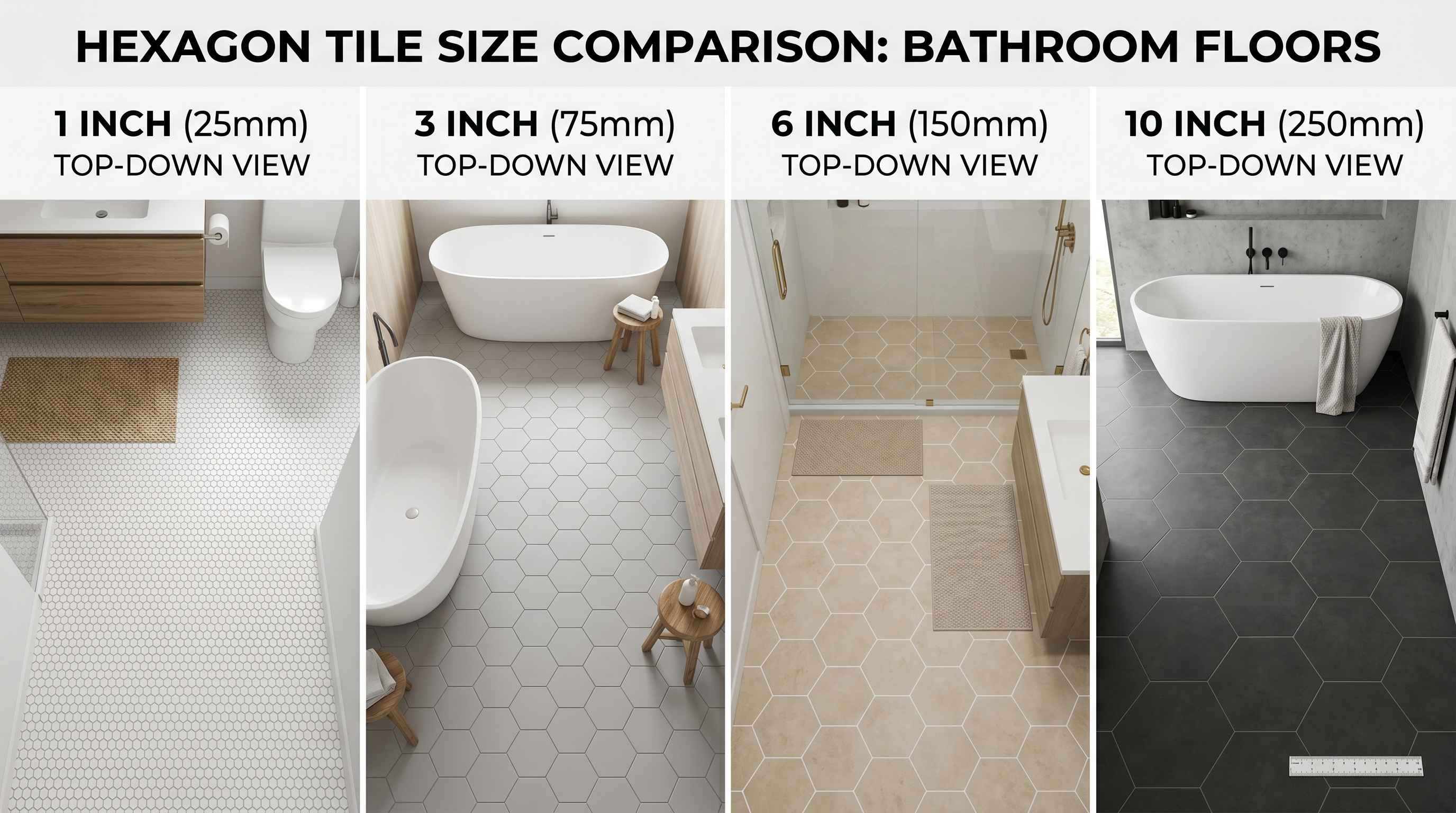
The Goldilocks zone is 4"–6". A 6" hexagon is the most-specified bathroom floor tile in this size range large enough for a clean contemporary look, small enough to follow a shower pan slope without needing a linear drain.
The counter-intuitive rule for small bathrooms: bigger hex tile often makes a small bathroom feel larger, not smaller. A 6" hex has fewer grout lines than a 2" hex less visual fragmentation, more apparent space. If your bathroom is under 60 square feet, don't reflexively reach for the smallest tile.
For shower floors specifically: 1"–4" sizes are the safe zone for standard shower pans. Smaller tiles follow the slope toward the drain naturally, and more grout lines mean more grip. The DCOF requirement for wet interior floors is 0.42 matte finish hex tiles in the 1"–6" range typically exceed this. Check the specification before ordering and choose matte over glossy on any floor that gets wet.
The Grout Colour Rule
This decision matters as much as the tile itself and almost nobody gives it its own section.The rule is simple:
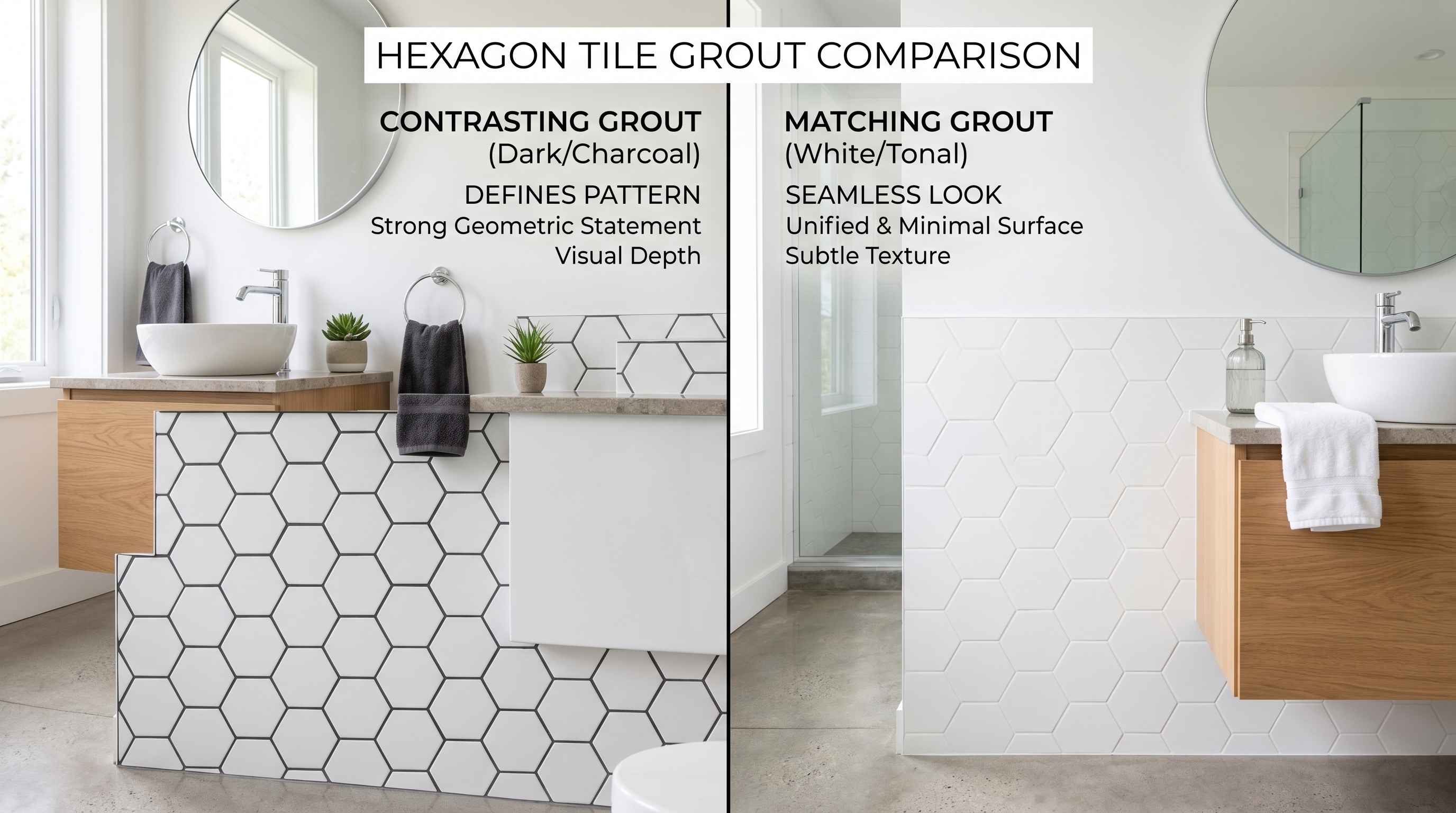
Contrasting grout defines the hexagon shape. Dark grout on white tile; white grout on black or dark tile. The individual hexagons become visible as distinct geometric units, the pattern reads as graphic and intentional, and the bathroom leans vintage or modern depending on colour.
Tonal/matched grout softens the pattern. When grout and tile are the same colour or close in tone, the hexagons blur into a continuous surface; the shape is present but not announced. This reads as sophisticated, minimalist, contemporary.
Neither approach is wrong. The mistake is choosing grout as an afterthought rather than a design decision made at the same time as the tile. If you're ordering hex tile without knowing your grout colour, you haven't finished designing the floor.
Practical grout tip: darker grout hides grime between cleanings. If the bathroom is high-traffic or low on cleaning time, dark grout on light tile is not just a design choice it's a maintenance decision.
Bathroom Floor Ideas
White Hex with Dark Grout: The Original
This is what Victorian and 1920s bathrooms did, and it hasn't stopped working. White or off-white hex, black or dark grey grout, small to medium tile size. Every period bathroom, farmhouse bathroom, and modern coastal bathroom that uses this combination is borrowing from a formula that's been in continuous use for 140 years.
The variations are in the tile size and the exact shade of white. Bright white with stark black grout reads sharper and more contemporary. Creamy white with charcoal grey grout reads warmer and more relaxed.
Black Hex Floor: The Moody Modern
Black hex flooring is the most dramatic version of the classic formula and the most practical for busy households. Dark tiles hide the grime that light tiles show. A black hex floor with white walls and black or brass fixtures is a high-contrast bathroom that looks intentional and requires minimal visual upkeep between cleanings.
Pair with white grout for maximum contrast (the tiles become clearly defined hexagons) or dark charcoal grout for a more subtle, one-tone effect.
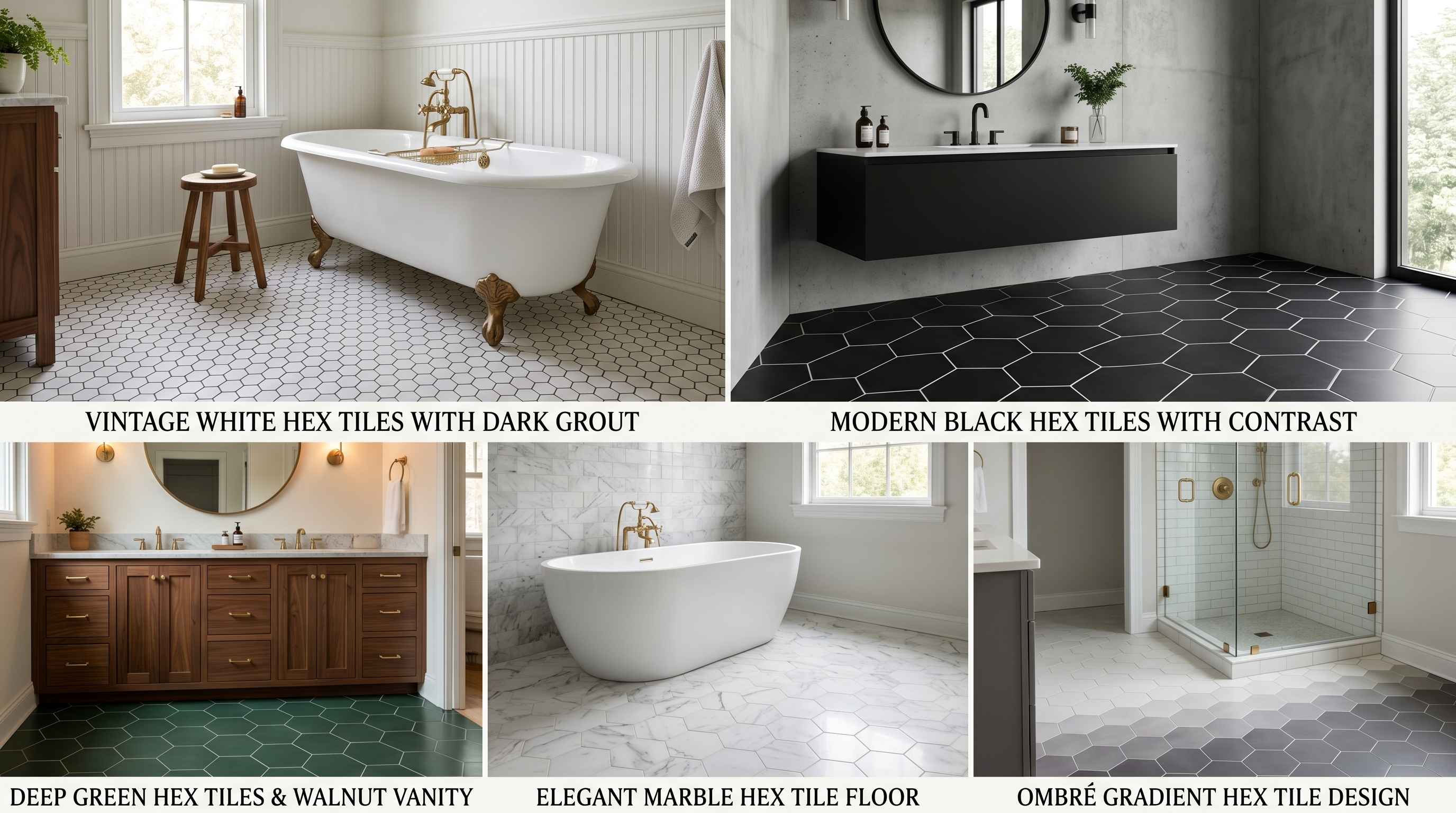
Green Hex Floor: The 2026 Direction
The shift from cool grey to warm earth tones has reached hex tile. Deep green hexagonsfrom sage to emerald to forest are the dominant 2026 bathroom floor direction. A 6" green hex floor with a warm wood vanity and brass fixtures is the clearest design formula of the moment. The geometric tile grounds the warmth of the materials; the warmth of the materials prevents the geometry from reading as cold.
Marble Hex Floor: Luxury with History
Small marble hexagon tiles on a bathroom floor are one of the most elegant combinations in residential design. Carrara is the classic choice white base with grey veining, cool enough to pair with chrome, warm enough to pair with brass. The texture difference between the polished marble surface and the grout lines creates visual depth that flat-colour tiles can't match.
The honest note: marble requires annual sealing and pH-neutral cleaning. The maintenance commitment is real. For a primary family bathroom, porcelain in a marble look may be the more practical specification.
Ombré/Gradient Patterns
Multiple shades of the same tile colour, transitioning from light to dark (or reverse) across the floor or up a wall. This works best with 2"–4" tiles where the individual hexagons are small enough for the gradient to read as smooth. A single-colour ombré in sage green pale sage at one end deepening to dark forest creates a floor that reads as a designed object rather than a tiled surface.
Planning note: ombré requires ordering multiple colour batches in advance and planning the placement before installation begins. Work out the gradient on paper or on a digital rendering before any tile is laid.
Shower Ideas
Shower Floor: The Safety Section
For shower floors, size determines safety. The more grout lines per square foot, the more grip underfoot which is why 1"–3" hex is the traditional shower pan tile. A 1" white hex shower pan with black grout is the defining shower floor of farmhouse, mid-century, and coastal bathroom styles.
For contemporary bathrooms that want fewer grout lines: a 4" matte hex in a calm colour (light grey, warm white, sage) reads as clean and modern while still providing adequate traction. Glossy finish on a shower floor is worth avoiding wet gloss is slippery regardless of tile size.
Shower Walls: The Feature Opportunity
Hex tile on shower walls creates a different effect than on floors: the geometric pattern covers a vertical surface the eye reads as intentional decoration rather than practical tiling. This works as either a full three-wall hex enclosure (immersive, spa-like, committed) or as a feature wall inside the shower (concentrated impact, lower material cost).
The waterfall cascade: running the same hex tile from the shower wall down onto the shower floor eliminates the line between surfaces and makes the shower feel like a single designed space rather than two separate tile choices stacked together. Use the same tile and same grout colour on both surfaces. This works particularly well with 6" tiles on the wall and 3" tiles on the shower floor of different sizes, same colour, so the surfaces read as continuous.
Wall and Feature Ideas
Feature Wall Hexagon
A single bathroom wall in hex tile behind the vanity, behind the tub, or along the shower wall is where colour and pattern shine without committing the whole room. The geometry gives even a neutral colour an inherent visual interest that flat subway tile can't match.
This is also where larger hex sizes (8"–12") work best: on a wall where floor slope doesn't matter, large-format hexagons make a bold, contemporary statement that's genuinely different from any other tile shape.
Vanity Backsplash
Hex tile as a vanity backsplash from bathroom countertop to mirror height behind the sink is the lowest-commitment way to introduce hex into a bathroom and the highest return per square foot on design impact. A small hex mosaic in a statement colour (deep green, terracotta, inky blue) behind a plain vanity turns a utilitarian surface into a focal point.
Powder Room: Full Commitment
The powder room is the best room in the house for bold hex tile precisely because the stakes are lowest. No shower, minimal moisture, the smallest footprint. You can tile all four walls floor to ceiling in a statement hex colour and the room remains functional and impressive regardless of how bold the choice.
Black hex walls with warm wood vanity and brass fixtures. Terracotta hex with white plaster walls above a wainscoting line. Full emerald green hex from floor to ceiling with a rattan mirror. These are powder room moves that would feel overwhelming in a primary bathroom and work perfectly here.
2026 Colour Directions
Deep green: the single strongest hex colour direction of 2026. Pairs with brass fixtures and warm wood vanity.
Terracotta: Mediterranean warmth; pairs with white walls, brushed brass or unlacquered bronze. 2"–4" sizes work best for terracotta hex to let the earthy colour read clearly.
Black: timeless modernism; pairs with white grout for classic, dark grout for moody. Hides grime; works in every bathroom style from Victorian to contemporary.
Warm white: the original. With contrasting dark grout it's vintage; with tonal pale grout it's contemporary. Still the most versatile hex colour.
Navy / inky blue: coastal and classic; a navy hex shower floor with white walls is one of the most cohesive looks available.
Fixture Pairings
Brass (unlacquered or brushed): the 2026 dominant pairing. Works with green, terracotta, warm white, and black hex. The warm metal complements both earthy palettes and classic B&W combinations.
Matte black: the high-contrast pairing for dark or dramatic hex. Black fixtures with black hex tiles (same colour, different materials) creates a bathhouse atmosphere.
Warm wood vanity hex tile's geometric precision needs organic warmth to balance it. A warm wood floating vanity prevents any hex bathroom from reading as cold or industrial.
Frequently Asked Questions
What size hexagon tile is best for a bathroom floor?
For most bathroom floors, 4"–6" is the sweet spot versatile enough for any design style and large enough for a clean contemporary look without requiring special installation for shower pans. For shower floors specifically, 1"–4" is the safe range; smaller tiles have more grout lines for grip. For feature walls and large statement bathrooms, 8"–12" creates a bold, contemporary effect.
What grout colour works best with hexagon tile?
Contrasting grout (dark on light, or light on dark) defines and emphasises the hexagon pattern. Tonal matched grout softens the pattern and creates a more seamless, contemporary feel. Neither is wrong but choose grout colour as a deliberate design decision at the same time you choose the tile, not as an afterthought.
Can hexagon tile make a small bathroom feel larger?
Yes, particularly larger hex sizes. Fewer grout lines mean less visual fragmentation, which can make a small bathroom floor read as more open. Light-coloured hex with tonal grout in a 4"–6" size is the most space-expanding approach. The counter-intuitive choice is to avoid the smallest hex tiles in a small bathroom. 1" mosaics create a lot of visual busyness that can make tight spaces feel even smaller.
Is hexagon tile good for shower floors?
It's one of the best choices. The grout lines provide traction and hex tile follows the slope of a shower pan naturally. Use matte finish (check DCOF 0.42+) and stick to 1"–4" sizes for standard shower pans. Avoid glossy finish in wet zones. It's slippery regardless of tile size.
Is hexagon tile timeless or trendy?
The shape has been used in bathrooms since the Victorian era it predates the concept of interior design trends. The specific colour and grout combination determines whether a hex bathroom reads as vintage or contemporary. The shape itself is neutral. Black and white hex with contrasting grout will look correct in 2050 for the same reason it looked correct in 1900: the geometry is right.