
The floor gets treated like a background choice. You pick what you want on the walls, choose the vanity, lock in the fixtures, and then spend fifteen minutes on the tile you'll look at every single day. Designers have started calling the floor the "sixth wall" meaning it deserves the same attention as any other surface. That's a reasonable position. Bathrooms where someone chose the floor deliberately just look different from ones where they didn't.
In 2026, bathroom floor tile is moving toward warmer materials, bolder patterns, and layouts that do more spatial work. But the floor has an obligation walls don't: it has to be safe when wet, every day. That constraint shapes everything below.
The Safety Number to Know First
One figure: DCOF 0.42. Dynamic Coefficient of Friction how much grip a tile provides on a wet surface. Any bathroom floor needs a wet DCOF of 0.42 or higher. Shower floors need more.
In practice:
Matte and textured finishes almost always clear 0.42
Glossy tiles often don't they belong on walls, not floors
Mosaic and penny tiles sail past 0.42; all those grout lines add friction
Polished marble and travertine frequently fall short request honed or textured finish for floors and confirm the DCOF before you order
Material Ideas
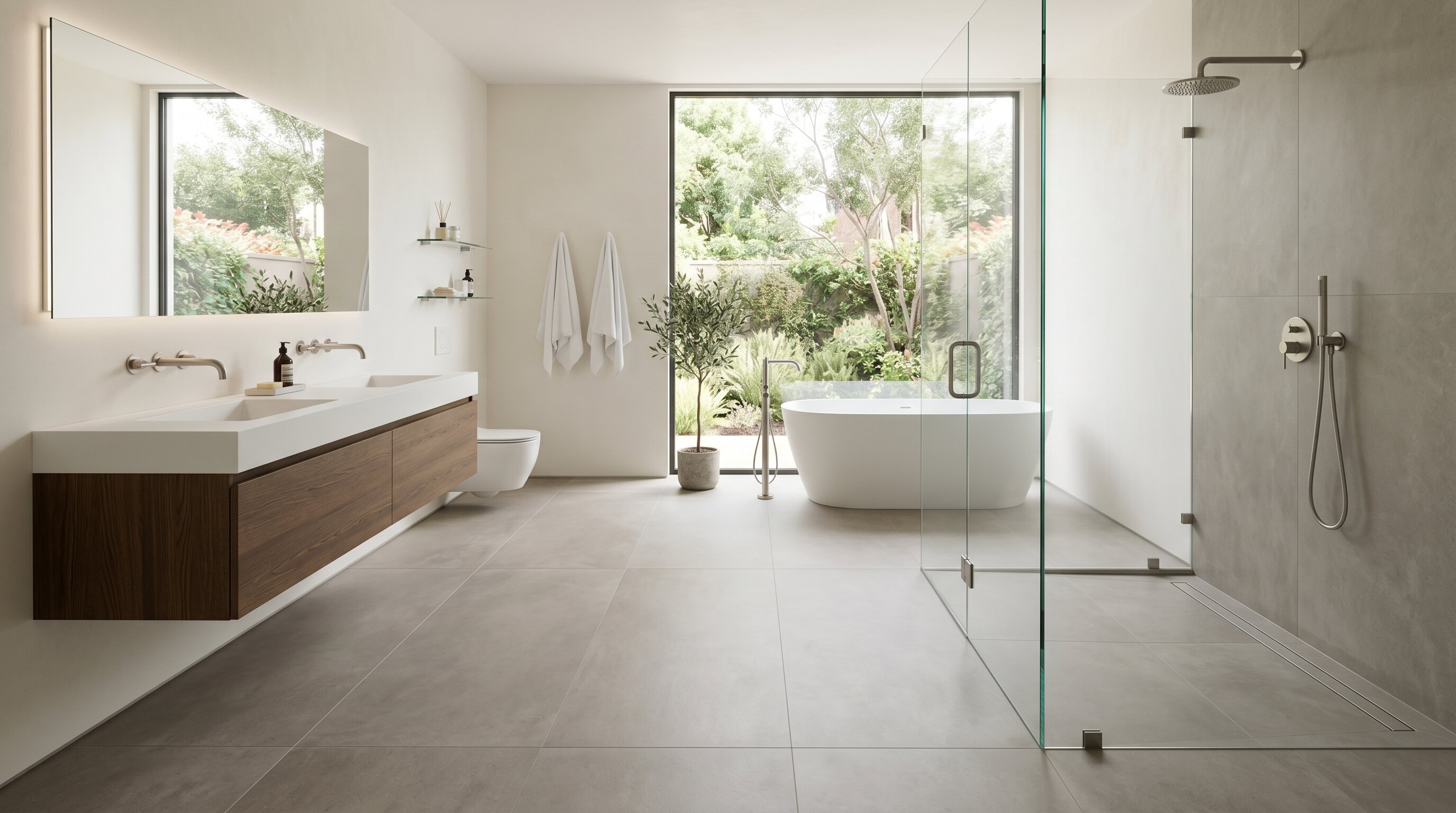
1. Large-Format Porcelain
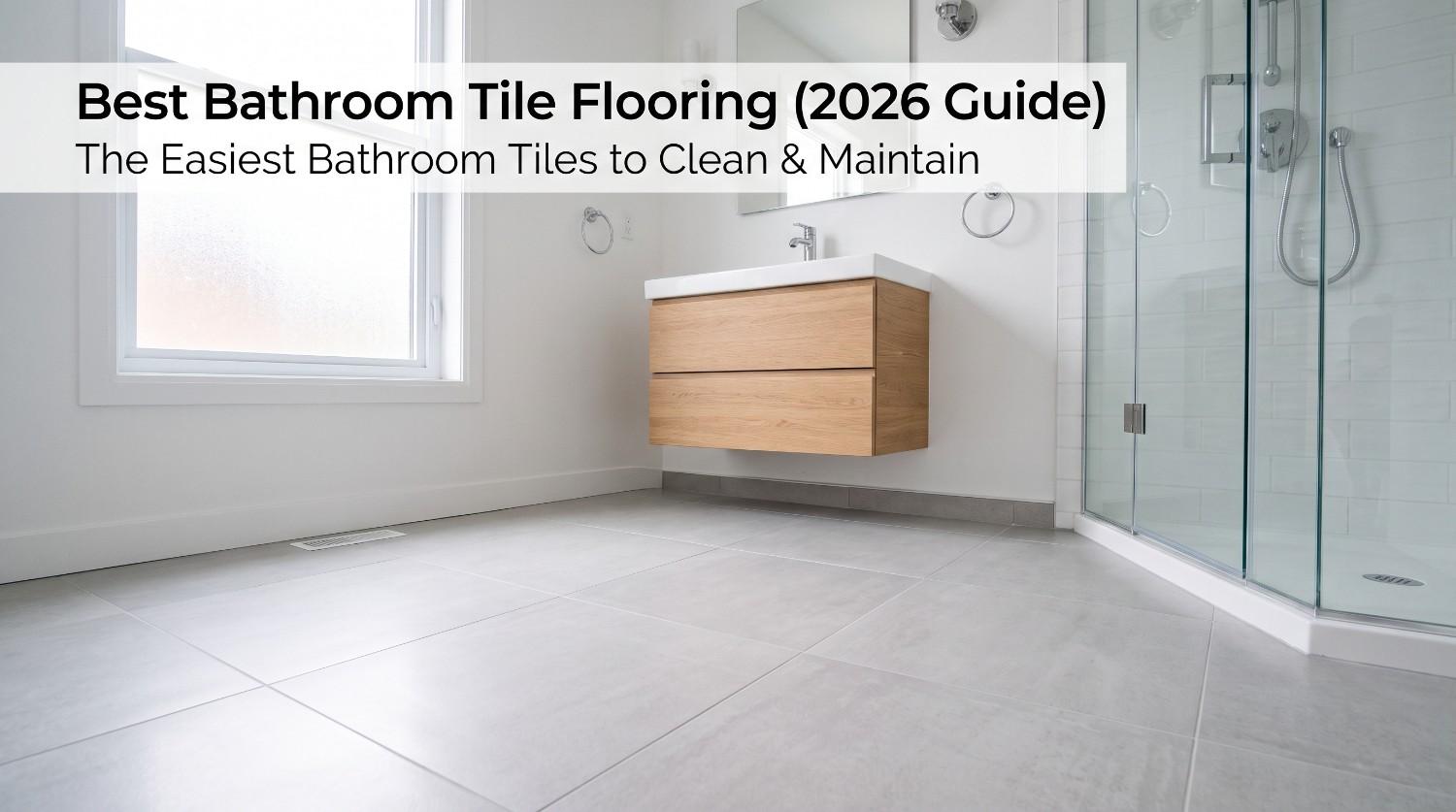
The most-specified bathroom floor tile in 2026. Slabs in 24×24" to 48×48", laid with a grout tone that matches the tile so the floor reads as one plane rather than a grid. Fewer grout lines mean faster cleaning. Near-zero porosity means no sealing, ever. The finish options marble-look, concrete-look, warm stone-look cover almost every design direction.
It also works in small bathrooms, which surprises people. Fewer grout lines mean less visual noise, and less visual noise means the floor reads as larger, not smaller.
2. Terrazzo
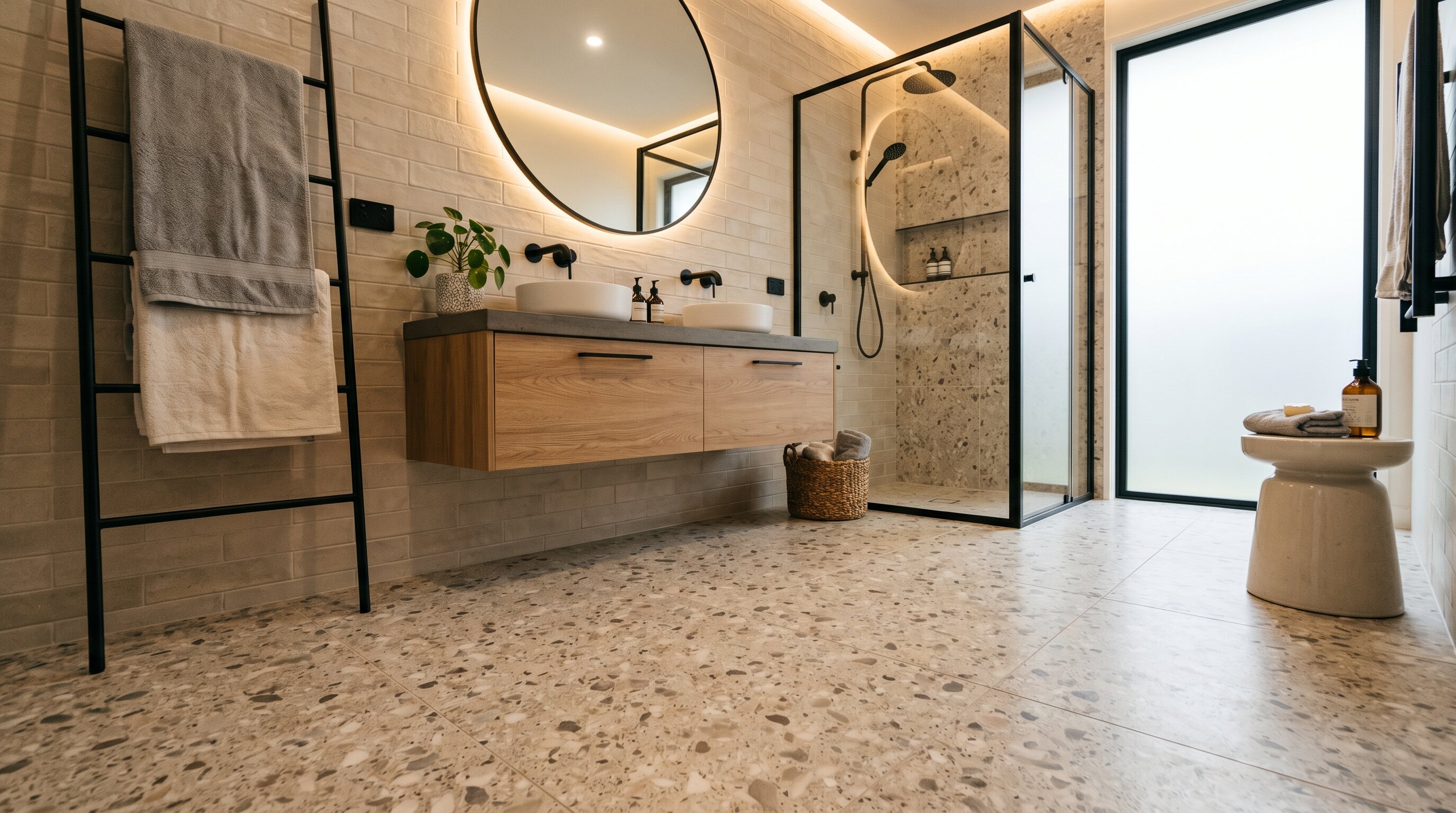
The biggest material story of 2026. Small chips of marble, quartz, or glass set in a cement or resin base the result is a speckled surface that hides water spots, ages well, and sits comfortably in both modern and vintage bathrooms.
In a small bathroom, stay with neutral-toned terrazzo (grey, beige, cream). Bold colours in a tight space tend to overwhelm rather than elevate. And if maintenance is a concern, porcelain terrazzo-look tiles offer better slip ratings and less upkeep than natural terrazzo.
3. Wood-Look Porcelain Planks
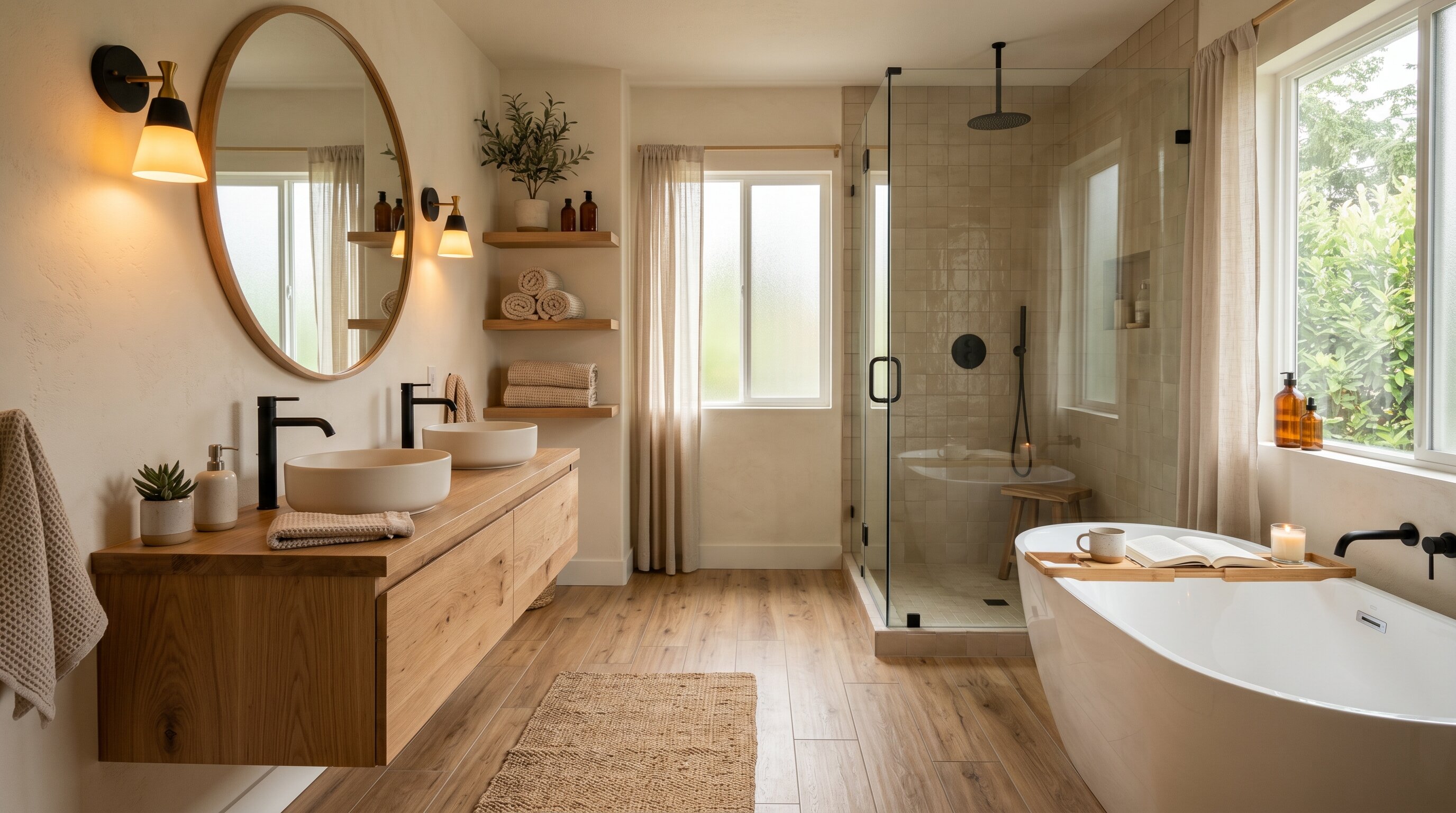
Real wood warps when it gets wet repeatedly. Wood-look porcelain doesn't. Plank sizes of 6×36" or 8×48" produce the most convincing result: realistic grain, visible knots, a warmth that ceramic and stone don't naturally have. It's also the most natural pairing for radiant underfloor heating. Warm tile on a cold morning is a different experience. Worth mentioning when spec'ing.
4. Natural Stone
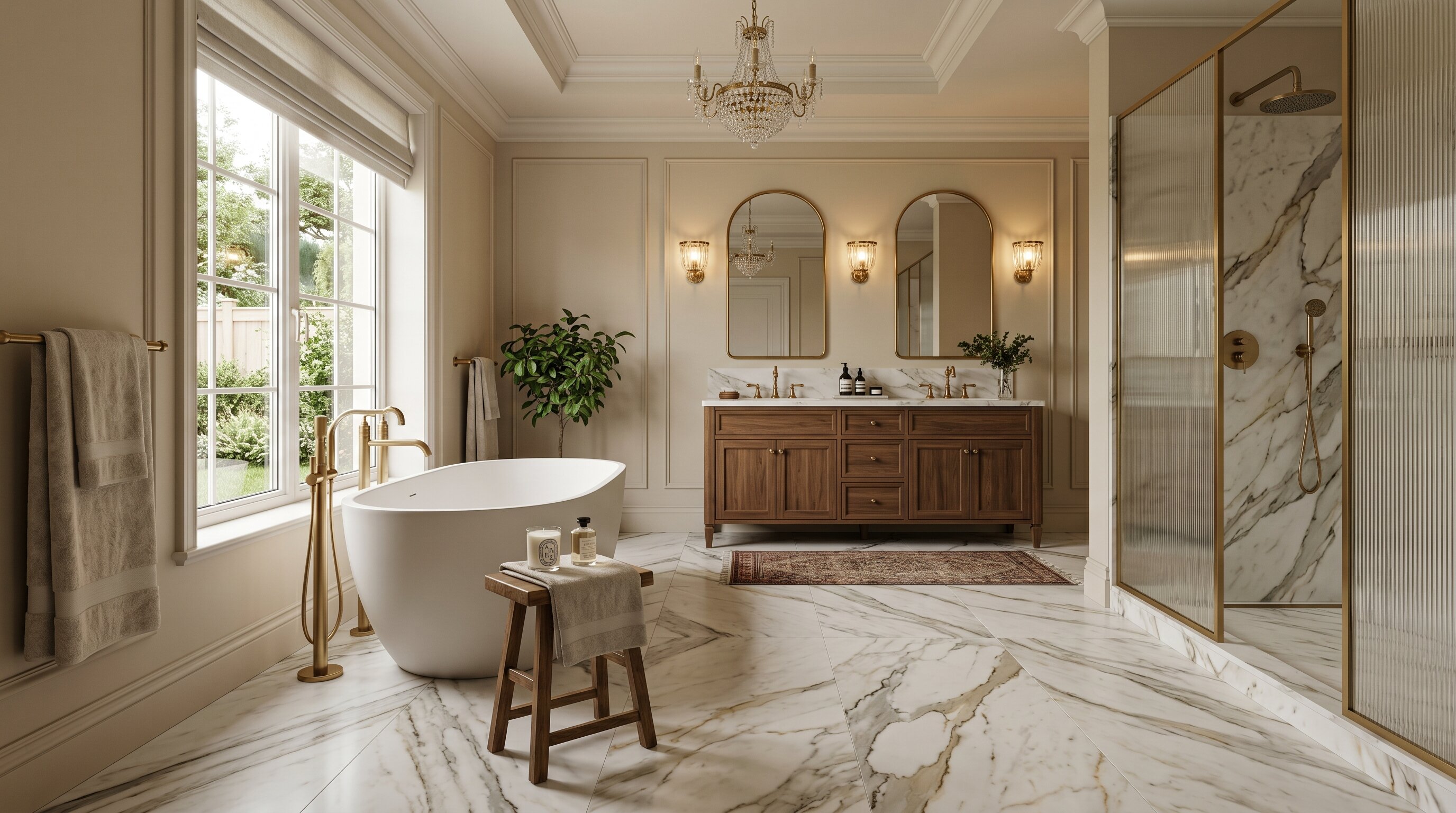
Marble and travertine remain the most luxurious bathroom floor option. The 2026 direction favours bolder stone deeper veining, higher contrast, material with visible character rather than pale uniformity.
The catch: floors need honed or matte finish, not polished. Polished stone looks beautiful and becomes genuinely dangerous underfoot when wet. Confirm the DCOF with the supplier before ordering. Marble needs annual sealing. Travertine and limestone every two years. Factor that into the decision before committing.
5. Terracotta
Slightly textured by nature, which means natural grip without any treatment. The warm earthy tone anchors the 2026 palette shift away from cool grey.The pairing that consistently works: terracotta floor, white subway wall tile, unlacquered brass fixtures, natural wood vanity. Mediterranean, rustic, or farmhouse bathrooms suit it immediately. In a primary bathroom with more contemporary fixtures, the surrounding choices need to be considered more carefully.
Pattern and Layout Ideas
6. Herringbone
The same tile, rotated and interlocked diagonally, makes a completely different room. Herringbone adds movement and character without changing the material or the colour it's a layout decision. It elongates narrow bathrooms specifically. If the space is long and thin, herringbone down the length of it does more visual work than almost anything else. One planning note: herringbone needs 15% tile overage, not the standard 10%. Angle cuts waste more material.
7. Hexagon
The most adaptable geometric floor tile with no visible direction, works from 1" mosaic scale to 12" statement scale, suits Victorian and contemporary styles without straining in either direction. In 2026, larger hexagons (6"–10") in warm clay, taupe, or sage are the modern application. Small white hexagons remain a classic with the added benefit of better grip from the denser grout.
8. Evolved Checkerboard
Checkerboard is back, but not the high-contrast version. The 2026 take uses muted pairs terracotta and cream, sage and warm white, taupe and off-white. Softer, more considered. The rule is simple: a patterned floor needs quiet surroundings. Busy vanity, patterned walls, bold fixtures, any of these competing with a checkerboard floor produces a bathroom where nothing reads clearly.
9. Basketweave
Small rectangular pieces interlocked in a woven pattern. It's been around for over a century for a reason; the result looks genuinely custom without being loud. In marble or pale porcelain it reads refined. In terracotta it reads artisan. A natural fit for transitional bathrooms that sit between traditional and modern.
10. Diagonal Layout
Take a standard square tile. Rotate it 45°. The room feels wider and the tile reads as larger no extra cost, no different material. This is the most underused spatial tool for small bathrooms on this list.
Mosaic and Small-Format Ideas
11. Mosaic Tile
For shower floors, this is the safest and most practical choice. The number of grout lines per square foot pushes the DCOF well above 0.42 without any special treatment. Running the same mosaic from the shower floor up the shower walls creates a fully wrapped, maximally grippy enclosure that also happens to look like a spa. Grip and atmosphere in one decision.
12. Penny Round
Small, circular, high grout density. Good grip on wet shower floors. The retro format works in more directions than you'd expect — soft white reads classic; terracotta or sage reads contemporary.
13. Matchstick Tile
Slim rectangular micro-tiles around 1×3". Mostly used in wet areas in 2026 for dense linear texture and added grip in a compact format. A shower floor or feature-zone choice, not a room-wide one.
Small Bathroom Ideas
14. Light Neutrals
In a bathroom under 50 square feet, floor colour affects perceived space more than most people expect. Off-white, warm beige, and pale grey reflect light upward. The ceiling reads higher; the room feels less closed.
The combination worth trying: warm neutral colour, large format or matched mosaic to reduce grout lines, grout tone matched to the tile. Contrasting grout in a small bathroom traces the room's small footprint rather than disguising it.
15. Tile Drenching Floor Into the Walls
Run the floor tile up the walls. Even 12–18 inches at the base eliminates the horizon line that compartmentalises small rooms. Full height does more. "The restraint is the statement," says Karen Asprea of Asprea Studio. "Let fixture finishes do the work instead of a contrast border." A brushed brass faucet against a continuous tiled surface creates contrast with purpose. A contrast tile border just interrupts the flow.
Frequently Asked Questions
What is the best bathroom floor tile for 2026?
Large-format porcelain for most bathrooms durable, low-maintenance, works in any aesthetic. Terrazzo for personality and character. For shower floors specifically, mosaic or penny round for the grip.
What tile makes a small bathroom look bigger?
Large-format with matched grout reduces visual interruption. Light neutral tones reflect light back into the room. Diagonal layouts make the floor read wider. Running floor tile up the walls removes the horizon line. One of these helps; two or three make a real difference.
What size tile is best for a bathroom floor?
24×24" is the practical sweet spot large enough for minimal grout, manageable in a space with angles and fixtures. Very small bathrooms can work with 12×24" or 12×12". Shower floors need smaller formats: mosaic, penny round, or 4×4" for adequate grip.
How do I know if a tile is safe for bathroom floors?
Check the DCOF: 0.42 or higher for flat bathroom floors, higher for shower floors. Matte and textured finishes almost always pass. Glossy finishes often don't. Confirm before buying. Mosaic and small-format tiles are the safest by default.
Which bathroom type allows the most floor tile freedom?
The powder room. No shower means no DCOF requirements beyond standard bathroom use. Bold patterns, polished finishes, materials that feel too risky elsewhere the powder room is where to try them. The stakes are lower and the effect is concentrated.
Conclusion
Are you tiling a shower floor, a bathroom floor, or both? Shower floors need DCOF 0.42+ and small-format tiles. Bathroom floors outside the shower have more options. Primary bathrooms justify premium materials. Powder rooms justify bold choices. Guest bathrooms fall in between. Answering that before you open a tile catalogue removes half the options and makes the other half easier to navigate.