
Zellige is the tile people see on Instagram and immediately want in their bathroom. Then they order it, and the imperfections arrive: chips, uneven edges, glaze variation and either that's exactly what they wanted, or it's a $3,000 shock.
This guide covers both sides. Ideas for every placement zone, the 2026 colour directions worth committing to, and the honest practical detail that protects you from post-installation regret.
What Zellige Actually Is
Zellige is a handcrafted clay tile from Morocco, made by master craftsmen called maâlems using techniques unchanged since the 10th century. Each tile is hand-cut from non-refined clay, hand-glazed, and fired in a traditional kiln. No two tiles are exactly the same in colour, tone, shine, flatness, or shape.
That's not marketing language, it's a technical reality with real installation implications. The variation creates the depth and organic richness that photographs beautifully. It also means your installer cannot treat it like standard porcelain subway tile.
The quality of authentic zellige comes at a price: $10–$30 per square foot for materials alone. Mass-produced zellige-look porcelain runs $7–$10 per square foot and installs like standard tile but more on that distinction later.
The Light Thing Nobody Mentions
The reason zellige photographs so well is also why it works so differently in a real bathroom versus a showroom: the undulating surface reflects light at a different angle every hour. Morning light grazing a wall of warm white zellige reads pearlescent and soft. The same wall in the afternoon sun picks up warm gold undertones. Artificial sconce light at night makes the surface shimmer and the glaze variations become dramatic.
This matters for placement decisions. A full-wall zellige installation behind a vanity with a well-positioned wall sconce on either side becomes a different room after dark. A zellige shower wall lit from above by a recessed fixture creates a depth that flat tile simply doesn't. Plan your lighting before finalising your zellige placement not after.
Where to Use Zellige in a Bathroom: Placement by Zone
Shower Walls The Primary Placement
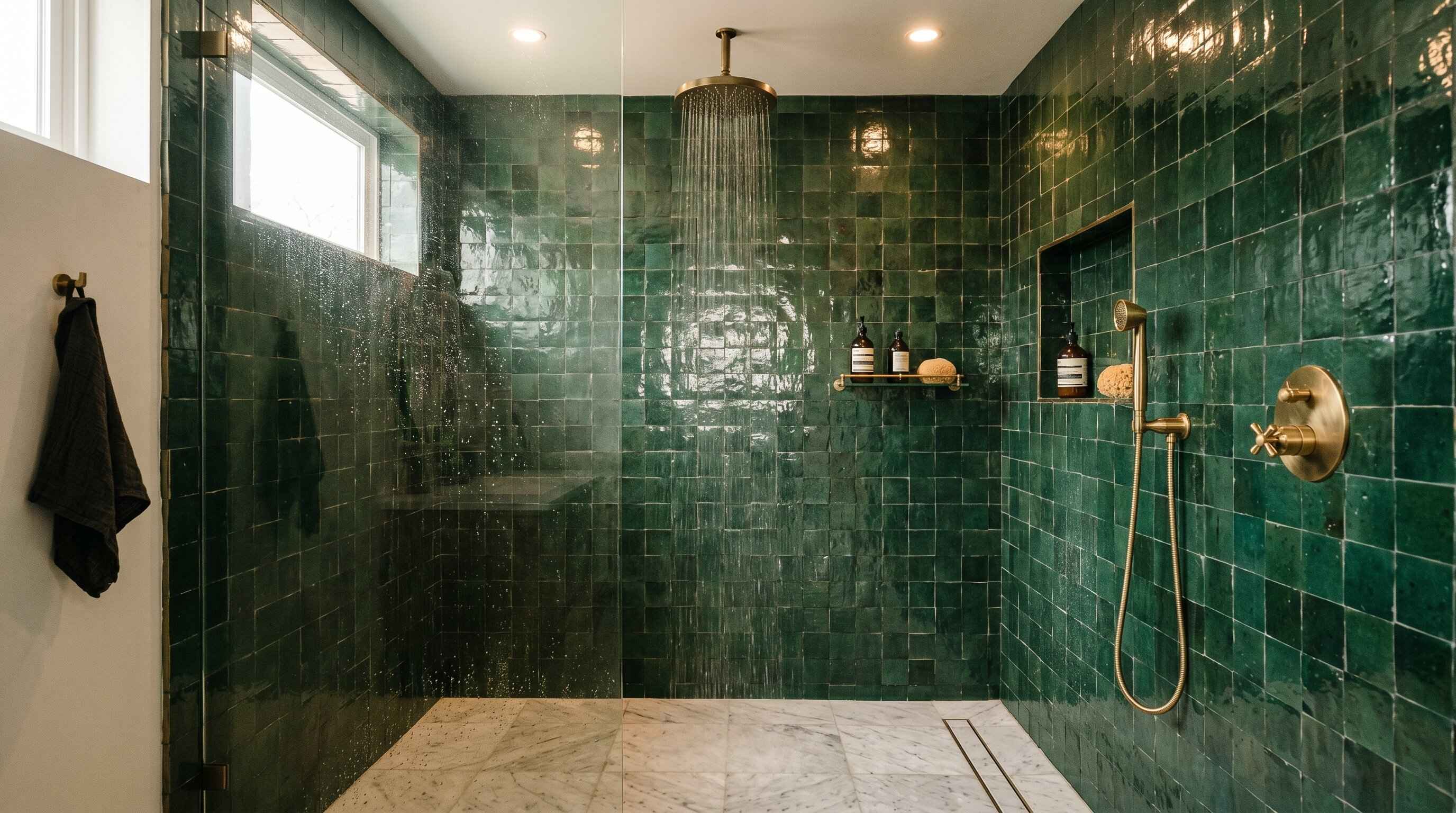
Shower walls are where zellige performs best. The wet surface amplifies the glaze and colour variation tiles that look interesting when dry become luminous under running water and steam. A full shower enclosure in a single zellige colour, where the tile's natural variation provides all the visual interest needed, is one of the most satisfying bathroom installations available.
You don't need a large shower for this to work. A compact shower with three zellige walls and a marble or limestone floor is a complete, finished design with no further decoration required.
One colour principle: resist the temptation to mix zellige colours within a single shower. The natural variation within one colour is already complex. Two different zellige tones fighting each other adds noise, not richness.
Shower Niche: Maximum Impact, Minimum Tile
The shower niche is where zellige delivers the highest drama per square foot. A neutral main shower tile (large-format porcelain, limestone, white marble) with a contrasting zellige colour inside the niche creates a jewel-box effect, a concentrated moment of colour and texture that reads as custom and considered.
Deep emerald, inky navy, or terracotta zellige inside a niche against white or stone walls: this is one of the best budget-conscious zellige applications. You get the material's full character without tiling an entire shower.
Powder Room: The Best Zellige Application in the House
If you only use zellige in one room, use it here. A powder room has no shower, which means no mandatory slip-resistance requirement, lower moisture exposure, and minimal foot traffic. You can commit zellige across all four walls, floor to ceiling, in any colour that would feel too intense in a daily-use bathroom.
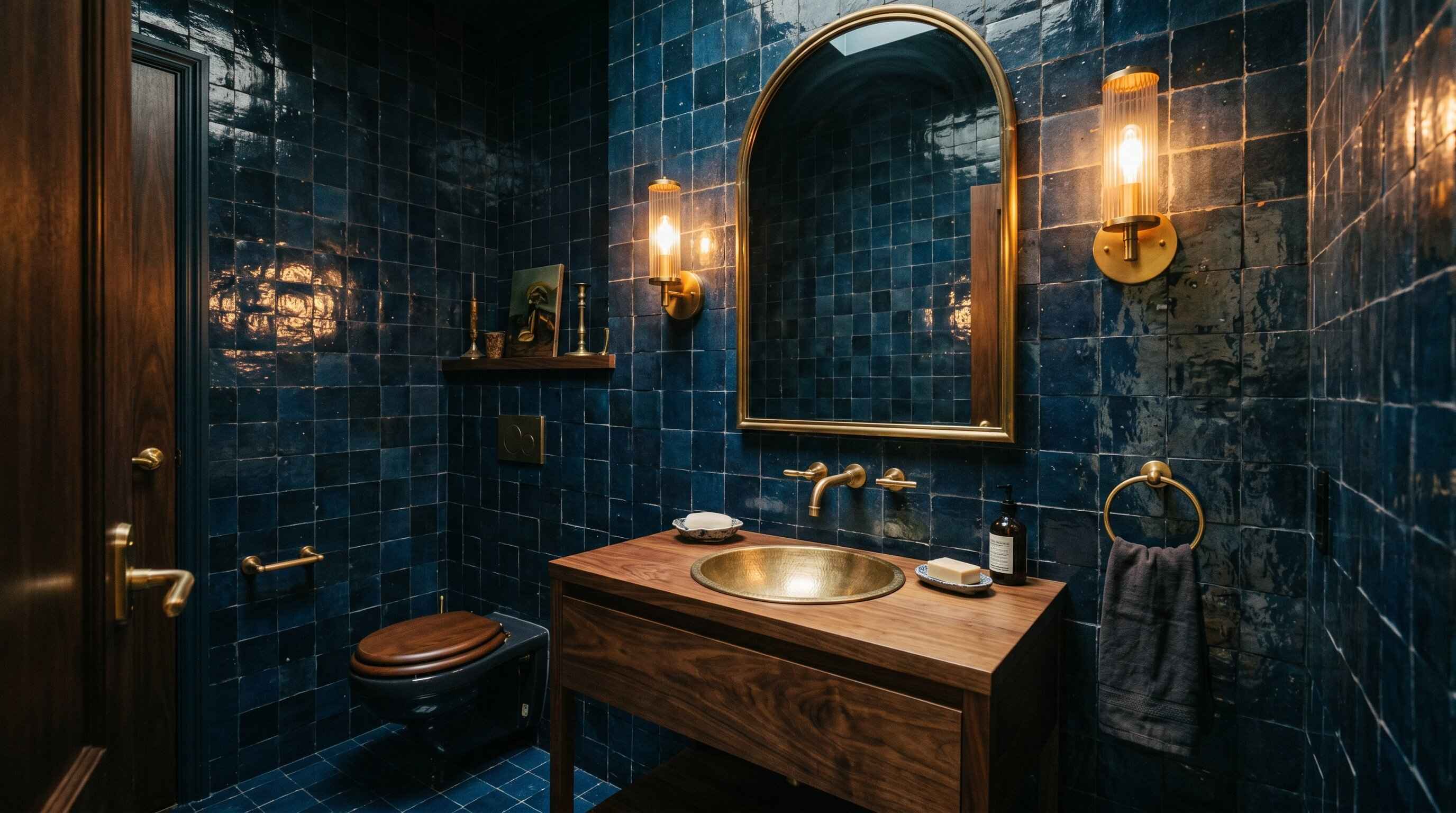
Powder rooms also have a social function they're the bathroom guests use, and the one where a bold material investment reads most clearly. Black zellige walls with warm wood floating vanity and unlacquered brass fixtures. Deep blue from floor to ceiling. Terracotta with a rattan mirror and linen hand towels. The powder room is where zellige can go fully committed without any practical compromise.
Vanity Backsplash: The Safe Entry Point
The vanity backsplash is the lowest-risk zellige placement. It's a dry zone compared to the shower, sees lighter cleaning demand, and is visible from outside the bathroom giving zellige's light-play quality a prominent position without requiring a full room investment.
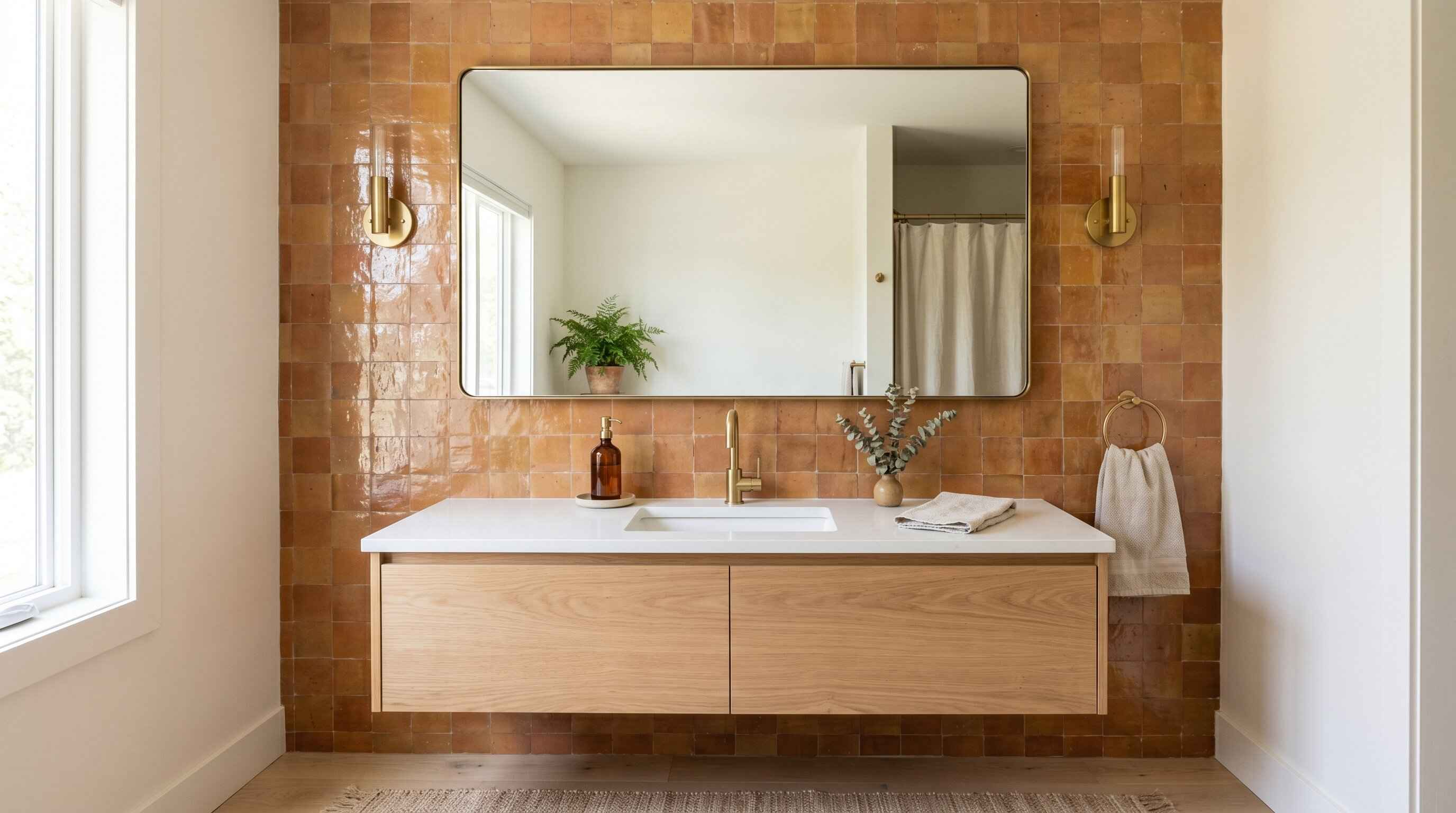
A zellige backsplash behind the sink, extending from countertop to mirror height, transforms a plain bathroom wall into a focal point. Pair it with a mirror that doesn't cover the full backsplash width so the tile reads as a full surface rather than an accessory.
Full Wall / Tile Drench
Running zellige from floor to ceiling on a single feature wall or across all walls creates the immersive Moroccan-inspired bathroom that drives most Pinterest boards. It works particularly well in bathrooms with natural light, where the changing daylight plays across the surface throughout the day.
This is zellige's most committed application and its most impactful. The material's natural variation means a single colour across all surfaces never reads as monotonous. The key design restraint: keep everything else quiet. Simple fixtures, plain floor tile, minimal accessories. The zellige leads; everything else follows.
Wainscoting: The Cost-Effective Approach
Not every bathroom budget supports full-wall zellige. Wainscoting solves this: tile zellige from floor to chair-rail height (typically 36–42 inches), and paint or use a neutral tile above the dividing line. A pencil trim tile or chair-rail piece finishes the horizontal boundary cleanly.
This approach uses roughly half the material and produces a bathroom that still reads as genuinely zellige-designed rather than a token gesture. It works especially well in longer bathrooms where the eye travels horizontally.
What About Zellige on the Floor?
The honest answer: avoid zellige on shower floors entirely. The glazed surface is slippery when wet. The uneven, hand-cut edges can have sharp points; one source from a contractor noted that even with extra grout, rough spots remained on shower floors. Stepping onto that at 6am is not the wabi-sabi experience the Pinterest board promised.
For bathroom floors outside the shower (dry zones with low slip risk), zellige can work in low-traffic areas as a guest bathroom rather than a primary family bathroom. Even then, if floor zellige is the goal, zellige-look porcelain with a floor-rated finish is the safer specification.
2026 Colour Palette for Zellige Bathrooms
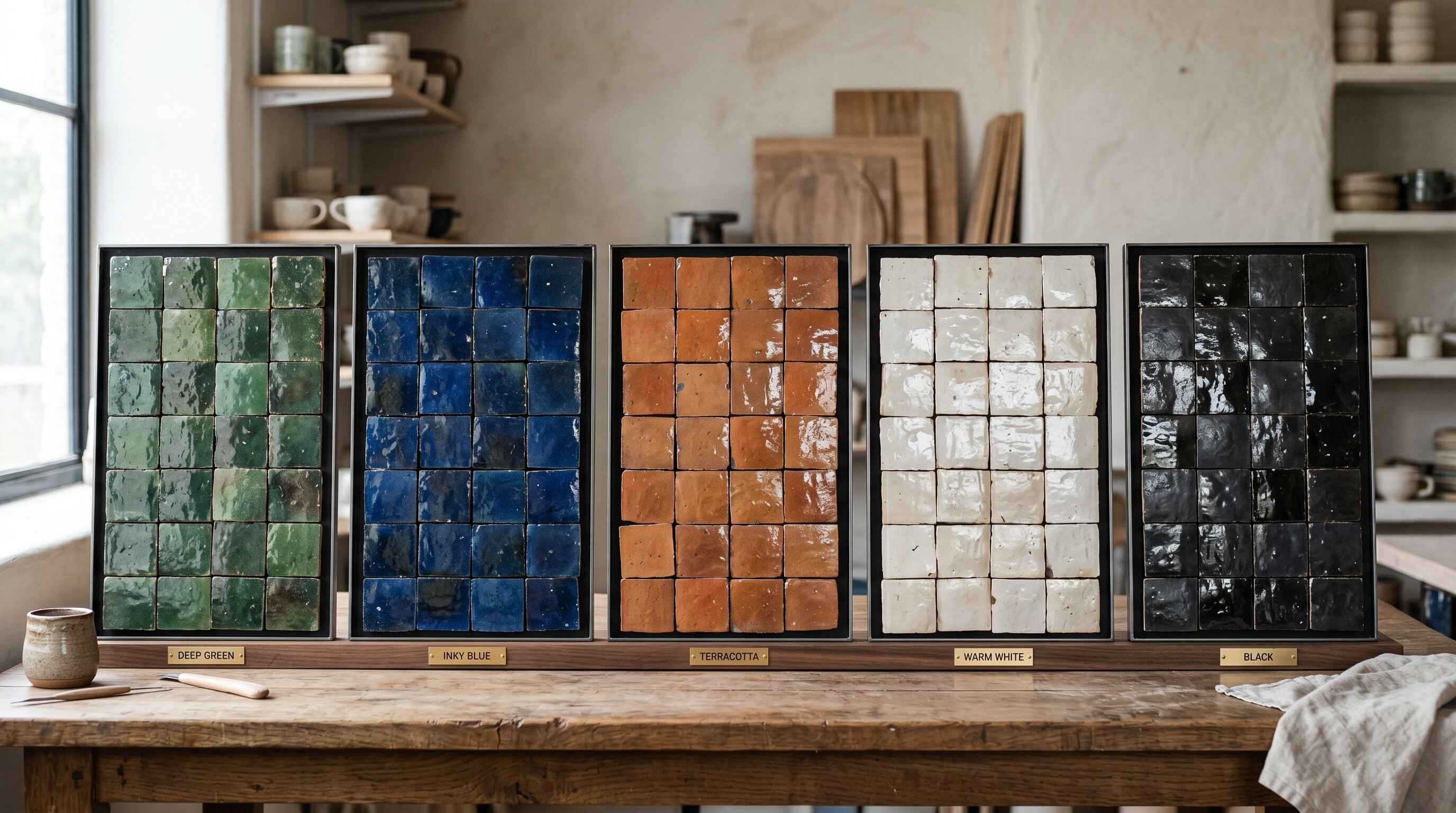
Zellige's 2026 moment sits at the intersection of two design movements: the shift from cool grey toward warm earth tones, and the growing appetite for tactile, artisanal materials with visible handcraft. These are the colours driving the most compelling bathroom installations right now.
Deep Green
Moss to emerald. The dominant 2026 zellige bathroom colour. Works from the powder room feature walls to full shower enclosures. Pairs with unlacquered brass, warm wood, and white marble floors.
Inky Blue
Charcoal to cobalt. The classic Moroccan palette and the most timeless zellige choice. A shower enclosure in inky blue zellige with white grout and brass fixtures has been a strong bathroom look for a decade and shows no signs of dating.
Warm White
Sea salt, weathered white, off-white. The most accessible entry. The glaze variation in white zellige catches light so effectively that a single-colour white installation never reads as plain. It pairs with every fixture finish and every floor material.
Terracotta
Earthy red-orange. Mediterranean palette. Pairs with limestone floors, rattan accessories, and brushed nickel or bronze fixtures. Works particularly well in bathrooms with warm natural light.
Black
Dramatic, moody, increasingly popular in 2026 for powder rooms and shower enclosures. Pairs with warm wood vanity and warm lighting. Photographically striking; practically easy to maintain.
Fixture Pairings for Zellige Bathrooms
Zellige's high-gloss, warm-toned surface has a natural affinity with warm metals. The 2026 pairing formula:
Unlacquered brass + zellige is the dominant combination. Unlacquered brass develops a patina over time, an aged, lived-in quality that mirrors zellige's own wabi-sabi character. The two materials evolve together rather than fighting each other's imperfections. It's the most considered pairing in the current design landscape.
Brushed brass is the lower-maintenance alternative. The warmth of brass without the patina develops a reasonable choice for bathrooms where consistent appearance matters more than character over time.
Matte black fixtures work with deep green, inky blue, and black zellige specifically. The contrast is graphic and strong; it works when zellige is in a darker palette and you want fixture hardware to anchor rather than complement the tile.
Warm wood vanity is the pairing that grounds every zellige installation. The glossy, irregular zellige surface needs something organic and matte to land against. A light-stained oak or walnut floating vanity beneath a zellige feature wall prevents the room from reading as hard or cold.
Authentic Zellige vs. Zellige-Look Porcelain: The Honest Comparison
There are two very different products you can buy for a bathroom, and the choice matters.
Authentic zellige
($10–$30/sq ft) is handmade Moroccan clay tile. Every tile is genuinely unique. The light play is a function of the actual undulating clay surface; it cannot be replicated by printing. Chips, pits, and crazing are inherent to the material and are not defects. It requires an experienced installer, grout release before grouting, and careful handling. For the right project a powder room, a shower wall, a feature wall authentic zellige produces something that no manufactured tile achieves.
Zellige-look porcelain
($7–$10/sq ft) is a mass-produced tile with an inkjet-printed glaze that references zellige's visual character. Installation is standard. Patterns will repeat across large installations. Floor-safe options exist. For high-traffic bathrooms, floors, and households where maintenance simplicity matters, porcelain is the sensible specification.
The honest guidance: if you're tiling a shower floor, use porcelain. If you're doing a powder room feature wall or a shower enclosure with no floor, authentic zellige is worth the investment. If you're budget-constrained or the bathroom sees intense daily family use, zellige-look porcelain delivers 80% of the visual result at 50–70% of the cost.
Installation: What Makes Zellige Different to Lay
Zellige requires an experienced tile installer; this is not a standard DIY tile job. The irregular size and thickness of authentic zellige means each tile must be individually levelled in the thin-set mortar bed. Cutting zellige without shattering the glaze requires specific technique and blades. The installation takes significantly longer per square foot than standard tile.
Two installation rules that nobody tells you until it's too late:
Apply a penetrating grout release sealer to the face of each zellige tile before grouting. The uneven surface and glaze texture will absorb grout pigment if this step is skipped, leaving a permanent discolouration that is extremely difficult to remove.
Order 10–20% more tile than your measured area. Imperfect shapes mean irregular cuts waste more material than standard tile. And if a tile cracks or chips after installation zellige's irregular surface can snag and catch replacement tiles needed to match the installed batch. Authentic zellige dye lots are never perfectly consistent between orders.
Maintenance
Zellige maintenance is simpler than most people expect with one rule that cannot be broken. Use only pH-neutral cleaner. Acidic cleaners, vinegar-based products, and abrasive scrubbing pads all damage the glaze. Standard bathroom spray cleaners are frequently mildly acidic. Switch to a dedicated tile cleaner or diluted mild dish soap applied with a soft cloth.
Grout lines trap dust and grime more readily than smooth tile surfaces; the textured zellige surface around each grout joint creates small recesses. Wipe down regularly and reseal grout lines periodically to prevent staining. The glaze itself does not need sealing on authentic glazed zellige. Crazing fine surface cracks that develop over time is a feature, not a maintenance issue. It adds to the aged, handcrafted character that is Zellige's entire point. Also explore about tile drenching.
Frequently Asked Questions
What is zellige tile and where does it come from?
Zellige is a handcrafted clay tile made in Morocco by master craftsmen called maâlems. The tradition dates to the 10th century. Each tile is hand-cut, hand-glazed, and fired in a traditional kiln. The result is a tile where no two pieces are identical in colour, tone, or shape — the defining characteristic of the material.
Can zellige tile be used in a shower?
Yes, on shower walls it's one of the best applications, as the wet surface amplifies zellige's natural gloss and colour variation. Shower floors are a different matter. The glazed surface is slippery when wet and the uneven hand-cut edges can leave rough or sharp points underfoot. Use zellige on shower walls and specify a floor-rated, textured tile or mosaic for the shower floor.
How much does zellige tile cost for a bathroom?
Authentic handmade zellige typically costs $10–$30 per square foot for materials, plus additional installation cost due to the longer labour time required. Zellige-look porcelain runs $7–$10 per square foot and installs like standard tile. Budget 10–20% additional material beyond your measured area for zellige's higher wastage during cutting.
How do you clean zellige tile in a bathroom?
Use a pH-neutral cleaner with a soft cloth or soft brush. Avoid acidic products (including many standard bathroom sprays), abrasive cleaners, and coarse scrubbing pads all of these damage the glaze. Wipe spills promptly. Clean grout lines with warm water and a soft brush, and reseal grout periodically.
Is zellige tile timeless or will it date?
Zellige has been used in Moroccan architecture for over 1,000 years. Its imperfect, handcrafted quality resists the "too perfect" look that dates most trend-driven tiles. Crazing and chips that develop over years add character rather than diminishing the tile. The specific colour and application will determine longevity more than the material itself; a deep green powder room wall is a bolder commitment than a warm white shower, but both lean on the material's inherent timelessness rather than surface pattern.
What's the best colour of zellige for a bathroom in 2026?
Deep green and inky blue are the strongest design statements and the most photographed. Warm white is the safest and most versatile; the glaze variation does enough visual work that "plain white" zellige is never actually plain. For a first-time zellige project, warm white or terracotta carries the least commitment risk while still showcasing what makes the material distinctive.