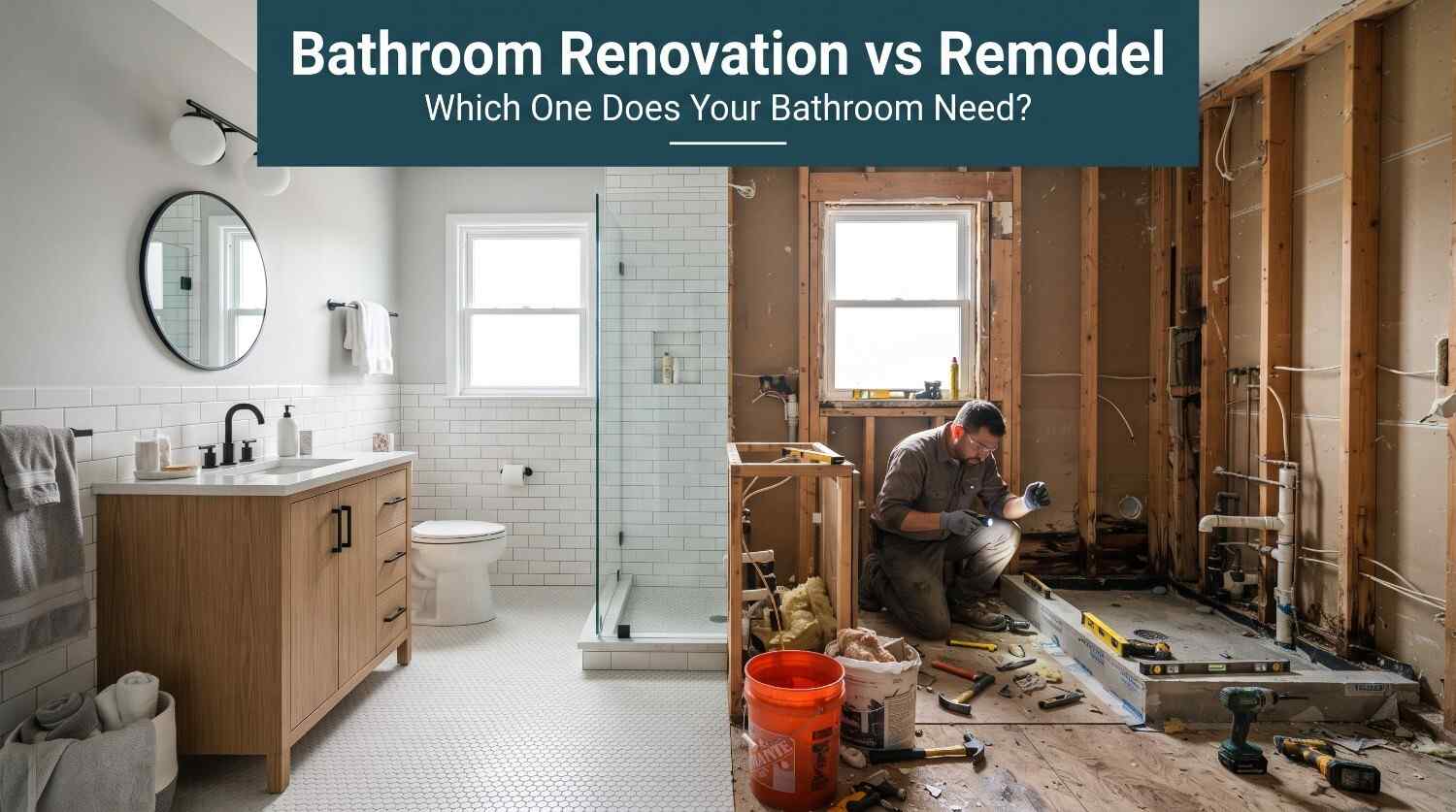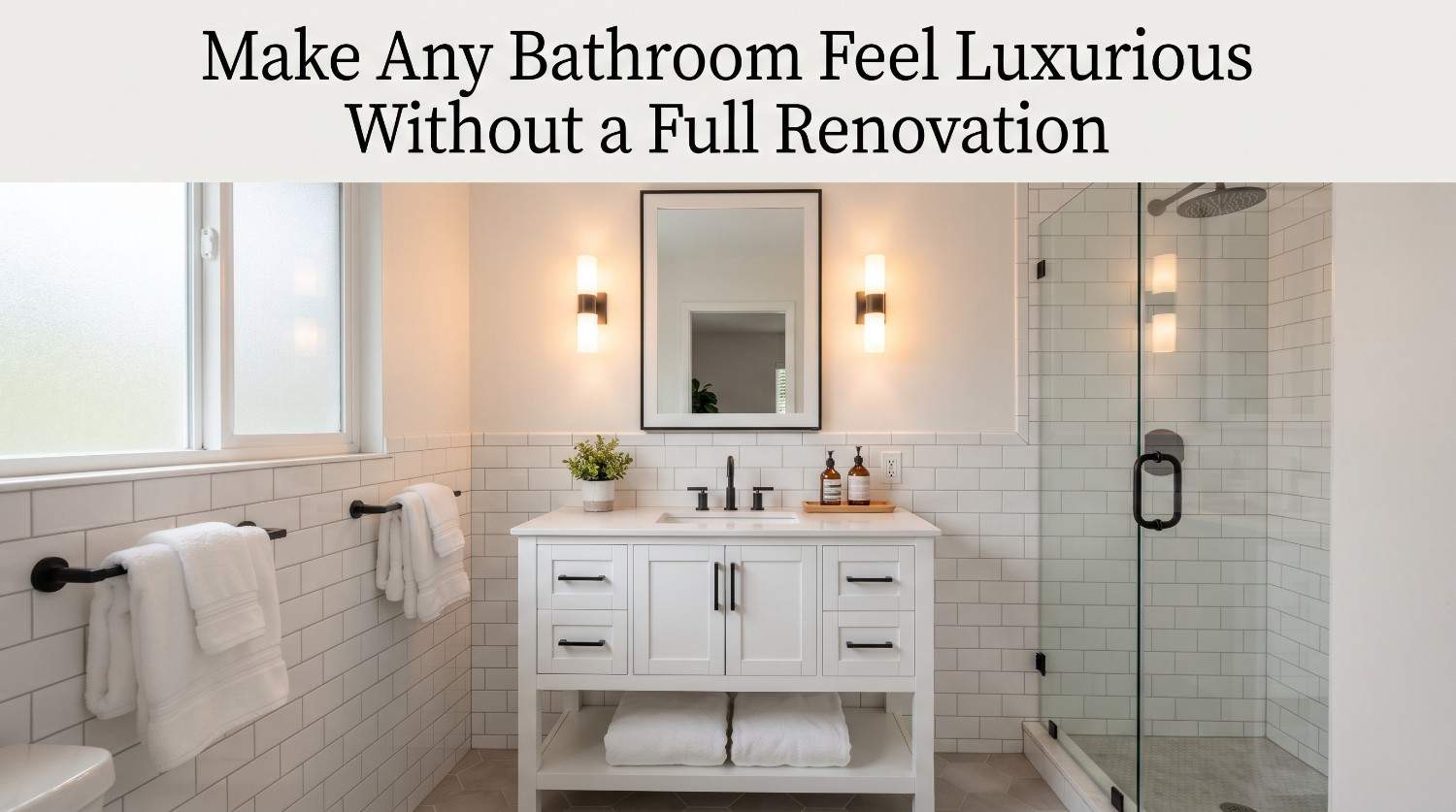

A budget friendly bathroom remodel costs $300–$1,000 for cosmetic work, $1,000–$5,000 for swapping fixtures without moving anything, and $5,000–$12,000 for a full standard update. The national average is $12,132, with most homeowners landing between $6,640 and $17,624. Nearly 95% say they're satisfied with the result and a mid-range remodel returns 73.7% of its cost when you sell.
What follows is the framework I use with clients who want real results without writing a blank check.
Pick Your Tier Before You Start
The worst bathroom remodels I've seen weren't caused by bad contractors. They happened because the homeowner hadn't decided what kind of project they were doing.
Three things spike costs without warning: moving plumbing ($1,000+ per fixture, before any finishing), demolition ($1,000–$2,300 per Angi), and permits ($100–$1,000 depending on where you live). Stay at Tier 1 and you avoid all three.
Labor alone runs 40–65% of your total (Angi) which is the real reason DIY saves money, not the materials. Budget remodels run $80–$120 per square foot; mid-range projects run $180–$280 (usacabinetstore.com, 2026).
Whatever number you land on, add 10–20% before you start. One in three homeowners goes over budget almost always because of something wet hiding inside the walls.
The One Rule That Saves More Money Than Everything Else
Don't move the plumbing.
Relocating a drain or supply line costs $1,000+ per fixture before you've touched a single tile. On a $3,000 budget, that's a third of your money gone before anything looks different. I've watched homeowners blow their entire budget on one plumbing reconfiguration that made the room feel slightly better organized.
Work with what's there. Move surfaces, not pipes.
10 Upgrades That Actually Pay Off
I'm ranking these by how much value you get per dollar spent — not by how impressive they sound in a magazine.
1. Paint : Under $200
This is the only upgrade that costs under $200 and genuinely changes the room. Walls, ceiling, vanity all of it, under $200. One rule: use moisture-resistant, mildew-resistant formula in semi-gloss or satin. Regular interior paint bubbles off bathroom walls within a year. I've seen it happen.
Light colors soft white, pale gray, warm greige make small bathrooms read bigger. One accent wall behind the vanity adds some depth without painting yourself into a corner with a bold color choice.
2. Hardware : $30–$100
Mismatched or dated brass hardware is one of the fastest ways a bathroom shows its age. A matched set knobs, pulls, towel bar, toilet paper holder costs $30–$100. Two hours and a screwdriver. No contractor, no permit, no mess. The visual payoff is immediate and usually surprises people.
3. Mirror : $30–$150
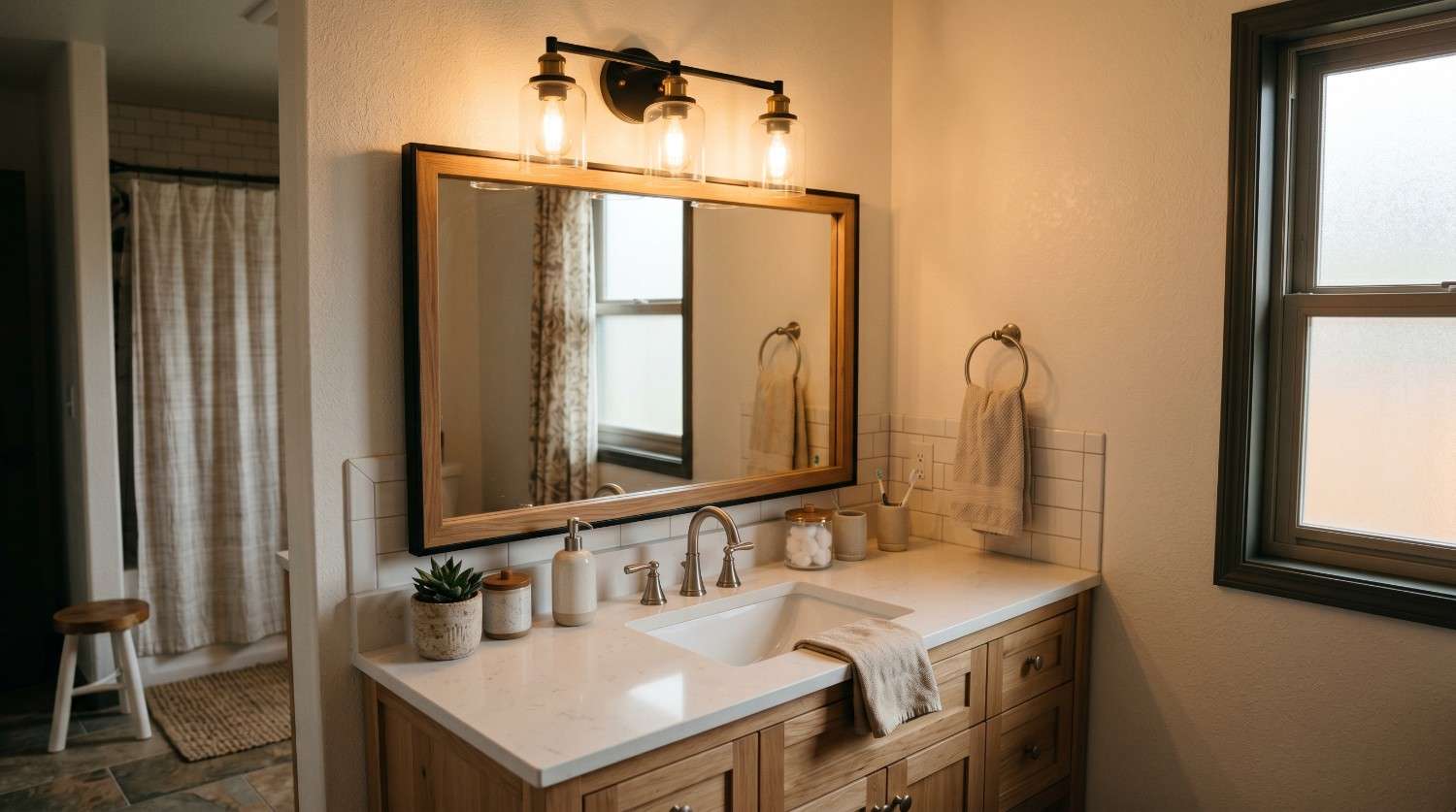
Builder-grade frameless mirrors don't look modern. They look like they came with the house — because they did. A framed or beveled replacement from Ikea, Amazon, or HomeGoods runs $30–$150 and changes the whole vanity area without touching anything structural.
4. Vanity Light : $50–$150
A three-light vanity bar replacing a single overhead fixture takes under an hour for anyone comfortable flipping a breaker. It's one of the most visible changes you can make for the money. Get 3000K LED bulbs — they're flattering and make the room feel livable rather than clinical.
5. Shower Curtain : $20–$80
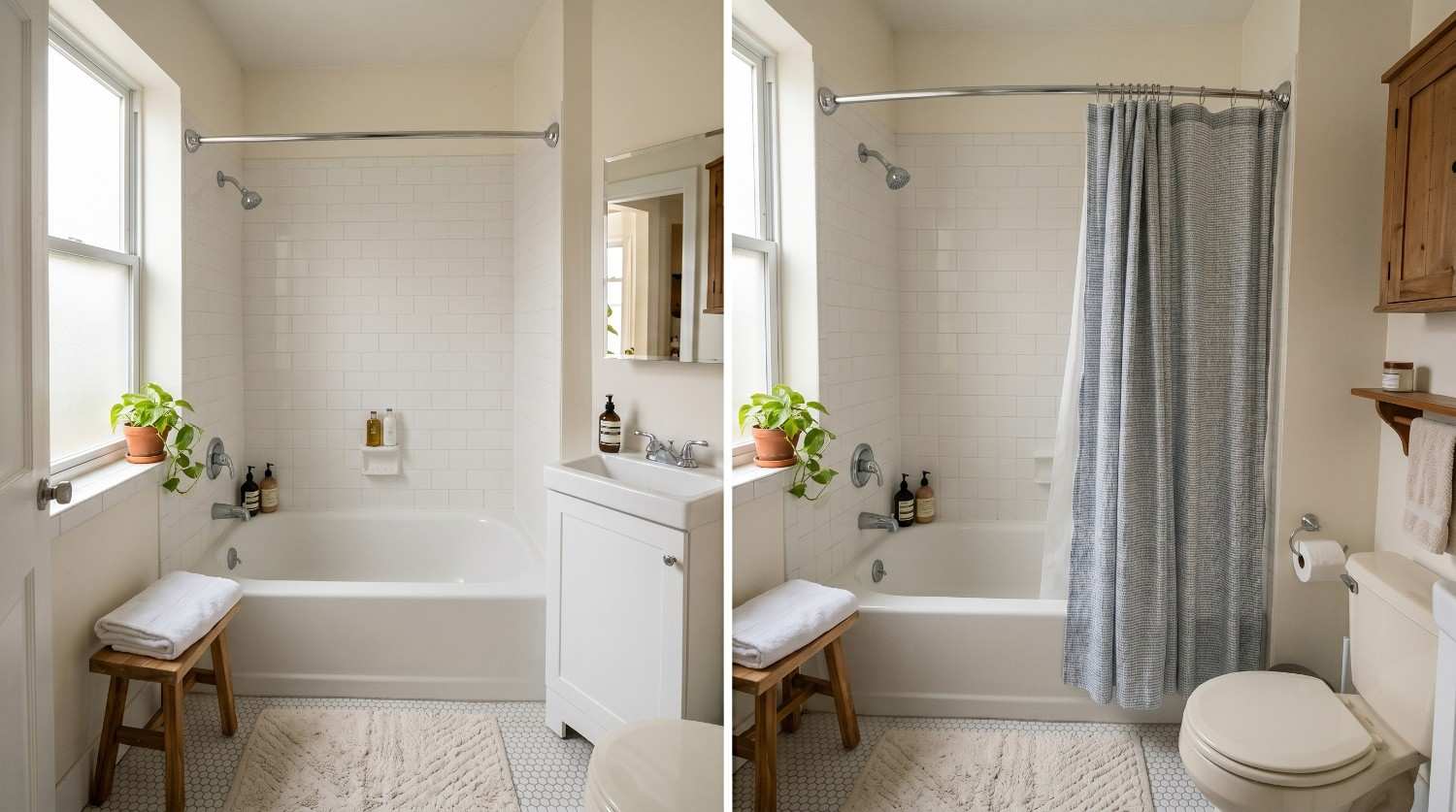
This one feels too simple to matter until you actually do it. A fabric curtain with brushed nickel rings costs $40–$80 and takes five minutes to swap out. A good pattern pulls attention away from dated tile. It photographs well. For $40, that's a hard argument to make against.
6. Peel-and-Stick Tile : $50–$150
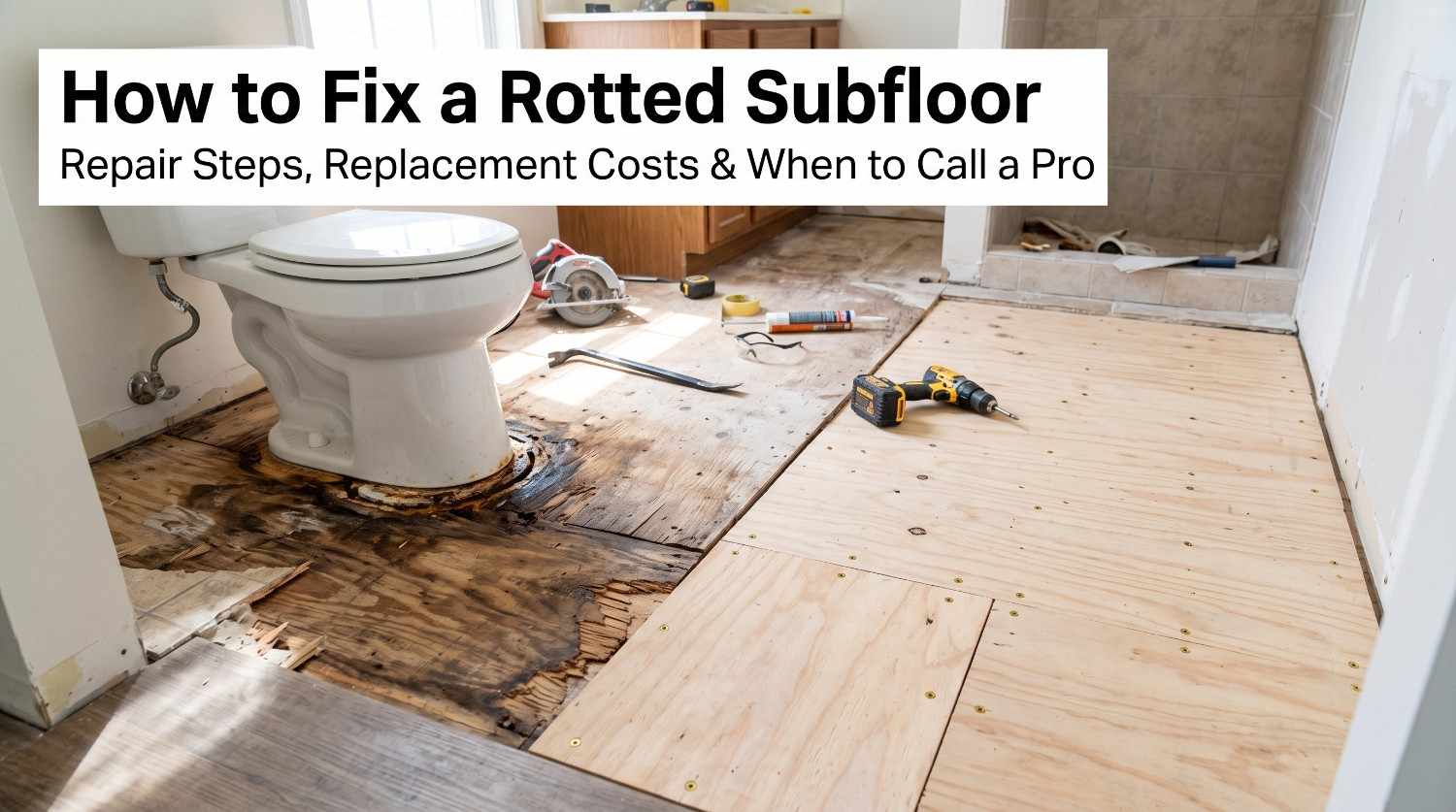
Goes over existing flat flooring or walls — no thinset, no demolition, no professional. A small bathroom floor takes about three hours and $50–$150 in materials. LifeProof and TrafficMASTER make good DIY options that actually hold up. The limitation: if your floor has any flex or high spots, the adhesive fails over time. Fix the subfloor first.
7. Faucet : $100–$300
Brushed nickel or matte black, $100–$300, doable for anyone who knows where the supply valve shutoffs are. Get a drain cover in the same finish while the order is open. A new faucet does more for the vanity's appearance than most people expect it's one of those changes that makes the room look purposeful rather than neglected.
8. Vanity Repaint : $50–$100
Before you spend $400 on a replacement, try painting the one you have. Sand lightly, prime with a cabinet-specific bonding primer, then two coats of cabinet paint. Benjamin Moore Advance and Sherwin-Williams Emerald Urethane both survive bathroom humidity. Add new hardware on top. Most people can't tell it's the same piece.
9. Tub Reglazing : $300–$650
Most homeowners skip this because they don't know it exists. Reglazing also called resurfacing refinishes the tub's surface for $300–$650 professionally. A full replacement runs $1,992–$9,369 including removal, surround, and installation (Angi). If the tub is structurally sound, reglazing gives it another 10–15 years.
One caveat: don't use abrasive cleaners afterward. They scratch through the coating and you're back to square one.
10. Regrout : $200–$500
Retiling an average bathroom costs $2,000 (Angi). If the tile itself is fine but the grout looks stained or cracked, regrouting costs $200–$500 in materials and a weekend of work. You need a grout removal tool, new grout, and a float. That's it. The result looks like a new tile job — because to anyone who doesn't inspect it closely, it basically is one.
Where to Spend, Where to Cut
The math works out like this: put an extra $500 into tile and a decent faucet. Cut $2,400 by going prefab on the vanity, laminate on the counter, and LVT on the floor. You get roughly the same room and $1,900 stays in your account.
What You Can Do Yourself vs. What You Shouldn't
These are safe to DIY no permit required in most areas:
Painting (walls, ceiling, vanity, cabinets)
Replacing hardware, towel bars, mirrors, toilet paper holders
Vanity light fixture flip the breaker, take your time
Peel-and-stick tile or click-lock LVT flooring
Showerhead and faucet shut off supply valves first
Regrouting
Mirror replacement
Call a licensed professional for these:
Pipe relocation or any new rough-in
Electrical panel work or adding circuits
Tile in wet areas shower and tub surrounds need proper waterproofing membrane installed under the tile. Skip this step and you're looking at $2,000–$10,000 in wall and floor damage once the water finds the gaps
Full demolition with structural changes
Toilet rough-in relocation
A general contractor on a full remodel adds 10–20% to your total (Angi). Get at least three quotes, not one, not two. The same project can cost 50% more in California than in Alabama. Labor markets vary more than most people realize.
Does It Add Home Value?
Yes, and the cheaper the remodel, the better the return.
Mid-range bathroom remodels return 73.7% of their cost at resale. Upscale remodels return 36% (2024 Cost vs. Value Report). The counterintuitive part: a $10,000 cosmetic refresh often gets you more back than a $40,000 custom renovation. Too much personalization narrows your buyer pool.
Ninety-four percent of real estate agents say updated bathrooms make homes easier to sell (NAR). If you're updating before listing, Tier 1 cosmetic work is the right call paint, hardware, lighting, fresh grout. Under $1,000 total. It photographs well and that's what matters at the listing stage.
Frequently Asked Questions
How much does a budget friendly bathroom remodel cost?
Under $1,000 for cosmetic-only work paint, hardware, lighting. $1,000–$5,000 for a partial remodel that keeps the existing layout. $5,000–$12,000 for a full standard update. The national average across all types is $12,132 (Angi, 2025).
Can you actually do a bathroom for $5,000?
Yes, but you have to stay disciplined. Keep the layout, no plumbing moves. Use a prefab vanity ($300–$600), LVT flooring ($2–$10/sq ft), a new toilet ($150–$375), and a new faucet ($100–$300). Skip tile work in the shower the moment you hire a tile contractor, the budget moves fast. Paint and hardware, do yourself.
What's the cheapest way to redo a bathroom?
Paint everything: walls, ceiling, vanity, and outdated tile if needed using tile-specific paint. Under $200 in materials. Add new hardware ($30–$100) and a shower curtain ($40). You've reset the room for under $350 with no demo and no contractor involved.
What shouldn't I try to DIY?
Plumbing relocations, electrical panel changes, and tile in wet areas. The tile waterproofing issue is the one that bites people most often bad installation behind a shower or tub causes wall and floor damage that runs $2,000–$10,000 to repair. Most municipalities also require permits for that work.
How long will a bathroom remodel take?
One to four weeks for most projects. About 65% of homeowners finished in that window (This Old House, 2026 survey of 1,000 homeowners). The usual culprits when it runs long: contractor scheduling, backordered fixtures, and something unpleasant discovered once the walls are open.
Does remodeling actually increase home value?
Mid-range remodels return 73.7% at resale; upscale remodels return 36% (2024 Cost vs. Value Report). A $10,000 refresh gets you more back than a $40,000 renovation in most markets because it appeals to more buyers and doesn't price out the neighborhood.
What hidden costs should I plan for?
Demolition ($1,000–$2,300), permits ($100–$1,000), plumbing surprises, and water damage behind existing tile or drywall. Build 10–20% contingency into your number before you start. One in three homeowners goes over budget almost never by choice, almost always because of something they didn't know was there.