
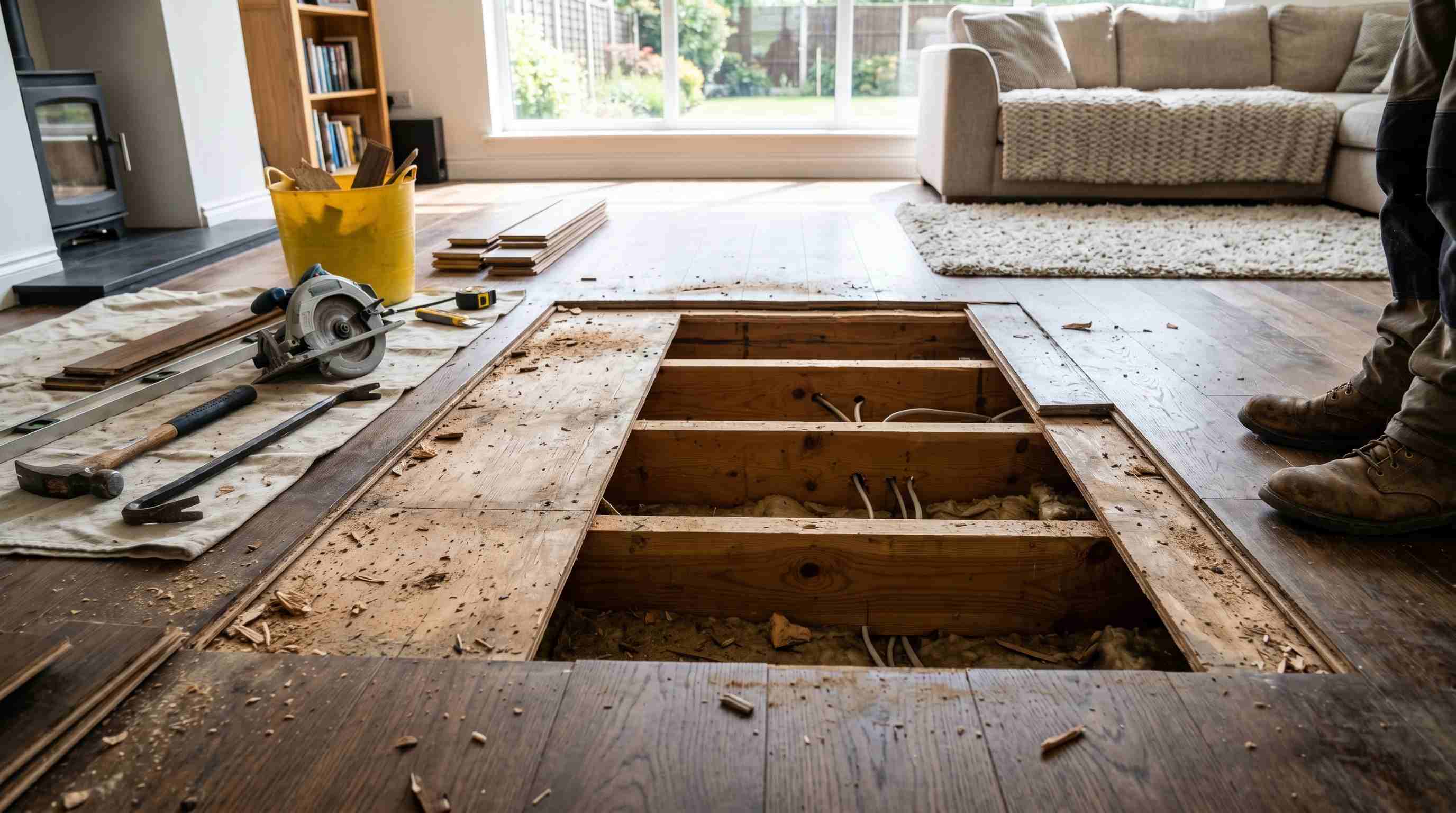

Floor repair costs range from under $50 for a minor scratch you fix yourself to over $20,000 when a sagging floor turns out to be a joist problem. Most homeowners fall somewhere in the $200–$3,000 range. Where you land depends entirely on three things: the flooring material, the type of damage, and most importantly which of the three layers of your floor is actually affected.
Getting that diagnosis right before calling anyone is how you avoid being quoted for work you don't need.
Floor Repair Cost Summary (2026 National Averages)
Professional labour typically runs $60–$120 per hour. Always collect at least three written estimates for anything beyond minor surface work.
The Three Layers: Why Floor Repair Is Never Just About the Surface
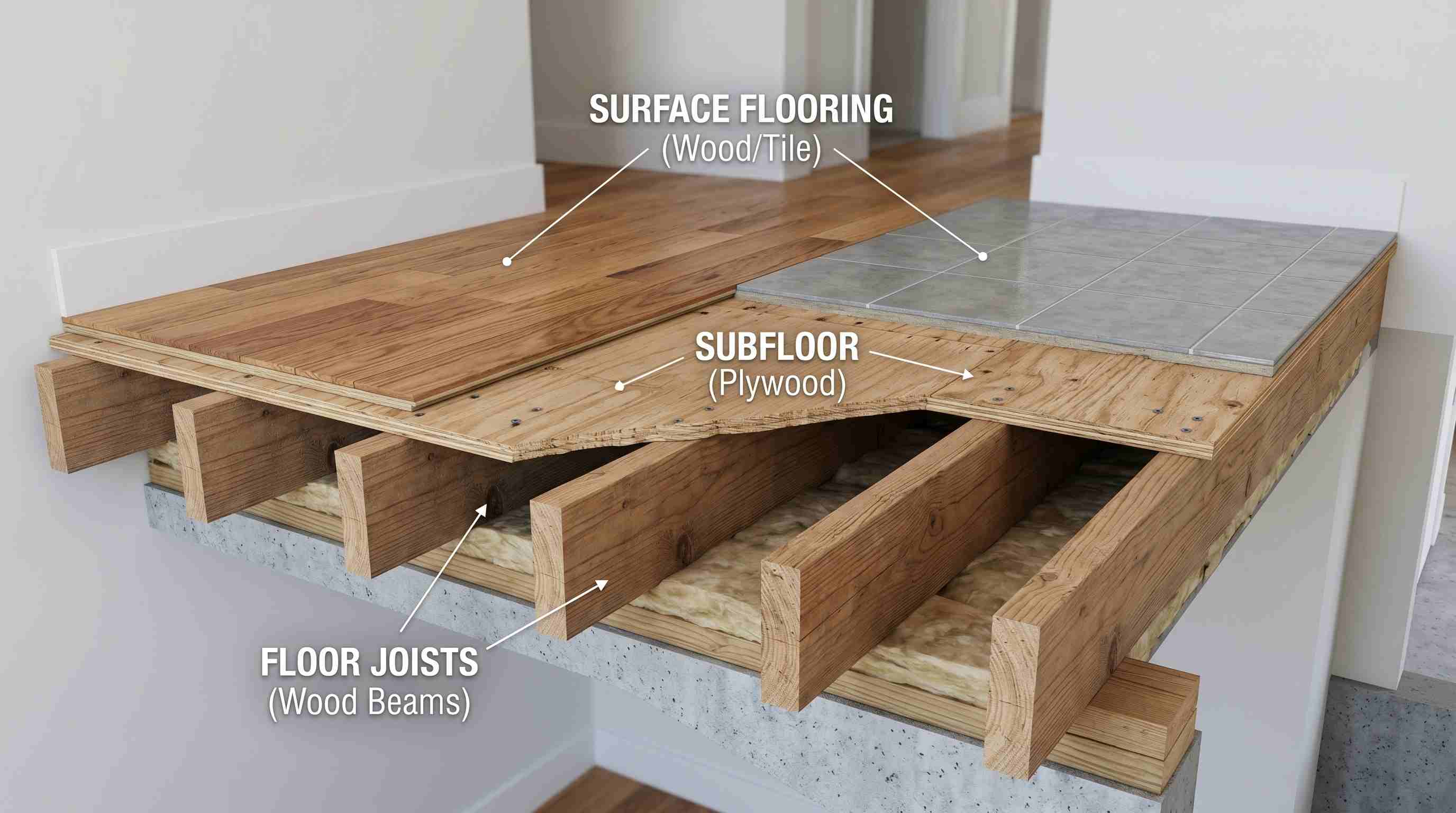
Most homeowners think of floor repair as fixing what they can see. In reality, every floor has three layers, and the cost and complexity increase dramatically as you move down:
Layer 1: Surface flooring
The material you walk on: hardwood, laminate, vinyl, tile, or carpet. Surface-level damage (scratches, dents, minor water staining) is the cheapest to repair and most DIY-friendly.
Layer 2: Subfloor
The plywood or OSB sheet layer that sits on top of the joists and below the finished floor. Subfloor damage typically from water infiltration or long-term neglect significantly raises repair costs. Subfloor repair runs $500–$1,200 per room for most jobs, climbing to $35–$80 per square foot for severely damaged areas.
Layer 3: Floor joists
The structural framing that supports everything above it. Joist problems are uncommon but expensive: $2,000–$10,000 per 200–500 square foot room, and in serious cases approaching $20,000. Joist repair is always a professional job and often requires a building permit.
The practical implication: before you budget for any floor repair, the first question is "which layer is damaged?" A floor that feels spongy or soft underfoot is telling you the problem is in Layer 2 or Layer 3 not the surface you're standing on.
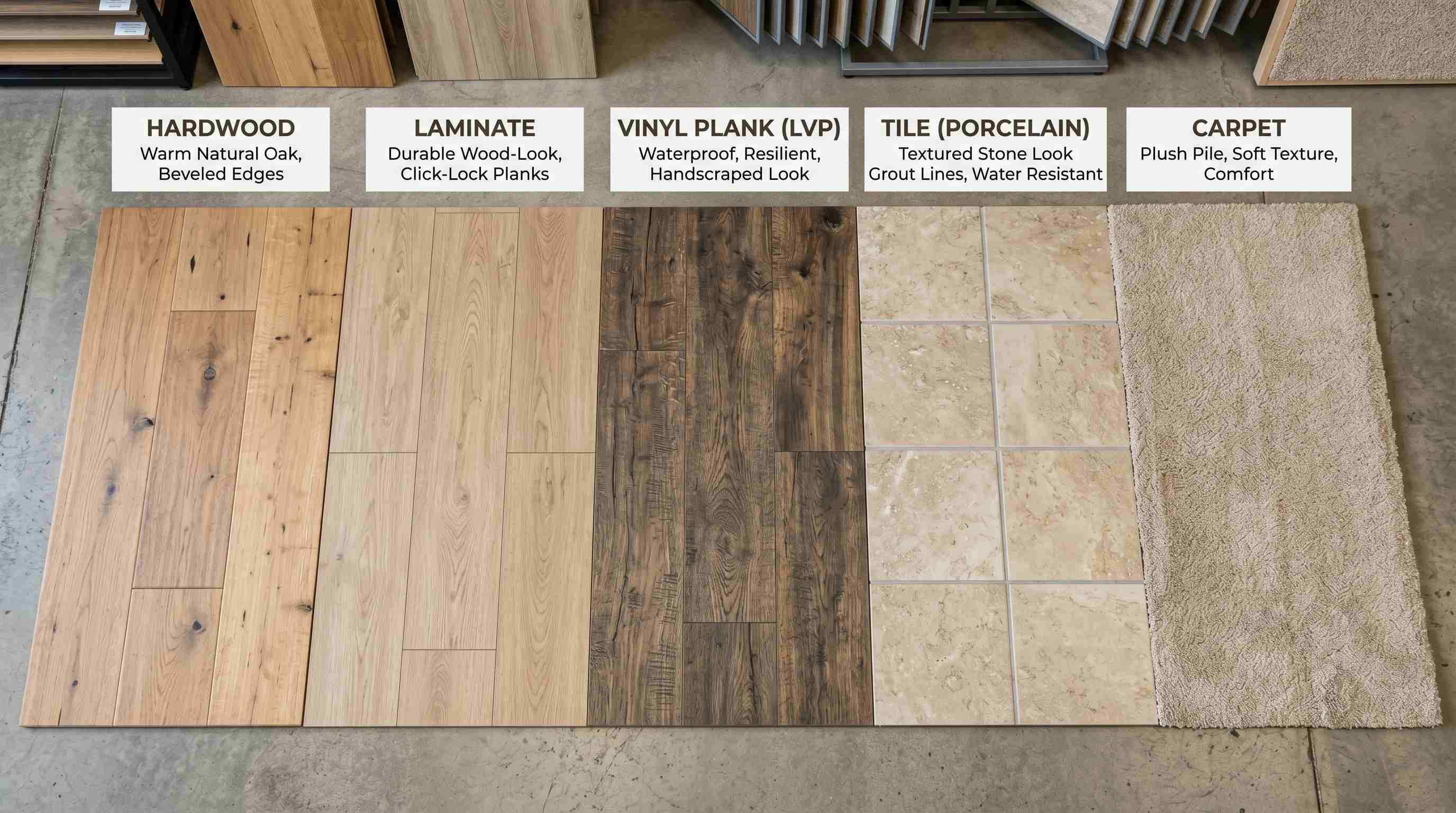
Which Floors Can Be Repaired And Which Have to Be Replaced
This table determines your repair path before cost even enters the conversation. If you have laminate and the damage is widespread, replacement is the only structural option knowing this upfront prevents spending money on quotes for work that cannot achieve a lasting result.
Hardwood Floor Repair
Hardwood is the most forgiving floor material. Solid hardwood can be sanded and refinished many times over its lifespan. Engineered hardwood has a thinner wear layer typically allowing one or two refinishes before the veneer becomes too thin.
By damage type:
Scratches. Light surface scratches that haven't cut through the finish can often be buffed and recoated: $150–$400 for a professional. Deep scratches or gouges that penetrate the wood itself require sanding, staining, and finish matching: $400–$1,000 or more, depending on how many boards are affected and how difficult the finish match is.
Cupping and crowning. Cupping (edges curl upward) and crowning (centre of the plank is higher than the edges) are both moisture-related. The repair: identify and eliminate the moisture source first then sand and refinish. Without fixing the moisture problem, the floor will move again within months regardless of how good the repair looks. Cupping repair runs $2–$6 per square foot for sanding and refinishing.
Water damage. Surface water caught within 24–48 hours may only require board replacement and finish blending: $800–$2,000 for moderate damage. Prolonged moisture exposure typically means subfloor involvement: $2,000–$4,000+. Severe water damage with joist damage: $5,000 and up.
Board replacement. Replacing individual damaged boards costs $100–$350 per board. The visible cost is relatively contained; the actual cost driver is to finish blending. Matching the stain and protective coating of aged surrounding boards to new replacement wood requires skill and time. On older floors with decades of patina, a perfect match is often not achievable; a close match within the context of the room is the realistic goal.
Repair vs Refinish : The 50% Rule
When hardwood floor repair costs approach or exceed 50–70% of what full refinishing would cost, refinishing the entire room typically delivers better value. Refinishing at $2–$8 per square foot produces a consistent result across the whole floor. Spot repairs at scale become expensive, increasingly visible patch jobs.
In practice: if you're replacing several boards in a 200 sq ft room, get a refinishing quote alongside the repair quote. The gap is often smaller than expected, and the result of refinishing is dramatically better.
Laminate Floor Repair
Laminate cannot be refinished or sanded. The material is a photographic layer over the fiberboard once damaged, the affected planks must be replaced.
Minor surface damage (small scratches, chips) can be concealed with laminate repair kits ($15–$25) or matching crayons. These are cosmetic solutions, not structural ones.
Plank replacement works well on click-lock floating floors; individual planks can be unlocked and swapped without disturbing the whole floor. If the laminate was glued down, replacement is significantly more involved.
Water damage is the laminate's most serious vulnerability. The fiberboard core absorbs moisture quickly, swelling and losing structural integrity. Swollen planks cannot be fixed; they must be replaced. If water has reached the subfloor beneath the laminate, the laminate itself may be dry while the structural damage continues below. Press on areas that feel slightly soft or springy; that sensation indicates compromised subfloor, not just surface damage.
Laminate repair projects average around $1,240 professionally. DIY plank replacement on click-lock systems is achievable for competent DIYers.
Vinyl and Luxury Vinyl Plank (LVP) Repair
Vinyl and LVP are waterproof as the surface water does not penetrate the plank itself. However, water can seep through seams, edges, and expansion gaps, reaching the subfloor below. This is why "waterproof flooring" and "waterproof installation" are different things.
For surface damage (tears, cuts, gouges): small repairs are difficult to make invisible because vinyl is printed cutting a patch from a different area of the floor can work if the pattern allows.
For lifted or loose planks: most commonly caused by moisture below or a failed adhesive bond. Dry the area completely, confirm the subfloor is sound, and re-adhere or re-click the planks.
For section replacement: cut-and-replace is the standard approach. Matching discontinued vinyl patterns is the main challenge this is where having leftover tiles from the original installation becomes genuinely valuable.
Tile Floor Repair
Hairline cracks in ceramic or porcelain tile can be filled with two-part clear epoxy ($10–$40 DIY). Apply with a toothpick, cure 10–15 minutes, sand flush. The crack line remains faintly visible but is sealed against moisture infiltration.
Broken tiles require full removal and replacement. Cost: $50–$150 per tile professionally, depending on accessibility and matching difficulty.
Grout repair is often a standalone project crumbling or stained grout does not indicate tile damage. A grout saw removes old material; matched new grout is applied and sealed. A full regrout for a bathroom floor is $200–$500 professionally.
When tiles crack repeatedly in the same area: the cause is almost always subfloor movement. The tile itself is not the problem. Repairing tiles without investigating and stabilising the subfloor means replacing them again within a few years.
Carpet Repair
Carpet is the lowest-cost material to repair. The national average for carpet repair is $207.
Stain removal by professional cleaning: $40–$90 per room. For stains that resist cleaning, patch repair cutting out the stained section and inserting a matching piece from a spare or inconspicuous area costs $150–$300.
Tears and burns: patching applies here as well. Carpet stretching for buckling and rippling (caused by high humidity or poor original installation) runs $100–$300 per room.
When to replace: mold in carpet or carpet padding is not treatable the material must go. Odours from pet urine that have penetrated through the carpet into the padding and subfloor also typically require full replacement.
Squeaky Floor Repair
A squeaking floor is not always a cosmetic nuisance; it is often the first audible sign of subfloor separation from joists or loosening of structural components.
The repair method depends on accessibility:
From below (crawl space or unfinished basement): A contractor injects construction adhesive between the subfloor and the top of the joist, or installs wood blocking to reinforce the connection. This is the most effective and least invasive approach: $300–$800.
From above (finished living space): Options include driving screws through the floor into the joists (covered or concealed), using a Counter Snap kit for hardwood (a breakaway screw system that leaves a small plug), or lubricating between boards with powdered graphite for minor friction-based squeaks. Above-floor access: $600–$1,500.
When squeaks reveal larger problems: A squeak that travels across a significant area, or that intensifies over time, often indicates the subfloor itself is failing. Inspect adjacent areas by pressing firmly if you find soft spots or spongy areas in the general vicinity, the repair scope is larger than a single squeak.
Water Damage Floor Repair: The 24-48 Hour Rule
Water damage is the most time-sensitive floor repair situation. Mold can begin growing within 24–48 hours of sustained moisture exposure, and subfloor materials degrade with every additional hour they remain wet. The cost-of-waiting escalates faster than almost any other home repair scenario.
Act within 24–48 hours:
Remove all standing water (wet vacuum)
Place fans and dehumidifiers to aggressively dry the area
Do not place anything on the wet floor
If the floor is damp, check whether water has reached the subfloor press firmly and listen for squelching
A surface water event caught within the 24-hour window: $800–$2,000 for drying, board replacement, and blending. The same event left for a week: $5,000–$10,000+ once subfloor replacement and possible mold remediation enter the picture.
Moisture-related flooring damage types:
Cupping: hardwood edges curl up; moisture imbalance (wetter below than above)
Crowning: hardwood centre rises; opposite moisture condition
Buckling: planks arch or lift completely off the subfloor; severe moisture or standing water
Warping: planks twist or bow; extended moisture exposure
Soft spots: spongy feel underfoot; subfloor compromise
For any moisture event affecting a significant area of flooring, have the subfloor moisture content tested before covering it again. Covering a damp subfloor with new flooring locks in the moisture and guarantees a repeat failure.
Sagging and Uneven Floors: When to Take It Seriously
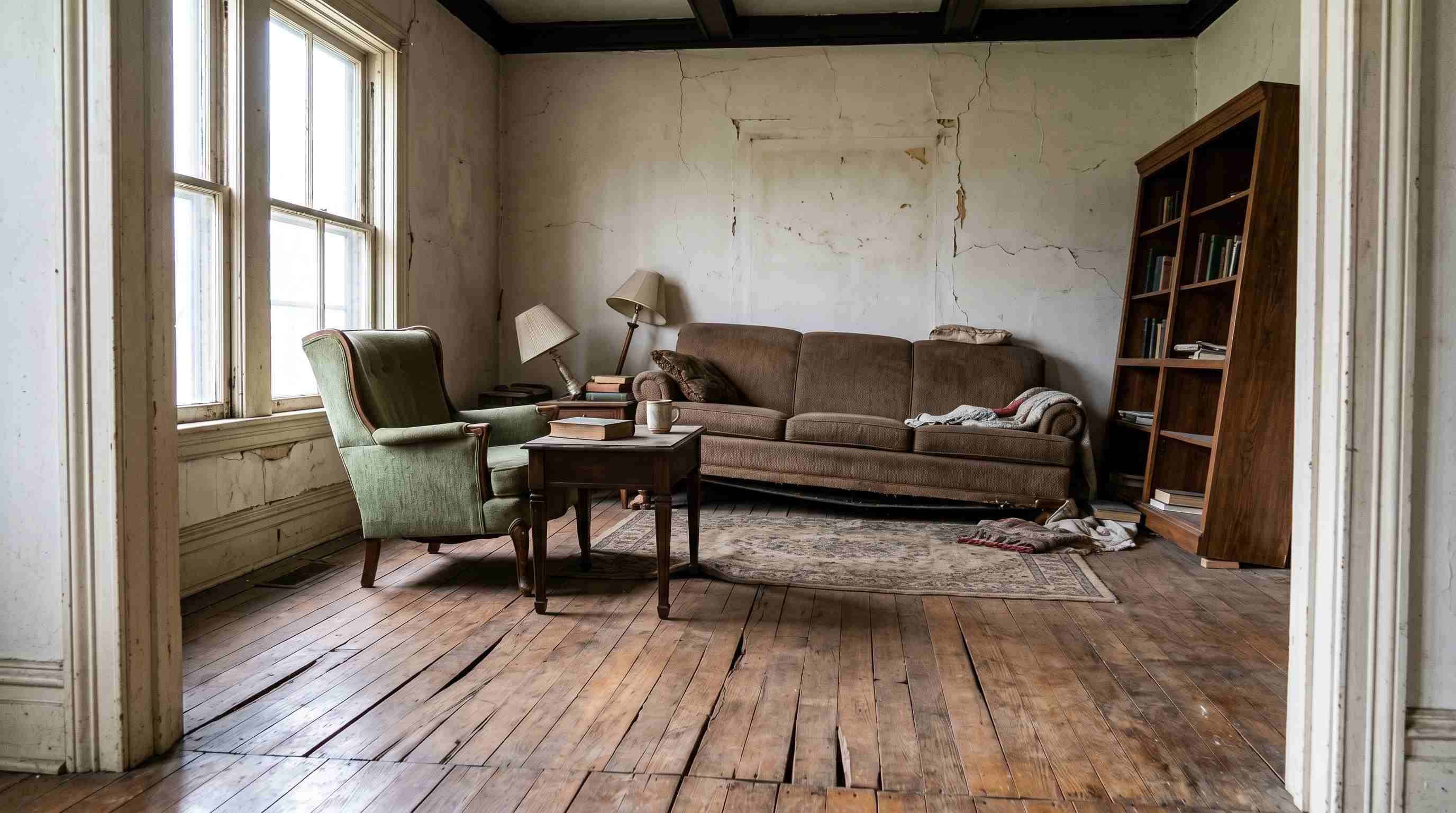
A floor that sags noticeably in one area, or that has developed a visible slope since the home was built, is communicating a structural problem. This is not a surface repair.
Causes range from settled foundation piers (relatively manageable: $1,000–$3,000) to compromised floor joists from water damage or pest damage ($2,000–$10,000+) to foundation movement ($5,000–$20,000+). Any floor that sags requires a professional structural assessment before any other repair work begins.
Signs that indicate structural floor problems: doors in the room suddenly sticking or not latching correctly; visible cracks running from floor toward corners of adjacent walls; floor deflection (bounce) when you walk.
The Decision Framework: Repair, Refinish, or Replace?
Choose repair when:
Damage is isolated to a small area (under 25–30% of the floor)
The floor material can be repaired or refinished
You can source matching materials
The subfloor and joists are structurally sound
Choose refinishing (hardwood only) when:
Wear affects more than 30% of the floor
Multiple spot repairs are needed and their combined cost approaches 50% of refinishing the whole room
You want a consistent appearance across the entire floor
Choose replacement when:
Repair costs exceed 50% of new floor installation cost
The material cannot be refinished (laminate, vinyl) and damage is widespread
Subfloor or joist damage has been discovered and requires significant work
You cannot find matching replacement material
Mold is present in carpet or subfloor
DIY vs Professional Floor Repair
Suitable for DIY:
Minor scratch and scuff repair on any floor type (markers, stain pens, repair kits)
Small tile chip fills with epoxy
Grout repair on tiles (grout saw + matched grout)
Carpet spot patching from spare material
Click-lock laminate or LVP plank replacement (single planks in accessible areas)
Powdered graphite for minor squeaks
Always hire a professional:
Hardwood board replacement with finish blending
Any water damage beyond a single small area
Subfloor repair or replacement
Joist issues (structural requires permit in most jurisdictions)
Sagging or noticeably uneven floors
Mold discovery during any repair
Frequently Asked Questions
How much does floor repair cost on average?
Floor repair cost ranges from $200–$6,000+ for most residential projects. Surface-only repairs (scratches, minor water stains) run $200–$1,200. Hardwood floor repair averages $1,077 nationally. Subfloor issues push total costs to $500–$3,000+. Labour runs $60–$120 per hour professionally. Always collect three quotes before committing.
What is the cost to repair a floor with water damage?
Water damage floor repair costs $8–$100 per square foot depending on severity. Surface-level water damage caught within 24–48 hours: $800–$2,000 for most rooms. Damage that has reached the subfloor: $2,000–$5,000+. Damage involving joists, mold, or structural framing: $5,000–$20,000. Speed of response is the single biggest cost variable.
Can laminate floors be repaired?
Laminate cannot be sanded or refinished the printed surface layer cannot be restored once damaged. Minor cosmetic damage can be concealed with repair crayons or kits. Damaged planks on click-lock systems can be individually replaced. Widespread damage to laminate typically requires full replacement.
When should I replace instead of repair?
Replace when: repair cost exceeds 50% of new floor installation; the material cannot be refinished and damage is widespread; you cannot source matching material; mold is present; or subfloor and joist damage makes the structural base unsound for re-installation of the existing surface.
How do I find a reliable floor repair professional?
Request NWFA (National Wood Flooring Association) certification for hardwood work. Get at least three written estimates with itemised scope. Verify general liability insurance. Ask specifically whether subfloor inspection is included in the assessment. Ask how they handle finishing matching a contractor who dismisses the challenge and doesn't fully understand hardwood repair.