
When it comes to remodeling your bathroom, the shower wall choice is one of the most important decisions. The wrong material can lead to water damage, mold growth, and expensive repairs. Acrylic and tile showers are two of the most popular options, each with its own pros, cons, and ideal use cases.
This guide will walk you through everything you need to know: cost, durability, maintenance, installation, design options, and which shower wall works best for your bathroom type. By the end, you’ll know whether an acrylic shower vs tile shower is the right choice for your space.
Why Shower Wall Choice Matters
Your shower walls are more than just a decorative feature. They protect your bathroom structure from water damage, prevent mold and mildew, and impact the longevity of your remodel. Choosing the right shower wall material ensures:
Durability: Long-lasting surfaces that withstand moisture and daily use
Maintenance Ease: Low-effort cleaning and upkeep
Aesthetic Appeal: A design that complements your bathroom style
Cost Efficiency: Avoid expensive repairs caused by water or mold damage
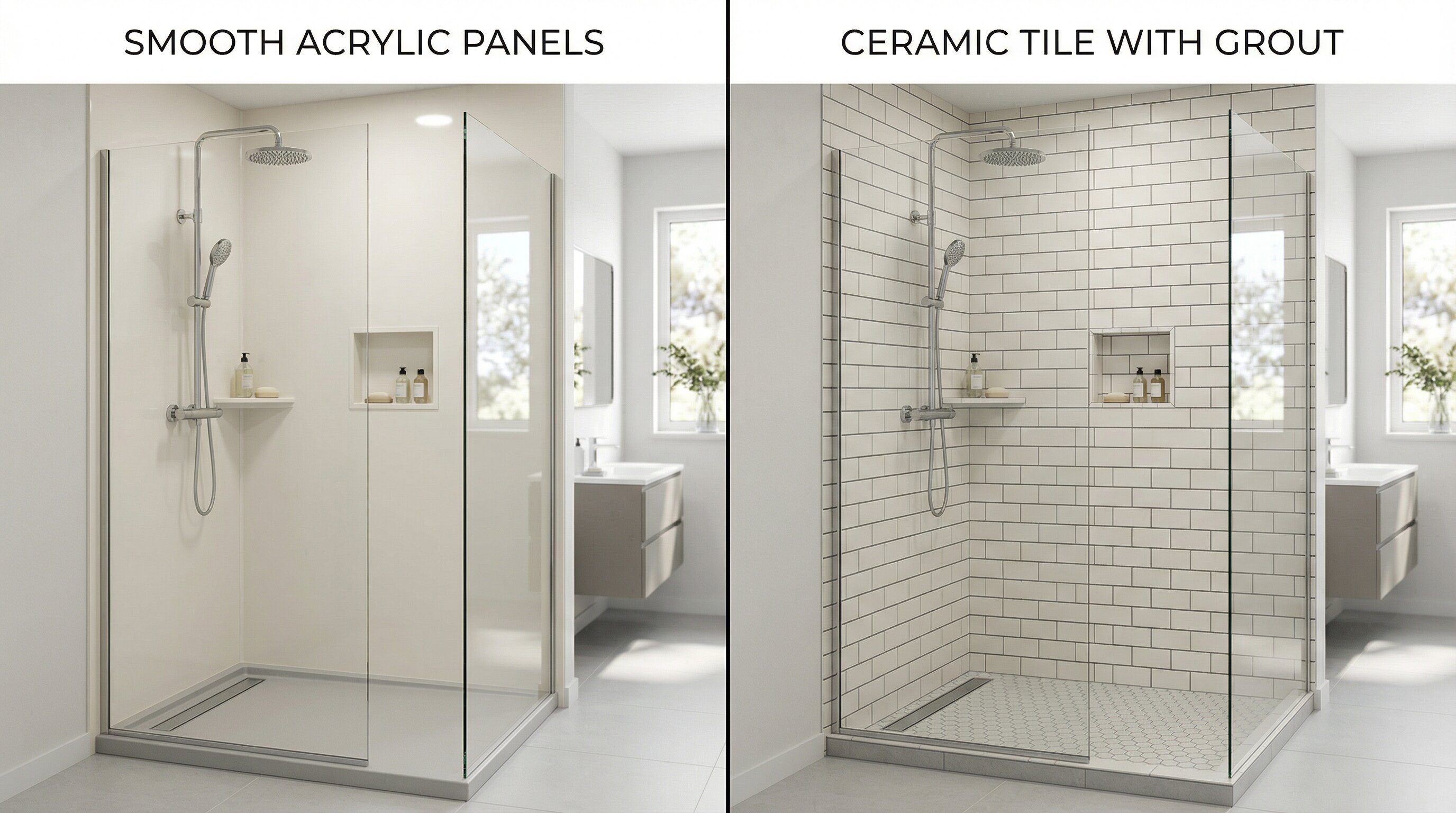 Acrylic Showers: Features, Pros & Cons
What is Acrylic?
Acrylic shower walls are made from molded plastic sheets that are lightweight, smooth, and non-porous. They can come in single sheets or panels, which are easy to install in new or remodeled bathrooms.
Pros of Acrylic Showers
Easy Installation: Lightweight panels install faster than tile.
Low Maintenance: Non-porous surfaces resist mold and mildew.
Fewer Seams: Reduces cleaning time and mold risk.
Cost-Effective: Usually less expensive than custom tile.
Variety of Finishes: Available in different textures, colors, and patterns.
Cons of Acrylic Showers
Less Customizable: Limited design options compared to tile.
Susceptible to Scratches: Can dent or scratch more easily than tile.
Potential Yellowing: Over time, acrylic may discolor if exposed to harsh cleaners or UV light.
Ideal for: Small bathrooms, quick remodels, low-maintenance households.
Tile Showers: Features, Pros & Cons
What is Tile?
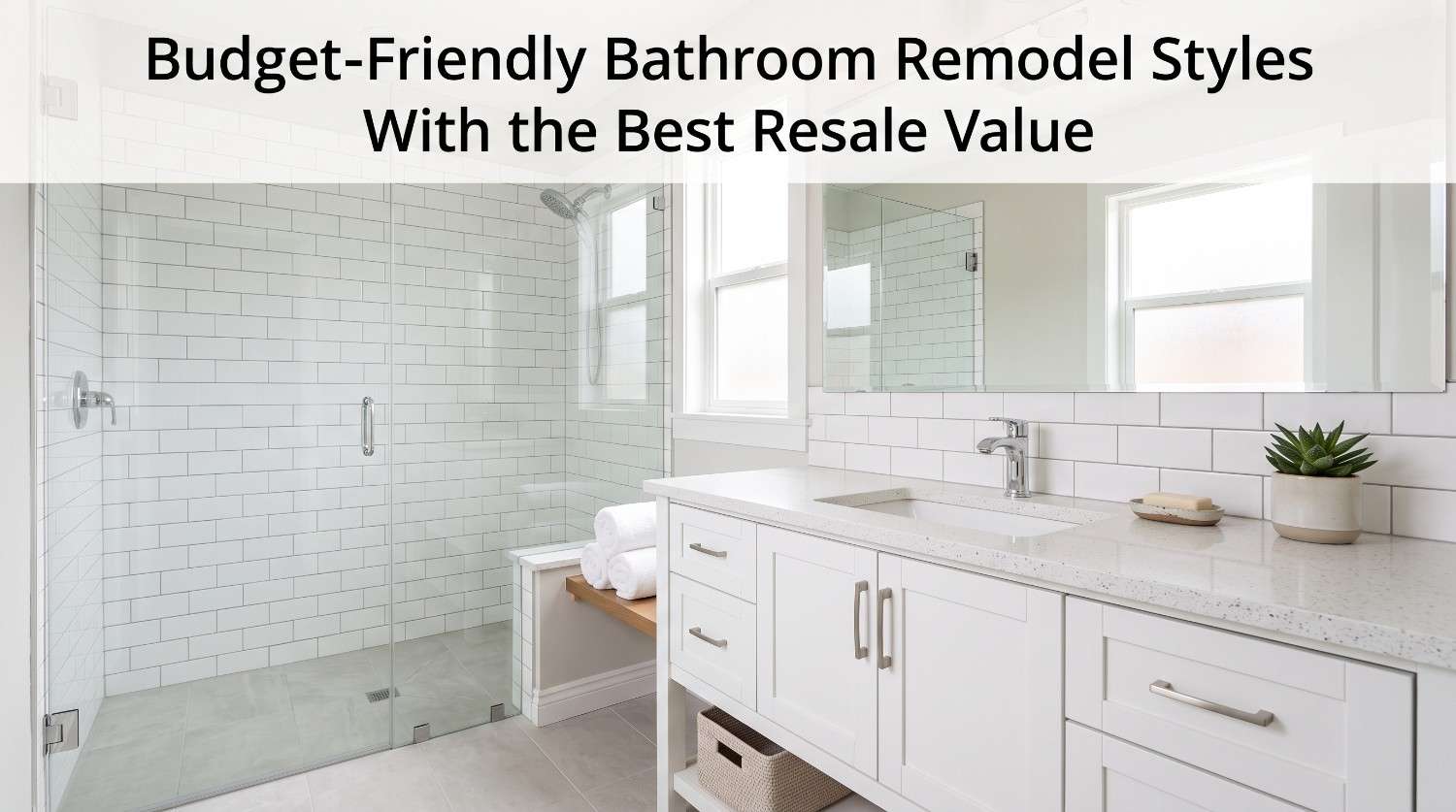
Tile showers are built with ceramic, porcelain, or natural stone tiles set on a waterproof substrate. Tiles offer endless design options, from classic subway tiles to luxurious mosaic patterns.
Pros of Tile Showers
Highly Customizable: Colors, patterns, and textures for a unique look.
Durable & Long-Lasting: Can withstand heavy use for decades.
High Resale Value: Custom tile showers add to home value.
Cons of Tile Showers
Complex Installation: Requires a professional for proper waterproofing and layout.
Grout Maintenance: Grout can develop mold if not sealed properly.
Higher Cost: Material and labor costs are typically higher than acrylic.
Ideal for: High-end designs, long-term investment, and bathrooms that prioritize aesthetics and customization.
Acrylic vs Tile Shower: Side-by-Side Comparison
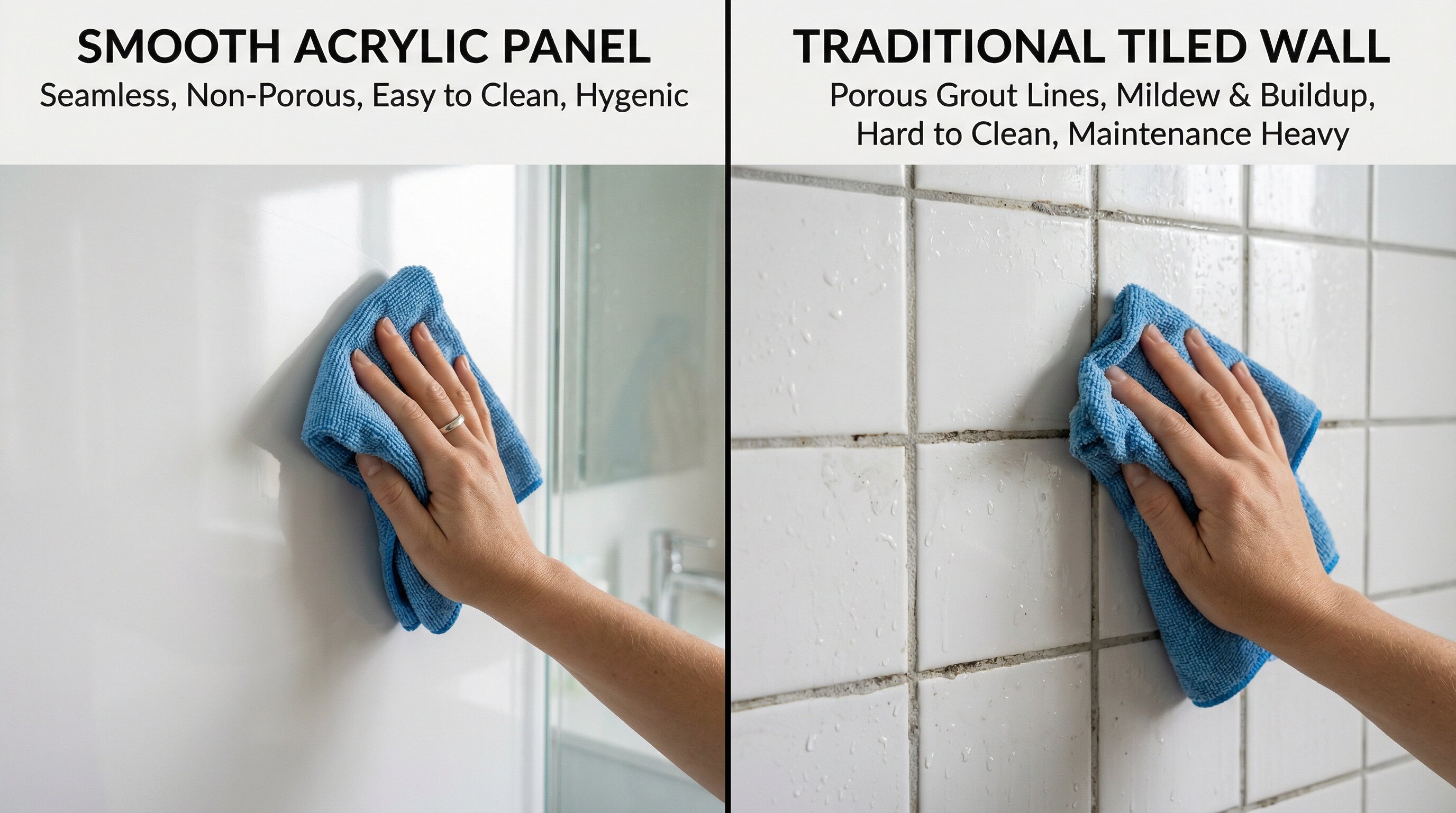
Installation Considerations
DIY vs Professional: Acrylic panels are often easier for DIY, while tile requires skilled labor.
Waterproofing: Both require proper waterproof membranes, especially behind tile walls.
Plumbing: Ensure alignment for wall-mounted fixtures, drains, and valves.
Wall Preparation: Smooth surfaces are critical for acrylic adhesion, while tile needs a level, waterproof substrate.
Cost Breakdown & Budget Planning
Acrylic Showers: Material + labor ranges $500–$1,500; low ongoing maintenance cost.
Tile Showers: Material + labor ranges $1,500–$5,000; grout sealing and cleaning add ongoing costs.
Tip: Factor in size, custom features, and long-term maintenance when budgeting.
Maintenance & Longevity
Acrylic: Wipe clean weekly; avoid abrasive cleaners. Expected lifespan: 10–15 years.
Tile: Clean grout weekly; reseal grout annually to prevent mold. Expected lifespan: 20+ years.
Tip: Choose material that matches your willingness to maintain and bathroom moisture levels.
Choosing the Right Shower Wall for Your Bathroom
Small Bathrooms: Acrylic panels save space, reduce maintenance, and install quickly.
Large or Luxury Bathrooms: Tile offers endless design options, higher durability, and premium appeal.
High-Moisture Areas: Acrylic is ideal for minimizing mold risk.
Budget Remodels: Acrylic keeps costs low without sacrificing functionality.
Frequently Asked Questions
Is an acrylic or tile shower easier to clean?
Acrylic showers are easier to clean because their smooth, non-porous panels have fewer seams, which prevents dirt and soap scum buildup. Tile showers require regular grout cleaning and periodic sealing, as grout lines are porous and can trap mold and mildew if not properly maintained.
Which shower wall is more durable?
Tile showers are generally more durable and can last decades if properly installed and maintained. Acrylic is moderately durable it resists water and stains well but can scratch, dent, or discolor over time, especially with heavy use or harsh cleaning products.
How much does a tile shower cost compared to an acrylic shower?
Acrylic showers typically range from $500–$1,500, making them a cost-effective option for smaller or budget-conscious remodels. Tile showers are more expensive, generally $1,500–$5,000, due to material, labor, and installation complexity, particularly for custom designs or natural stone tiles.
Can I DIY install an acrylic shower wall?
Yes, acrylic panels are lightweight and often come in pre-formed sheets, making them suitable for DIY installation. Tile showers, however, require precise waterproofing, grout work, and sometimes a waterproof substrate, which usually makes professional installation the safer and more reliable option.
Does tile develop mold more than acrylic?
The tile itself is water-resistant, but grout lines are porous and can harbor mold and mildew if not sealed and maintained. Acrylic showers have seamless panels with minimal joints, which reduces moisture trapping and makes mold growth far less likely, making them ideal for high-humidity bathrooms.
Can acrylic showers be customized like tile showers?
Acrylic showers offer a limited range of colors, textures, and pre-formed designs. Tile showers provide virtually unlimited customization options, including patterns, mosaics, and natural stone finishes, allowing for a completely unique look tailored to your bathroom design.
Conclusion
Choosing between an acrylic vs tile shower comes down to your bathroom size, budget, maintenance willingness, and design goals. Acrylic is ideal for small spaces, low-maintenance households, or budget-conscious remodels. Tile is perfect for larger bathrooms, high-end designs, and long-term durability. By evaluating cost, installation, maintenance, and aesthetic preferences, you can select the shower wall that keeps your bathroom functional, stylish, and mold-free for years.