
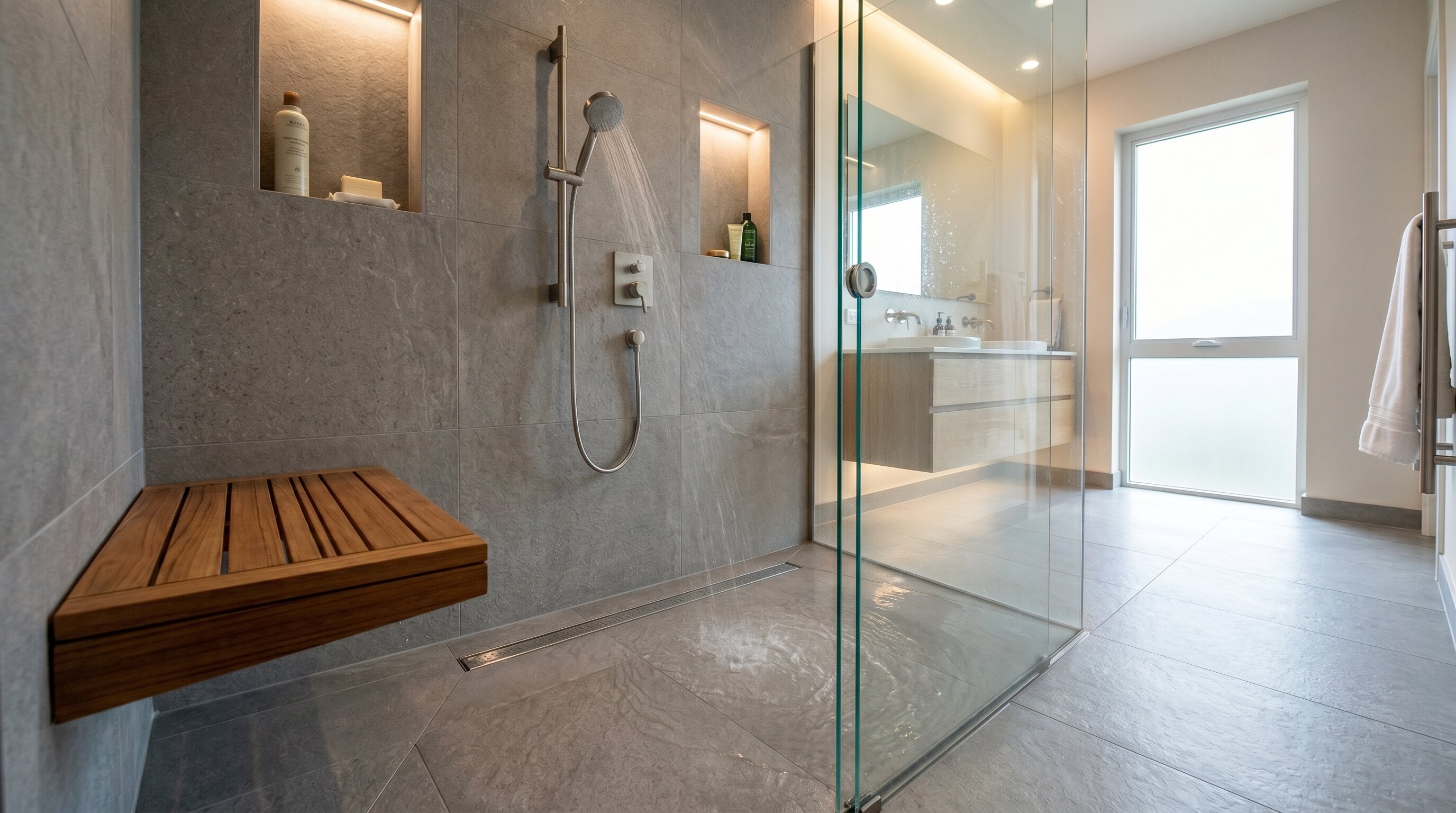
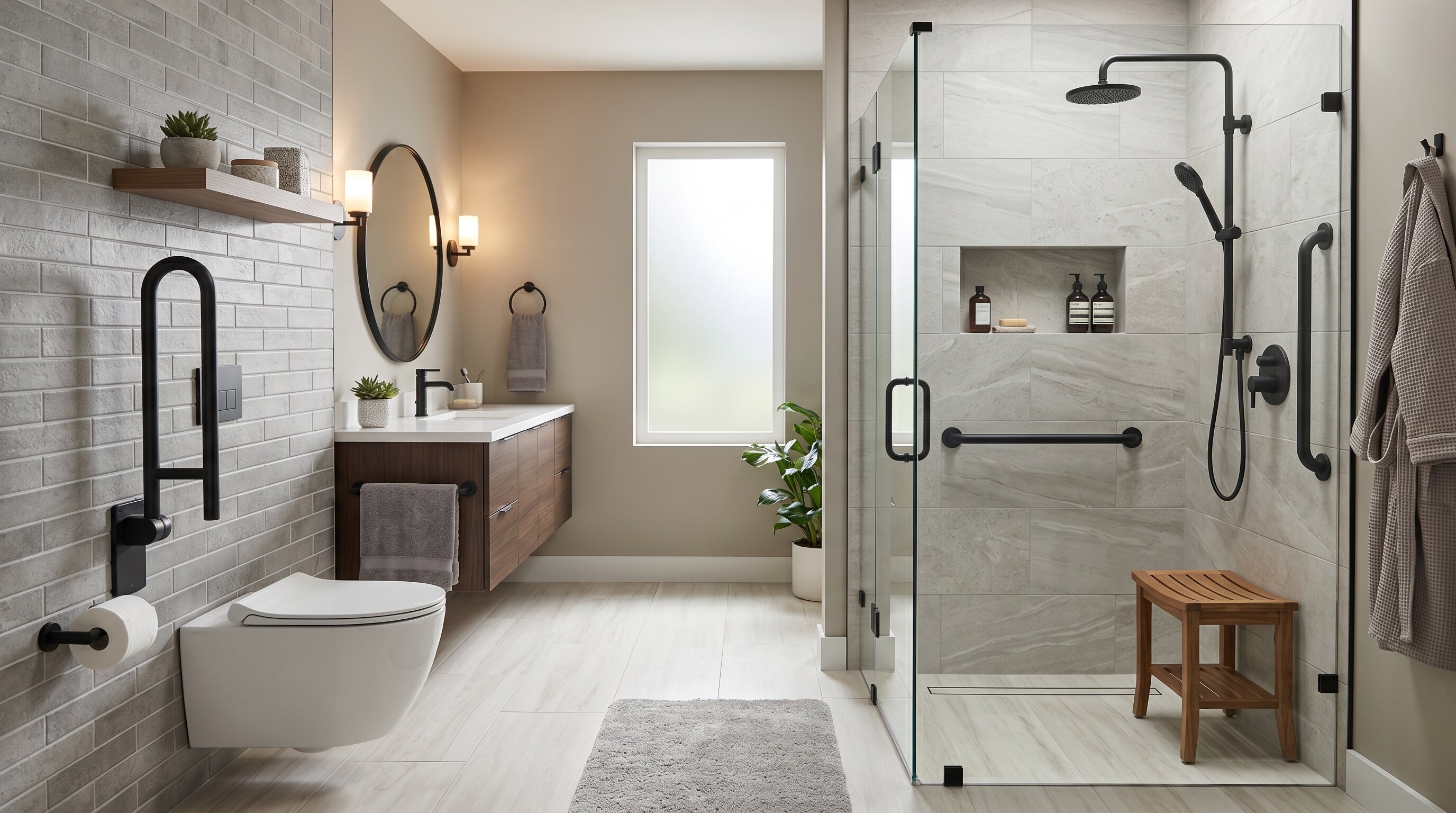
The bathroom is where most falls happen. Not outside. Not on the stairs. The bathroom wet floor, hard edges on every surface, movements that strain balance even on a good day. Each year more than 3 million older adults are treated for fall-related injuries, and 81% of bathroom injuries are falls. That's the number that makes aging in place bathroom remodel planning worth taking seriously and the reason for doing it before there's a crisis to respond to matters. Most aging in place planning starts with ramps, stair lifts, and ground-floor bedrooms. The bathroom gets addressed last usually after a fall has already happened.That's the wrong order. Three things make it the highest-risk room: a wet floor, hard edges on every surface, and the specific movements bathing requires sitting down, standing up, stepping over thresholds which stress balance and joints in ways that other daily tasks don't. A loose bath mat on tile is a hazard that seems trivial right up until it isn't. The financial case for doing this early is the one most homeowners don't hear until too late. Assisted living costs $4,000–$8,000 per month on average in the U.S. A $20,000 bathroom remodel looks entirely different against that number. An accessible bathroom doesn't prevent every problem, but it delays the timeline for needing outside care sometimes by years. The most important structural decision in an aging in place bathroom, and the one worth protecting budget around if choices have to be made. No curb or a threshold under half an inch removes one of the most common trip points in the home and leaves the space usable by wheelchair or walker without any modification later. What it needs: a linear drain along one wall so water moves away from the entry, a built-in bench, walls reinforced for grab bars, a handheld showerhead on a slide bar, and non-slip tile. Plan for all of it during the original build. Retrofitting a bench or adding grab bar blocking after tile is down costs three times what it would have cost during construction. Installed cost: $4,000–$15,000. One thing worth saying plainly: a portable shower stool shifts on a wet floor. A built-in bench at 17–19 inches wheelchair seat height doesn't. The bench is not optional. Highest safety return per dollar of anything on this list. A grab bar near the toilet and inside the shower gives a stable handhold that can stop a stumble before it becomes a fall. Per the U.S. Access Board, they go at 33–36 inches above the floor and must hold 250 lbs which means solid blocking in the wall, not just drywall anchors. Cost: $85–$300 per bar installed. If grab bars aren't in the immediate budget, at least have the walls reinforced with blocking during the remodel. Installing a grab bar into a prepped wall later is a $100 job. Doing it into drywall that wasn't reinforced means opening the wall again. Modern bars come in brushed nickel, matte black, and bronze. Nobody visiting your bathroom is going to identify them as a medical feature. Comfort-height toilet Standard toilet seats sit at 14–15 inches. Comfort-height toilets sometimes called ADA-height sit at 17–19 inches, which is roughly chair height. The difference in effort required to sit down and stand up, especially for someone with arthritic knees or weakened hips, is significant. Options: a full comfort-height toilet replacement ($400–$800 installed), a seat riser that adds 2–6 inches to an existing fixture ($50–$150), or a wall-mounted toilet with fully adjustable height ($1,500–$3,000 installed). If a full remodel is happening, replace the toilet. The riser is a workaround and looks like one. High-gloss tile in a wet bathroom is one of those choices that seems fine until someone slips. Porcelain tile rated for wet areas is the right base, small-format tiles create more grout joints for grip, and textured or mosaic stone both work well. Anti-slip sealant applied to existing tile is a maintenance option between remodels, not a permanent solution. New non-slip flooring for a 100 sq ft bathroom runs $1,500–$4,000 installed. Standard bathroom doors are 24–28 inches too narrow for most wheelchairs, and uncomfortable for walkers and crutches. The ADA target is 32 inches of clear opening; 36 is more comfortable in practice. Options, in rough order of cost and disruption: Swing-clear hinges add 2 inches without reframing ($50–$100). Barn-style sliding doors eliminate the swing and the floor track ($300–$1,000). Pocket doors slide into the wall and recover the most floor space ($800–$2,500). Full door widening with wall reframing runs $500–$2,000. Inside, a wheelchair needs a 60-inch turning radius. Not always achievable in a small bathroom without layout changes but worth knowing what the target is, especially if a gut renovation is already being considered. A floating vanity at 34 inches creates knee clearance for a seated user. Pull-out drawers replace deep lower cabinets that require bending into dark corners. Lever faucets need no grip strength relevant for anyone with arthritis, and they look better than knobs regardless. Thermostatic valves on the sink and shower set a maximum water temperature. Small add-on during a remodel, real hassle to retrofit after tile is in. Nearly every accessible bathroom guide mentions lighting and almost nobody installs it properly. Shadows in the shower and poor visibility around the toilet create conditions for missteps the same way a slippery floor does just more gradually. Layer it: recessed ceiling cans over the shower and toilet, vertical fixtures flanking the mirror rather than above it (overhead lighting creates shadows on the face), and LED strips at floor level for middle-of-the-night trips to the bathroom. Motion-sensor night lighting from bedroom to bathroom is cheap to wire during a remodel and almost always gets skipped. It shouldn't. Walk-in tubs are heavily promoted to older homeowners. They're also frequently regretted, and the reason is built into the design. You enter the tub dry, close the watertight door, and then fill it. After bathing, you drain it completely before you can open the door and exit. Each direction takes 10–15 minutes of sitting in a wet enclosure waiting for water to move. For someone who feels cold easily, which many older adults do, that's genuinely uncomfortable. For someone with more significant mobility issues, the step-in threshold and the narrow door can still be a challenge. The accessible features themselves grab bars, comfort toilet, lever hardware are not the expensive part. The cost comes from structural work: widening doorways, reconfiguring layouts, replacing the shower. Labor takes 40–65% of any bathroom remodel total. The most important cost point in the whole article: accessible features are cheap to specify at rough-in and expensive to retrofit into a finished bathroom. Blocking for grab bars during construction costs nothing extra. Retrofitting them into drywall that wasn't reinforced means opening the wall. Decisions made before the walls close cost a fraction of what they'd cost to undo. Most homeowners assume they're paying the full cost out of pocket. A fair number don't have to. Finally, your local Area Agency on Aging often administers grant or low-interest loan programs specifically for accessibility modifications. Find yours through eldercare.acl.gov. General bathroom remodeling experience doesn't automatically translate to accessible design. A grab bar anchored into drywall without proper blocking will pull out under weight. A curbless shower without the correct drainage slope floods the bathroom. Clearances that look right on a floor plan can be unusable in daily life. The credential worth looking for is CAPS Certified Aging-in-Place Specialist, issued by the National Association of Home Builders. It indicates specific training in universal design and accessibility, not just general renovation work. Ask to see completed accessible projects. Ask past clients whether the space works the way it was supposed to, not just whether it looks good. Residential bathrooms aren't legally required to meet ADA standards that apply to commercial and public buildings. But experienced contractors use ADA technical guidelines as their practical reference for residential accessible design. If a contractor doesn't mention ADA clearances, turning radii, or U.S. Access Board guidelines when discussing your project, ask about their experience with accessible work specifically. The most common answer to "when should we do this?" turns out to be: after something goes wrong. That's the most expensive, most stressful version of this project: decisions made fast, contractor availability limited, and no time to make good material choices. The best time is during a bathroom renovation that's already planned. Adding curbless shower entry, grab bar blocking, a wider door, and lever hardware to a remodel that was already happening costs $5,000–$10,000 extra. The same changes retrofitted to a finished bathroom cost roughly double. The second-best time is now, before there's a pressing reason. A planned project means choosing the contractor, not settling for whoever's available. It means time to order materials without rush fees. It means a bathroom that works the way you designed it, not one that was installed in a difficult few weeks. A remodel that modifies a standard bathroom to stay safe, accessible, and usable as mobility and balance change with age. Core features include a curbless walk-in shower, grab bars, comfort-height toilet, non-slip flooring, wider doorway, and lever-style hardware. A basic safety package grab bars, comfort toilet, non-slip flooring runs $2,000–$5,000. A fully accessible remodel with a curbless shower and layout changes typically costs $15,000–$45,000 depending on what needs to move and where you live (Douglas County Remodel, 2026). No. Medicare doesn't cover renovations. Medicaid waivers may cover modifications for qualifying individuals, VA grants are available to eligible veterans, FHA Title 1 loans don't require equity, and modifications prescribed by a doctor may qualify as medical tax deductions under IRS Publication 502. Most homeowners don't investigate these options. No ADA compliance is a legal requirement for commercial and public buildings, not private residences. But ADA technical specifications are what experienced contractors use as the practical reference for accessible residential design. Grab bar heights, door clearances, turning radii these all come from ADA guidelines even in a private home. Certified Aging-in-Place Specialist a credential from the National Association of Home Builders indicating specific training in accessibility and universal design. It's worth asking for when hiring for this kind of work. General remodeling experience doesn't guarantee familiarity with what actually functions well for aging in place design. For most people, no and it's worth being honest about why. You enter dry, fill the tub, bathe, drain it completely, then exit. Each direction takes 10–15 minutes of sitting in a wet enclosure. A curbless shower with a built-in bench and handheld showerhead achieves the same safety goals with considerably less inconvenience and usually lower cost. Walk-in tubs work for people who genuinely prefer bathing over showering and have specific mobility needs. But understand the daily reality of using one before committing to $2,000–$20,000+. The bathrooms that get remodeled well for aging in place are the ones planned before the need was urgent. Not because the timing is always ideal, but because a planned project gives you real choices: contractor, materials, timeline instead of whatever's available right now under pressure. The grab bar blocking you put in during a renovation costs nothing extra. The curbless shower you spec now is a design choice. In ten years, both of those decisions are going to matter in a different way. The bathroom doesn't have to signal what it's for. It just has to work.1. Why the Bathroom Is the First Room to Address
2. The Features That Actually Matter
Curbless walk-in shower
Grab bars
Non-slip flooring
Doorways and clearance
Vanity, sink, and faucets
Lighting
3. Walk-In Tubs: What the Marketing Doesn't Tell You
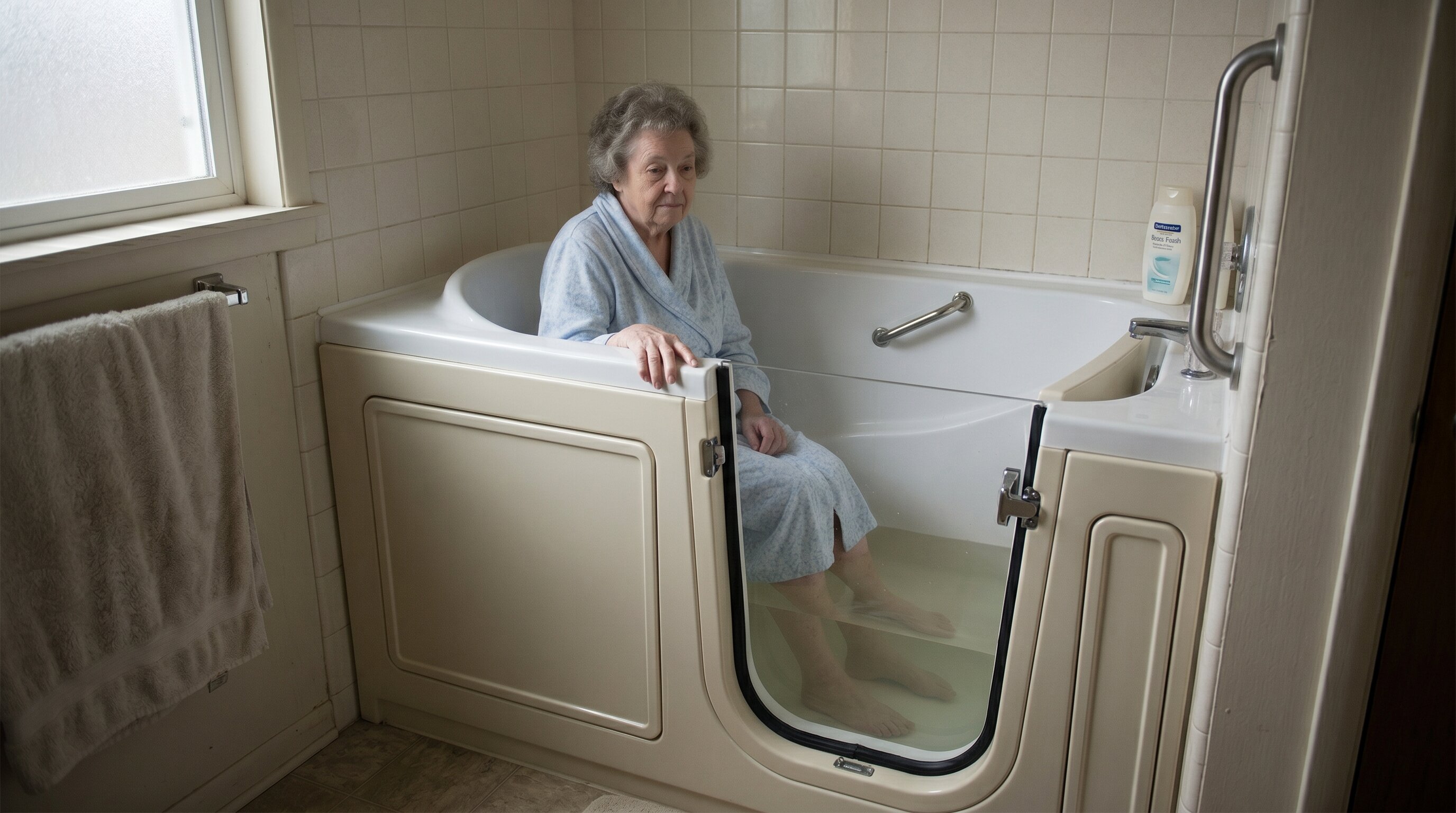 A physical therapist quoted in AARP's bathroom guide said it plainly: patients who spent $10,000+ on a walk-in tub frequently hated it. For most people, a curbless shower with a built-in bench and a handheld showerhead achieves the same safety goals with less inconvenience, less cost, and better daily usability. If bathing is a genuine preference and mobility considerations make a tub the better fit, walk-in tubs can work well, prices run $2,000–$20,000+ installed. Just understand what the daily experience actually looks like before committing.
4. What an Aging in Place Bathroom Remodel Actually Costs
5. Funding Options Worth Knowing About
6. Finding the Right Contractor
7. When to Start
Frequently Asked Questions
What is an aging in place bathroom remodel?
How much does an aging in place bathroom remodel cost?
Does Medicare cover aging in place bathroom remodels?
Do residential bathrooms have to meet ADA standards?
What is a CAPS contractor?
Is a walk-in tub worth it?
Conclusion
- 1. Why the Bathroom Is the First Room to Address
- 2. The Features That Actually Matter
- 3. Walk-In Tubs: What the Marketing Doesn't Tell You
- 4. What an Aging in Place Bathroom Remodel Actually Costs
- 5. Funding Options Worth Knowing About
- 6. Finding the Right Contractor
- 7. When to Start
- Frequently Asked Questions
- Conclusion
Aging in Place Bathroom Remodel: What to Install, What It Costs, and When to Start
Aging in place bathroom remodel guide grab bars, curbless showers, comfort toilets, ADA clearances, full cost breakdown, and funding options.

Written by Zohaib Ali
More on Nationwide BuildersRead more Home Improvement Tips blogs
Pros
Support