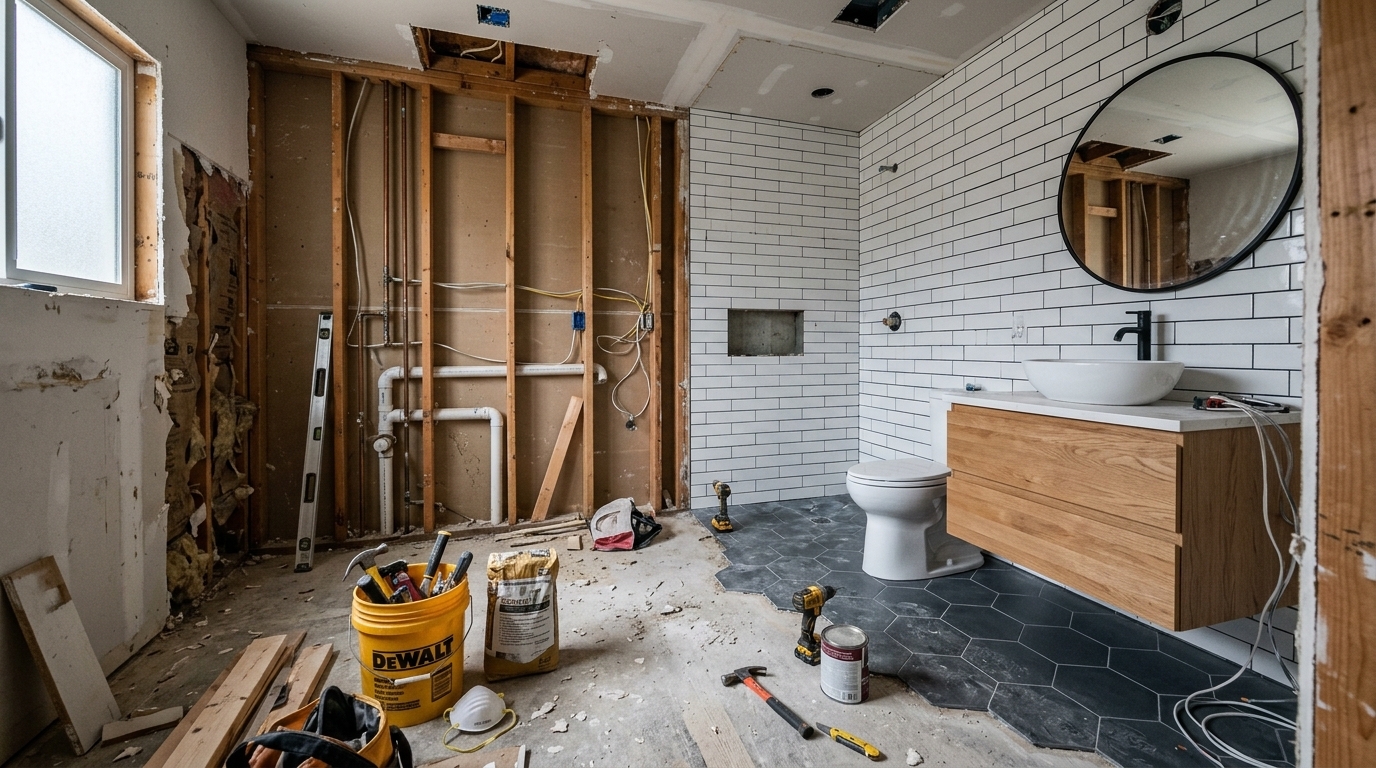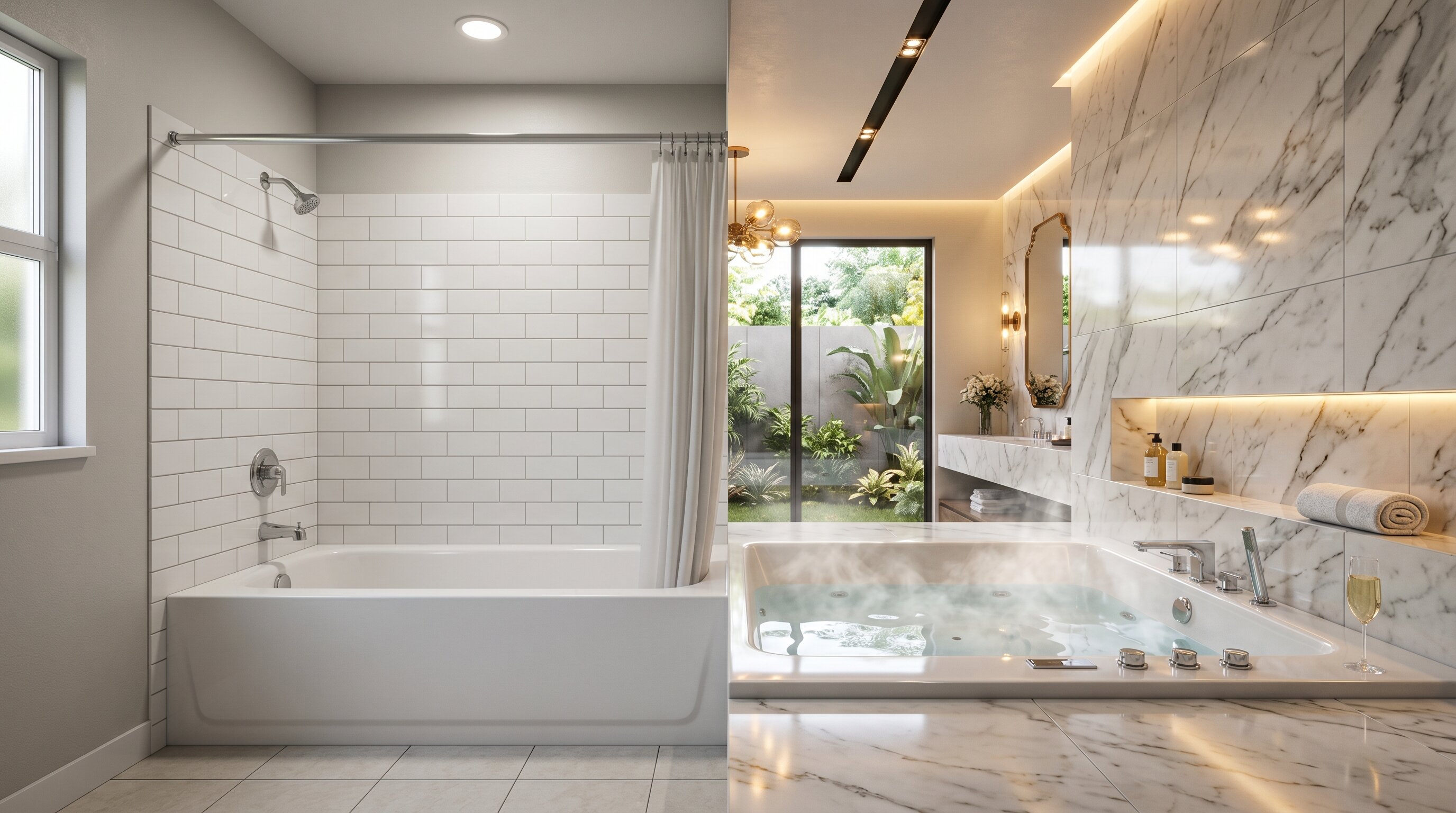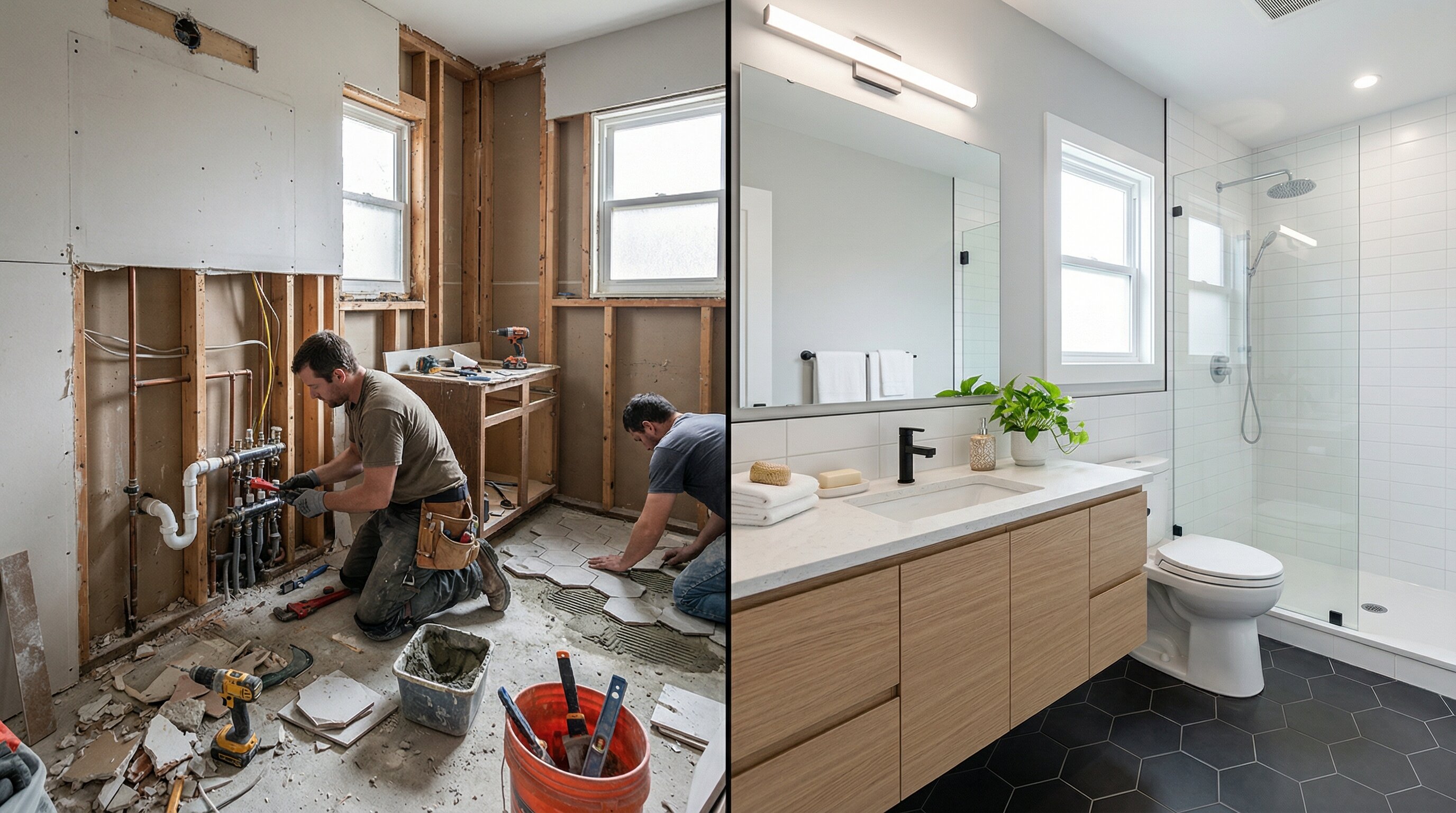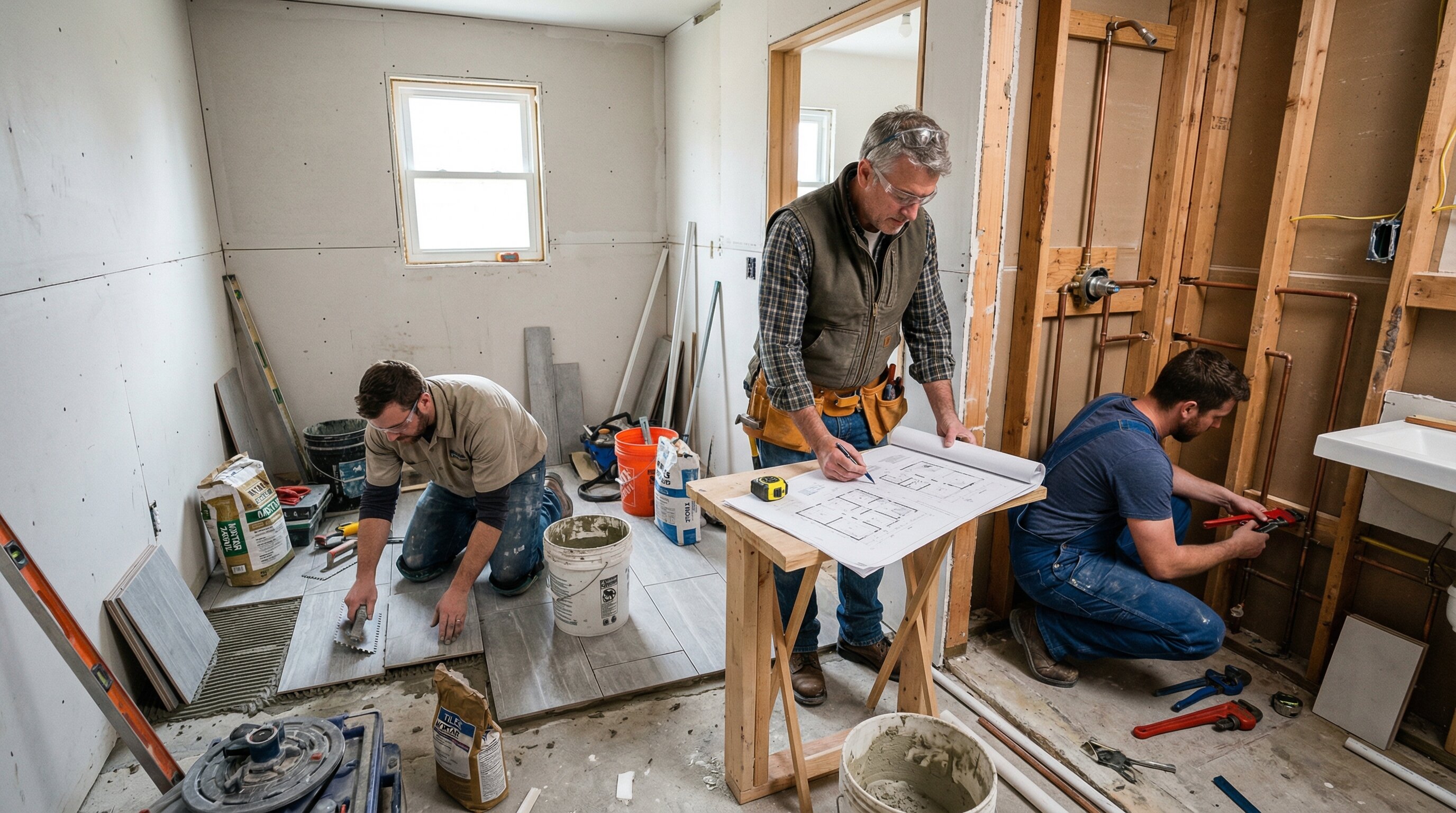

Adding a bathroom to your home is one of the highest-ROI renovation projects you can undertake. Whether you need a second full bath for a growing family, a half bath for guests, or a basement bathroom to complete a finished lower level, the cost to add a bathroom depends on several factors and the range is wide.
In this guide, you will get honest, contractor-verified price ranges for every scenario: full bathroom additions, half baths, basement installs, garage conversions, upstairs additions, and master bath upgrades. We also cover what actually drives the price up and how to keep your project on budget.
Average Cost to Add a Bathroom Summary by Type
Before diving into each scenario, here is a high-level comparison of the most common bathroom addition types and their realistic installed cost ranges in the US.
Cost to Add a Full Bathroom
A full bathroom contains four fixtures: toilet, sink (vanity), bathtub, and a shower or a combined tub/shower unit.
Adding a full bathroom to an existing home without expanding the structure typically costs $15,000 to $35,000 when the space is already available (converting a closet, unused bedroom corner, or bonus room).
If structural changes are needed moving load-bearing walls, extending the foundation, or adding a dormer costs rise to $30,000–$60,000+.
What's Included in a Full Bathroom Cost
Pro Tip: The single biggest cost driver in adding a full bathroom is plumbing distance from the existing drain-waste-vent (DWV) stack. Locate your new bathroom as close to existing plumbing as possible to save $1,000–$4,000 in rough-in costs.
Cost to Add a Half Bathroom (Powder Room)
The cost to add a half bathroom also called a powder room typically ranges from $3,000 to $15,000 in the US.
A half bath includes only a toilet and a sink, making it far less expensive than a full bath because there is no tub, shower, or associated waterproofing.
The average cost to add a half bathroom lands around $5,000–$8,000 when plumbing connections are reasonably accessible and no major structural work is needed.
Half Bathroom vs. Full Bathroom Cost Comparison
How much does it cost to add a half bathroom in a small, accessible location (like a closet under the stairs)? In many cases, $4,000–$7,000 is achievable if the space is within 10 feet of existing plumbing supply and drain lines.
Cost to Add a Bathroom in a Basement
Adding a basement bathroom is one of the most popular and cost-effective bathroom additions because no structural expansion of the home is required as the space already exists. However, basement bathrooms introduce a unique challenge: gravity drainage.
Most basement floors sit below the main sewer line, which means waste cannot drain by gravity. The solution is an ejector pump (sewage ejector), which pumps waste up to the main sewer line. This single factor is the biggest variable in basement bathroom cost.
Basement Bathroom Cost Scenarios
Average cost to add a bathroom in a basement: $7,000–$15,000 for most standard installations with an ejector pump system.
The cost to add a bathroom to a basement is also affected by how accessible the concrete slab is. Cutting through a concrete floor (jackhammering) to lay new drain pipes adds $500–$2,000 to the project depending on slab thickness and length of new runs.
Cost to Add a Bathroom Addition (New Square Footage)
A bathroom addition meaning you are literally expanding the footprint of the house to build a new bathroom is the most expensive scenario. You are not just adding plumbing and fixtures you are building new walls, a new foundation or slab section, roofing, exterior siding, and insulation. Average cost to add a bathroom addition: $20,000–$50,000+, with luxury or complex builds reaching $75,000–$100,000.
Bathroom Addition Cost Breakdown
The estimated cost to add a bathroom addition also varies significantly by US region labor and material costs in New York or California can be 40–70% higher than the national average.
Cost to Add a Bathroom to a Garage
Garage bathroom additions are popular for detached workshops, pool areas, or converting garages into ADUs (accessory dwelling units). The cost to add a bathroom to a garage ranges from $5,000 to $25,000, depending on whether the garage is attached or detached, and how far the new bathroom is from existing sewer connections.
For a detached garage, running new water supply and sewer lines from the main house is typically the largest cost item this alone can run $2,000–$10,000 depending on distance and whether trenching through landscaping or paving is required.
Key Consideration: Detached garage bathrooms may require a separate permit for new utility connections. Always check local zoning and building codes before beginning. Some municipalities require the addition to conform to ADU standards if anyone will sleep in the space.
Cost to Add a Bathroom Upstairs
Adding a bathroom upstairs typically over an existing bathroom on the ground floor is one of the most efficient configurations. When you stack bathrooms directly above each other, plumbing can share the same vertical drain stack, significantly reducing rough-in costs. How much does it cost to add a bathroom upstairs? Expect $10,000–$25,000 for a standard upstairs full bath when stacked above existing plumbing. Non-stacked configurations (running new supply and drain lines horizontally through floors and walls) add $2,000–$6,000 to that range.
Upstairs Bathroom Cost Configurations
Key Factors That Drive the Cost to Add a Bathroom
Understanding what actually moves the needle on bathroom addition costs helps you make smarter decisions before you call a contractor.
Plumbing Distance from Existing Stack
Every bathroom needs supply lines (hot and cold water) and a drain-waste-vent (DWV) system connecting to the main sewer stack. The farther your new bathroom is from existing plumbing, the more pipe you need and the more walls, floors, or ceilings must be opened. This single factor can swing your total cost by $2,000–$8,000.
Permit Requirements
Any bathroom addition involving new plumbing, electrical, or structural work requires permits in virtually every US jurisdiction. Permit costs range from $200 to $1,500 depending on your municipality. More importantly, unpermitted work can cause serious problems at resale always pull the permits.
Fixture Quality & Finishes
A standard toilet runs $200–$500. A wall-mounted smart toilet can run $1,500–$5,000+. The same multiplication applies to vanities, faucets, shower systems, and tile. Finish selections alone can swing a bathroom addition from $15,000 to $40,000 at the same square footage.
Structural Modifications
Moving load-bearing walls, adding a dormer, reinforcing floor joists for tile weight, or extending the foundation all add significant cost. These items are difficult to estimate without a structural engineer review budget $500–$1,500 for an engineering consultation if you suspect structural changes are needed.
Contractor Type & Region
General contractors typically charge 15–25% above subcontractor-only costs for project management. In high cost-of-living metros (San Francisco, NYC, Boston, Seattle), labor rates run 40–70% above national averages. In the Midwest and Southeast, costs are typically at or below the national average.
Detailed Cost Breakdown: What You Are Actually Paying For
Here is a realistic line-item breakdown for a mid-range full bathroom addition (not expanding the home footprint) a project that converts existing square footage:
Average Cost to Add a Bathroom by US Region
Labor rates and material costs vary significantly across the United States. The table below shows how regional pricing adjusts the national average cost to add a bathroom.
Adding a Bedroom and Bathroom Combined Costs
Many homeowners want to add a bedroom and bathroom at the same time either as a suite for a family member, a home office with an attached bath, or an income-generating ADU.
The average cost to add a bedroom and bathroom together ranges from $25,000 to $75,000+, depending on size and whether you are converting existing space or building new square footage.
Bedroom + Bathroom Combined Cost Scenarios
Average cost to add a bedroom and bathroom: $35,000–$65,000 for a mid-range project adding new square footage to a single-family home in the US Midwest or Southeast. Coastal and high-cost regions add 40–70% to these figures.
How to Reduce the Cost to Add a Bathroom
Smart planning can reduce your bathroom addition cost by $3,000–$15,000 without compromising quality or safety:
• Locating the new bathroom adjacent to or directly above/below existing plumbing this alone is the highest-impact cost-reduction move.
• Choosing a standard-size prefab shower/tub unit over a custom tile shower saves $2,000–$6,000 in materials and labor.
• Use stock vanities from a home improvement store rather than custom cabinetry comparable quality at 40–60% less cost.
• Get at least 3 itemized quotes from licensed plumbers, electricians, and general contractors separately, not just one GC.
• Pull permits yourself in jurisdictions that allow homeowner-pulled permits saves $300–$800 in contractor permit markup.
• Schedule your project in winter (November–February) when contractor demand drops and pricing is more competitive.
• Use 12x24 or 12x12 porcelain tile in a straight-lay pattern for the shower and floor, the most economical professional tile installation.
• Avoid moving the toilet relocating a toilet adds $500–$1,500 in additional drain work that can often be avoided with smart layout planning.
Key Takeaway:
The average cost to add a bathroom in the US ranges from $3,000 (basic half bath) to $50,000+ (full addition with structural work). A standard full bathroom addition typically costs $15,000–$35,000, while adding a half bathroom runs $3,000–$15,000. Your actual price depends on bathroom type, location in the home, plumbing distance, permits, and finishes.
Frequently Asked Questions
How much does it cost to add a bathroom?
The average cost to add a bathroom in the US is $15,000–$35,000 for a full bath in existing space, and $20,000–$50,000+ for a full bathroom addition (new square footage). A half bathroom typically costs $3,000–$15,000.
How much will it cost to add a bathroom to my house?
Your specific cost depends on bathroom type, your home's existing plumbing layout, local permit fees, and your finish selections. The most reliable approach is to get 3 local contractor quotes after having a plumber assess the rough-in complexity. National averages are a starting point, not a firm estimate.
How much would it cost to add a bathroom on a concrete slab?
The cost to add a bathroom on a concrete slab is typically $8,000–$20,000 for a standard installation. The slab must be jackhammered to run new drain lines, which adds $500–$2,000 depending on the length of new runs. If the slab layout allows for a gravity drain (no ejector pump needed), total costs stay closer to $8,000–$14,000. Yes, in most US markets, adding a bathroom returns 50–70% of its cost in added home value, according to remodeling cost-vs-value data. Homes with only one bathroom that add a second bath often see the strongest ROI, particularly in entry-level and mid-range price tiers. The return is strongest when the addition addresses a genuine buyer need a second full bath in a 3-bedroom home is far more valuable than a third full bath in the same home. The cheapest approach is to add a half bath (toilet + sink only) in an existing closet or utility room that is immediately adjacent to existing plumbing. In the best-case scenario a closet back-to-back with an existing bathroom a powder room can be roughed in and finished for as little as $3,500–$6,000 by an experienced plumber and tile contractor. The cost to add a bathroom in a basement ranges from $3,000 (if rough-in pipes are already stubbed out) to $20,000–$25,000 (new plumbing, ejector pump, custom tile finish). The average for a standard basement bathroom with an ejector pump system runs $8,000–$15,000. Yes in virtually every US jurisdiction, adding a bathroom requires permits for plumbing, electrical, and any structural work. Unpermitted bathroom additions can trigger mandatory removal at resale, create insurance complications, and may void your homeowner's warranty. Always pull the required permits your contractor should include in the scope and cost. The three questions that will most accurately predict your final cost are: • How far is the new bathroom from existing plumbing? Answer those three honestly, and you will have a realistic budget before a contractor ever sets foot in your home.Is adding a bathroom worth it for home value?
What is the cheapest way to add a bathroom?
How much does it cost to add a bathroom in a basement?
Do I need a permit to add a bathroom?
Final Takeaway: Planning Your Bathroom Addition Budget
The cost to add a bathroom ranges from $3,000 for a simple powder room to $75,000+ for a full master suite addition with premium finishes. Most homeowners adding a standard full bathroom to existing space budget $15,000–$35,000 and land close to that range as long as they plan carefully, pull permits, and choose a contractor with verifiable bathroom addition experience.
• Are structural changes required?
• And what level of finishes are you targeting?