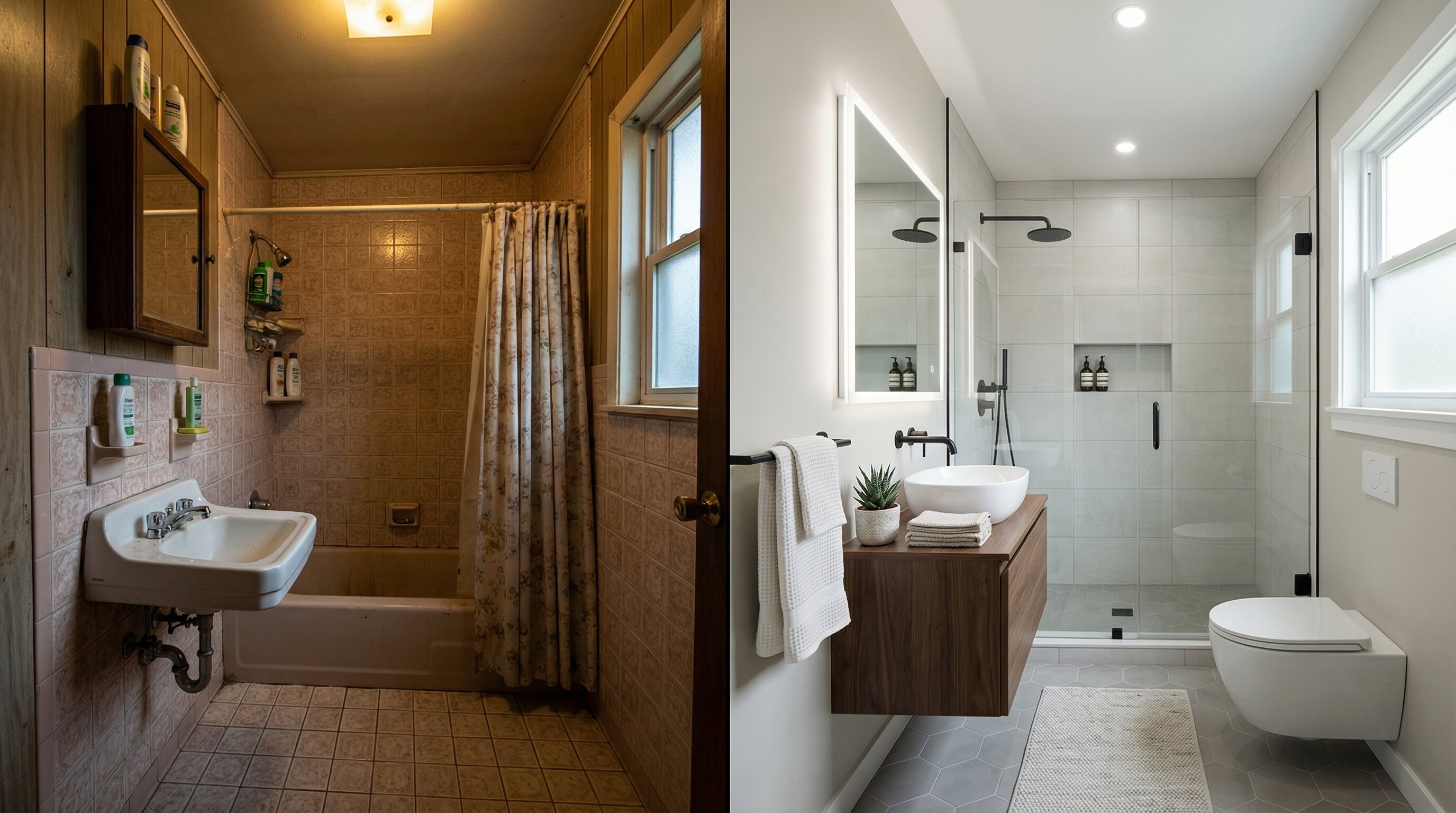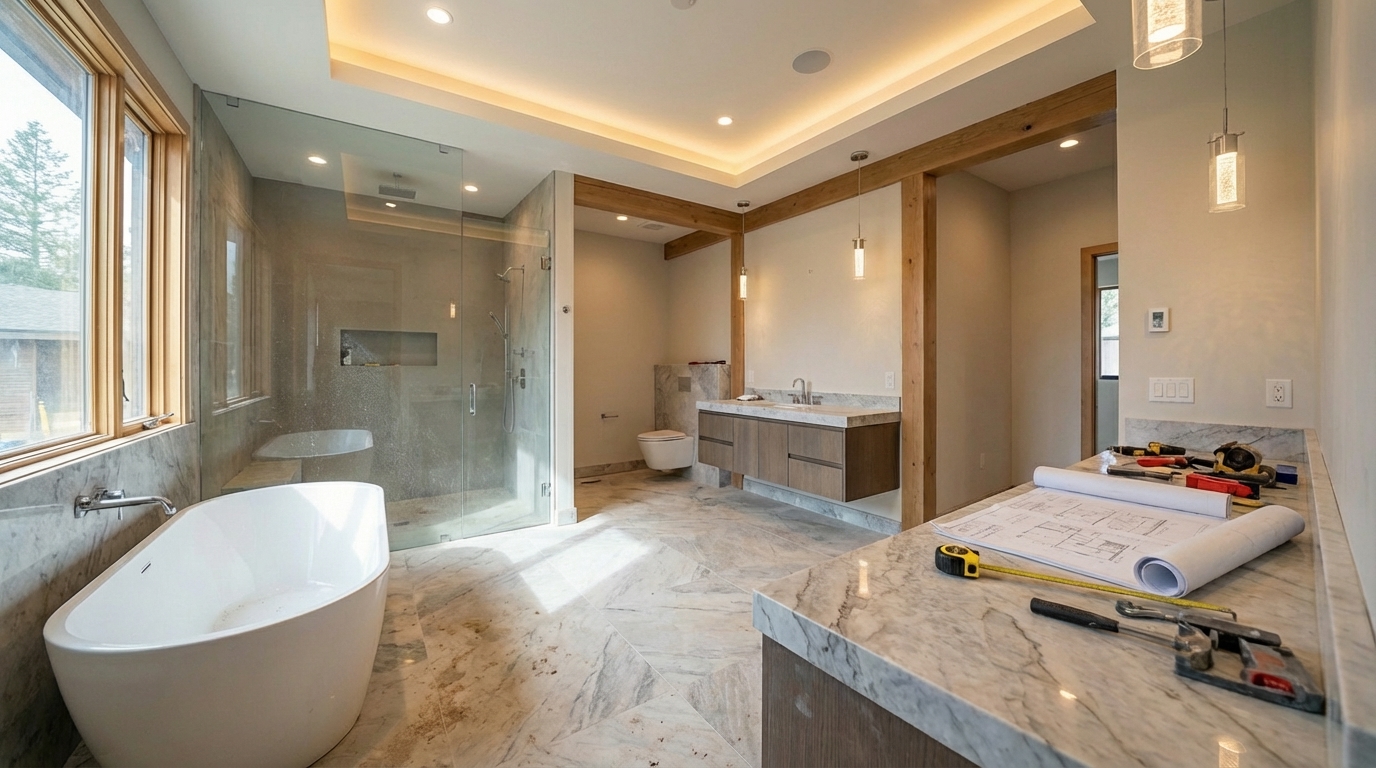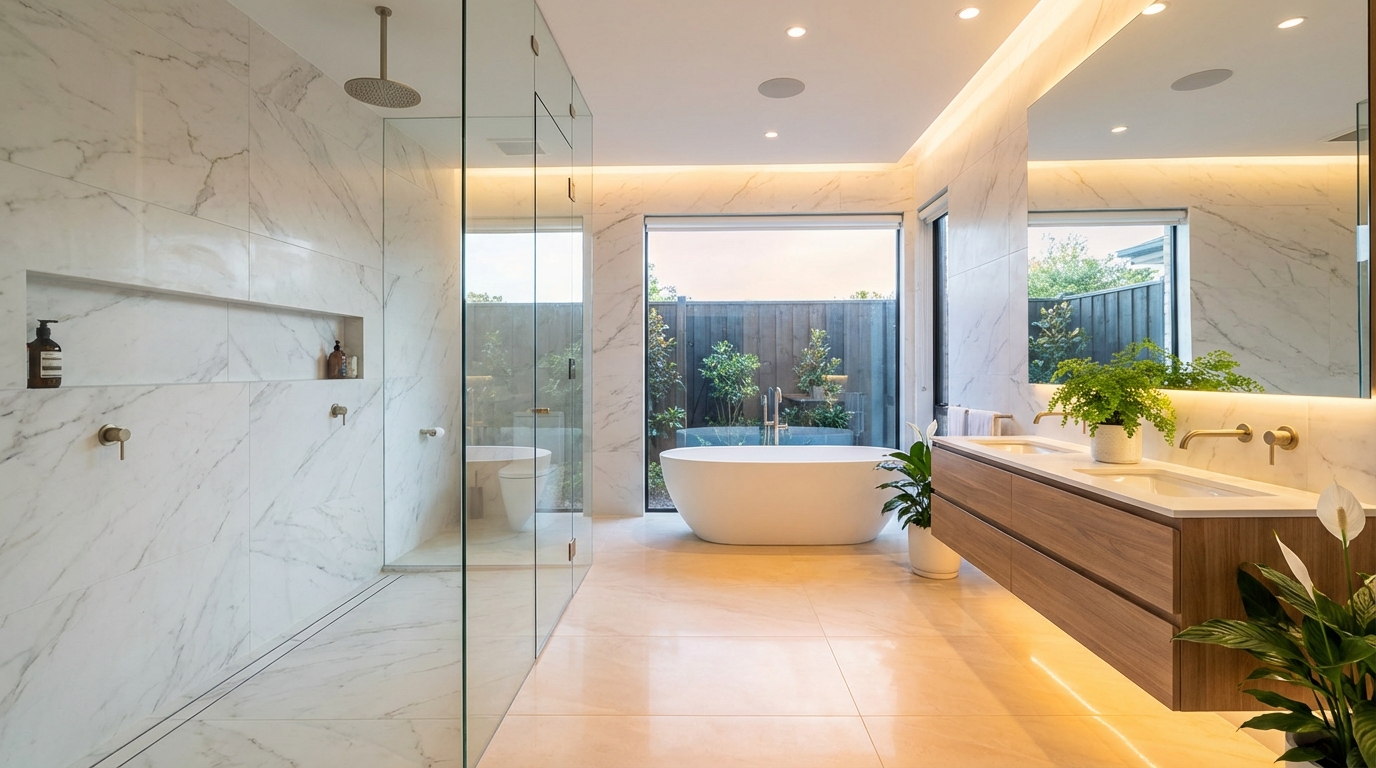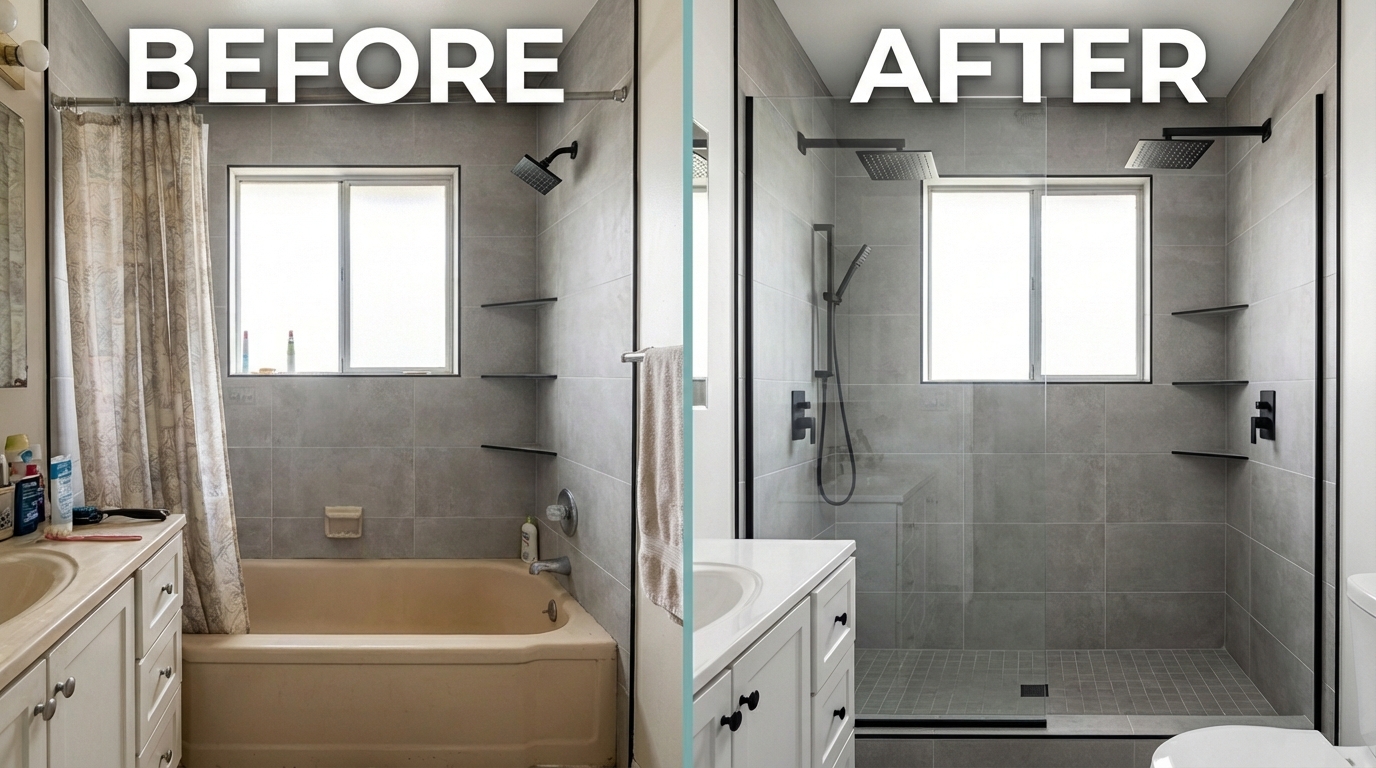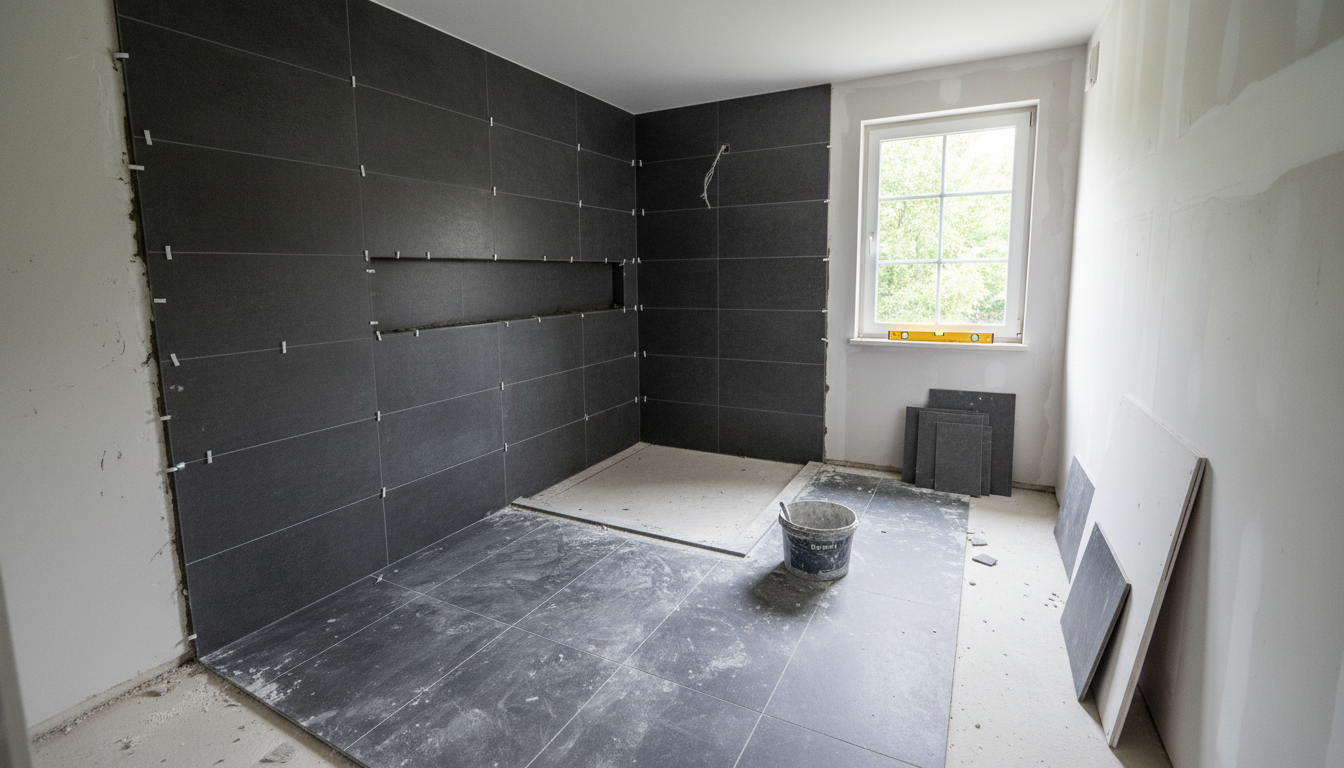
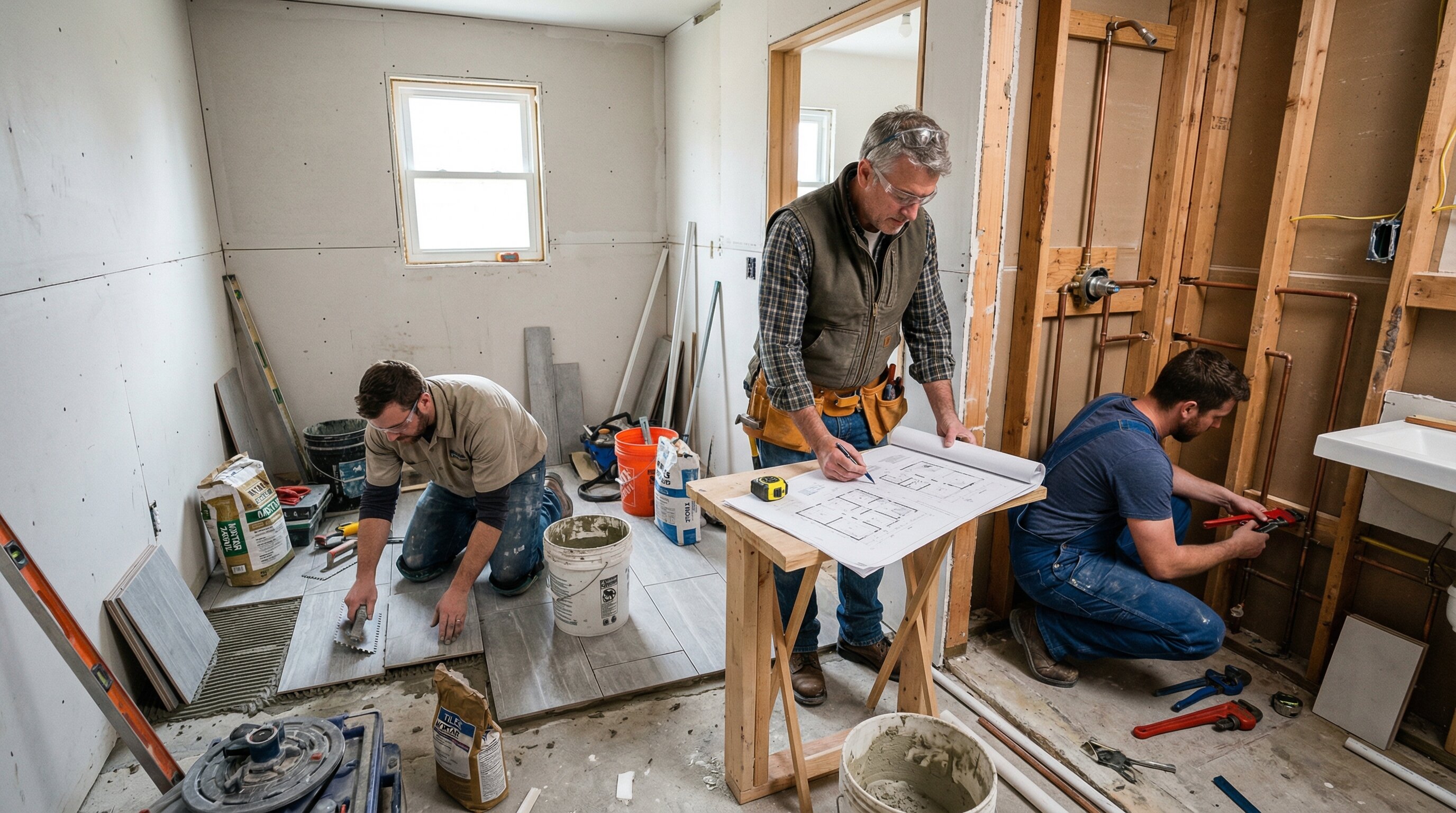

You just received a contractor quote. The total looks roughly right but how do you know if the plumbing line is fair? How do you know whether tile labor should really cost that much?
Most homeowners find out too late. For a standard 5×8 bathroom remodel, labor cost runs $1,200 to $7,000 or more. Where you land depends on two decisions: whether you move any plumbing, and what goes in the wet area.
This guide breaks labor down by trade so you can read any invoice and know instantly whether each line is reasonable.
What Does Labor Cost for a 5×8 Bathroom Remodel?
Labor accounts for 40–65% of total bathroom remodel cost. On a $10,000 project, expect $4,000–$6,500 in labor alone.
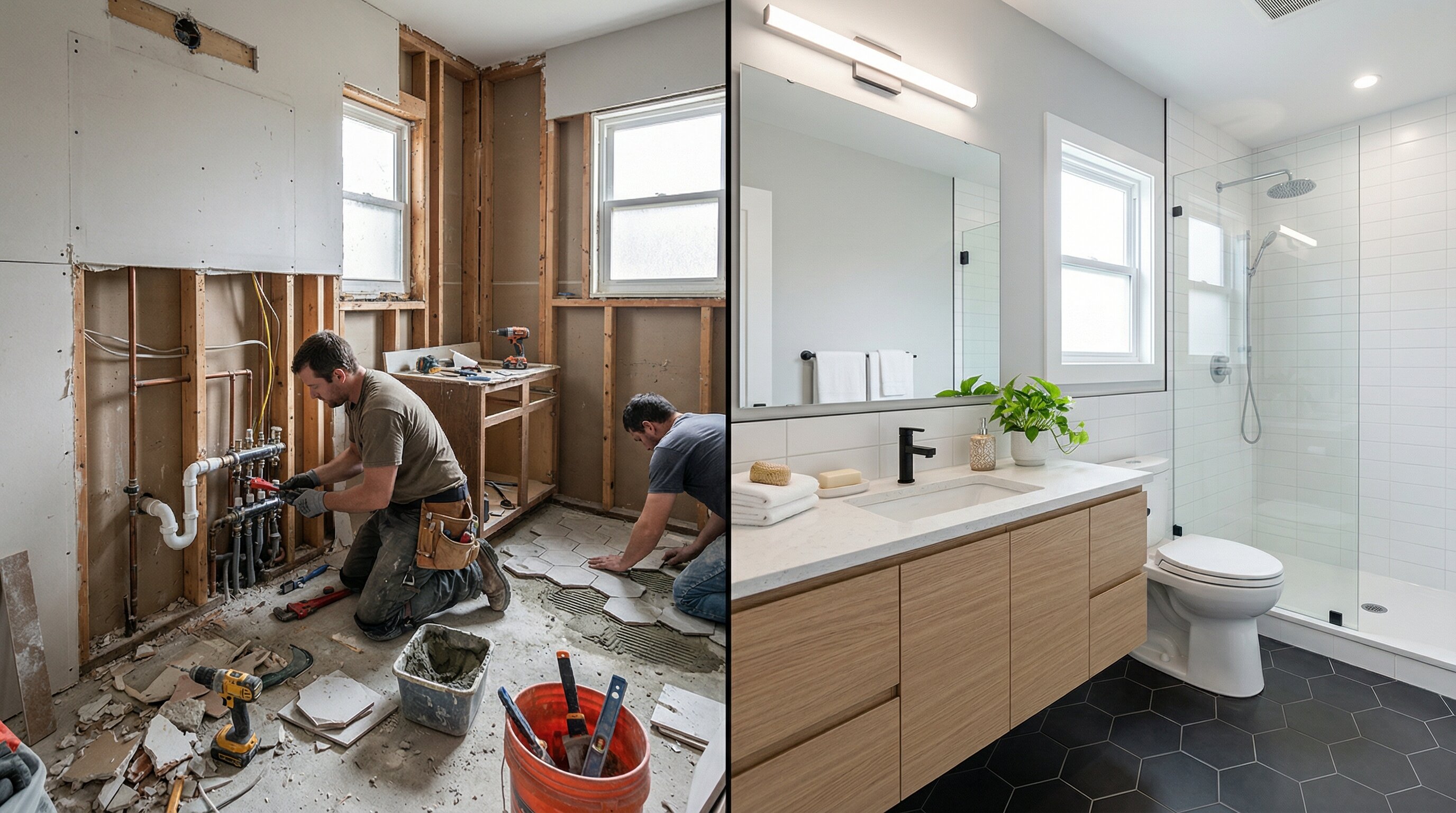
Labor accumulates across four phases. Demo costs the least. Rough-in — plumbing and electrical is where the bill climbs fastest. Tile and fixtures follow. Painting closes out.
Full Labor Cost Breakdown by Trade
Every figure below is labor only. Materials are never included.
Hourly rates: plumber $75–$150/hr, electrician $80–$150/hr, tile setter $60–$120/hr. These are contractor billing rates overhead and insurance sit on top of Bureau of Labor Statistics median trade wages.
Bathroom Demolition Cost
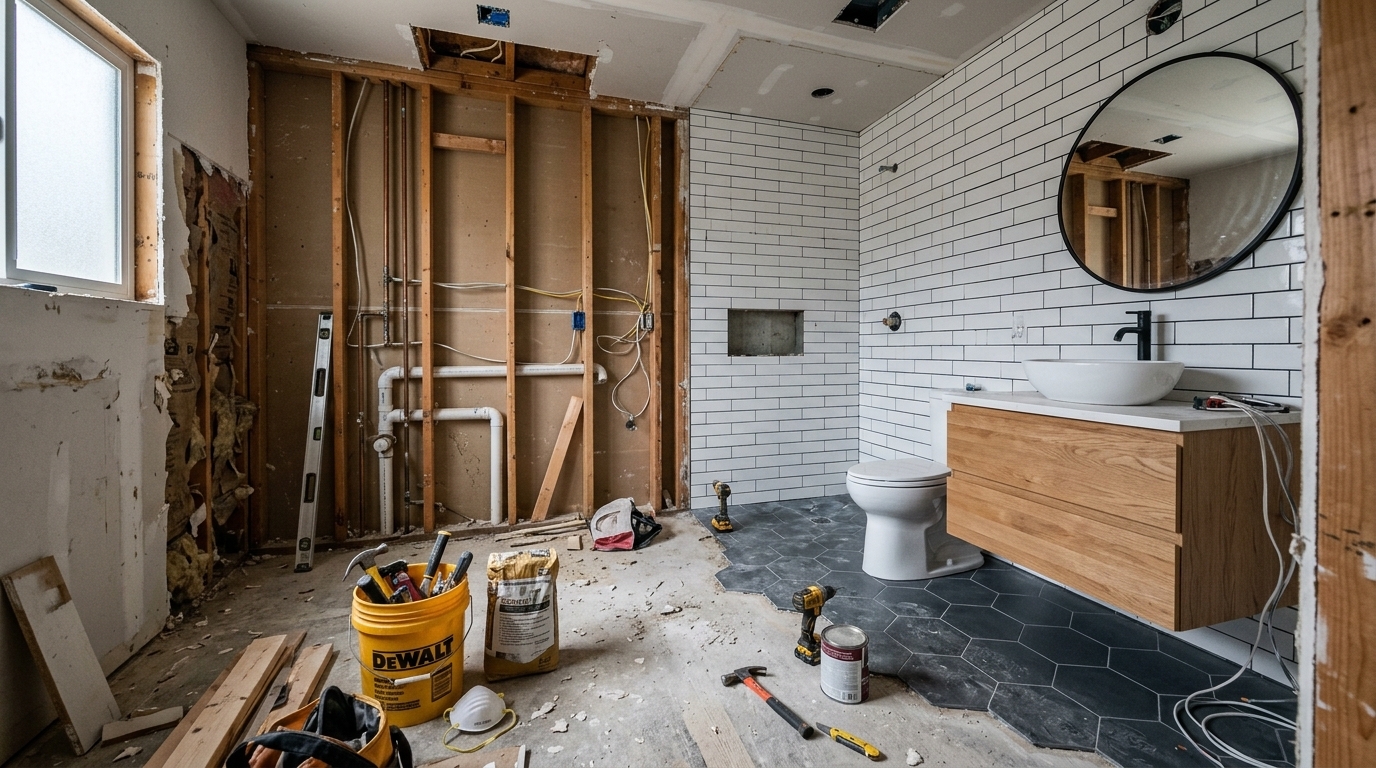
Full strip-out of a 5×8 runs $500–$800 at mid-range. It is the most DIY-friendly phase doing it yourself saves the full amount. Pre-1978 homes must be tested for asbestos before the bathroom demo begins. Licensed asbestos removal adds $1,500–$3,000 if found.
Plumbing
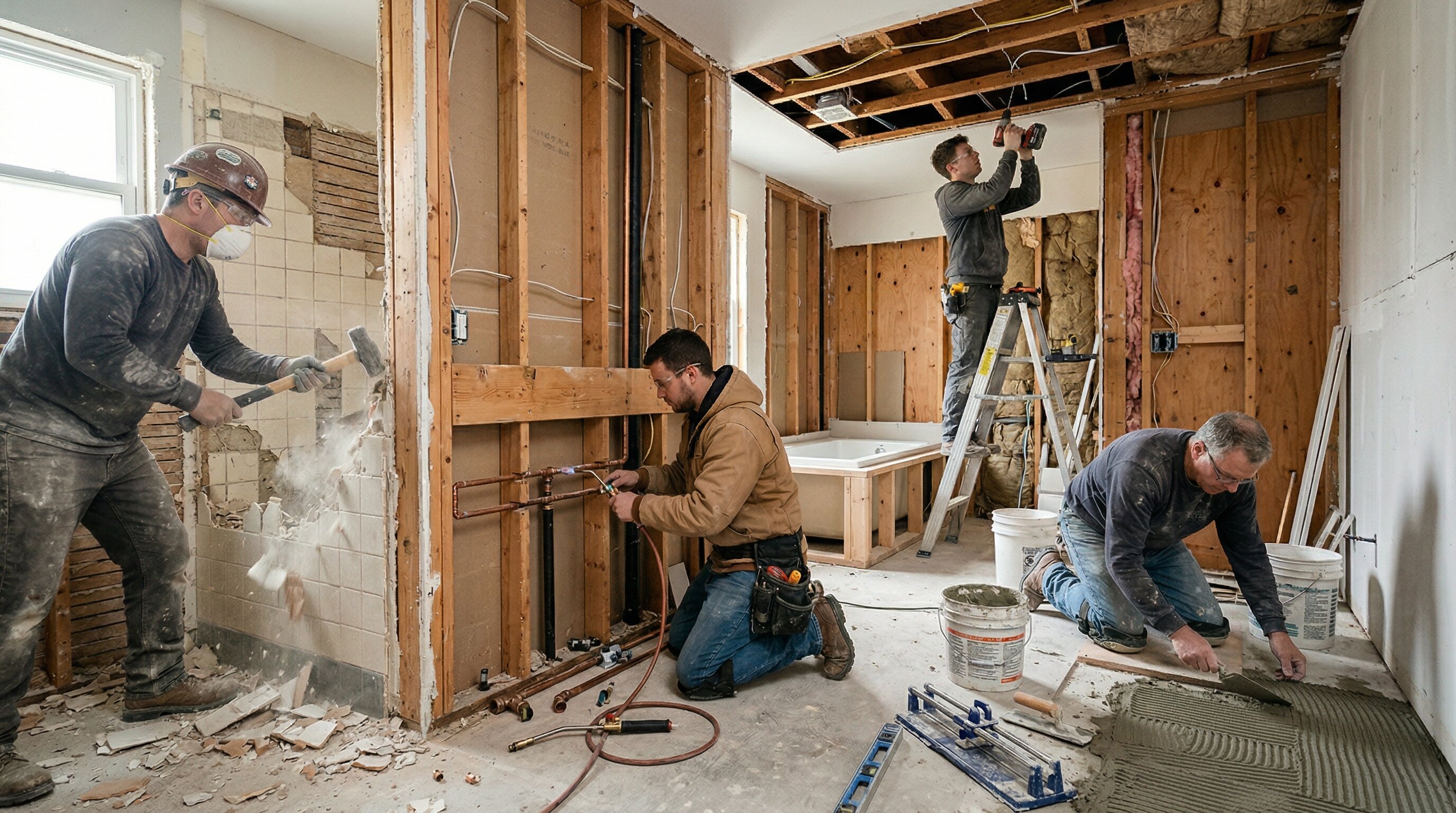
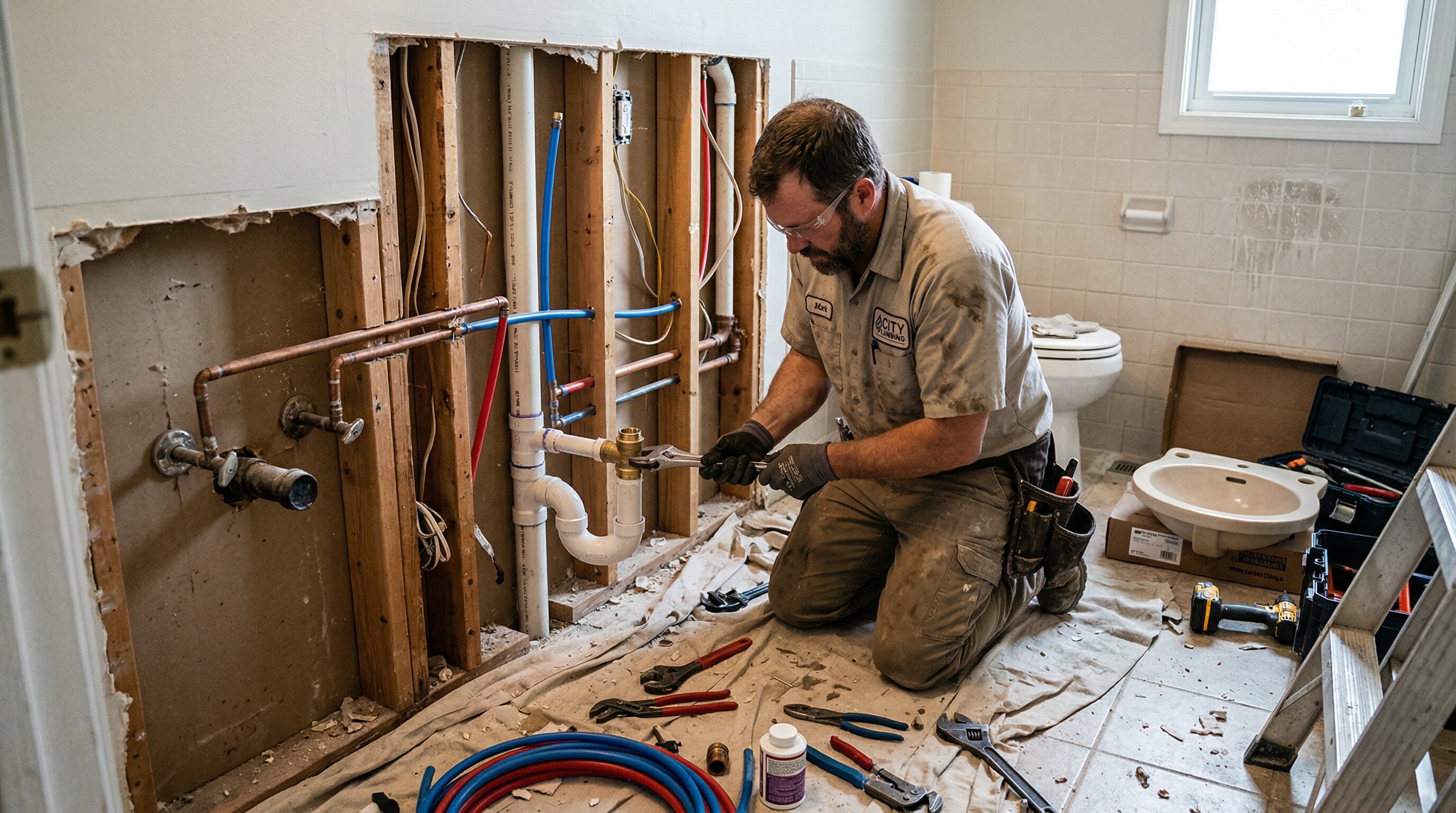
Keep all fixtures in place: $400–$1,200 in labor. Move one fixture: add $500–$2,000 on top. Move two: add $1,500–$4,000 total. Slab foundations add $500–$1,500 for concrete cutting before any pipe work begins. Licensed plumbers are required in all US states unlicensed work voids homeowner's insurance.
Electrical
Standard scope GFCI outlets, exhaust fan, vanity lighting runs $300–$800. A new circuit or panel breaker upgrade pushes toward $1,500. All bathroom outlets must be GFCI-protected by code. An exhaust fan is required in any bathroom without an operable window installation runs $150–$350 and must vent to the exterior.
Drywall and Cement Board
Standard drywall cannot go behind tile in wet areas. Cement board HardieBacker, Durock is mandatory for shower and tub surrounds. It costs $2–$4 per sq ft in labor versus $1.50–$3 for standard drywall. Confirm your contractor specifies cement board in wet areas before signing anything.
Tile Installation
Floor tile alone: $600–$900. Shower or tub surround: $400–$900. Combined mid-range: $900–$1,500. Complexity drives the cost up fast. Large format tile adds 10–20% to tile labor. Natural stone adds 15–25%. Mosaic adds 30–50%. Herringbone or chevron pattern adds 25–40%. Choose your tile format before you set a budget not after.
Fixture Installation
Same-location swap of toilet, vanity, and shower or tub: $500–$1,200. Custom tiled shower pan or layout reconfiguration: up to $2,000. If the existing tub is sound, reglazing costs $300–$600 versus $400–$800 to remove and replace. Reglazing delivers the highest ROI per labor dollar in most 5×8 remodels.
Painting and Finishing
Painting a full 5×8 takes 3–6 hours and saves $200–$500 in professional labor. High DIY suitability second only to demo. Use mould-resistant semi-gloss or satin paint. Flat paint does not hold up in a high-humidity bathroom.
What Drives the Labor Bill Up?
Every one of these factors is within your control knowing them before you commit to a scope is the difference between a predictable budget and an expensive surprise.
Moving Plumbing
Keeping plumbing in place saves 20–30% on total labor. Moving one fixture adds $500–$2,000. Moving two adds $1,500–$4,000. This single decision separates a $3,500 labor bill from a $9,000 one.
Tile Complexity
Every step up in tile format adds cost. Switching from subway tile to herringbone marble mid-project can add $400–$1,200 to the tile line item alone. Decide on tile format before the budget is finalised.
GC Overhead and Markup
A general contractor adds 13–22% on top of all trade labor. On $5,000 in trade labor, that is $650–$1,100 extra. Managing trades directly avoids this but requires the homeowner to coordinate scheduling, permits, and inspections.
Hidden Damage
Water damage adds $500–$3,000. Mould remediation adds $500–$1,500+. Code upgrades add $300–$800. A rotted subfloor adds $300–$1,500. These surprises appear in 30–40% of bathroom remodels once the demo begins. Always build a 10–20% contingency into your budget before work starts.
Permits and Regional Rates
Permits cost $100–$500 depending on your municipality. They are required for plumbing, electrical, and structural changes. Never skip permits, unpermitted work must be disclosed at property sale.
Regional rates vary significantly. NYC and LA: plumbers bill $150–$200/hr, 25–40% above national average. Houston and Phoenix: close to national benchmarks. Rural Midwest and South: 10–20% below. Always get local quotes before finalising a number.
5 Ways to Cut Your Labor Bill
Keep plumbing in place. Saves 20–30% on total labor more than any other single decision.
DIY demo and painting. Combined savings: $500–$1,700. Test for asbestos first on pre-1978 homes. Never attempt plumbing or electrical without a licence.
Order materials before the demo begins. Delayed tile on a stalled site costs $200–$500 per contractor return visit. Order everything before demo day.
Schedule in winter. November through February brings 10–20% lower contractor rates in most US markets.
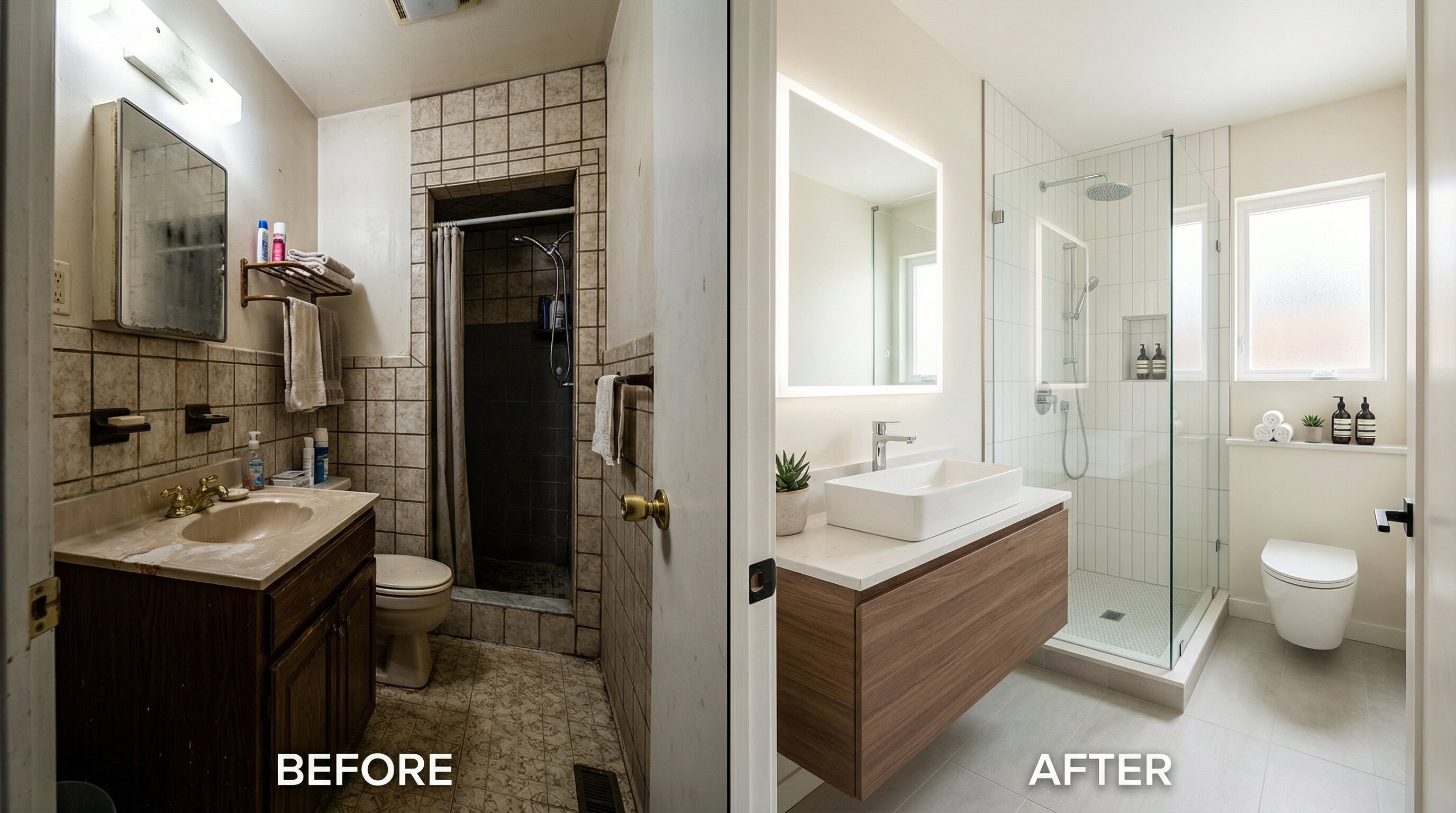
Refinish rather than replace. Reglazing a sound tub saves $100–$200 in labor versus replacement. Refinishing a vanity delivers similar savings.
How to Get and Read a Contractor Quote
Always request itemised quotes. Every trade should have its own labor line plumbing separate from electrical, tile separate from fixtures. A $7,500 quote that includes waterproofing and cement board may be better value than a $6,000 quote that leaves those steps out.
Your contract must cover: full scope of work, payment schedule (never more than 30% upfront), permit responsibility, contingency process for hidden damage, and a lien waiver at close. Verify every contractor's licence on your state licensing board website before signing. Confirm insurance and workers' compensation separately.
Frequently Asked Questions
How much does labor cost for a 5×8 bathroom remodel?
$1,200–$2,500 for a cosmetic refresh with no tile work. $3,000–$7,000 for a standard remodel. $7,000–$12,000+ for a full gut with plumbing relocation. Materials are additional.
What percentage of a bathroom remodel is labor?
40–65% of total project cost. On a $10,000 project, expect $4,000–$6,500 in labor. Projects with complex tile or plumbing moves sit at the higher end.
Does moving plumbing add a lot to labor cost?
Yes, it is the single biggest driver. Moving one fixture adds $500–$2,000. Moving two adds $1,500–$4,000. Slab cutting adds $500–$1,500 on top.
What is included in the bathroom remodel labor cost?
Seven trades: demolition, plumbing, electrical, drywall and cement board, tile, fixtures, and painting. Plumbing and electrical carry the highest hourly rates at $75–$150/hr.
Is it cheaper to remodel a small bathroom yourself?
Partially. Demo and painting save $500–$1,700 combined. Plumbing and electrical must always go to licensed professionals, unlicensed work voids insurance and fails inspection.
What hidden costs should I expect?
Budget 10–20% contingency above your labor estimate. Water damage, mold, code upgrades, and subfloor rot appear in 30–40% of remodels once demo begins.
How long does a 5×8 bathroom remodel take?
Two to four weeks for a standard remodel. A cosmetic refresh takes 5–10 days. A gut renovation with plumbing relocation runs 4–6 weeks.
Conclusion
A 5×8 bathroom remodel labor cost is not one number, it is seven trade decisions stacked on top of each other. Keep plumbing in place, choose tile format before the budget is set, and verify every licence before signing. Get those three decisions right and the rest of the quote becomes predictable.