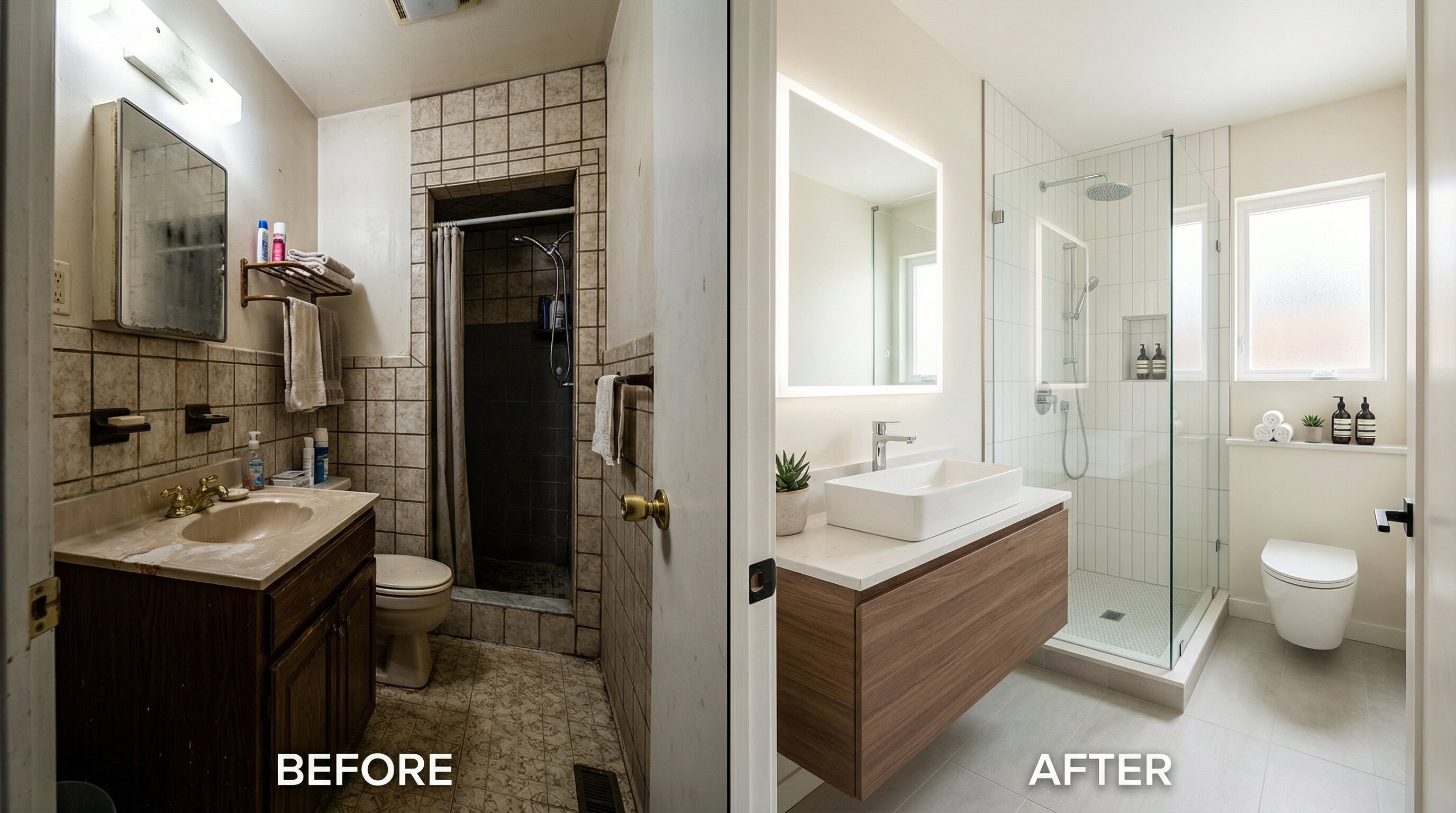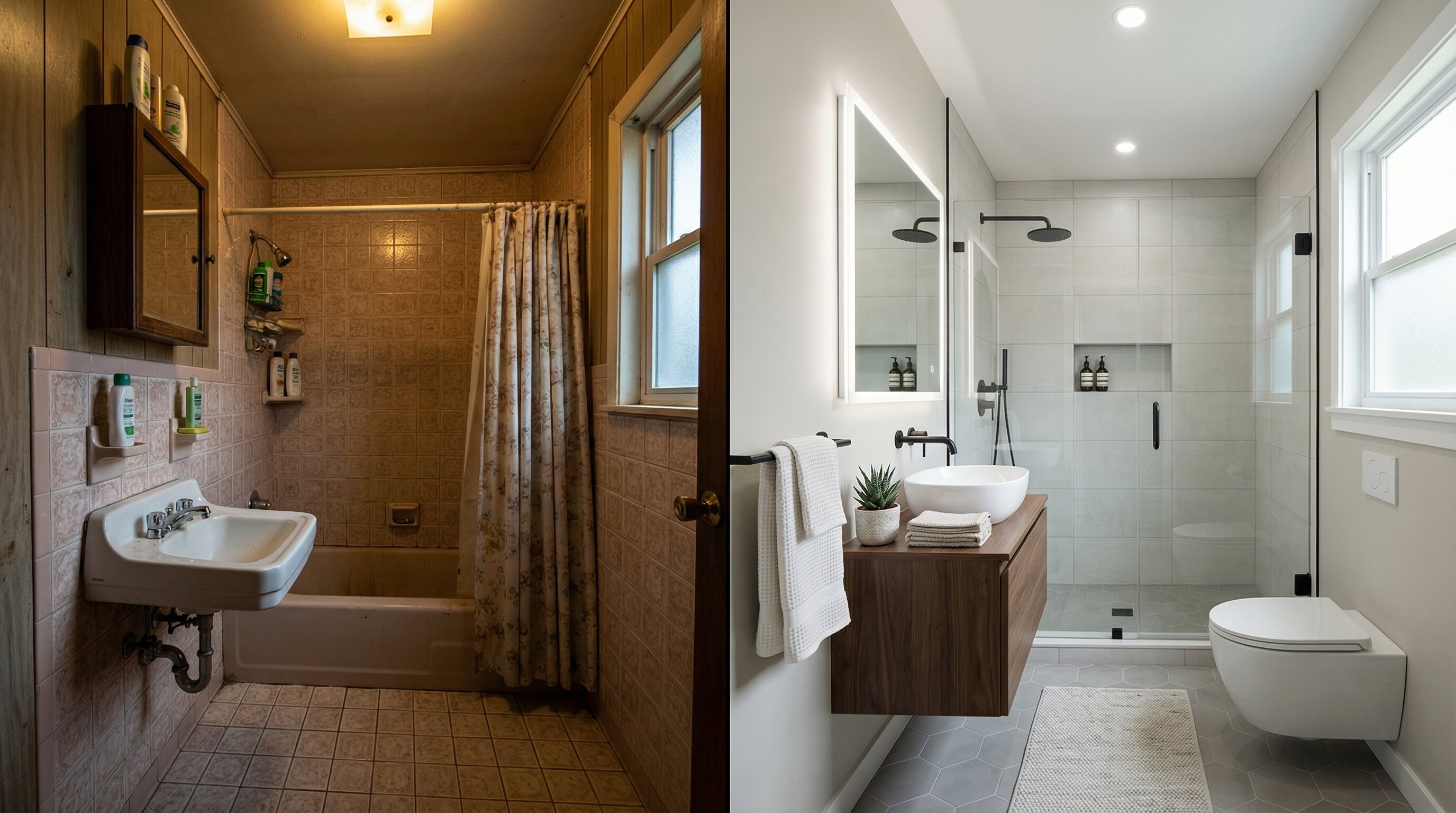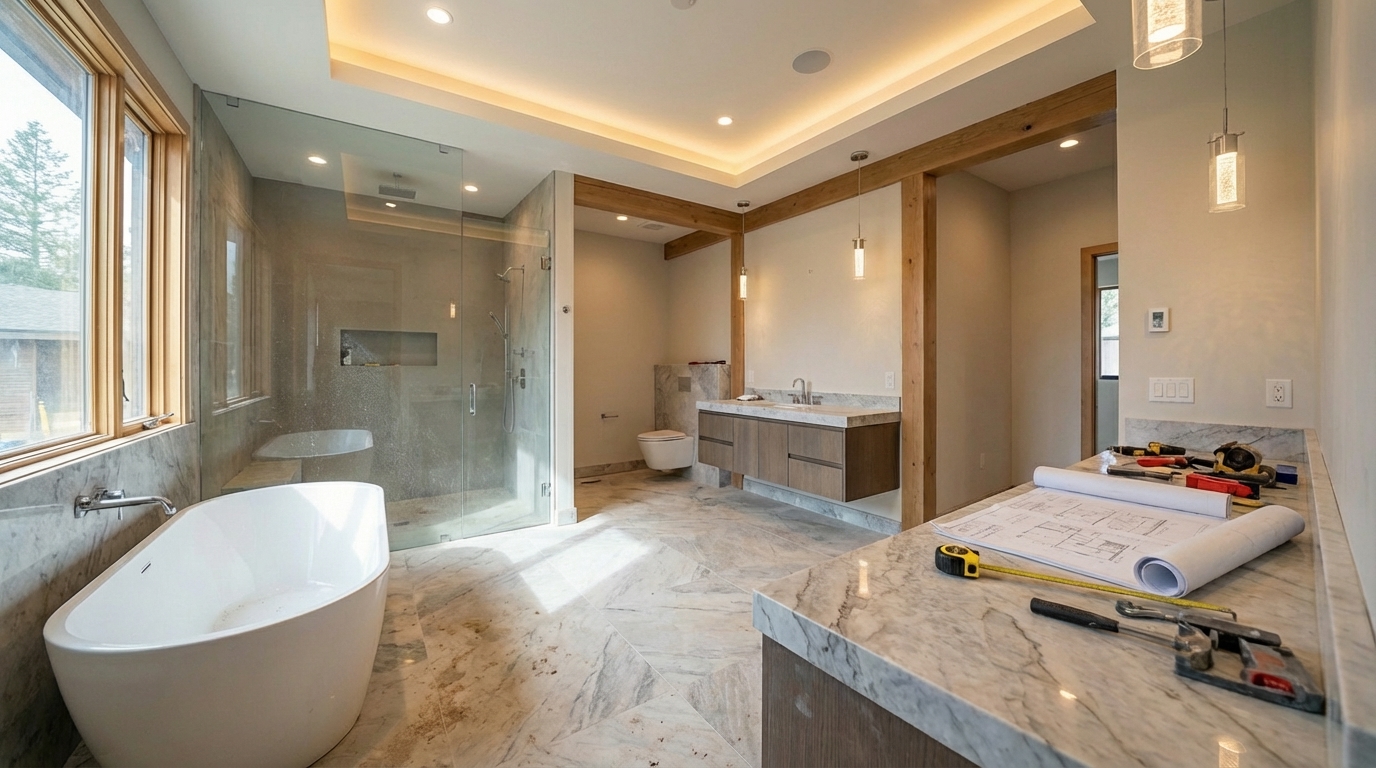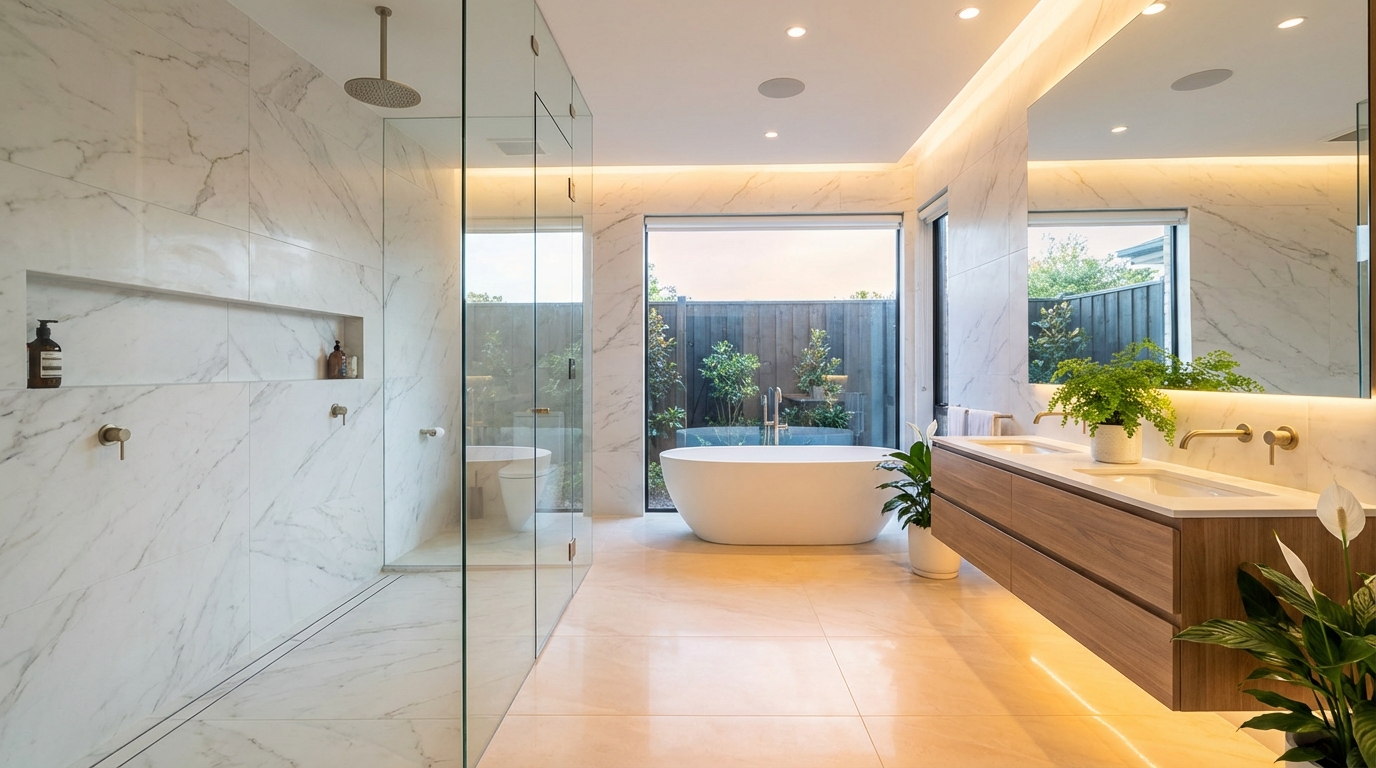
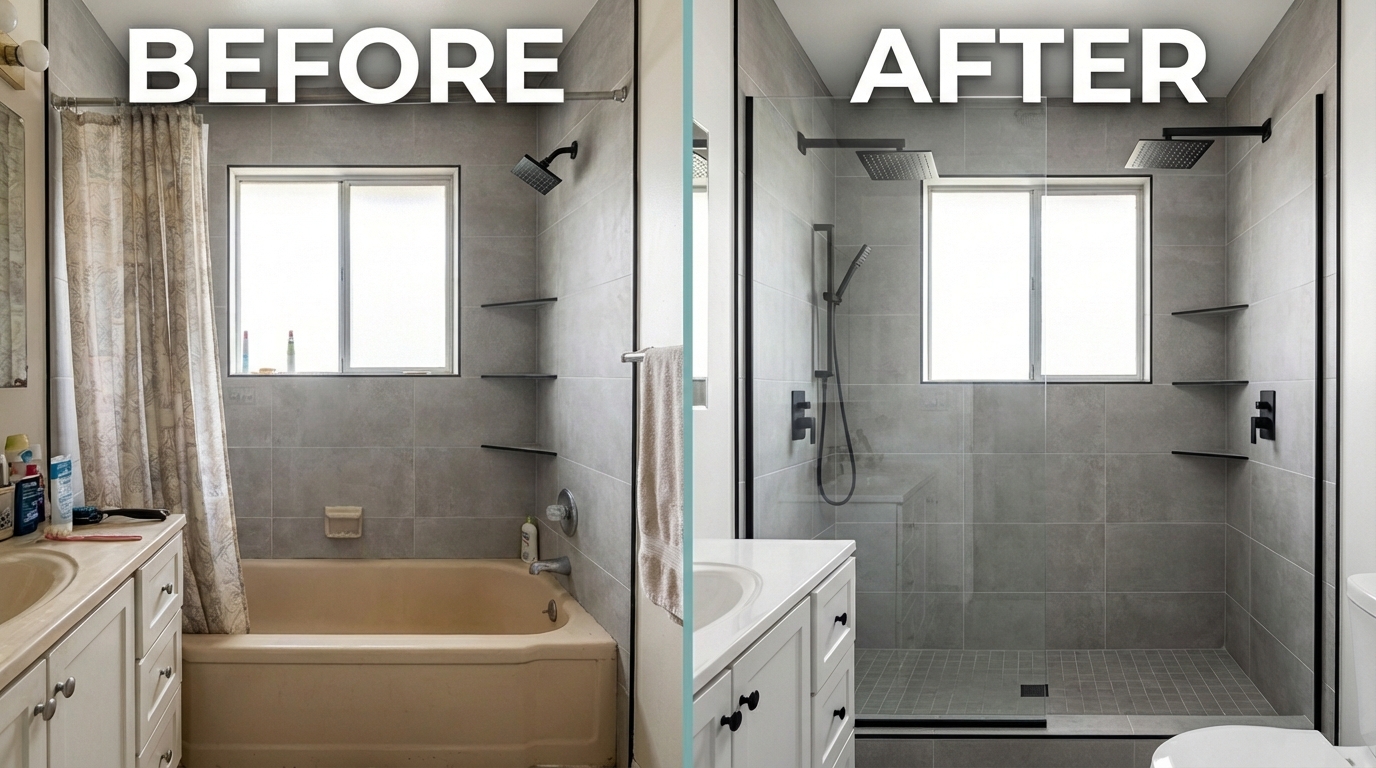

The convert tub to shower cost depends on more variables than most homeowners realize before getting their first quote. Converting a bathtub to a shower is one of the most common bathroom renovation projects in the US, driven by changing usage habits, the push for accessible bathrooms as homeowners age, and the practical reality that most households use the shower and leave the tub unused for months at a time.
Understanding the true converting tub to shower cost before calling a contractor is the most effective way to evaluate quotes accurately and avoid the common mistake of accepting a lowball number that explodes once demolition reveals what was hidden behind the walls. Whether you want to know the convert tub to walk in shower cost, a basic enclosed stall, or a curbless design, this guide covers every variable: shower type, materials, labor rates, plumbing costs, hidden line items, and what each option realistically costs in .
Average Cost to Convert a Tub to a Shower
The national average cost to convert a tub to a shower sits between $1,500 and $8,000 for most standard bathroom projects. The midpoint for a professionally installed conversion using mid-range materials in a standard 60-inch tub alcove is approximately $3,000 to $5,000. High-end custom conversions with natural stone tile, a curbless entry, and frameless glass routinely exceed $12,000 to $15,000.
The average cost of converting a tub to a shower has such a wide range because the conversion can mean anything from dropping a prefab acrylic kit into an existing alcove in two days to a full structural remodel requiring drain relocation, framing, and hand-set marble tile over ten days. Both are tub-to-shower conversions. The price difference reflects the scope, not the quality of the contractor.
Why the Range Is So Wide: Four decisions determine most of the final cost: theshower type you choose, whether the drain and plumbing stay in place or must move, the wall and floor material selected, and the scope of demolition and framing work the existing bathroom requires. Each of these is covered in full detail in the sections below.
Cost by Shower Type
The type of shower installed is the single largest cost variable in a tub-to-shower conversion. Choosing between a prefab kit, a tiled shower, a walk-in design, or a curbless floor determines the majority of the budget before a single material price is looked up.
Prefab Shower Kit (Acrylic or Fiberglass): $1,500 to $4,000
A prefabricated shower unit comes as a one-piece or multi-piece kit with molded walls and an integrated floor base, typically made from acrylic or fiberglass. It is the most affordable and fastest option available. The kit installs inside the existing tub footprint, typically requires no plumbing changes, and can be completed in one to two days. The unit itself costs $350 to $2,000 depending on size and finish; installation labor adds $500 to $1,500. Modern acrylic surrounds look clean and last 10 to 15 years with proper care.
Tiled Shower (Ceramic or Porcelain): $2,500 to $10,000
A tiled shower uses individual ceramic, porcelain, or stone tiles on the walls and floor, installed over cement backer board and a waterproofing membrane. It offers complete design flexibility, lasts 20 to 30 years, and adds more resale value than a prefab unit. The cost to convert a tub to a tile shower varies significantly because tile material alone ranges from $1 per square foot for basic ceramic to $30 or more for stone.
Shower Stall: $1,500 to $5,000
A shower stall is a self-contained, fully enclosed unit with walls, a floor base, and a door. Standard stall dimensions of 32x32 or 36x36 inches fit within the original tub footprint, which keeps the cost to convert a tub to a shower stall at the lower end of the range. A prefab acrylic stall with a framed door runs $1,500 to $2,500. A tiled stall with a frameless glass door runs $3,500 to $5,000.
Stand-Up Shower: $2,000 to $6,000
The cost to convert a tub to a stand-up shower is similar to a standard enclosed shower. Budget $2,000 to $3,500 for a prefab stand-up shower in a standard alcove. A tiled stand-up shower with a glass door runs $3,500 to $6,000 depending on tile selection and whether the drain stays in place.
Curbless Shower: $6,000 to $12,000
A curbless shower sits flush with the bathroom floor with no step or threshold to enter. This design is highly accessible and popular for aging-in-place renovations. It is the most expensive shower type to install because proper drainage requires sloping the subfloor, which involves structural modification. Most curbless conversions require opening the floor to relocate the drain, adding $800 to $2,000 in plumbing costs beyond the standard work.
Cost to Convert a Tub to a Walk-In Shower
The converting tub to walk in shower cost is the most-searched variation of this topic, and for good reason: the walk-in shower is the most desired result for most homeowners undertaking this renovation. The average cost to convert a tub to a walk-in shower ranges from $3,000 for a basic prefab model to $12,000 or more for a fully custom tiled installation.
The cost of converting a tub to a walk-in shower is higher than a standard enclosed shower for three main reasons. First, walk-in designs are frequently larger than the original tub footprint, which means new framing. Second, an open entry requires more precise waterproofing. Third, most homeowners choose frameless glass panels for walk-in showers, which cost $800 to $3,000 more than framed doors or curtains.
Most Impactful Cost Decision for a Walk-In Shower: Whether the new walk-in shower stays within the old tub footprint or expands beyond it determines whether the cost stays in the $3,000 to $6,000 range or crosses into $8,000 and above. Staying within the 60x30 inch tub alcove avoids new framing, extra waterproofing, and often avoids drain relocation entirely.
Cost by Shower Size
Shower size directly affects total cost because larger spaces need more tile, more wall surface to waterproof, more backer board, and more labor hours. Most standard tub alcoves measure 60 inches long and 30 to 32 inches wide, which is also the most affordable starting size for a conversion because it requires the least structural change.
Cost by Material
Material choice is the second largest cost variable after shower type. The difference between a prefab acrylic surround and a hand-set marble tile installation can represent $3,000 to $8,000 in materials alone for the same size space.
Wall Surround Materials
Shower Base or Pan
• Prefab acrylic or fiberglass base: $150 to $600 for the unit + $200 to $500 for installation
• Custom tiled shower pan with waterproofing membrane: $800 to $2,000 installed
• Solid surface or cultured marble base: $500 to $1,500 installed
Shower Doors and Enclosures
• Shower curtain rod and curtain: $50 to $200
• Framed sliding glass door (installed): $200 to $800
• Semi-frameless hinged door (installed): $400 to $1,200
• Frameless glass door (installed): $800 to $3,000
Labor Cost to Convert a Tub into a Shower Stall
Labor is the largest single line item in most tub-to-shower conversions, typically representing 40 to 60 percent of the total project cost. The total labor cost to convert a tub into a shower stall ranges from $500 to $5,000, depending on what work is involved and which trades are needed.
What Drives Labor Costs Higher
• Cast iron tub removal: A fiberglass tub costs $200 to $500 to remove. A cast iron tub requires additional equipment and can run $500 to $1,200 for removal and disposal alone.
• Tile installation complexity: Intricate patterns such as herringbone or diagonal layouts add 15 to 30 percent to tile setter hours.
• Wall demo to studs: Stripping existing tile back to bare framing adds $300 to $800 in framing, drywall, and backer board work.
• High cost-of-living markets: Contractor rates in New York, San Francisco, and Boston run 40 to 80 percent above national averages.
• Expanding the footprint: Any new wall area beyond the original tub location requires framing, backer board, and waterproofing, adding directly to labor time.
Plumbing Cost to Convert a Tub to a Shower
The plumbing cost to convert a tub to a shower is one of the most variable line items in the project. When the existing drain and water supply lines can be reused without modification, plumbing costs are modest. When the drain must relocate or supply lines need rerouting, costs rise considerably.
Critical: Drain Location: A bathtub drain sits at the foot of the tub. Shower drains are typically centered. If the new shower design places the drain in a different location, a plumber must open the subfloor and reroute the drain pipe. This one change adds $800 to $2,000 to a project that might otherwise have cost $200 to $400 for plumbing work.
Cost to Convert a Garden Tub to a Shower
Converting a garden tub to a shower typically costs $3,500 to $10,000. Garden tubs are large freestanding or drop-in soaking tubs, often 60 to 72 inches long and built into a raised platform. The conversion costs more because the larger footprint requires more framing and tile work, the existing platform must be demolished and rebuilt, and the plumbing must be fully reconfigured. If the garden tub sits in an open area without existing walls, new wall framing adds another $500 to $1,500.
Cost to Convert a Tub to a Handicap or Accessible Shower
The cost to convert a tub to a handicap or accessible shower ranges from $5,000 to $15,000. ADA-compliant roll-in showers require a minimum 60x30 inch interior for standard use. The curbless entry requires subfloor modification and adds significant labor cost. Additional features include: grab bars ($150 to $400 installed per bar), fold-down shower bench ($300 to $800), handheld showerhead on slide bar ($150 to $400), and anti-scald thermostatic valve ($300 to $800).
Cost to Convert a Shower Back to a Tub
The convert shower to tub cost is $1,500 to $5,000 in most standard bathrooms. The cost to convert shower to tub includes: shower enclosure removal ($200 to $600), alcove tub purchase ($500 to $2,000), plumbing reconfiguration ($300 to $800), and wall surround installation ($400 to $1,500). The cost to convert walk in shower to tub sits at the higher end because the larger shower footprint often requires subfloor work to properly position the tub.
Additional and Hidden Costs
The initial contractor quote often excludes several line items that are either assumed, variable, or only discovered once demolition begins. Building these into the original budget prevents the most common source of financial friction in bathroom renovation projects.
Always Budget a 10 to 15 Percent Contingency: Subfloor water damage is present in a significant share of older bathtub surrounds and is invisible until demolition. Rotted floor joists, corroded drain pipes, and mold behind walls are all common mid-project discoveries that must be addressed before the new shower can be installed.
Real-World Cost Examples
Generic ranges only go so far. The following three itemized examples show what a realistic line-item budget actually looks like at the budget, mid-range, and high end of the market.
Example 1: Budget Conversion Prefab Acrylic, Existing Plumbing Reused
Standard 60-inch alcove, fiberglass tub, acrylic surround kit, framed glass door. No drain relocation.
Example 2: Mid-Range Conversion Porcelain Tile, Walk-In Design
60x36 inch walk-in shower, porcelain tile walls and floor, thermostatic valve, frameless glass half-panel, drain stays in place.
Example 3: High-End Conversion Marble, Curbless Walk-In
Custom 48x60 inch curbless walk-in shower, marble tile, cast iron tub removal, drain relocated, linear drain, full frameless glass enclosure, body spray system.
DIY vs. Hiring a Professional
DIY tub-to-shower conversion can save $1,000 to $3,000 in labor, but involves plumbing, waterproofing, and structural work where mistakes are expensive and not immediately visible. Water damage from poor waterproofing can go undetected for months before mold and structural rot force a costly repair.
DIY is a reasonable choice only for prefab kit installations in a standard alcove where the drain does not need to move and the existing walls are structurally sound. Any project involving tile work, drain relocation, cast iron tub removal, or suspected water damage should be handled by a licensed bathroom contractor.
How to Save Money on a Tub-to-Shower Conversion
1. Stay within the original tub footprint. The single most effective cost control. Avoiding expansion means no new framing, no drain relocation, and less waterproofing material. A standard 60x32 inch alcove conversion costs $1,000 to $3,000 less than a custom larger footprint.
2. Choose a prefab surround instead of tile. A quality three-piece acrylic surround costs $350 to $1,500 for materials versus $1,000 to $4,000 for a fully tiled shower wall. For rental properties and budget projects, a prefab surround is the right call.
3. Keep the drain in its existing location. Moving a drain adds $800 to $2,000 to a project that could otherwise have $200 to $400 in plumbing costs. If the shower design requires a centered drain, ask your plumber whether a linear or offset drain fitting avoids a full relocation.
4. Use a framed door instead of frameless glass. Frameless glass panels cost $800 to $3,000 installed. A quality framed or semi-frameless door costs $200 to $800. The functional difference in a standard shower is minimal.
5. Get at least three written, itemized quotes. Labor rates vary 30 to 50 percent between contractors in the same metro area. An itemized quote is the only way to identify where a contractor is padding costs.
6. Supply your own fixtures. Showerheads, valves, and hardware purchased at a plumbing supply house cost 20 to 40 percent less than contractor-sourced materials with markup. Confirm this arrangement with your contractor before purchasing.
7. DIY the demolition before the contractor starts. Removing the old tile surround and tub yourself can save $300 to $700 in demo labor, provided you can safely disconnect the water supply lines.
Effect on Home Value
Whether a tub-to-shower conversion increases or decreases home value depends primarily on one factor: whether at least one bathtub remains in the home after the conversion.
When the home retains at least one full bath with a tub, a tub-to-shower conversion in the master bathroom typically delivers an average ROI of approximately 60 percent and improves buyer appeal. An updated, accessible walk-in shower in a master bathroom is considered a premium feature in most current US real estate markets.
When the conversion eliminates the only bathtub in the home, resale value can be negatively affected. A significant portion of homebuyers, particularly families with young children, consider at least one bathtub a basic requirement. Consult a local real estate agent before removing the last tub in a home being prepared for sale.
Key TakeAway
The average cost to convert a tub to a shower is $1,500 to $8,000 for a standard bathroom. A basic prefab conversion starts around $1,500. A custom tiled walk-in shower can reach $10,000 to $15,000. Labor accounts for 40 to 60 percent of the total project cost in most conversions.
Frequently Asked Questions
How much does it cost to convert a tub to a shower?
The average cost to convert a tub to a shower is $1,500 to $8,000 for a standard bathroom. A basic prefab conversion starts around $1,500. A custom tiled shower reaches $8,000 to $10,000. Labor accounts for 40 to 60 percent of total cost. The single most reliable way to get an accurate number is to get three written, itemized quotes from licensed bathroom contractors in your area.
What is the average cost to convert a tub to a walk-in shower?
The average cost to convert a tub to a walk-in shower is $3,000 to $12,000. The average cost of converting a tub to a walk-in shower nationally is approximately $5,500 to $9,000. A prefab walk-in runs $3,000 to $5,500. A custom tiled walk-in with frameless glass runs $6,000 to $12,000. The converting tub to walk-in shower cost is higher primarily because walk-in designs are often larger than the original tub footprint and typically include frameless glass.
What is the labor cost to convert a tub into a shower stall?
The labor cost to convert a tub into a shower stall ranges from $500 to $5,000, representing 40 to 60 percent of total project cost. General contractors charge $50 to $100 per hour. Licensed plumbers charge $70 to $150 per hour. Tile setters charge $10 to $25 per square foot. For a standard prefab stall, total labor typically runs $800 to $1,500. For a tiled stall with plumbing work, $2,000 to $5,000 is the realistic range.
What is the plumbing cost to convert a tub to a shower?
The plumbing cost to convert a tub to a shower is $150 to $600 when the existing drain is reused and only the valve needs updating. If the drain must be relocated, plumbing costs increase to $800 to $2,000. Converting the tub valve to a shower valve adds $200 to $600. Full plumbing rework involving drain relocation, new valve, and rerouted supply lines runs $1,200 to $3,500.
How much should converting a tub to a shower cost?
A fair price for converting a tub to a shower is $2,000 to $6,000 for most standard bathrooms using mid-range materials with professional installation. If a contractor quotes well below $1,500 for anything beyond a pure prefab kit, or above $12,000 for a basic standard conversion, request a detailed line-item breakdown before proceeding.
How much does it cost to convert a shower to a tub?
The cost to convert a shower back to a tub is $1,500 to $5,000. This covers removing the shower enclosure, installing a standard alcove tub ($500 to $2,000 for the unit), plumbing reconfiguration ($300 to $800), and finishing the surround with acrylic or tile ($400 to $1,500). The cost to convert a walk-in shower to a tub is at the higher end due to additional subfloor and framing work typically required.
How long does a tub-to-shower conversion take?
A prefab tub-to-shower conversion takes 1 to 2 days. A tiled shower conversion takes 4 to 7 days, including curing time. A walk-in or curbless shower with tile, drain relocation, and frameless glass takes 7 to 10 days. Add 24 to 48 hours curing time after completion before the shower can be used.
Do I need a permit to convert a tub to a shower?
In most US jurisdictions, yes. A permit is required when plumbing lines are altered or electrical work is performed. Permits cost $50 to $300 depending on the municipality. A licensed contractor will pull the permit on your behalf. Completing work without a required permit creates disclosure issues at the time of home sale and may void homeowner's insurance coverage for water damage claims.
Does converting a tub to a shower reduce home value?
It depends on whether a bathtub remains elsewhere in the home. If the home keeps at least one full bath with a tub, the conversion carries an average ROI of approximately 60 percent and often improves buyer appeal. If it removes the only tub in the home, resale value can be negatively affected, particularly for buyers with young children.
Is a prefab shower or tiled shower cheaper to install?
A prefab acrylic or fiberglass shower is significantly cheaper: $1,500 to $4,000 installed versus $2,500 to $10,000 for a tiled shower. Prefab units install faster, require less skilled labor, and work well for rental properties and budget projects. Tiled showers last 20 to 30 years and add more resale value. For owner-occupied homes, tile is the better long-term investment.