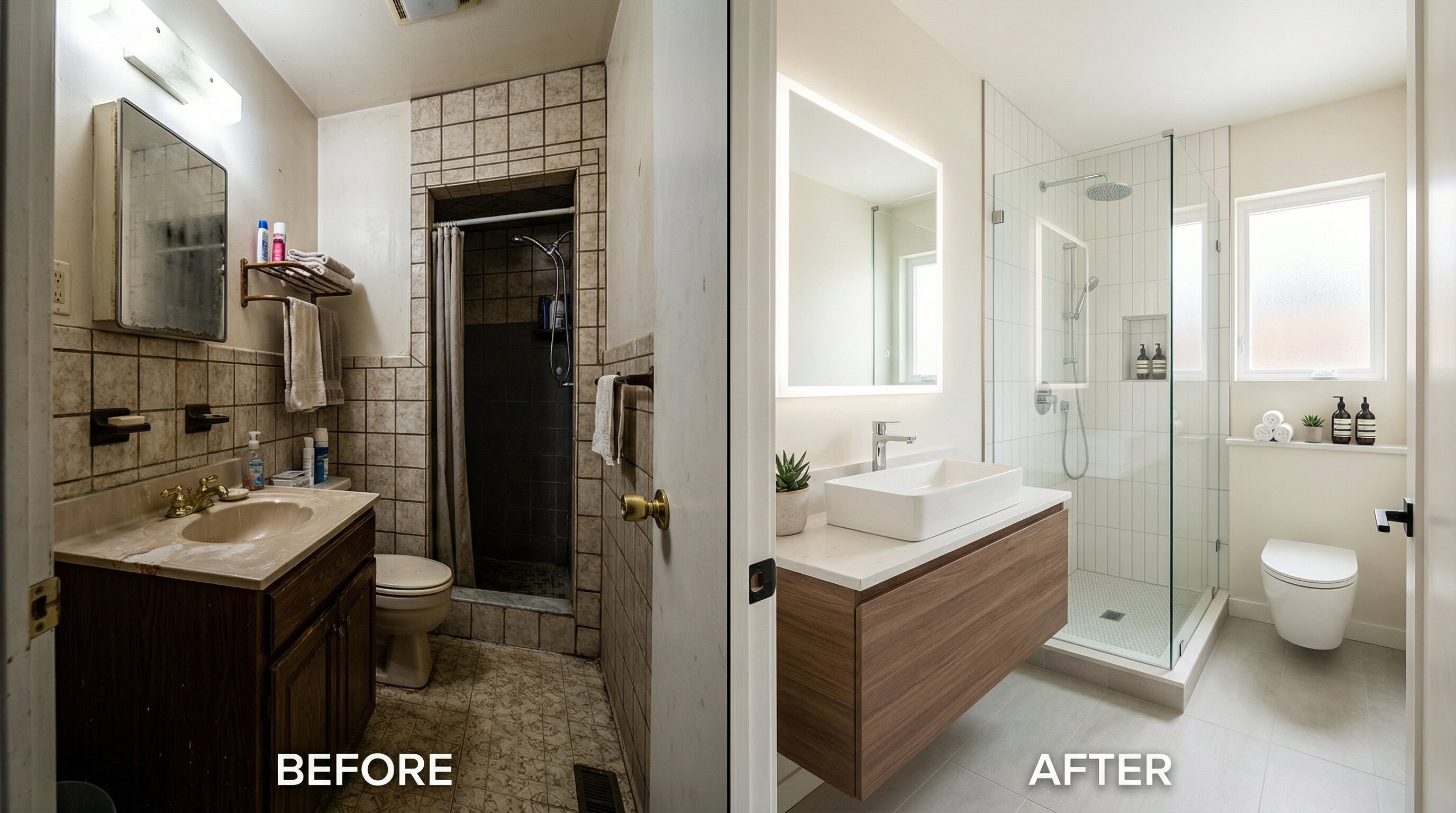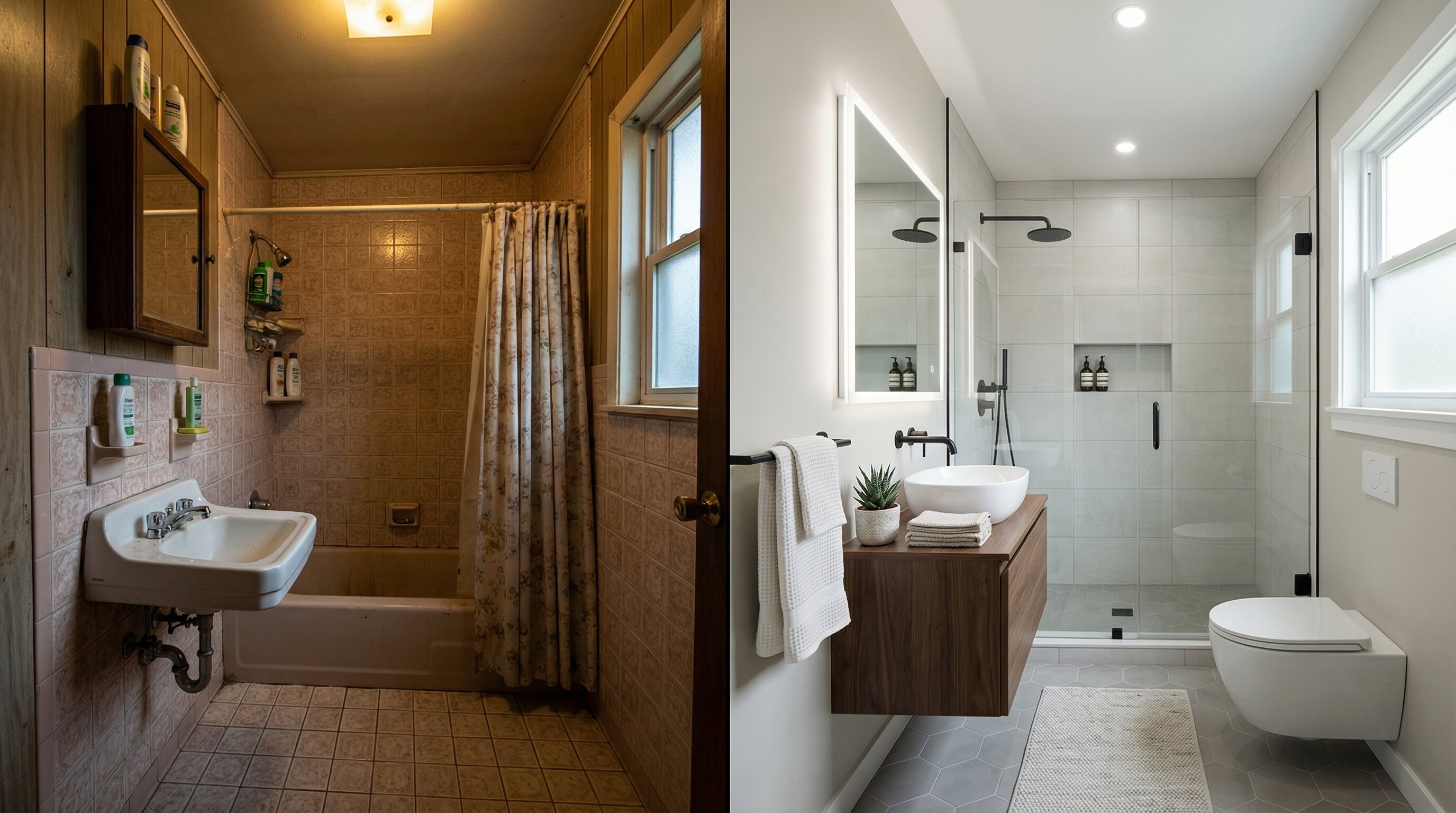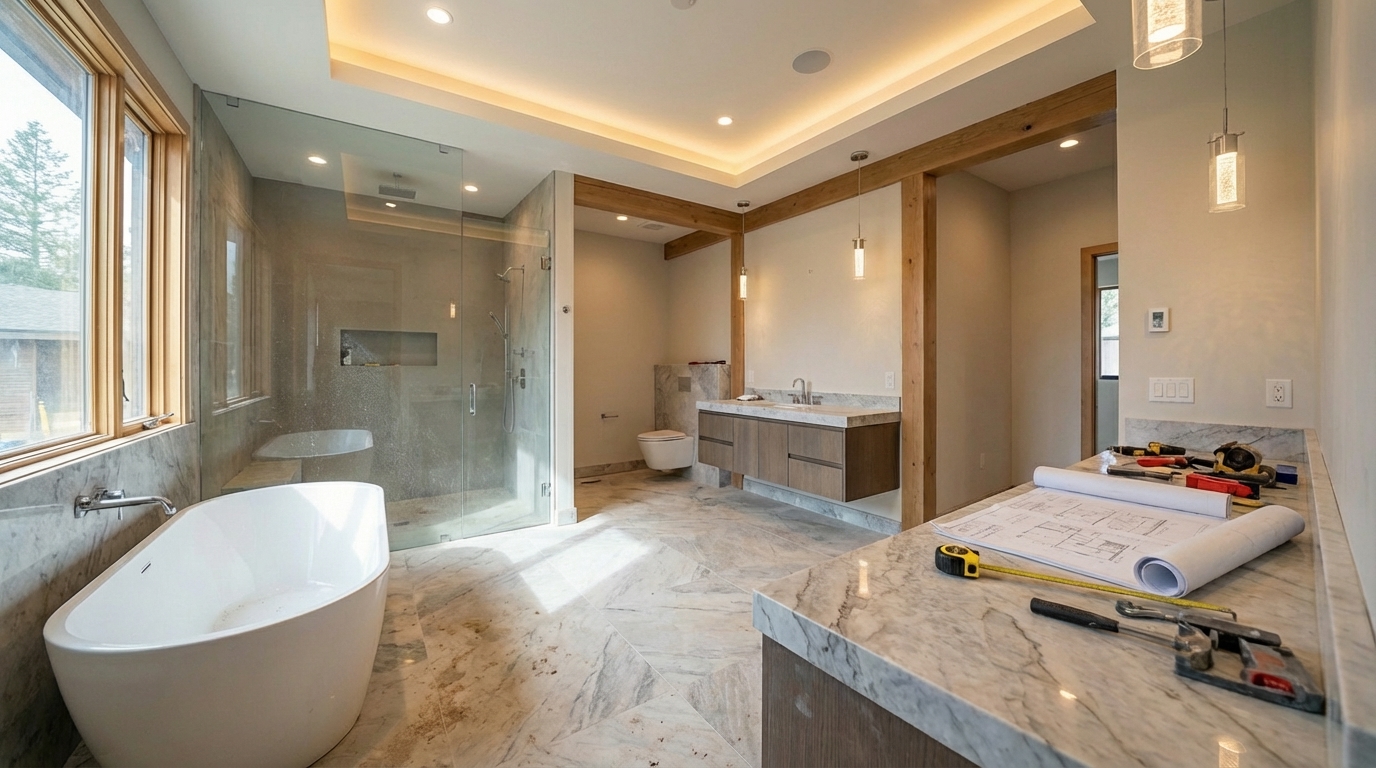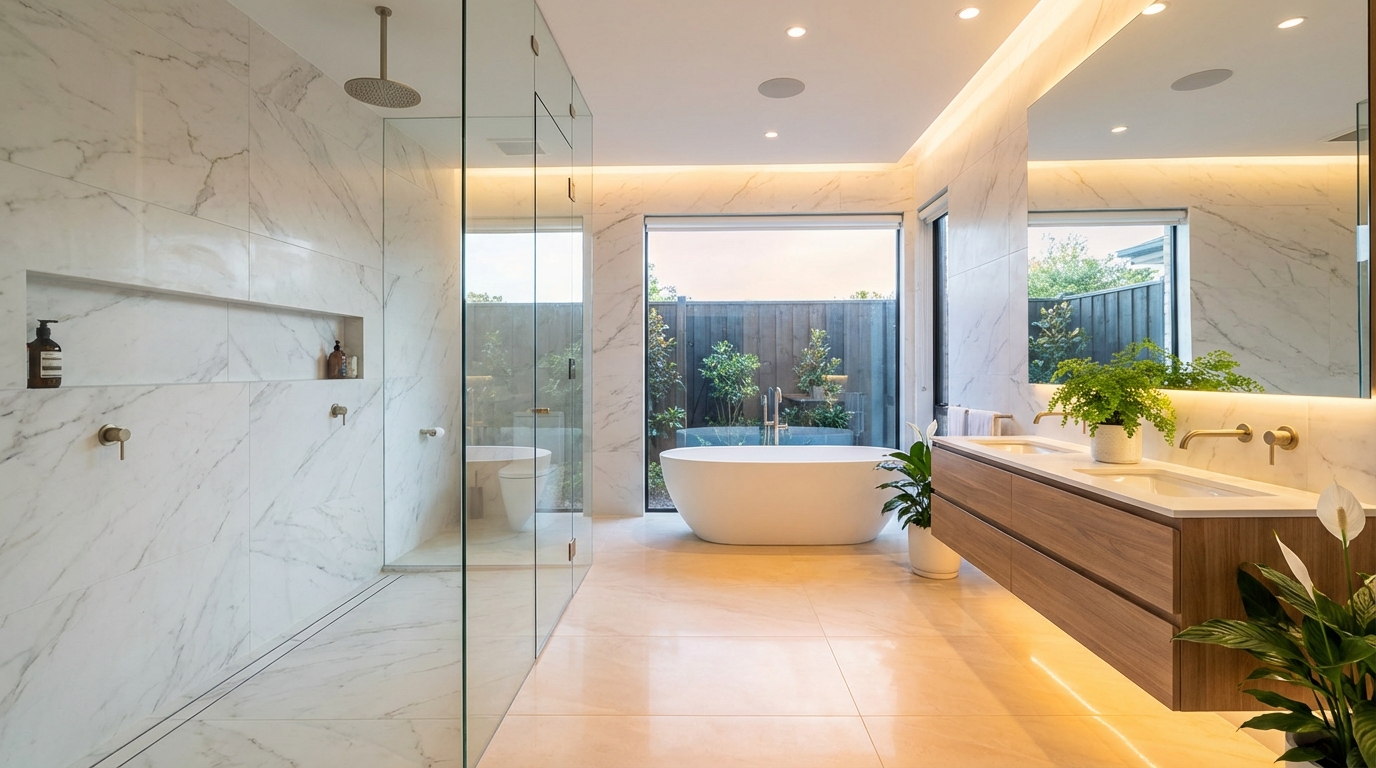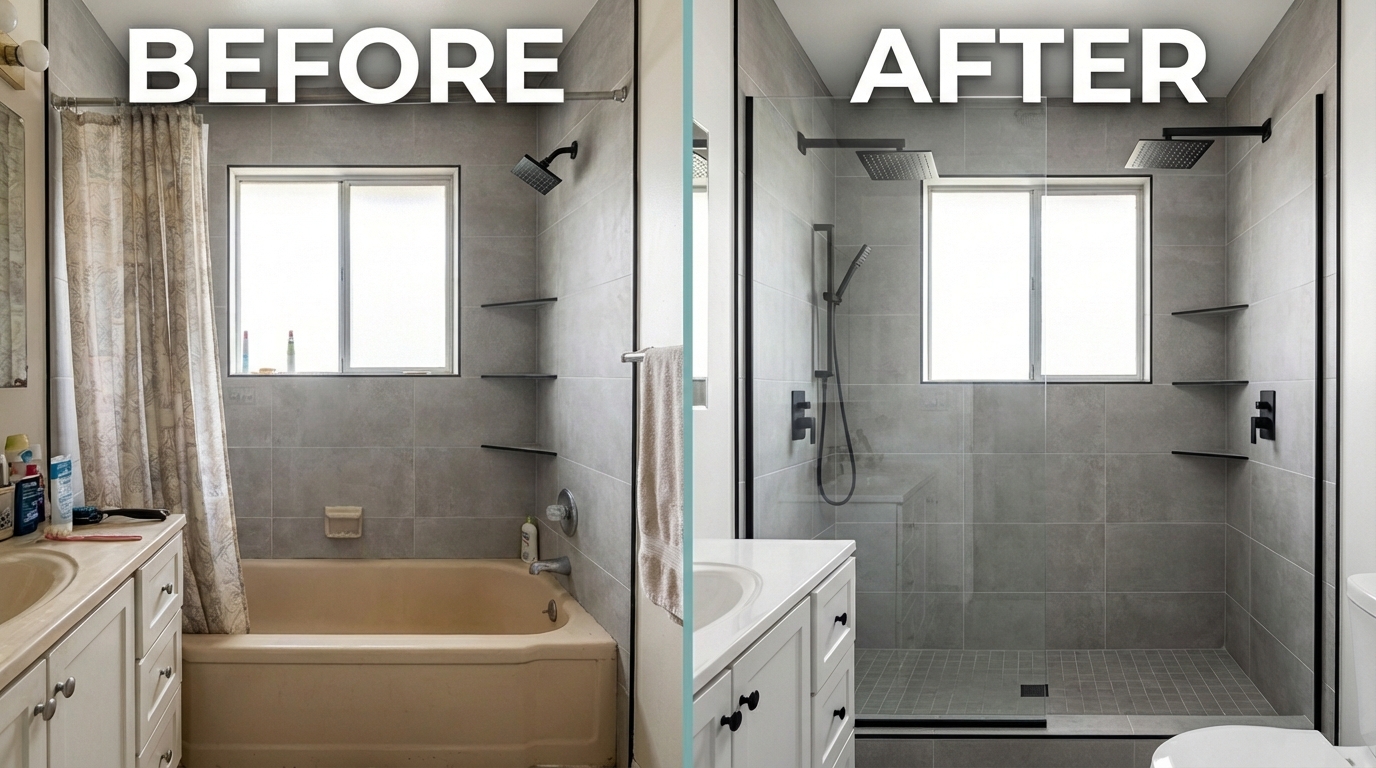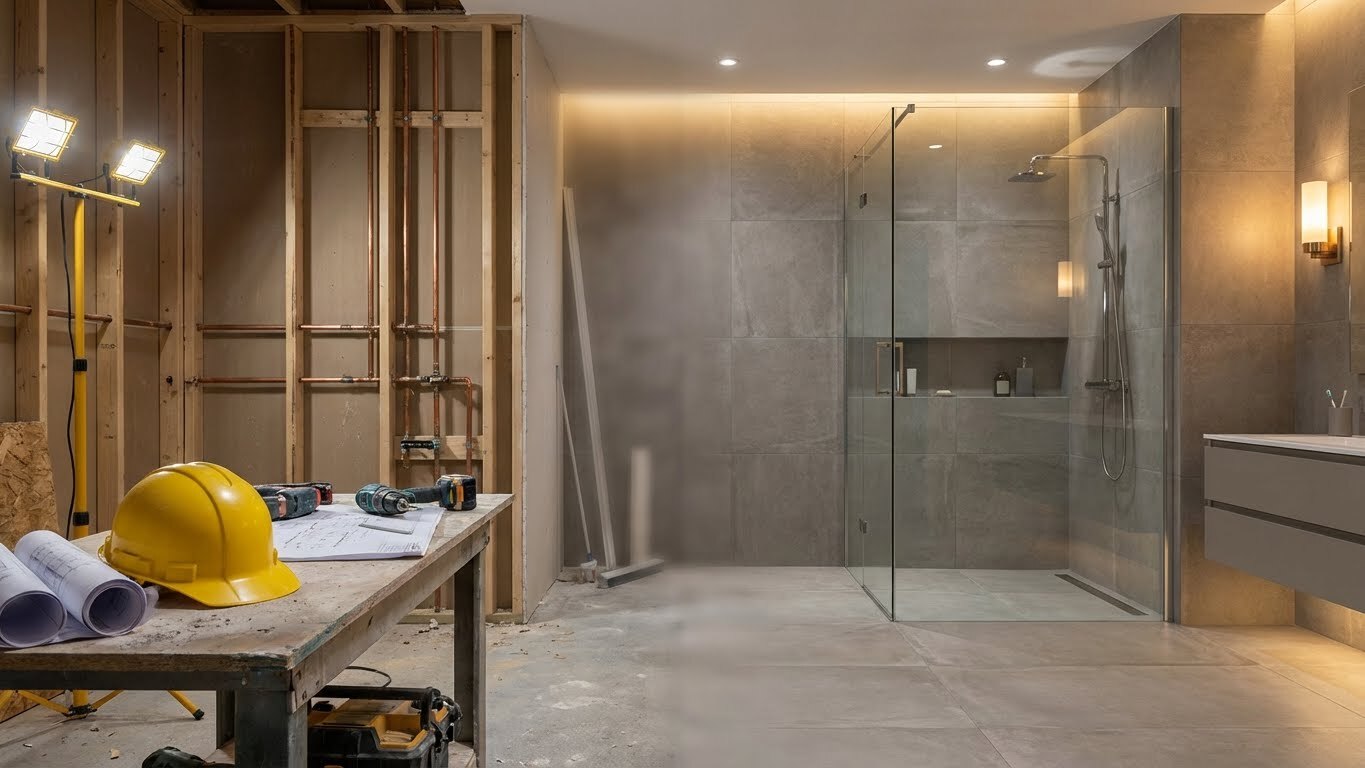
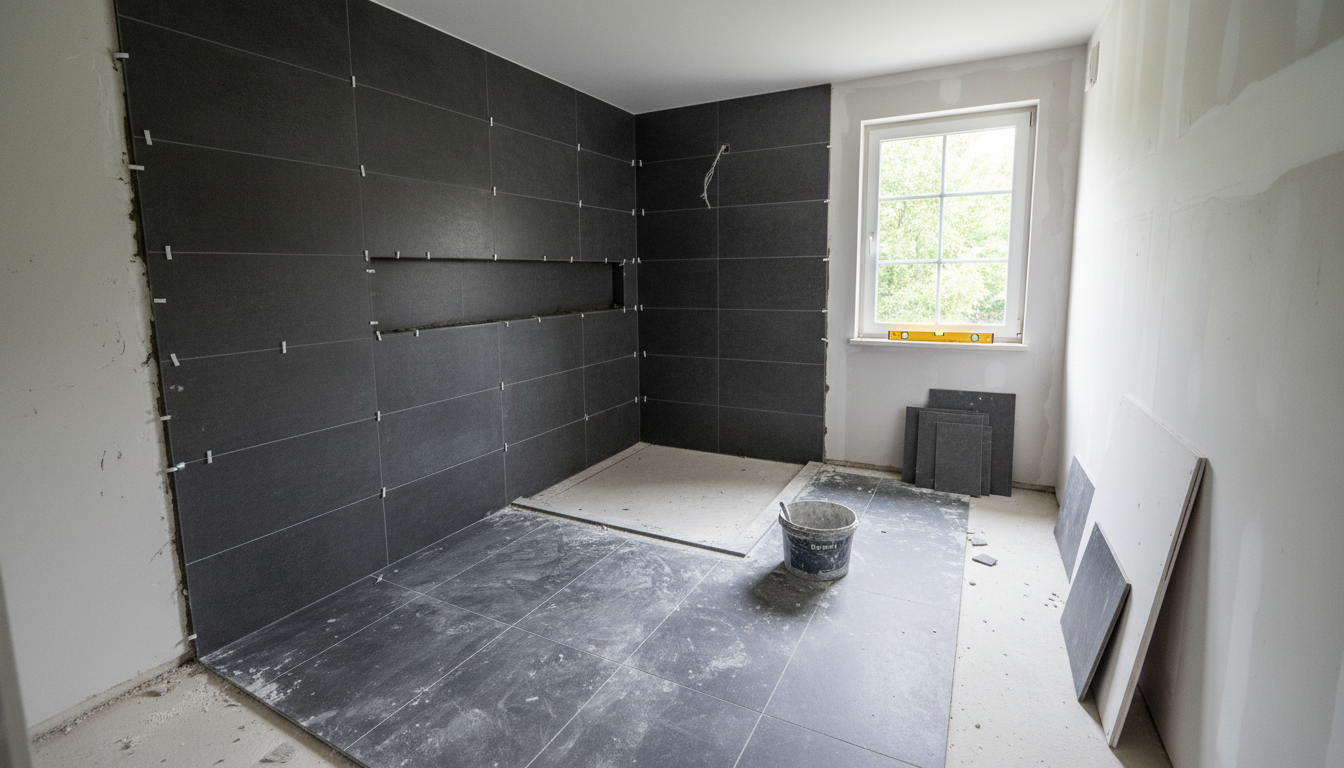

Tiling a bathroom is one of the most impactful renovations a homeowner can make. It increases moisture resistance, improves hygiene, and transforms the visual character of the space. But the range of possible costs is wider than almost any other single-room renovation because the tile material alone can range from $1 per square foot for basic ceramic to $30 per square foot for natural marble a 30x difference on material alone, before labor even enters the equation. This guide walks through every variable so you can build an accurate budget for your specific project.
Average Cost to Tile a Bathroom by Size
The average cost to tile a bathroom depends first and foremost on how much surface area needs to be covered. Unlike a simple floor project, bathroom tiling often covers multiple surfaces the floor, lower wall wainscoting, shower walls, and occasionally the full wall height from floor to ceiling. The total tile area in a bathroom is therefore almost always larger than the floor footprint suggests. A standard 60-square-foot bathroom floor typically requires 180 to 240 square feet of tile when walls are included. The table below breaks down the average cost to tile a bathroom by room size, from a small 5x5 powder room to a full master bathroom suite. All figures include materials, labor, thinset, grout, and standard prep work, but exclude tile removal (which applies to retile projects only).
How to Estimate Your Bathroom: Measure the floor square footage, then multiply by 3 to 4 to estimate total tile area including walls and shower surround. This is the single most common budgeting mistake homeowners make estimating only the floor and being surprised when the full quote comes in.
Cost to Tile a Bathroom by Surface
The cost to tile a bathroom varies significantly depending on which surfaces are being tiled. A floor-only project is the simplest and lowest-cost tile installation in a bathroom. A shower wall project is the most complex and most expensive per square foot because it requires waterproofing membrane application, precision cuts around fixtures, and perfectly plumb installation on vertical surfaces. Understanding which surfaces you are tiling is the most important step in getting an accurate estimate. The labor cost per square foot increases substantially as tile moves from horizontal floor surfaces to vertical wall surfaces to overhead and wet-zone applications. The table below shows installed cost by surface type so you can build a line-item budget for each area of your bathroom independently.
Shower Tiling Warning: Shower wall tile installation is the highest-risk tile job in a home if done incorrectly. Failed waterproofing behind shower tile causes mold, subfloor rot, and structural damage that can cost $5,000 to $20,000 to remediate. Always hire a licensed tile setter with shower waterproofing experience for this surface specifically.
Cost to Tile a Bathroom by Tile Type
The type of tile you select is the single largest variable in your material budget. Ceramic tile remains the most affordable and widely used option in residential bathrooms, with material costs starting below $2 per square foot. Porcelain tile offers superior density and moisture resistance at a modest premium. Natural stone marble, travertine, slate, or limestone commands the highest material cost and requires sealing but produces the most distinctive aesthetic results. Glass and mosaic tiles are typically used as accent surfaces rather than full-coverage tile. Every tile type also has different labor implications. Larger tiles require a more precisely leveled substrate. Mosaic sheets have high grout line counts that take longer to set and finish. Natural stone must be dry-laid and sorted before installation to match veining. The table below shows installed cost per square foot for each major tile type, combining material and labor into a single planning figure.
Best Value Recommendation: Porcelain tile at $8 to $20 per square foot installed is the best overall value for most bathroom projects. It is denser than ceramic (PEI 5 vs. PEI 3), naturally frost-resistant, requires no sealing, and comes in formats that convincingly mimic stone and wood at a fraction of the price.
Bathroom Tile Installation Labor Cost
Labor cost to tile a bathroom is the most misunderstood part of the budget for most homeowners. The average labor cost to tile a bathroom floor runs $4 to $8 per square foot for a standard straight-lay ceramic or porcelain installation. Wall tile adds $1 to $4 per square foot to that rate due to the additional prep and vertical setting complexity. Shower walls are the highest labor cost surface, running $7 to $15 per square foot because of waterproofing requirements, precision cuts around fixtures, and the structural demands of vertical tile setting. Labor also varies significantly by region. High-cost markets like New York, San Francisco, and Boston typically run 30 to 60 percent above the national averages shown below. Labor is usually quoted per square foot for larger projects and as a flat day rate ($350 to $700 per day) for smaller jobs. Always request itemized quotes showing labor separately from materials so you can compare bids accurately.
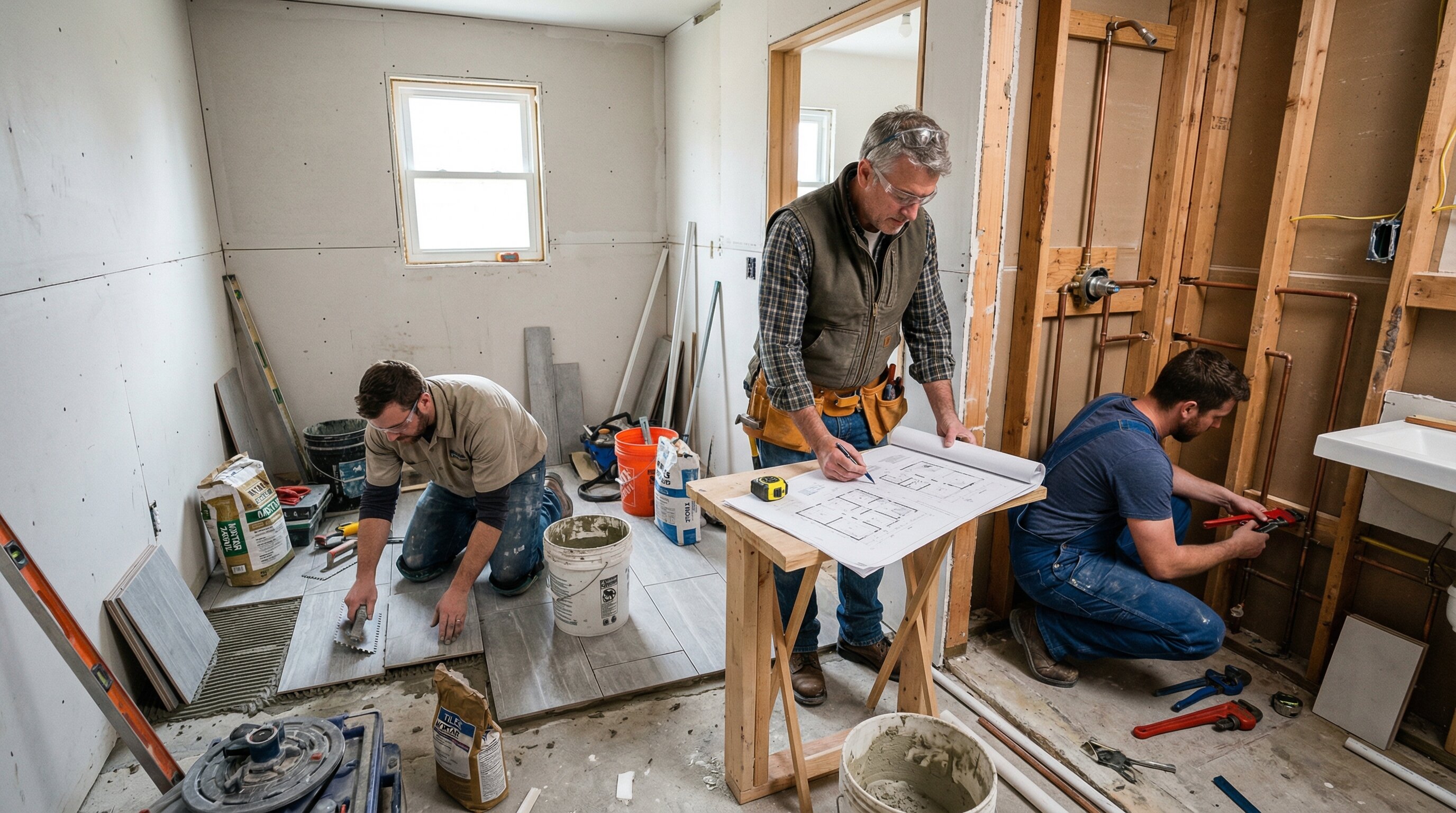
Two-Trade Rule: Most bathroom tile projects require two trades: a tile setter for the floor and wall work, and a licensed plumber if any fixtures must be removed or repositioned. If you are retiling a shower, a plumber is almost always needed to pull the drain, which costs $100 to $300 additional and should be in your budget before work begins.
Bathroom Tile Material Cost Breakdown
Material cost in a bathroom tile project is more than just the tile itself. A complete material budget includes the tile, the adhesive (thinset mortar), the backing substrate (cement board), waterproofing membrane for wet areas, grout, sealer, edge trim pieces, and an overage allowance for cuts and breakage. Homeowners who budget only for the tile face a 30 to 60 percent budget shortfall when all supporting materials are factored in.
The standard overage allowance is 10 percent for straight-lay patterns and 15 to 20 percent for diagonal or herringbone patterns, which generate more waste cuts. For natural stone, always add 15 percent minimum because stone breakage during cutting is higher than for ceramic or porcelain. The table below itemizes every material component with per-square-foot unit costs so you can build an accurate materials-only budget.
Cost to Retile a Bathroom
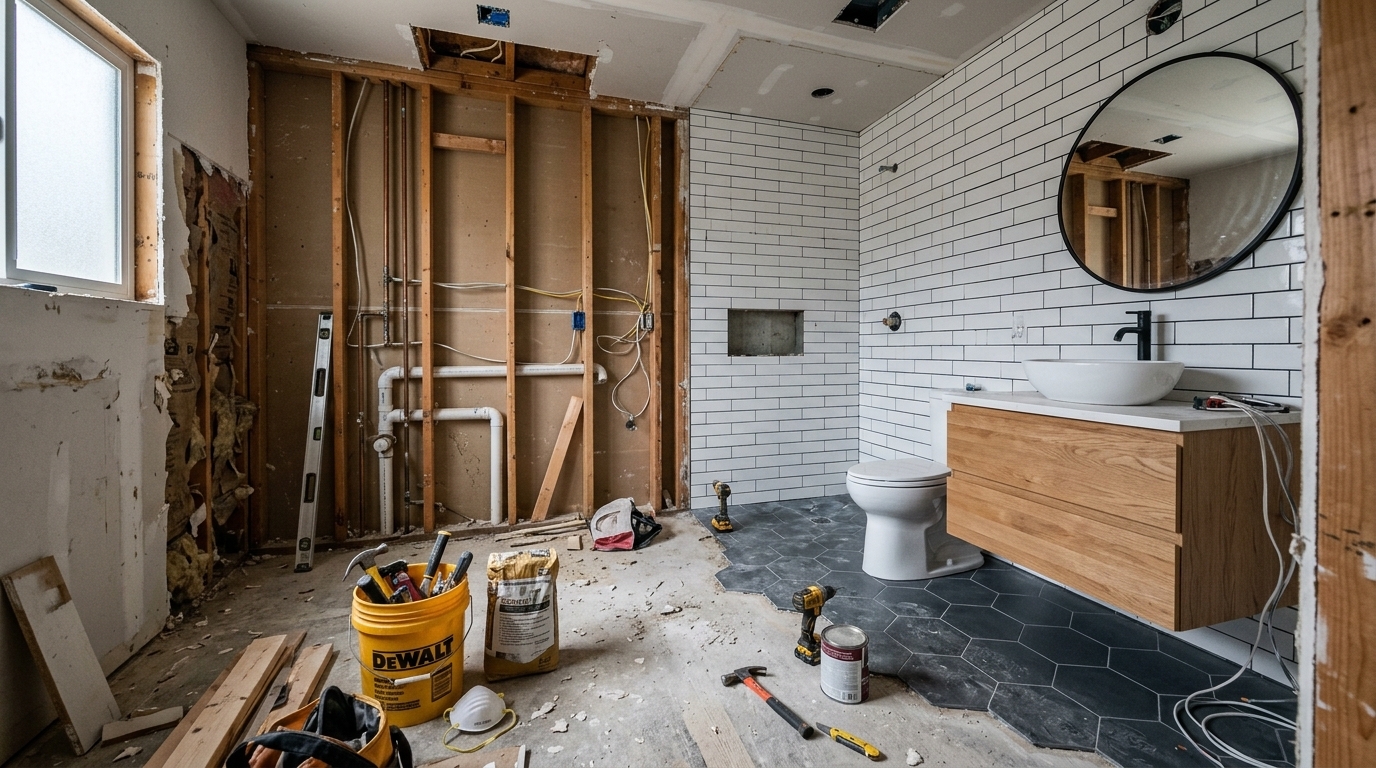
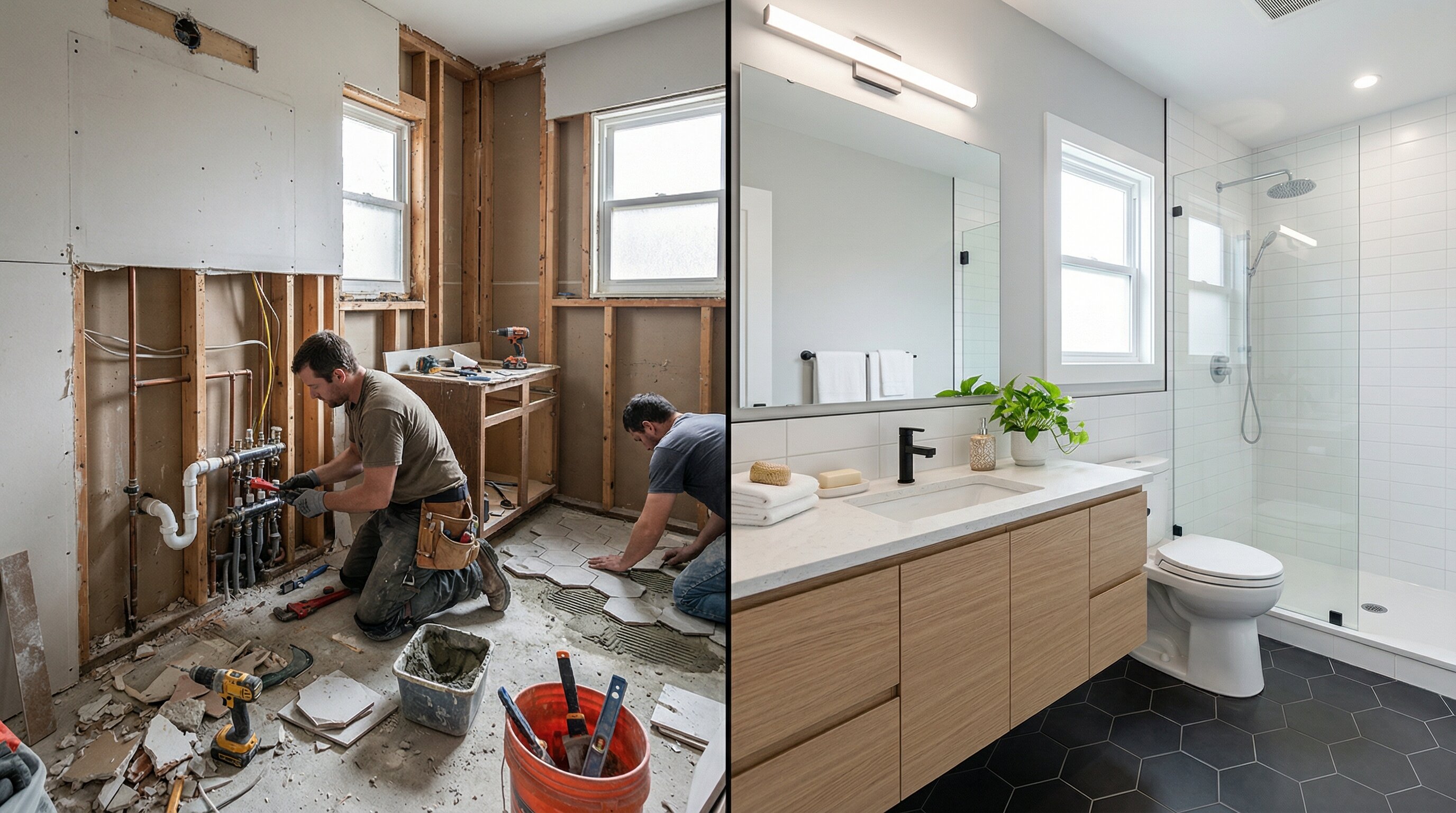
The cost to retile a bathroom is higher than a new tile installation for one primary reason: demolition. Before new tile can go down, the existing tile must be removed, the underlying substrate must be inspected and repaired if damaged, and in many cases the backer board must be replaced. Tile removal alone adds $1.50 to $4 per square foot to the project cost a $200 to $600 addition for a standard bathroom floor.
How much does it cost to re-tile a bathroom depends heavily on what is found after the old tile comes off. Bathrooms that have been tiled for more than 15 years often reveal water-damaged subfloor, deteriorated backer board, or mold behind shower surrounds. These discoveries add $300 to $3,000 in remediation cost that cannot be anticipated in the initial quote. The table below shows cost ranges for the most common retile scopes so you can understand what to budget for each type of project.
Retile Budget Rule: Always add a 20 percent contingency buffer to any retile budget. The most experienced tile contractors still cannot guarantee what they will find once the old tile comes off. A $3,000 retile quote can become $3,600 if a section of water-damaged backer board needs replacement and this is normal, not a contractor upsell.
Small Bathroom Tile Cost
How much does it cost to tile a small bathroom is one of the most searched variations of this topic, and the answer surprises most homeowners: small bathrooms cost more per square foot to tile than large ones. The reason is labor minimums. Most licensed tile setters charge a minimum of $400 to $600 for a project regardless of size because mobilizing, setting up, mixing thinset, and cleaning up takes the same amount of time whether the floor is 25 square feet or 80 square feet. A 5x5 bathroom (25 sq ft) with ceramic tile and straight-lay installation typically costs $450 to $1,000 all-in. A 5x8 bathroom (40 sq ft) runs $700 to $1,700 for floor and partial walls.
How much does it cost to tile a small bathroom shower is a separate question: even in a small bathroom, the shower surround adds 60 to 100 square feet of vertical tile surface, which can double the total project cost. The most cost-effective approach for small bathrooms is to limit tile to the floor and wet-zone walls only, using paint-grade moisture-resistant drywall on the remaining upper walls.
Hidden and Additional Costs to Budget For
The average cost to tile a bathroom quoted by contractors often excludes several line items that are either conditional, site-dependent, or assumed to be the homeowner's responsibility. The most common source of budget overruns in tile projects is the discovery of damaged subfloor or water-affected backer board after demo begins.
A secondary source is the cost of tile removal in retile projects, which many contractors list as a separate line item rather than including in the base quote. Before accepting any tile installation quote, ask explicitly whether the following items are included. If the answer is unclear, request an itemized written breakdown. The table below lists the most common hidden costs and when each one typically applies.
Real-World Cost Examples: Three Tiled Bathrooms
The following three examples represent complete, all-in installed costs for bathroom tile projects at budget, mid-range, and high-end specifications. All figures use 2026 national average pricing for materials and labor. These are not estimates they are line-item reconstructions of the type of project each price point produces, so you can see exactly where money is being spent and what tradeoffs each tier involves.
Key Observation: The jump from $860 to $3,016 is driven primarily by surface area (floor only vs. floor plus walls) and tile quality, not labor rate differences. The jump from $3,016 to $8,555 is driven by adding a shower surround, switching to premium tile, and the waterproofing requirement. Tile type and surface coverage are the two biggest levers in your budget.
DIY vs. Professional Tile Installation
Tiling a bathroom floor is a DIY-achievable project for a homeowner with basic construction skills, the right tools, and patience for a learning curve. Tiling a shower is not. The difference is waterproofing: a floor tile failure results in a cracked tile or loose grout. A shower wall tile failure where water penetrates behind improperly waterproofed tile can cause $10,000 to $30,000 in mold remediation and structural repair. Professional installation for shower areas is a non-negotiable investment for most homeowners.
The labor cost to tile a bathroom wall professionally runs $5 to $14 per square foot. For a standard 80 sq ft bathroom with 180 sq ft of tile surfaces, that is $900 to $2,500 in labor. DIY saves that amount but requires a wet saw rental ($100 to $150 per day), tile spacers, trowels, grout floats, and typically two full weekends of work. The comparison below helps you decide where professional labor is worth paying for.
How to Save Money on Bathroom Tile Installation
The average cost to tile a bathroom floor and walls is one of the most negotiable budgets in home renovation. Unlike HVAC or plumbing where code and safety requirements set a firm cost floor, tile projects offer several genuine savings levers that do not compromise quality. The following strategies are used by experienced remodelers to reduce tile project costs by 15 to 40 percent without cutting corners.
Choose porcelain over natural stone for the floor. Porcelain at $3 to $10 per square foot provides comparable durability to marble or travertine at $10 to $30 per square foot, requires no sealing, and is easier for the installer to cut cleanly which can reduce labor cost by $1 to $3 per square foot on complex cuts.
Limit full-height tile to the shower zone. Tiling every wall floor-to-ceiling in a large bathroom dramatically increases material and labor cost. Use tile to 48 inches above the floor outside the shower zone, then paint moisture-resistant drywall above. This can reduce wall tile square footage by 30 to 50 percent.
Use large-format tile to reduce grout lines and labor time. A 24x24 inch porcelain tile requires far fewer cuts and grout joints than a 4x4 inch ceramic which can lower labor time per square foot despite the higher tile material cost.
Supply your own tile and let the contractor install. Labor-only quotes are 15 to 25 percent lower than supply-and-install contracts. Buy tile directly from a tile distributor or during a sale and provide it to the contractor with a 15 percent overage. Verify this is acceptable with your contractor before ordering.
Schedule during contractor slow seasons. January through March is the lowest-demand period for tile contractors in most US markets. Contractors willing to fill their schedule may offer 10 to 20 percent discounts on labor during this window.
Get three written, itemized quotes. The single most reliable cost reduction is comparison shopping. Itemized quotes show exactly what is and is not included. Labor-only cost variations of 30 to 50 percent between equally qualified installers are common in the same metro area.
Key Takeaway
The average cost to tile a bathroom is $1,500 to $4,500 installed for a standard 50 to 80 square foot bathroom covering the floor and walls. Per square foot, installed tile costs run $5 to $25 depending on tile type, surface complexity, and labor rates. A small bathroom tile job runs $600 to $1,700. A full master bathroom tiling project runs $1,900 to $8,500. Retiling an existing bathroom costs $700 to $8,000 depending on scope. The numbers below reflect what homeowners actually pay in 2026 not outdated estimates from 2018 or 2020 that still populate most competitor pages. Every table in this guide has been built from current contractor data, regional labor surveys, and tile material pricing from national distributors.
Frequently Asked Questions
How much does it cost to tile a bathroom?
The average cost to tile a bathroom is $1,500 to $4,500 installed for a standard 50 to 80 square foot bathroom covering floor and walls with porcelain or ceramic tile. Per square foot, the all-in installed cost runs $5 to $25 depending on tile type, surface complexity, and regional labor rates. Small bathrooms run $600 to $1,700. Full master bathroom tiling projects run $1,900 to $8,500.
How much does it cost to tile a bathroom floor?
The cost to tile a bathroom floor runs $5 to $15 per square foot installed for ceramic or porcelain tile, or $700 to $2,000 total for a standard 35 to 60 square foot bathroom floor. Natural stone floor tile installed runs $11 to $25 per square foot. The floor-only labor cost to tile a bathroom is $4 to $8 per square foot, which is the lowest labor rate of any tile surface in the bathroom.
What is the average cost to tile a bathroom?
The average cost to tile a bathroom in the US in 2026 is $1,500 to $4,500 for a standard installation. What is the average cost to tile a bathroom varies by region, tile quality, and which surfaces are covered. The national average for floor plus walls in a 60-square-foot bathroom using mid-range porcelain is approximately $2,800 to $3,200 installed by a licensed tile setter.
How much does it cost to tile a bathroom shower?
The cost to tile a bathroom shower runs $1,500 to $5,000 for a full shower surround including floor, three walls, and any niche or bench tiling. Per square foot, shower wall tile installation costs $9 to $40 installed depending on tile type. Shower floor tile (mosaic or small-format tile for slope drainage) adds $11 to $38 per square foot. Waterproofing membrane, required in all shower tile applications, adds $0.80 to $2.50 per square foot.
How much does it cost to tile a bathroom wall?
The cost to tile a bathroom wall runs $6 to $34 per square foot installed, depending on tile type and height of coverage. A standard 80-square-foot bathroom with walls tiled to 48 inches on three sides (approximately 100 to 120 sq ft of wall tile) costs $700 to $3,000 in wall tile labor and materials. Full floor-to-ceiling wall tiling doubles the surface area and cost proportionally.
How much does it cost to tile a small bathroom?
The cost to tile a small bathroom (35 to 50 square feet) runs $600 to $1,700 installed for floor and partial wall tile using ceramic or porcelain. How much it costs to tile a small bathroom floor only runs $450 to $900. The cost to tile a small bathroom floor specifically without wall tile is the lowest-cost tile project in a residential bathroom. How much should it cost to tile a small bathroom including a shower surround is $1,200 to $2,500. How much would it cost to tile a small bathroom with premium tile like porcelain or stone is $1,500 to $3,500. The average cost to tile a small bathroom is higher per square foot than larger bathrooms because contractor minimums apply regardless of area.
How much does it cost to get a bathroom tiled?
The cost to get a bathroom tiled professionally ranges from $800 to $9,000+ depending on bathroom size, tile quality, and scope of surfaces covered. How much does it cost to have a bathroom tiled in the US averages $1,500 to $4,500 for a standard bathroom with floor and wall tile. What does it cost to have a bathroom tiled by a licensed tile setter includes materials, labor, thinset, grout, backer board, and standard prep not tile removal, which is quoted separately for retile projects.
How much does it cost to re-tile a bathroom?
The cost to re-tile a bathroom runs $700 to $8,000 depending on scope. How much does it cost to re-tile a bathroom floor only is $700 to $2,500. How much does it cost to re tile a bathroom covering all surfaces is $2,500 to $8,000. The average cost to re tile a bathroom for floor and walls is $1,500 to $4,000. How much does it cost to re-tile a small bathroom is $800 to $2,200 for floor and partial walls. Retile projects always cost more than new installations because tile removal adds $1.50 to $4 per square foot in demolition labor, which is not present in new construction installs.
How much does it cost to tile a full bathroom or 10x10 bathroom?
How much does it cost to tile a full bathroom meaning floor, all walls, and shower runs $2,500 to $8,000 for a standard 60 to 80 square foot bathroom. How much cost to tile a 10 x 10 bathroom specifically (100 sq ft floor) covering floor and walls with standard porcelain is $2,800 to $5,500. How much cost to tile a bathroom at this size is heavily influenced by wall tile height and whether the shower is included. How much cost to tile a bathroom with premium stone in a 10x10 space can reach $7,000 to $10,000 for full-coverage luxury installations.
What is the labor cost to tile a bathroom?
The labor cost to tile a bathroom floor is $4 to $8 per square foot. The labor cost to tile a bathroom wall is $5 to $10 per square foot. How much does labor cost to tile a bathroom overall depends on total tile area and surface types, but a standard bathroom project typically runs $700 to $2,500 in tile-setting labor alone, not including electrician or plumber fees. How much does it cost to have a bathroom tiled by a professional in high-cost cities like New York or San Francisco runs 30 to 60 percent above these national averages.
What does it cost to tile a bathroom per square foot?
The installed cost to tile a bathroom per square foot is $5 to $25 all-in. Ceramic tile installed runs $5 to $15 per square foot. Porcelain installed runs $8 to $20 per square foot. Natural stone installed runs $11 to $44 per square foot. The floor-only cost to tile a bathroom floor per square foot is at the lower end of each range; wall and shower tile surfaces add $1 to $7 per square foot in additional labor.
How much would it cost to tile a bathroom yourself (DIY)?
The DIY cost to tile a bathroom yourself is $300 to $1,500 in materials for a standard bathroom, which is $700 to $2,500 less than a professional installation. The cost to DIY tile a bathroom includes tile, thinset, grout, backer board, wet saw rental ($100 to $150/day), and supplies. However, DIY tiling carries meaningful quality risk on wall and shower surfaces. DIY bathroom floor tile on a simple straight-lay pattern is achievable for most homeowners with patience. DIY shower tile installation is not recommended due to waterproofing complexity.
What is the average cost to tile a bathroom shower?
The average cost to tile a bathroom shower is $1,500 to $3,500 for a standard 36x36 to 48x36 inch shower enclosure, including three walls and the shower floor. Premium tile or larger shower formats (60+ inch walk-ins) run $3,000 to $7,000. The average cost to tile a bathroom shower wall only (not floor) runs $900 to $2,500 for a standard shower surround. These figures include waterproofing membrane, which is non-negotiable in shower applications.