
Renovating a bathroom is exciting, but it’s also one of the most disruptive home projects. Many homeowners ask: “How long will this actually take?” Without a clear plan, timelines can stretch, causing stress, extra costs, and living in a half-finished space. From demolition and plumbing to tiling and fixture installation, each phase has its own duration and unexpected delays can throw off your schedule.
Understanding a realistic bathroom remodel timeline helps you plan effectively, allocate time for each stage, and avoid surprises. This guide breaks down the remodel step by step, explains potential delays, and provides practical tips to keep your project on track.
How Long Does a Bathroom Remodel Take?
The total duration of a remodel depends on bathroom size, layout, and finishes. Typical timelines are:
These estimates include pre-construction planning, demolition, construction, and finishing touches. Adding a buffer of 5–10% for material delays or inspections ensures a smoother process.
Tip: Always factor in lead times for specialty items like cabinets, tiles, or LED mirrors. Missing materials can stall the project for days.
Pre-Construction Planning
Good planning sets the foundation for a smooth remodel. Skipping steps here can create costly delays.
Design & Layout (1–2 weeks): Decide on flooring, cabinets, vanity height, shower type, lighting, and fixtures. A finalized layout prevents mid-project design changes that add time.
Permits & Approvals (1–3 weeks): Plumbing, electrical, or structural changes usually require local permits. Securing these in advance avoids work stoppages.
Material Ordering (1–4 weeks): Cabinets, tiles, mirrors, and light fixtures often have long lead times. Ordering ahead keeps construction moving without interruption.
Tip: Keep a checklist for design choices, material specs, and permits. This helps track decisions and reduces misunderstandings with contractors.
Step-by-Step Remodel Timeline
1. Demolition (1–3 days)
Remove old cabinets, flooring, tiles, and fixtures carefully. Protect adjacent rooms with plastic sheeting and drop cloths. Proper bathroom demolition ensures you don’t damage existing plumbing or electrical wiring.
Tip: If walls contain moisture or mold, address it now. Treating underlying issues prevents future repairs.
2. Plumbing & Electrical (3–5 days)
Install new pipes, drains, and electrical wiring. This includes adding GFCI outlets, proper lighting circuits, and IP-rated fixtures in wet zones for safety.
Tip: Double-check measurements for vanity sinks, showerheads, and lighting placement. Early adjustments save time later.
3. Tiling & Flooring (2–4 days)
Install wall tiles, shower tiles, and flooring. Allow proper curing for mortar and grout. Complex tile patterns or large-format tiles may take longer. Moisture-resistant materials increase durability.
Tip: Keep materials on site in advance. Waiting for missing tiles can pause the project for days.
4. Fixture & Cabinet Installation (2–3 days)
Install vanities, sinks, showers, toilets, mirrors, and lighting. LED mirrors or vanity light bars improve both functionality and style. Check alignment, leveling, and plumbing connections carefully.
Tip: Consider adding dimmer switches or layered lighting for flexible ambiance and task lighting.
5. Painting & Finishing Touches (1–2 days)
Apply waterproof paint, finish trims, and install accessories. These steps protect surfaces and complete the polished look.
Tip: Use moisture-resistant paint for ceilings and walls to prevent peeling over time.
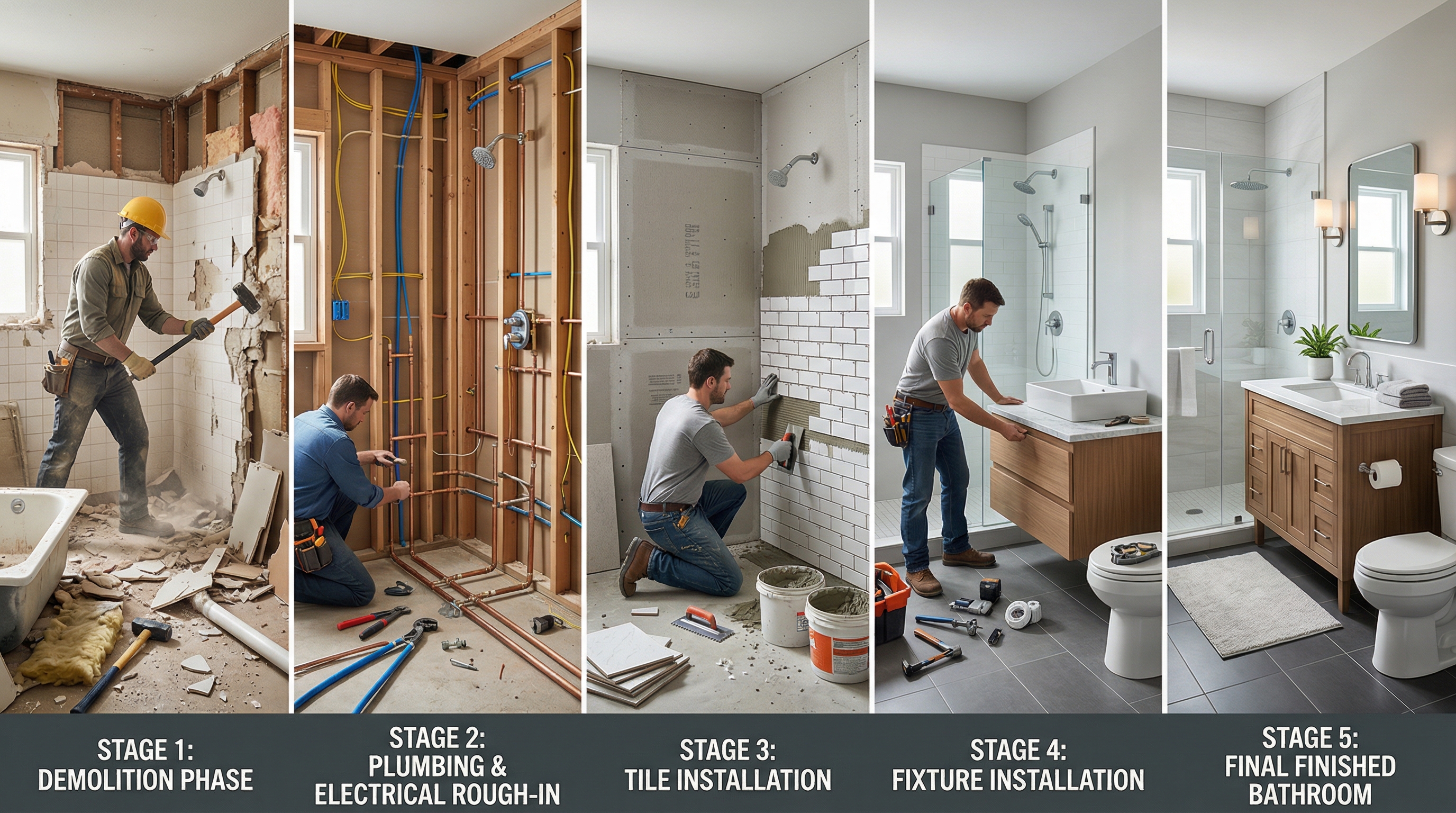
Total Duration: Adding up each phase aligns with typical remodel times. Always include a buffer for inspections, material delays, or unexpected challenges.
Bathroom Type Timelines
Different bathroom sizes and layouts impact duration:
Small Bathroom (2–4 weeks): Fewer fixtures and minimal tiling make completion faster. Good planning allows for the shortest timeline.
Half Bathroom (2–3 weeks): Limited plumbing and fixtures make it one of the quickest remodels. Simple finishes speed up installation.
Standard Full Bathroom (4–6 weeks): Moderate complexity with a shower, vanity, and full tiling. Coordination of contractors is critical to avoid downtime.
Master Bathroom (6–8+ weeks): Larger space, multiple fixtures, and high-end finishes extend the project timeline. Custom cabinetry or luxury tiles can add extra days.
Tip: Always include pre-construction planning time for design finalization and permit approvals. Skipping this can add 1–2 weeks unexpectedly.
Common Delays and How to Prevent Them
Even well-planned projects can encounter delays. Common causes include:
Material Shortages: Tiles, cabinets, or light fixtures arriving late can stall progress.
Permit & Inspection Delays: Municipal approvals may not align with your schedule.
Design Changes: Adjustments mid-project can add days or weeks.
Scheduling Conflicts: Coordinating plumbers, electricians, and tilers can create bottlenecks.
Tip: Anticipate risks by:
Ordering materials early
Booking inspections in advance
Maintaining clear communication with contractors
Adding a buffer of 5–10% to the overall timeline
Tips to Keep Your Remodel on Track
Plan Thoroughly: Finalize design, materials, and permits before starting construction.
Order Materials Early: Ensure tiles, cabinets, and fixtures arrive before demolition begins.
Schedule Inspections in Advance: Booking inspections early prevents idle waiting periods.
Maintain Clear Communication: Frequent check-ins with contractors prevent misunderstandings and rework.
Document Every Step: Track progress, payments, and any issues to stay organized.
Use Layered Lighting: Combine ambient, task, and accent lighting to make the space functional and stylish.
Following these tips ensures a smoother remodel, on-time completion, and less stress for homeowners.
Budgeting & Time Buffer
Even with careful planning, some delays are inevitable. Add extra 10–15% of time for:
Late delivery of fixtures
Contractor availability
Inspection rescheduling
Unexpected structural or plumbing issues
Tip: Allocate a small contingency budget for surprises. Being proactive saves stress and extra cost later.
Frequently Asked Questions
What is the best way to plan a bathroom remodel timeline?Break the remodel into clear phases: planning, demolition, construction, and finishing. Include time for permits, inspections, and material delivery. Checklists and early communication with contractors reduce surprises.
How long does a small bathroom remodel typically take?Small bathrooms usually take 2–4 weeks, depending on plumbing, tile work, and fixture installation. Pre-ordering materials and scheduling trades efficiently can reduce this time.
What causes bathroom remodels to run longer than expected?Delays often come from late material deliveries, permit approvals, design changes, or scheduling conflicts between trades. Proper planning and buffers prevent most timeline overruns.
Can I remodel my bathroom faster?Yes. Planning thoroughly, ordering materials early, and hiring experienced contractors can shorten the timeline. Some steps, like tile curing and inspections, cannot be rushed without compromising quality.
Do master bathrooms always take longer?Yes. Larger spaces, custom cabinetry, multiple fixtures, and high-end finishes extend the project timeline. Factor in extra days for design changes and coordination of multiple trades.
Conclusion
Renovating a bathroom doesn’t have to be stressful when you understand the timeline and key phases. By planning ahead, ordering materials early, and coordinating contractors carefully, you can keep your remodel on track. Whether it’s a small bathroom or a master suite, following a realistic schedule and adding buffers for delays ensures a smoother process, better results, and a beautiful, functional space you’ll enjoy for years.