
Walk-in tubs have become one of the fastest-growing home accessibility upgrades in the US and for good reason. With an aging population and growing demand for aging-in-place solutions, more homeowners are asking the same question: how much does a walk-in tub cost?
The honest answer is: it depends. Walk-in tub prices range from $2,000 for a basic soaking model to $20,000+ for a fully installed hydrotherapy system from a premium brand. In this guide, you will get real, current price data broken down by brand, type, features, and installation so you can make a fully informed decision.
The average walk-in tub cost in the US ranges from $2,000 to $10,000 for the tub alone, and $5,000 to $17,000+ fully installed. A Safe Step walk-in tub typically costs $3,000–$9,000 (unit) and $8,000–$15,000 installed. Kohler walk-in tubs run $3,500–$10,000 (unit) and up to $16,000 installed. Tubs with air/water jets, heated seats, and shower combos are at the higher end of the range.
Walk-In Tub Cost Summary All Types
Use the table below as your at-a-glance reference for walk-in tub pricing across all major categories.
How Much Does a Walk-In Tub Cost? Understanding the Price Tiers
Walk-in tub pricing falls into three clear tiers based on feature level and build quality. Understanding these tiers helps you identify what you are actually getting at each price point.
The most common mistake buyers make: comparing only unit prices without factoring in installation. A $2,500 budget tub that requires extensive plumbing modification can end up costing more than a $4,500 mid-range tub that fits a standard alcove with minimal rough-in changes.
How Much Does a Safe Step Walk-In Tub Cost?
Safe Step is one of the most searched and most purchased walk-in tub brands in the United States, particularly among seniors. Their aggressive direct-to-consumer marketing (TV infomercials, senior publications) has made "Safe Step walk-in tub cost" one of the top search queries in this category.
Safe Step walk-in tub cost range: $3,000–$9,000 for the unit, and $8,000–$15,000 fully installed in most US markets.
Safe Step Walk-In Tub Pricing by Model
Note on Safe Step Pricing: Safe Step does not publish fixed MSRP prices online; their sales model involves in-home consultations and quotes. The ranges above are based on installer reports and third-party review data. Always get a written itemized quote before signing, and compare it with at least one other brand.
How Much Does a Kohler Walk-In Tub Cost?
Kohler walk-in tubs cost $3,500–$10,000 for the unit and $8,500–$16,000 fully installed. Kohler is widely regarded as the top-quality brand in the walk-in tub market; their units are built to higher construction tolerances and typically carry stronger warranties than budget alternatives.
Unlike Safe Step, Kohler sells through authorized dealers and home improvement retailers, which means you can purchase the unit separately from installation, a key cost-saving advantage for buyers who want to shop their own contractor.
Kohler Walk-In Tub Models and Costs
Kohler vs. Safe Step Which is worth more? Kohler offers better long-term durability and parts availability. Safe Step offers a more turnkey experience (they handle everything). For buyers prioritizing quality, Kohler wins. For buyers who want a single-vendor hassle-free install, Safe Step's model suits them but at a premium over buying the components separately.
How Much Does a Walk-In Tub Cost Installed?
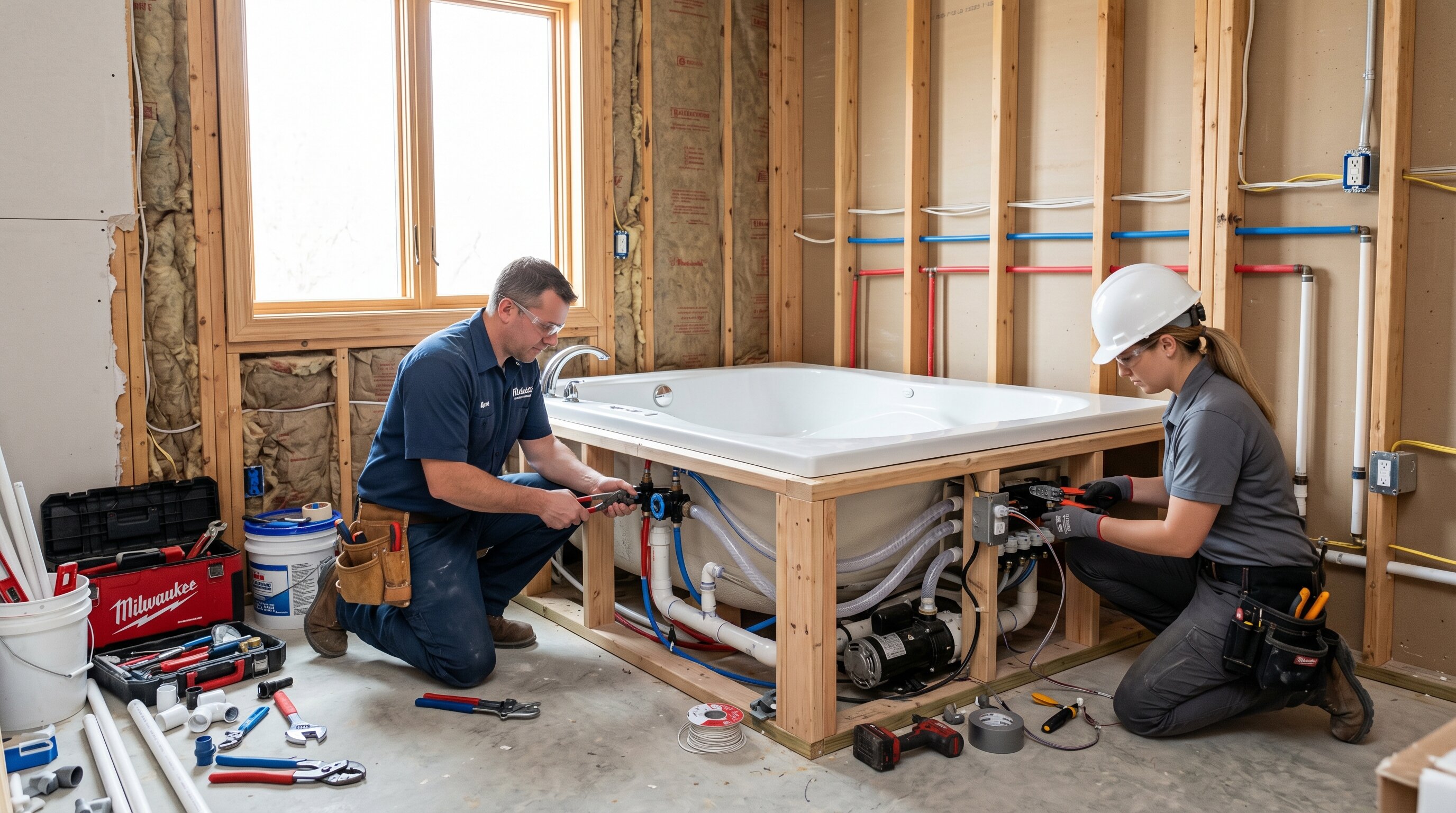
Installation is the biggest variable in total walk-in tub cost. The tub unit itself is only part of the story, getting it properly installed requires plumbing modification, electrical work (for jets and heated features), and often tile and fixture replacement.
Walk-in tub installation cost: $2,000–$8,000 depending on your bathroom's existing configuration, the distance to plumbing connections, and whether electrical upgrades are required.
Installation Component Costs
Important: Walk-in tubs are larger and heavier than standard tubs. A filled walk-in tub can weigh 400–900+ lbs. Always have a contractor verify that your floor joists can support the load before installation begins. This is especially critical in older homes with 1.5-inch joist spans.
Walk-In Tub with Shower Cost & What to Know
A walk-in tub with shower combo costs $3,000–$6,500 for the unit and $7,000–$13,000 fully installed. This is one of the most practical configurations for smaller bathrooms it eliminates the need for a separate shower, and most models include an overhead rain shower plus a handheld showerhead.
The main trade-off with a tub/shower combo is privacy most use a curtain system rather than a glass enclosure due to the door mechanism. Some premium models include a secondary door panel that creates a more shower-like enclosure. If you’re comparing this option with other bathroom upgrades, you may also want to check the cost to convert a tub to a shower which is another popular solution for improving accessibility and space efficiency.
How much does a walk-in tub and shower cost at Lowe's or Home Depot? Big-box stores carry entry-level combo units starting around $1,500–$2,500 (unit only, no installation). These are typically basic soaking models without jets. Installation on a big-box unit still runs $2,000–$5,000 depending on your plumbing configuration.
Walk-In Tub with Jets Whirlpool vs. Air Bath Costs
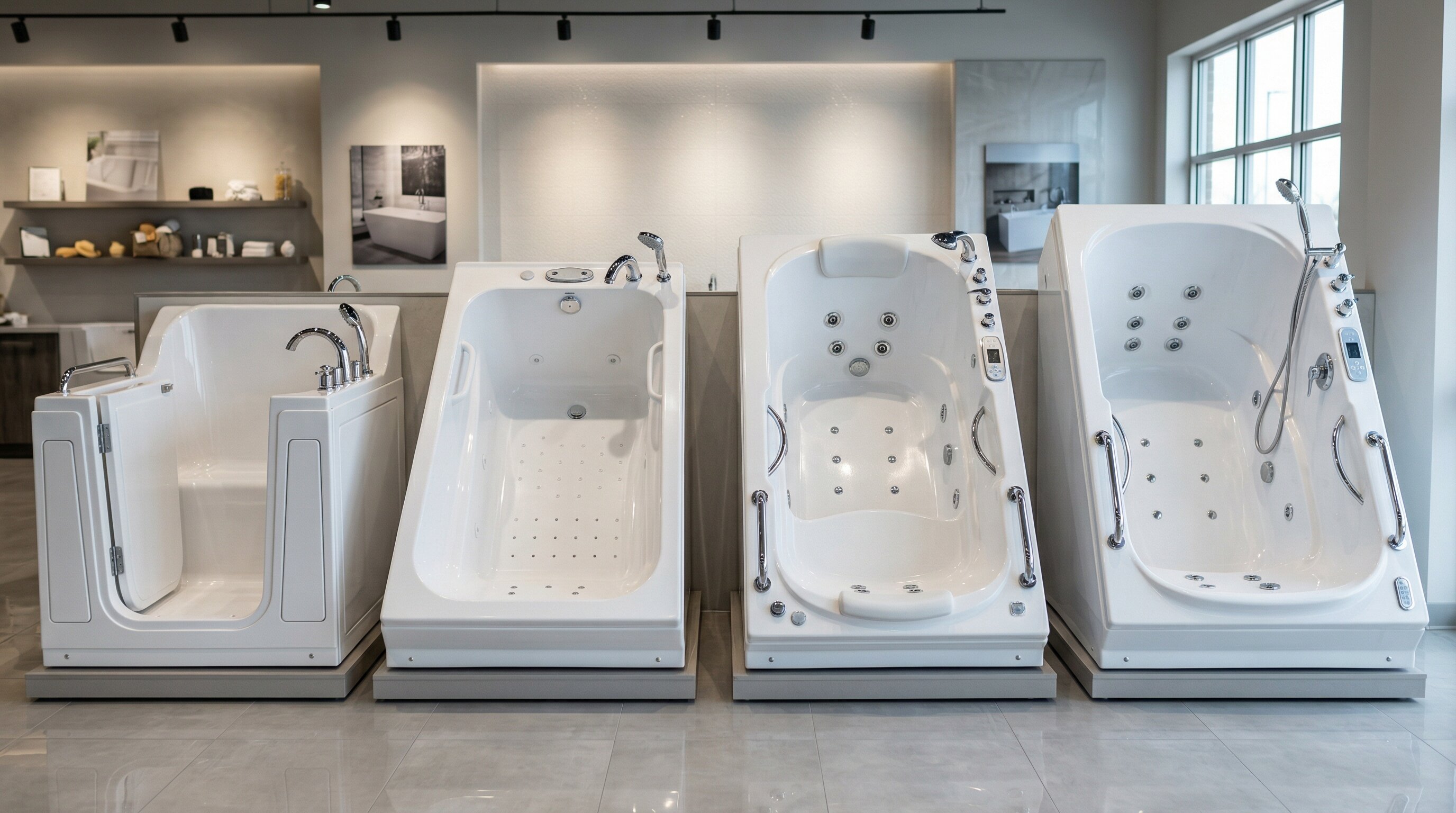
Jets are the most popular upgrade feature in walk-in tubs, and also the most misunderstood. There are two types of jet systems water jets (whirlpool) and air jets and they deliver different therapeutic experiences at different price points.
How much does a walk-in tub with jets actually cost? Expect to pay $3,500–$7,000 for a quality jetted walk-in tub unit, and $8,000–$14,000 fully installed. Jacuzzi-brand walk-in tubs with jets typically run $4,000–$9,000 for the unit alone.
Walk-In Tub Cost for Seniors Features That Matter Most
When evaluating walk-in tub cost for seniors, price should not be the only metric. The features that specifically address senior safety and independence have the highest impact on quality of life and these features vary significantly between models.
For senior buyers, the mid-range tier ($3,500–$6,500) is typically the sweet spot it includes all critical safety features plus heated seating (important because walk-in tubs require the door to be closed before filling, meaning users wait in the tub while it fills and drains).
Key Factors That Affect Walk-In Tub Cost
Bathroom Size & Existing Layout
Walk-in tubs are larger than standard tubs most are 28–32 inches wide and 52–60 inches long, compared to the standard 30x60 alcove tub. If your bathroom cannot accommodate a standard walk-in tub without modification, costs rise. Some buyers opt for a corner-entry or extra-wide model, which typically costs $1,000–$3,000 more.
Plumbing Distance & Configuration
Walk-in tubs fill faster than standard tubs (to reduce wait time), which requires larger-diameter supply lines in many installations. If your existing supply lines are 1/2 inch, upgrading to 3/4 inch adds $300–$1,000 to the plumbing cost.
Brand & Dealer Model
Brands like Safe Step, Kohler, and Jacuzzi carry premium pricing partly due to brand recognition and marketing costs. For an equivalent feature set, generic or private-label brands from reputable manufacturers can be 20–40% less expensive. The trade-off is parts availability and warranty support.
Geographic Location
Labor rates vary dramatically by region. Walk-in tub installations in Northeast and West Coast markets typically cost 35–55% more in total than Midwest or Southeast installations for the same unit.
Warranty Length & After-Sale Service
A longer warranty (lifetime vs. 1-year) represents real financial value walk-in tub repairs (jet pump replacement, door seal replacement, heater repair) typically cost $200–$800 per incident. Brands offering lifetime warranties on the shell and extended coverage on components are worth paying a premium for.
Walk-In Tub vs. Roll-In Shower Cost Comparison
If the primary goal is fall prevention and independent bathing, a walk-in tub is generally superior to a standard tub modification. If wheelchair transfer and zero-threshold entry are the primary needs, a roll-in shower may serve better at lower cost.
Medicare, Medicaid & Tax Credits Can You Offset Walk-In Tub Cost?
This is one of the most frequently asked questions and the answer is nuanced.
Does Medicare Cover Walk-In Tubs?
Original Medicare (Parts A and B) does not cover walk-in tubs as durable medical equipment (DME). Walk-in tubs are classified as home modifications, not medical devices, a critical distinction. Some Medicare Advantage (Part C) plans offer limited home modification benefits; check your specific plan's Evidence of Coverage.
Does Medicaid Cover Walk-In Tubs?
Medicaid coverage for walk-in tubs varies by state and is administered through Home and Community-Based Services (HCBS) waivers. Some states (including New York, California, and Pennsylvania) have waiver programs that may cover bathroom modifications for eligible low-income seniors. Contact your state Medicaid office or a certified Aging and Disability Resource Center (ADRC) for current eligibility.
Tax Credits & Deductions
Walk-in tub costs may qualify as a medical expense deduction on federal income taxes if the installation is prescribed by a physician for a specific medical condition. Medical expenses exceeding 7.5% of your adjusted gross income (AGI) may be deductible on Schedule A. Consult a CPA for your specific situation.
Veterans Administration (VA) Grants
Eligible veterans may qualify for the VA's Specially Adapted Housing (SAH) grant or the Home Improvements and Structural Alterations (HISA) grant both can cover walk-in tub and accessibility modification costs. HISA grants provide up to $6,800 for service-connected conditions. Contact your local VA benefits office for current limits and eligibility.
Bottom Line on Offsets: Most buyers pay out-of-pocket for walk-in tubs. However, VA grants (for veterans), Medicaid waivers (for low-income seniors), and potential tax deductions (with a physician's letter) can meaningfully reduce net cost. Always explore these before paying full price.
How to Buy a Walk-In Tub Without Overpaying
The walk-in tub industry is rife with high-pressure sales tactics, inflated "regular" prices, and bundled installation packages that are difficult to compare. Here is how to protect yourself:
Never agree to pricing at the first in-home consultation. All major brands offer the same "limited time" pricing and repeatedly take time to get competing quotes.
Separate the tub purchase from installation. Buying the unit from a dealer and hiring your own licensed plumber and electrician separately often saves $1,500–$3,000.
Get a minimum of 3 written, itemized quotes. Ask each quote to break out: tub unit, plumbing, electrical, tile/surround, permits, and labor separately.
Check the warranty terms carefully. A "lifetime warranty" may only cover the shell motors, jets, and door seals may have 1–5 year coverage. Ask for full written warranty documentation.
Verify the installer is licensed for both plumbing and electrical. Walk-in tub installations require permits and licensed trades in most US jurisdictions. Unlicensed work voids warranties and creates liability.
Research brand reviews beyond the manufacturer's website. Check the Better Business Bureau (BBB), Consumer Affairs, and Google Reviews for your specific local dealer.
Ask about removal of your existing tub. Disposal of the old unit (if not a DIY job) should be included in any full-service quote if it is not itemized, ask.
Frequently Asked Questions
How much does a walk-in tub cost on average?
The average walk-in tub costs $3,500–$7,000 for the unit alone, and $7,000–$14,000 fully installed in the US. The most popular mid-range models (air jets, heated seat, handheld shower) typically land at $8,000–$11,000 fully installed.
How much does a Safe Step walk-in tub cost?
Safe Step walk-in tubs cost $3,000–$9,000 for the tub unit, and $8,000–$15,000 installed, depending on the model and your location. Safe Step sells through in-home consultations and does not publish fixed pricing always get a written quote before agreeing to any offer.
How much does a Kohler walk-in tub cost?
Kohler walk-in tubs range from $3,500–$10,000+ for the unit. Fully installed, expect to pay $8,500–$16,000 depending on model, bathroom configuration, and regional labor rates. Kohler is sold through authorized dealers and can be purchased separately from installation.
How much does a walk-in tub cost installed?
Installation adds $2,000–$8,000 on top of the unit cost, bringing the typical total installed cost to $7,000–$15,000 for most mid-range models. Key installation costs include plumbing modification ($500–$2,500), electrical ($300–$1,500), and labor ($1,500–$4,000).
How much does a walk-in tub shower combo cost?
A walk-in tub and shower combo costs $3,000–$6,500 for the unit and $7,000–$13,000 installed. These combos are ideal for smaller bathrooms where both bathing and showering functionality are needed. Big-box store units start around $1,500–$2,500 but require separate professional installation.
How much does a walk-in tub with jets cost?
Walk-in tubs with air jets start around $3,500–$5,500; models with both air and water (whirlpool) jets run $5,000–$9,000. Jacuzzi-branded jetted walk-in tubs typically cost $4,000–$9,000 for the unit alone. Fully installed, jetted models typically run $9,000–$15,000.
How much does a walk-in tub cost at Lowe's?
Lowe's carries entry-level walk-in tub units starting around $1,500–$2,500. These are basic soaking models without jets or premium features. Professional installation is sold separately and typically adds $2,500–$5,000, bringing the total to $4,000–$7,500 for a Lowe's unit fully installed.
Does a walk-in tub add value to a home?
Walk-in tubs generally do not add significant resale value for typical home buyers and may even limit your buyer pool if the tub replaces a standard tub in a home's only full bathroom. They are best viewed as a quality-of-life investment for current residents rather than a value-add renovation. If maintaining resale appeal is a priority, a walk-in shower may be a better choice.
How much does it cost to remove a walk-in tub?
Removing a walk-in tub typically costs $300–$800 in labor and disposal. If you are replacing it with a standard tub or shower, additional plumbing modification may add $500–$1,500 depending on the configuration changes required.
Conclusion
For most buyers, a mid-range walk-in tub air jets, heated seat, anti-scald valve, and handheld showerhead installed by a licensed contractor will cost $8,000–$12,000 in total. That is the realistic budget for a quality result that meets safety standards, carries a reasonable warranty, and does not require you to compromise on the features that matter most.
At the premium end, Safe Step and Kohler fully installed packages run $12,000–$16,000, a legitimate choice if brand support, turnkey installation, and long warranties are priorities. At the budget end, a basic unit from a home improvement store installed by a local plumber can be accomplished for $5,000–$7,500 if you are willing to manage the project yourself.
Whatever your budget, get written itemized quotes, verify contractor licensing, and read the warranty terms before signing anything. The walk-in tub industry has a high rate of consumer complaints related to pricing transparency Informed buyers consistently pay less and get better results.