
How Much Does Bathroom Tile Removal Cost? (2026-Guide)$200 - $1,200
Average fixed price
How Much Does Bathroom Tile Removal Cost? (2026-Guide)

Removing old tile is often the first step in a bathroom renovation, but many homeowners underestimate how much this demolition stage can cost. Whether you're planning a full remodel or simply replacing damaged tiles, understanding the bathroom tile removal cost helps you plan your budget and avoid surprises.
On average, the cost to remove bathroom tile ranges from $2 to $7 per square foot, depending on the tile material, labor rates, and demolition complexity. For most homes, this means spending $200 to $1,200 for a typical bathroom tile removal project.
However, costs can increase if the tile is difficult to remove, the subfloor is damaged, or you need full bathroom demolition. In this guide, we’ll break down the average tile demolition cost, what affects pricing, and how to reduce your renovation expenses.
Average Bathroom Tile Removal Cost
Most homeowners pay between $300 and $800 for standard bathroom tile removal. The total cost depends mainly on the bathroom size and the type of tile being removed.
These estimates include basic labor and debris removal. If the tile is heavily bonded with strong adhesive or mortar, the tile demolition cost may increase because contractors need more time and specialized tools.
Bathroom Tile Removal Cost Per Square Foot
Contractors typically calculate the cost to remove bathroom tile per square foot. The price varies depending on the tile material and installation method.
Ceramic tiles are usually easier to remove, while porcelain and natural stone tiles are thicker and bonded more strongly to the floor or wall. This increases the overall tile demolition cost because they require heavier demolition tools.
Cost to Remove Bathroom Tile by Area
Different areas of the bathroom require different demolition techniques. Removing tile from floors, walls, or showers may involve different labor costs.
Cost to Remove Bathroom Floor Tile
Bathroom floors typically contain the largest tile area, so this is where most demolition costs occur.
Typical price range: $2 to $7 per square foot
Floor tiles are often installed with strong thinset mortar. Removing them may involve breaking tiles with a hammer or demolition tool before scraping off the adhesive. If the underlying subfloor is damaged during removal, repairs may add extra cost.
Cost to Remove Shower Tile
Shower tile removal can be more complicated because it often includes waterproof backing materials and cement board.
The cost to remove shower tile typically ranges from: $300 to $900
Contractors must carefully remove wall tiles to avoid damaging plumbing fixtures or waterproof layers. This extra labor can increase the demolition price.
Bathroom Wall Tile Removal Cost
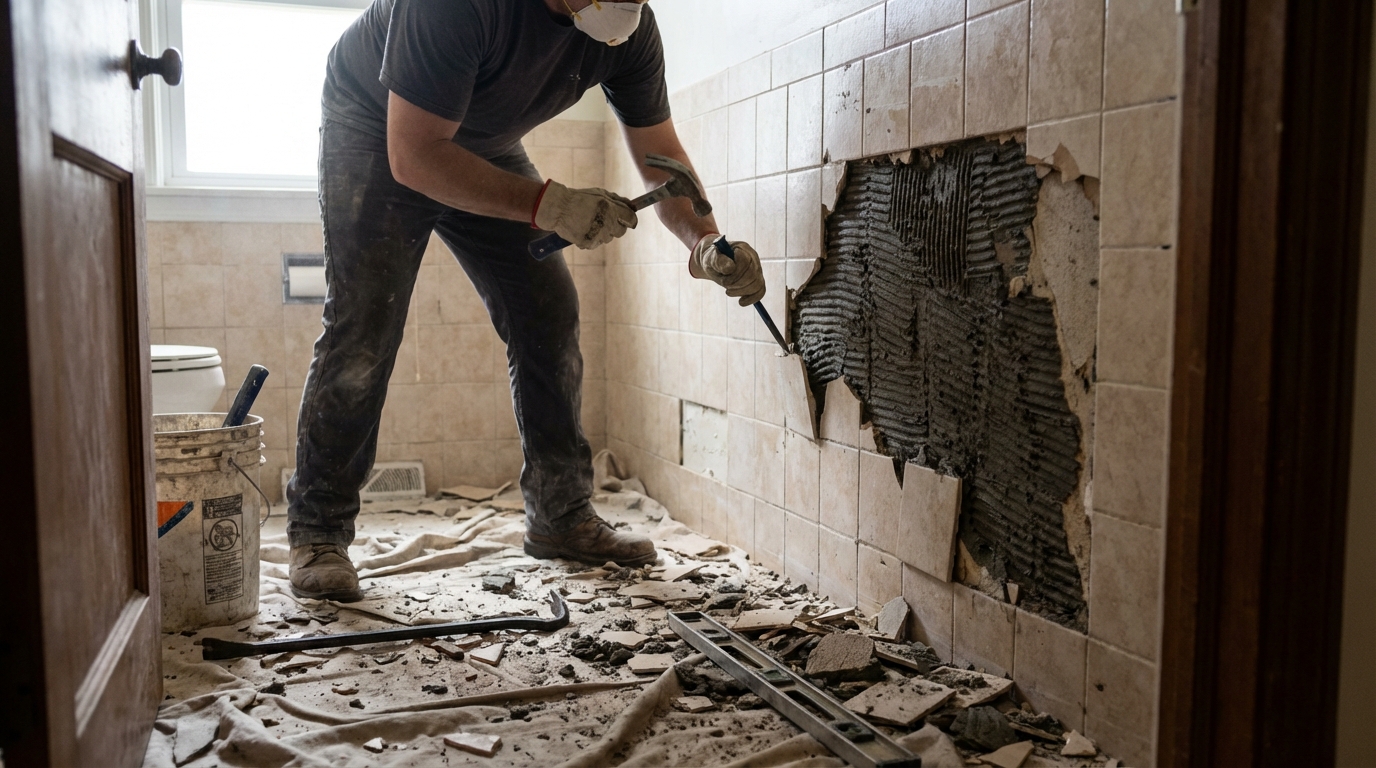
Wall tile removal is usually easier than floor demolition because gravity helps loosen the tiles.
Typical cost: $2 to $6 per square foot
However, removing wall tiles can sometimes damage drywall, which may require repair before installing new tile.
Bathroom Demolition Cost vs Tile Removal
Many homeowners confuse tile removal with full bathroom demolition, but these are different projects.
Tile removal focuses only on removing tile surfaces, while full demolition involves removing fixtures, cabinets, flooring, and walls.
The average cost to demo a bathroom depends on the number of fixtures, materials, and disposal requirements. Full demolition projects require more labor and debris removal than simple tile demolition.
What Affects Bathroom Tile Removal Cost?
Several factors influence the final bathroom tile removal cost. Understanding these can help you estimate your project more accurately.
Tile Material
Tile material plays a major role in demolition difficulty.
Common materials include:
Ceramic tile
Porcelain tile
Natural stone tile
Porcelain and natural stone tiles are denser and harder to remove than ceramic tiles, increasing the overall tile demolition cost.
Labor Costs
Labor is usually the biggest part of the demolition budget.
Contractors typically charge: $50 to $120 per hour
Complex demolition jobs may require specialized tools like demolition hammers, which also increase labor costs.
Bathroom Size
Larger bathrooms naturally contain more tile, increasing the amount of work required. A large bathroom renovation may require several hours or even a full day of demolition.
Subfloor or Wall Damage
Removing tile may reveal hidden damage underneath, such as:
water damage
cracked subfloor
mold or rot
If repairs are necessary before installing new tile, your overall renovation cost may increase.
Debris Removal and Disposal
Tile demolition produces heavy debris that must be hauled away. Disposal fees typically range from: $100 to $400
Some contractors include debris removal in their quote, while others charge separately.
DIY Bathroom Tile Removal vs Hiring a Contractor
Some homeowners attempt DIY tile demolition to save money. While this can reduce labor costs, it also requires tools, time, and physical effort.
DIY removal usually involves tools such as:
hammer and chisel
pry bar
demolition hammer
grout removal tools
However, professionals work faster and reduce the risk of damaging the subfloor or plumbing.
How Long Does Tile Removal Take?
The time required to remove bathroom tiles depends on several factors, including the size of the bathroom, tile type, and installation method. In most cases, tile removal takes 4 to 12 hours for a standard bathroom.
Key factors that affect the timeline include:
Bathroom size – Small bathrooms may take only a few hours, while larger spaces can take a full day.
Tile material – Ceramic tiles are easier to remove, while porcelain or natural stone tiles take longer.
Installation method – Tiles installed with strong mortar or thinset adhesive require more effort to remove.
Location of the tile – Removing shower wall tiles often takes longer than removing floor tiles.
Subfloor or wall condition – If damage is found during demolition, additional repair time may be required.
Professional contractors often complete the work faster because they use specialized demolition tools and efficient removal techniques.
Tips to Reduce Bathroom Tile Removal Costs
Bathroom demolition can become expensive quickly, but a few smart steps can help you control the tile removal cost without sacrificing quality. Planning ahead and reducing unnecessary labor can make a noticeable difference in your overall renovation budget.
Prepare the bathroom before demolition
Before the contractor arrives, clear out as much as possible from the space. Removing items such as mirrors, shelves, accessories, and small fixtures can reduce the time workers spend preparing the area. Less preparation time often means lower labor charges.
Handle simple prep work yourself
If you’re comfortable with basic DIY tasks, you can remove trim pieces, baseboards, or loose fixtures ahead of time. These small tasks may seem minor, but they can reduce the number of hours contractors need to spend on demolition.
Compare quotes from multiple contractors
Labor rates vary between contractors and regions. Getting at least two or three quotes allows you to compare prices, understand what’s included in the estimate, and choose a professional offering fair pricing for the tile demolition work.
Plan demolition alongside other renovation work
If you are already replacing bathroom flooring, cabinets, or plumbing fixtures, it’s often more cost-effective to complete all demolition tasks at the same time. Combining projects can reduce labor visits and lower the overall tile demolition cost.
Final Thoughts
Understanding the bathroom tile removal cost helps homeowners plan their renovation budget more accurately. While basic projects may cost a few hundred dollars, larger demolition jobs or full bathroom remodels can reach $1,000 or more. Factors like tile material, bathroom size, labor rates, and debris disposal all influence the final tile demolition cost. By comparing contractor quotes and planning the demolition carefully, you can reduce expenses and prepare your bathroom for a successful renovation.
Frequently Asked Questions
How much do tilers charge to remove tiles?
Most tilers or demolition contractors charge $50 to $120 per hour for labor. When calculated per area, tile removal generally costs $2 to $7 per square foot. The final price depends on factors such as tile type, installation method, and how easily the tiles can be removed from the floor or wall.
How much does it cost to demo a 5×8 bathroom?
A standard 5×8 bathroom (about 40 square feet) typically costs $150 to $400 for tile removal alone. However, if you are doing a full demolition that includes fixtures, cabinets, flooring, and drywall, the bathroom demolition cost may range from $600 to $2,000 depending on the materials and labor involved.
Is it difficult to remove bathroom tiles?
Removing bathroom tiles can be moderately difficult, especially if the tiles were installed with strong mortar or thinset adhesive. Ceramic tiles are usually easier to remove, while porcelain or stone tiles require more effort and heavier tools. For large areas or stubborn tiles, hiring a professional can make the process faster and safer.
How messy is tile removal?
Tile demolition is typically dusty and messy. Breaking tiles creates debris, dust from grout and mortar, and small fragments that spread around the room. Professionals often use plastic barriers, protective coverings, and proper debris removal methods to control dust and keep the rest of the house clean.
What tools do professionals use to remove ceramic tile?
Professionals commonly use specialized demolition tools such as:
Hammer and chisel
Pry bar
Demolition hammer or rotary hammer
Floor scraper
Grout removal tools
These tools help break tiles efficiently and remove adhesive from the subfloor or walls without causing unnecessary damage.
What are common mistakes when removing tile?
Some common mistakes during tile removal include:
Not protecting surrounding surfaces
Using the wrong demolition tools
Damaging the subfloor or drywall
Ignoring safety equipment like gloves and eye protection
Planning the demolition carefully and using the right tools can prevent costly repairs during a bathroom renovation.
Can tile be removed without damaging drywall?
In some cases, tiles can be removed without damaging drywall, especially if they were installed with lighter adhesive. However, tile removal often loosens the drywall surface or backing board, particularly in bathrooms where waterproof cement board is used. Minor wall repairs are common after removing wall tiles before installing new finishes