
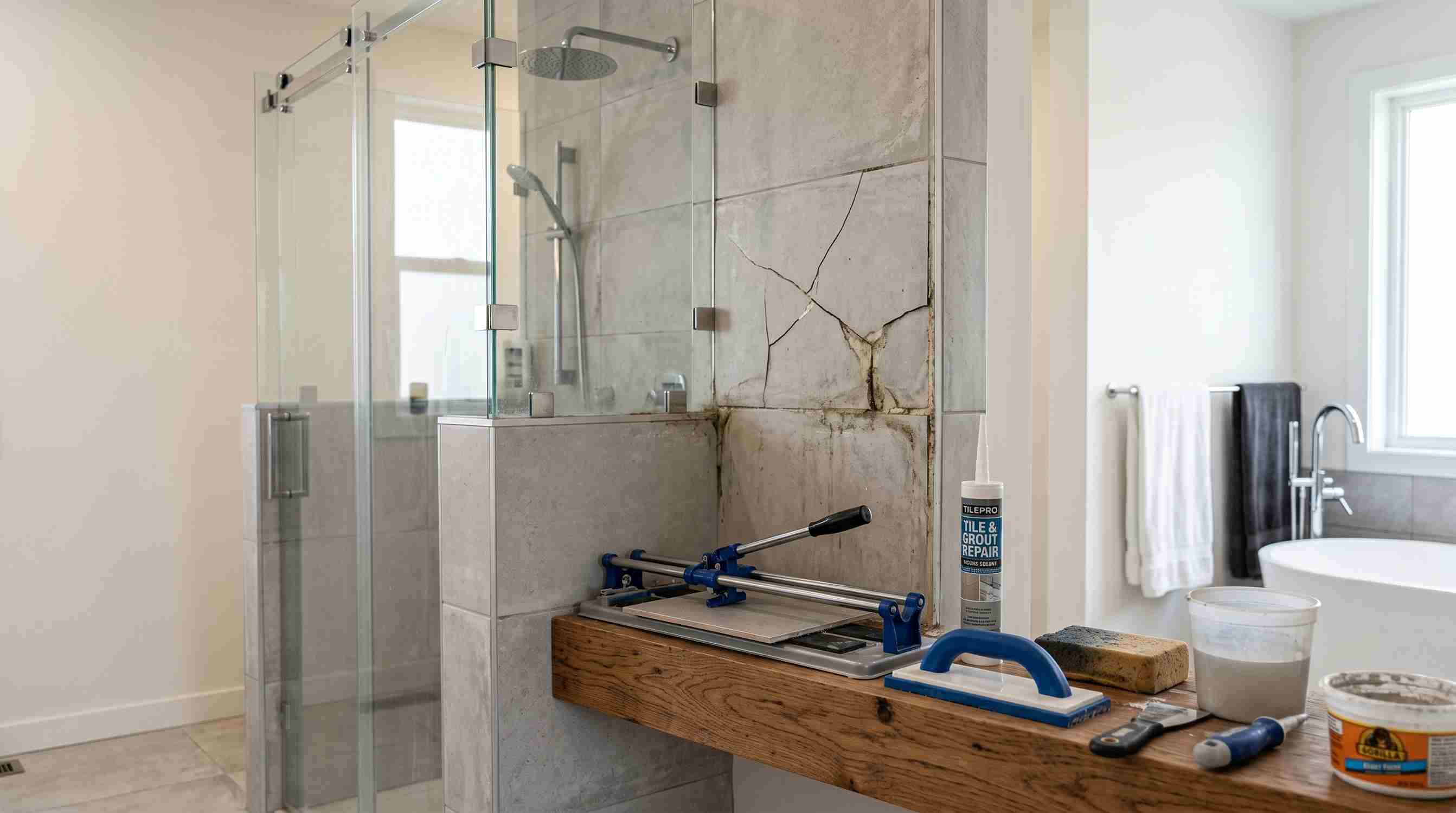

Fixing a cracked bathroom tile can cost as little as $10 if you DIY it or as much as $2,000 if the crack has been letting water into the wall behind it. Most homeowners pay $280–$661, with a national average of $466.
The wide range exists because bathroom tile problems are rarely just surface issues. The right number depends on the damage type, tile material, and whether water has already reached the substrate.
Quick Cost Summary
Labour: $50–$100/hr · Minimum service call: $100–$300 always applies
Cost to Repair Tiles by Type
Cracked or Chipped Tiles
A hairline crack that hasn't let in moisture is the cheapest bathroom tile repair:
DIY: Two-part clear epoxy ($10–$30). Mix, apply with a toothpick, cure in 15 minutes, sand flush, paint to match. Works on ceramic and porcelain.
Professional: Expect the minimum service call ($100–$300) regardless of crack size. Pros are worth calling when the tile is patterned, the crack is deep, or you suspect anything behind the wall.
The hidden damage escalator. A crack that looks like a $200 repair can become a $1,500–$2,000 job once water damage behind the tile is found. Every crack is also a potential water entry point. The longer a crack sits, the higher the risk.
Loose or Tenting Tiles
Tiles that sound hollow when tapped or that have visibly lifted must be replaced, not just re-adhered on the surface. Tenting typically happens when expansion joints are missing or when adhesive fails.
Cost: $120–$500 depending on tile count and access
Don't delay: A loose tile in a wet zone is an active water infiltration point
Grout Repair
Grout-only repair is appropriate when tiles are intact but grout is crumbling, cracking, staining, or showing mold.
Never put new grout over old grout. It masks water damage and causes the new grout to fail faster. Old grout must be fully removed with an oscillating tool before fresh grout is applied.
Grout sealing ($0.50–$1.50/sq ft materials only) is the cheapest maintenance available. In shower and wet areas, seal annually.
Shower Tile Repair
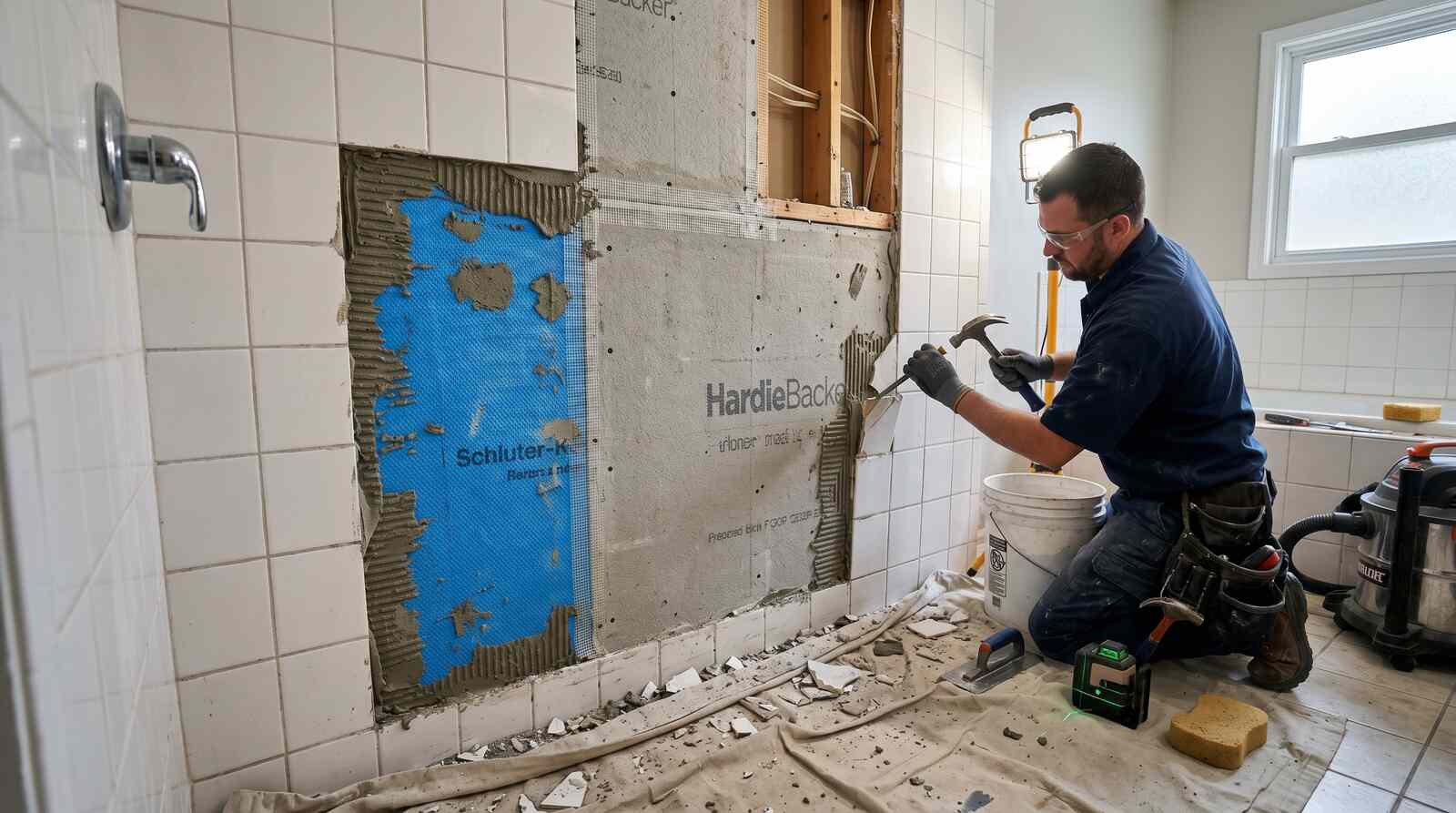
Showers cost more to repair than bathroom floors for three reasons: confined access, mandatory waterproofing checks, and higher water-damage stakes.
Any shower repair that involves removing tiles must include inspection of the waterproof membrane and cement backer board behind them. If either is damaged, replacement is non-negotiable before retiling.
Water Damage Behind Tiles
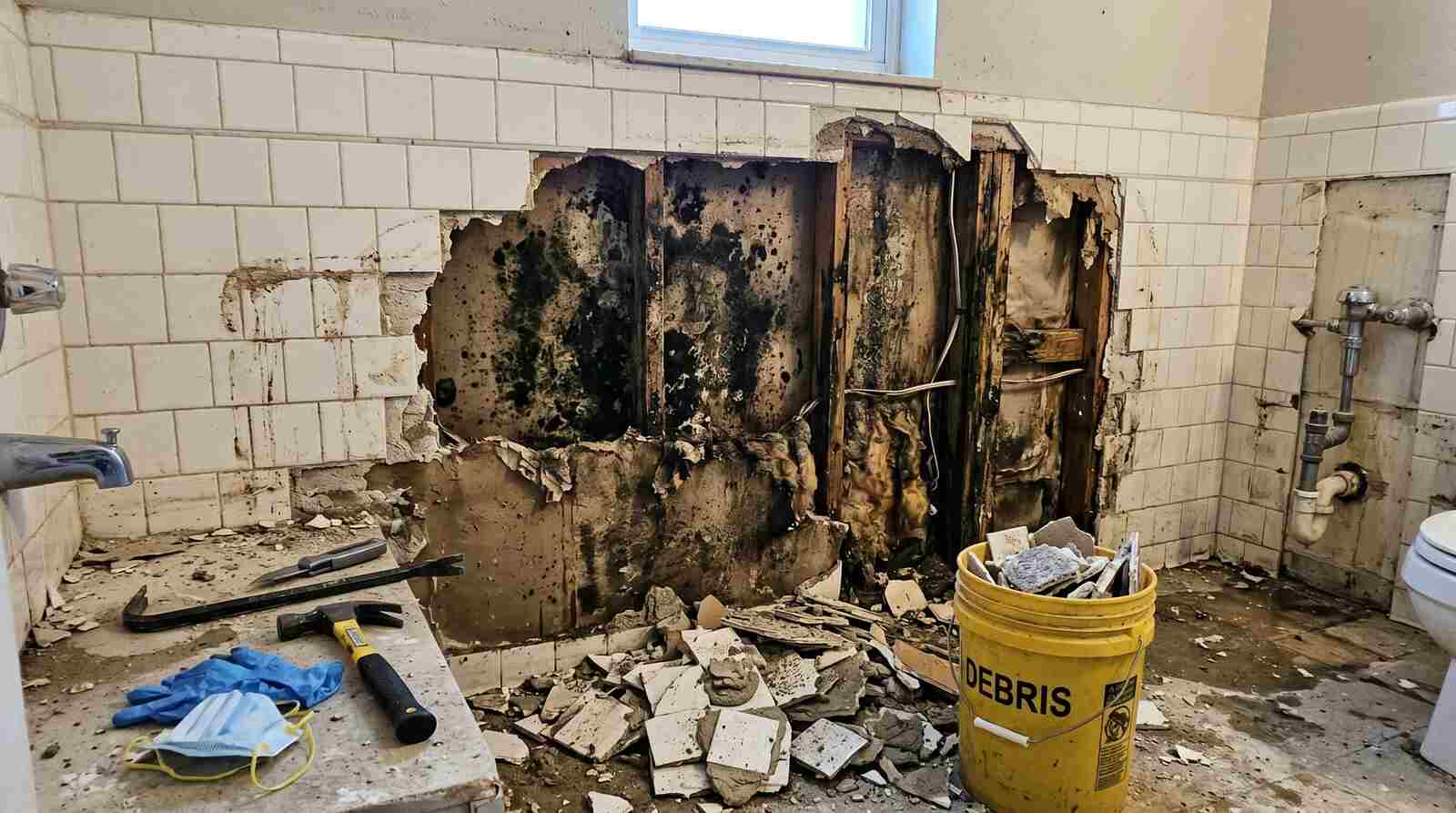
This is the most expensive bathroom tile outcome. Grout failure, ignored cracks, and loose tiles all allow moisture to reach the wall behind the tile.
Average cost: $1,500–$2,000 (tiles, grout, waterproofing, retiling)
Drywall replacement (if panels are saturated): $300–$1,500+ on top
Signs water has already reached the substrate:
Tiles that sound hollow even though they appear intact
Musty smell from the wall
Grout that cracks or fails repeatedly in the same area
Tiles that feel slightly warm or soft when pressed
Cost to Repair Tiles by Material
Natural stone tiles should not be DIYed, incorrect cleaning agents or sealants permanently damage the surface.
DIY vs Professional
You can DIY:
Hairline cracks and small chips on ceramic or porcelain (epoxy kit)
Grout cleaning and resealing
Small spot grout repairs on bathroom floors (not showers)
Always hire a professional for:
Shower tile work (waterproofing must be verified)
Loose or tenting tiles
Any sign of water damage behind the tile
Natural stone tile
Matching discontinued or patterned tiles
The minimum service call trap: Most tile contractors charge $100–$300 just to show up, even for a $30 repair. This makes DIY economically rational for small ceramic tile chips and cracks. For anything in the shower or involving grout replacement, the professional's minimum is usually worth paying.
Repair or Replace?
Repair when:
Damage is limited to 1–3 tiles
Grout is failing but tiles are structurally sound
No evidence of water behind the tile
Matching tiles are available
Replace when:
Water damage has reached the substrate
Multiple tiles are loose or cracked across a wide area
Matching tiles are discontinued and no spares exist
The waterproof membrane needs replacing
Save spare tiles from every installation. Keep 10% of your tile purchase. When a tile cracks five years later, matching tiles make the repair labour-cost-only instead of a search-and-match project. This single habit cuts future repair costs in half.
How to Save on Bathroom Tile Repair
Fix cracks and chips immediately delay multiplies the cost (hidden damage escalator)
Get at least 3 written estimates from licensed tile contractors
Bundle small repairs with a larger visit to offset the minimum service call
Handle post-repair cleanup yourself to reduce billed time
Use leftover tiles from the original installation if they exist, material cost drops to near zero
Consider tile reglazing ($4–$12/sq ft) for discoloured tiles that are structurally sound much cheaper than replacement
Frequently Asked Questions
What is the average bathroom tile repair cost?
The national average is $466, with most homeowners paying $280–$661. Small DIY crack repairs cost $10–$30. Shower work or water damage repairs run $1,500–$2,000+.
Can I repair a cracked bathroom tile myself?
Yes for small cracks and chips on ceramic or porcelain using a two-part epoxy kit ($10–$30). Avoid DIY for shower tiles, natural stone, or any tile with signs of water damage behind it.
How much does grout repair cost in a bathroom?
Small area spot repairs: $200–$400. Full shower regrouting: $450–$2,000 (national average $1,500). Always remove old grout fully, never apply new grout on top of old.
How do I know if there's water damage behind my bathroom tiles?
Tap tiles gently a hollow sound when they were previously solid indicates de-bonding. Look for musty smells, repeatedly failing grout in the same spot, or any tile that flexes slightly when pressed.
When should I replace tiles instead of repairing them?
Replace when: water damage is confirmed behind the tile, tiles are tenting across a wide area, the waterproof membrane is compromised, or matching replacement tiles are unavailable.