

You walk into the bathroom. Lights come on automatically. The shower starts heating to your saved temperature. The mirror shows the weather and your first meeting of the day. You wrap up in a warm towel pulled from a heated drawer. This is a smart bathroom and none of it requires a luxury budget to begin.
Smart bathroom technology connects IoT-enabled devices through smartphone apps and voice commands to automate, personalize, and monitor your bathroom. There are roughly 70 million smart homes in the United States, and the smart bathroom market is projected to grow from USD 10.8 billion in 2026 to USD 39 billion by 2035 at a 13.7% annual growth rate (Future Market Insights). According to a Hippo survey, 46% of smart home users adopt technology for convenience, 15% to lower utility bills, and 16% for security.
This guide covers the six essential smart bathroom devices, what each costs, which are DIY-friendly, and exactly where to start if you are not ready for a full remodel.
Why Upgrade to Smart Bathroom Technology?
Four benefits drive adoption.
Convenience
A shower that starts at your preferred temperature before you enter. Lights that turn on when you walk in at 3 AM. Hands-free faucets that dispense water at a preset temperature. Every friction point in your morning routine can be removed.
Water and energy savings
Smart toilets with WaterSense certification reduce water use by up to 20% compared to older models (EPA). Smart faucets can reduce water consumption by up to 70% versus traditional fixtures. Smart LED lighting with motion sensors shuts off automatically, cutting energy waste.
Hygiene
Touchless fixtures eliminate surface germ transfer. This is especially relevant for households with young children or immunocompromised family members.
Home value
Over 80% of real estate buyers say they are more inclined to purchase a home with smart technology products (Re-Bath, 2025). Smart bathroom upgrades are now a standard resale signal in premium markets.
Leak detection devices carry an additional financial benefit: water monitoring systems can qualify homeowners for reduced insurance premiums.
The 6 Core Smart Bathroom Devices
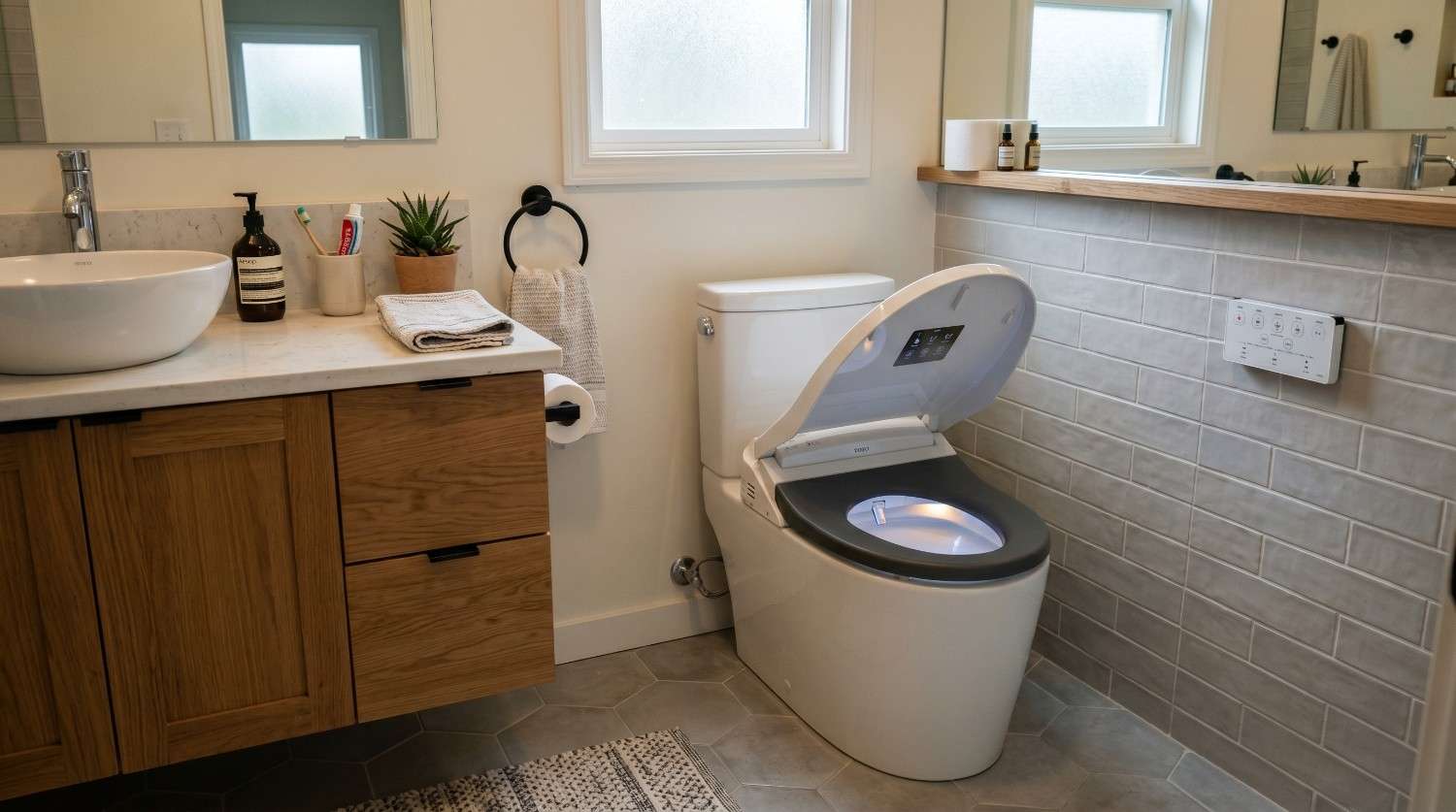
1. Smart Toilet
A smart toilet is the highest-investment upgrade in the bathroom and the most transformative comfort experience. Core features include a heated seat, automatic touchless lid, bidet with adjustable water temperature and pressure, air dryer, built-in deodorizer, and night light. Advanced models include UV sterilization, self-cleaning wands, and anti-microbial bowl surfaces.
The WaterSense-certified models use sensor systems to flush with only the amount of water needed, reducing overflow risk and lowering water bills.
Brands: TOTO Washlet, Kohler Numi, GROHE Sensia Pro, American Standard.
Cost: $1,000–$13,000. Basic bidet seat attachments for existing toilets start around $300.
Installation: Requires a licensed plumber and electrician. Not DIY-appropriate.
2. Smart Shower System
A smart shower valve learns and stores each family member's temperature, pressure, and spray pattern preferences. Before you step in, a voice command or app tap starts the shower and brings it to your exact temperature, no cold-water adjustment, no water wasted while heating up.
Moen's U by Moen system integrates with Amazon Alexa, Google Assistant, and Apple HomeKit. Kohler's DTV+ digital system connects with Alexa and Google. Both allow shower pausing, timed limits, and real-time water usage tracking.
Cost: $300–$2,000 for the valve unit (Moen, Kohler, SmarTap). Showerheads and professional installation are not included in this range.
Installation: Requires new wiring and often plumbing modifications. Hire a licensed plumber.
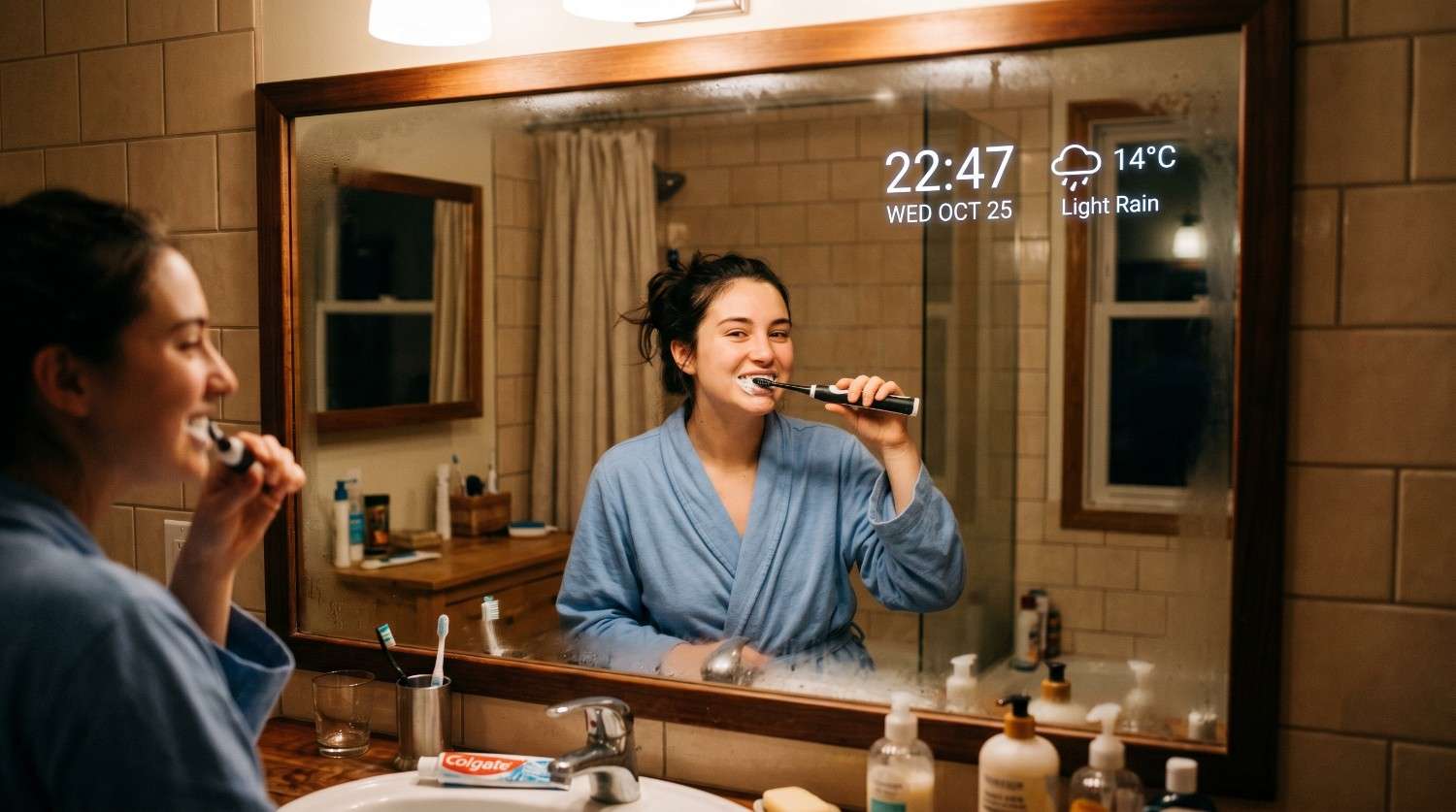
3. Smart Bathroom Mirror
A smart mirror does more than reflect. It displays weather forecasts, calendar events, news headlines, and traffic updates on an integrated LED screen. Bluetooth speakers handle music, podcasts, or hands-free calls. Anti-fog technology keeps the glass clear immediately after the hottest shower.
Advanced models include skincare AI that uses a built-in camera to assess your skin moisture levels, pores, and early signs of aging and recommend products. When linked to a smart scale, health metrics appear on the mirror surface.
iHome, HiMirror, and Bath Knot are among the leading brands. Some models use facial recognition to tailor displayed content to whoever is standing in front of the mirror.
Cost: $100–$2,800. Interactive LED mirrors with full display features typically run $1,000–$2,000.
Installation: Most models are wall-mounted. Specialized electrical work required for wired models. Some plug-in options are DIY-capable.
Privacy note: Models with cameras collect biometric data. Review the manufacturer's privacy policy before purchase.
4. Smart Faucet
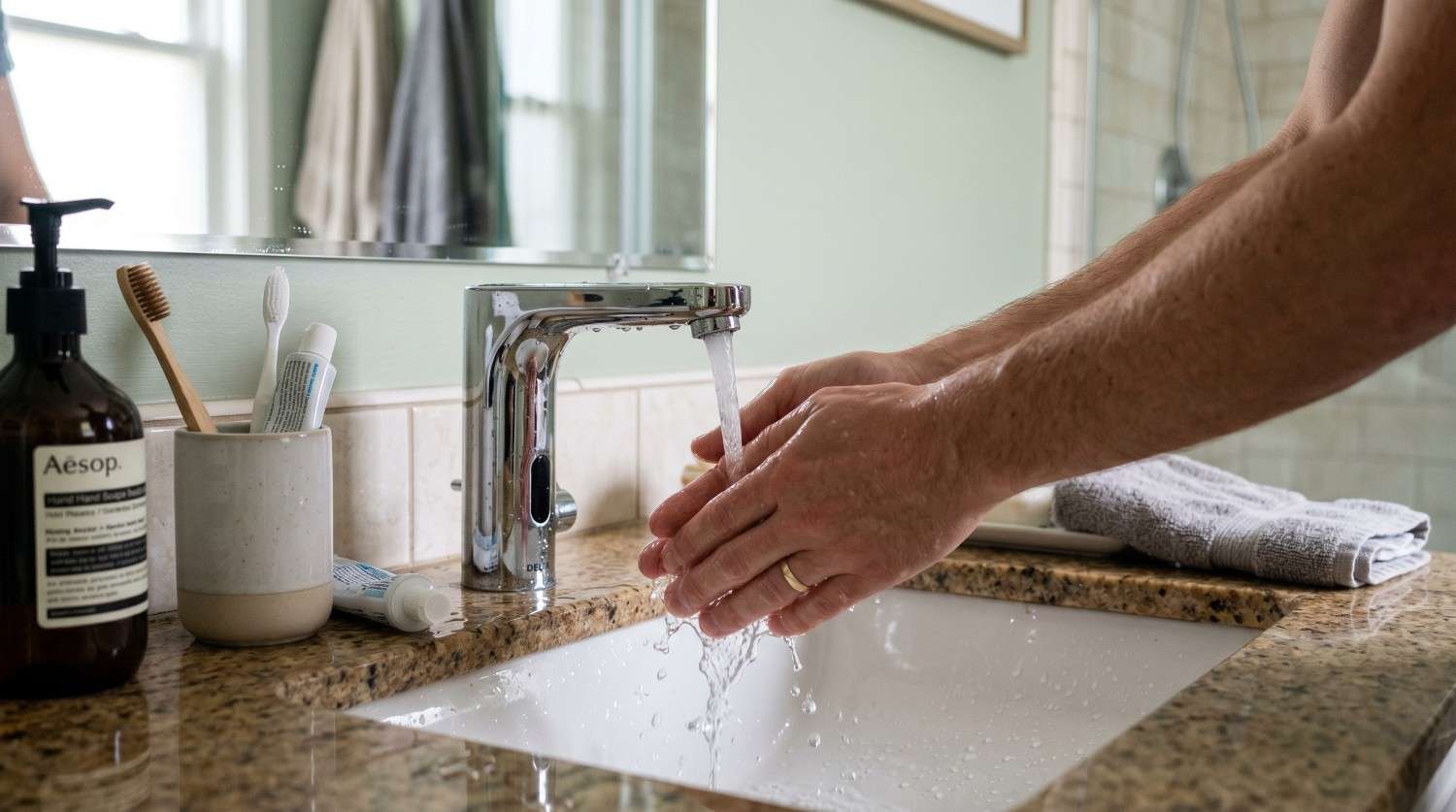
A smart faucet activates via motion sensor, touch, or voice no handle contact required. It maintains preset water temperatures and measures flow. Delta's VoiceIQ faucets respond to Amazon Alexa and Google Assistant. Moen's Eva series carries WaterSense certification, reducing flow without sacrificing pressure.
Programmable features include timed dispense for teeth-brushing routines a practical addition for households with young children.
Cost: $150–$600 for most residential smart faucets.
Installation: DIY-capable for most homeowners comfortable replacing a standard faucet.
5. Smart Bathroom Lighting
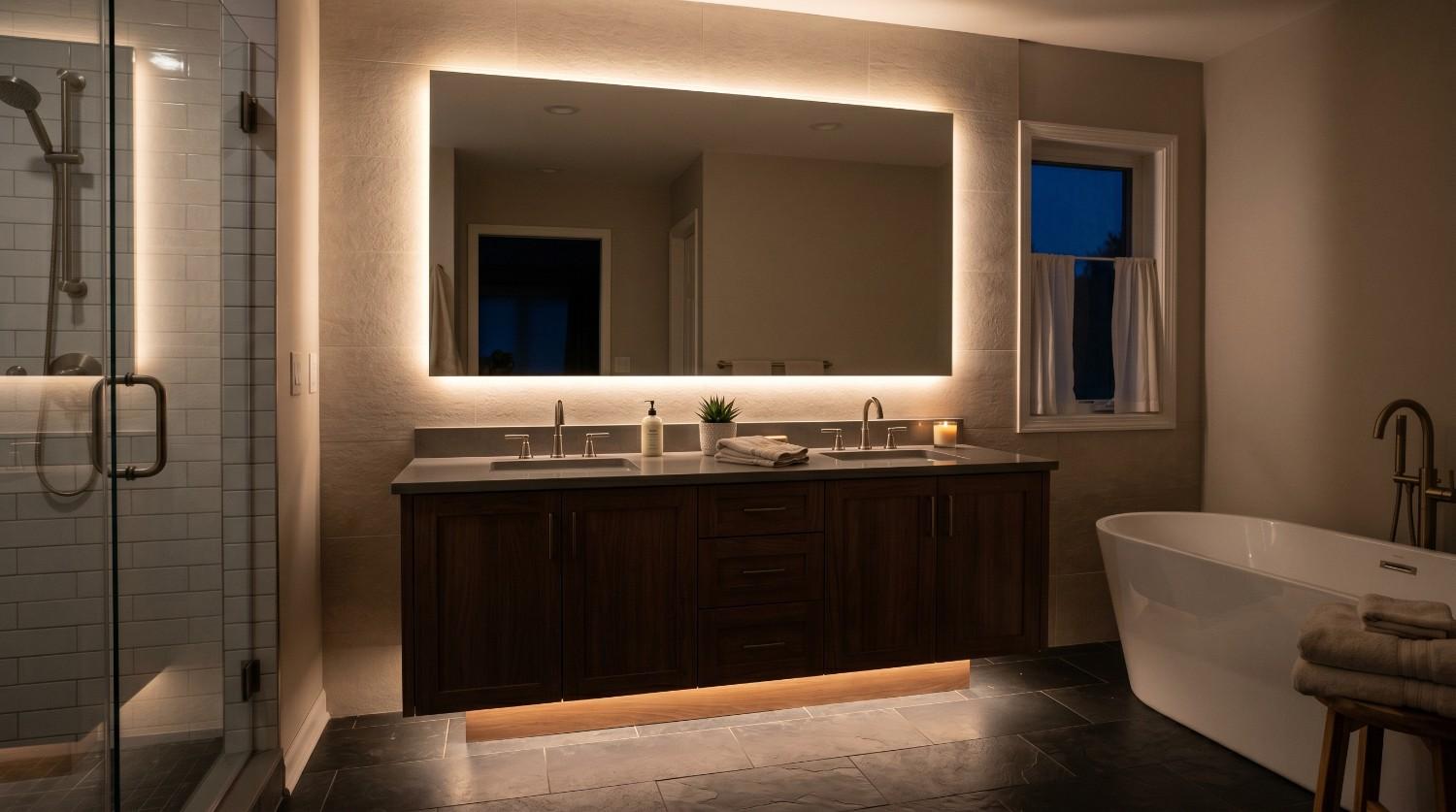
Smart bathroom lighting does three things standard switches cannot: it turns on automatically when you enter, dims to different levels for different tasks, and adjusts color temperature throughout the day. Morning routines benefit from cool, bright light. Evening wind-down works better with warm, dim settings.
Motion-activated LEDs shut off automatically when the room is empty. This alone eliminates one of the most common residential energy wastes. Circadian rhythm modes adjust from cool morning tones to warm evening tones without manual input.
Cost: $30–$150 per smart bulb or fixture. Retrofit smart switches run $20–$60 each.
Installation: Smart bulbs: DIY. Smart switches: DIY for most homeowners. In-ceiling smart fixtures: may require an electrician.
6. Smart Scale
A smart scale goes well beyond weight. It measures body fat percentage, muscle mass, hydration level, bone mass, and resting heart rate all synced to a companion app (FitTrack, Wyze, Renpho are leading brands). The data accumulates over time, giving a trend view rather than a single daily number.
When paired with a smart mirror, measurements display directly on the mirror surface each morning.
Cost: $40–$60. The lowest-cost entry point for any smart bathroom upgrade.
Installation: Set on the floor and pair via Bluetooth. Fully DIY.
Cost Summary: Smart Bathroom Technology at a Glance
How to Start a Smart Bathroom
Most homeowners do not need a full remodel to start. A practical entry sequence:
Step 1 : Smart scale ($40–$60). Install in one minute. Immediate health tracking. Establishes the foundation for mirror integration later.
Step 2 : Smart LED lighting ($30–$150). Replace existing bulbs with smart LEDs and link to your phone. Motion sensing and scheduling start working that day.
Step 3 : Smart touchless faucet ($150–$600). Replace the existing faucet. Hygienic, water-saving, and the most visible daily-use upgrade in a bathroom.
Step 4 : Smart mirror ($100+). Choose a plug-in model first. Morning routine transformation without electrical work.
Step 5 : Smart shower or toilet. Plan this as part of a bathroom renovation. Budget for professional installation and any required plumbing modifications.
Compatibility check: Before buying, confirm that devices support your existing ecosystem — Amazon Alexa, Google Assistant, or Apple HomeKit. Most major brands support all three. Mixed-ecosystem bathrooms can be managed through a central hub app.
Frequently Asked Questions
What is a smart bathroom?
A bathroom where fixtures and devices connect to a Wi-Fi or Bluetooth network and are controlled through smartphone apps, voice commands, or sensors. The goal is automation water temperature ready before you enter, lights on when you walk in, health metrics logged without any manual tracking.
Is smart bathroom technology worth the investment?
For individual devices, yes particularly smart lighting (immediate energy savings) and a smart scale (zero installation, immediate health value). For full smart bathroom suites ($40,000–$70,000+), the ROI depends on how long you stay in the home and your market. Over 80% of buyers factor smart technology into purchasing decisions, so premium installations do add measurable resale value.
Do smart showers and faucets actually save water?
Yes. WaterSense-certified smart toilets reduce water use up to 20%. Smart faucets with flow regulators and motion activation reduce consumption up to 70% versus standard fixtures. Smart showers with pause functions and real-time usage tracking help households cut shower water use measurably.
Can I install smart bathroom devices myself?
Smart scales, LED bulbs, smart switches, and plug-in smart mirrors: all DIY-capable. Smart faucets: manageable for homeowners comfortable with basic plumbing. Smart toilets and digital shower systems: require a licensed plumber and in many cases an electrician. Never DIY electrical work in a wet room.
What voice assistant works with smart bathroom devices?
Most major brands support all three platforms: Amazon Alexa (Kohler Konnect, Delta VoiceIQ, Moen U by Moen), Google Assistant (Kohler, Moen, Delta), and Apple HomeKit (Moen U by Moen). Verify your preferred platform before purchasing a few devices that are single-platform only.
Are smart mirrors safe? What about the cameras?
Smart mirrors with AI skincare cameras collect biometric data. This data is typically stored by the manufacturer. Before purchasing, read the privacy policy and understand what data is collected, how it is stored, and whether it can be deleted. If privacy is a concern, camera-free smart mirrors are available at every price point.
What is the future of smart bathroom technology?
The next generation centers on AI health monitoring toilets and mirrors that track vital signs over time and flag early health concerns. Greater integration with wearables, predictive water temperature based on schedule and biometric data, and self-adjusting environments that respond to mood and time of day. The smart bathroom market is projected to nearly quadruple between 2025 and 2035.